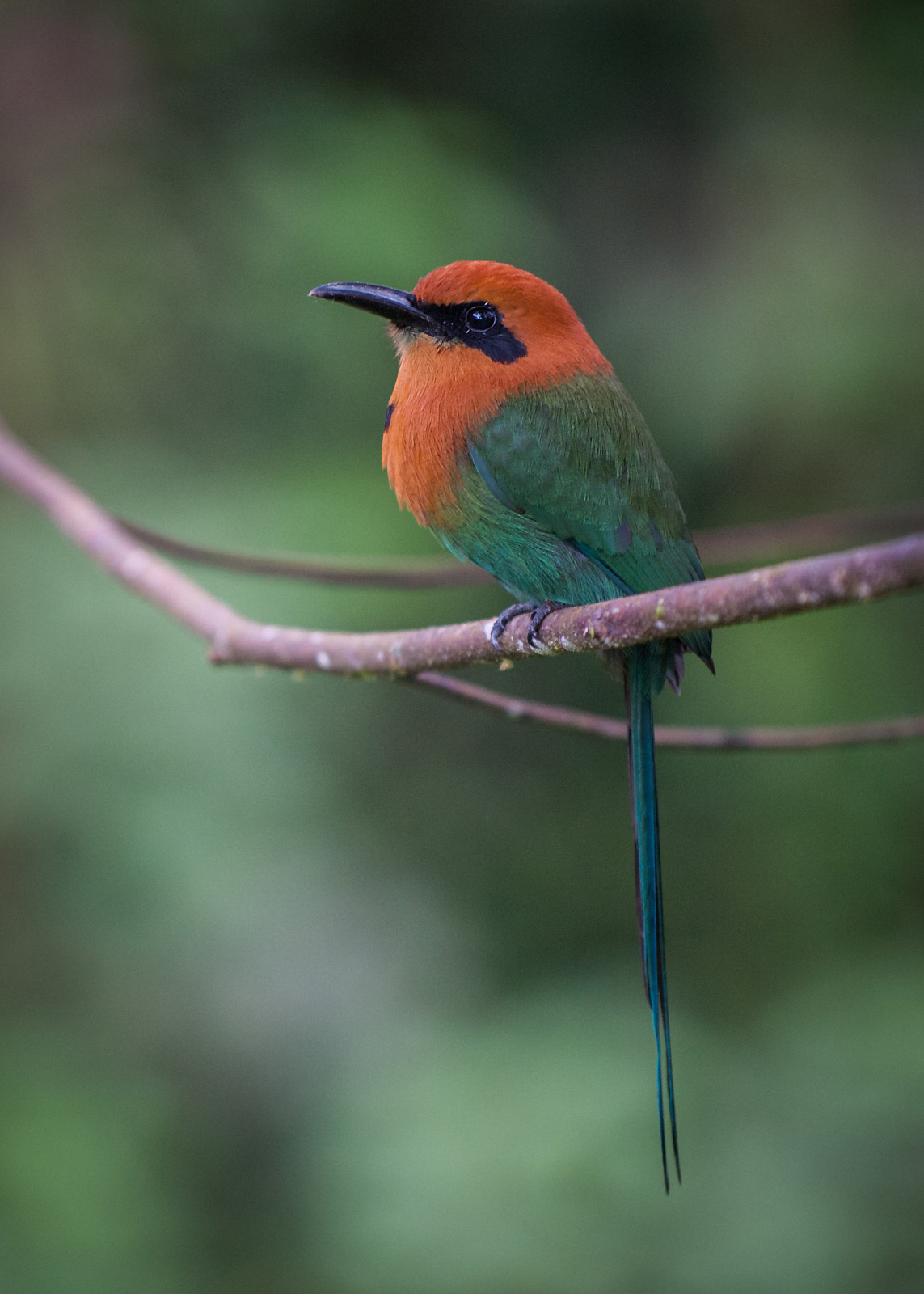
Always nice to run into motmots while in Central and South America. This particular motmot is of the rufous variety. He/she allowed a very close approach, as well as a side angle, enabling me to photograph all that great color in the feathers. This wasn’t too far from our lodge in the cloud forest of Ecuador. Nikon D700 with Nikkor 70-200mm lens (at 200mm) ISO 1600, f/2.8 at 1/160th of a second.
After yesterday’s shorebird with questionable eating habits, I promised something a bit more adorable. So here’s another look at a brown mouse lemur, one of the world’s smallest primates. Photographed on the island of Nosy Mangabe, off the coast of the island of Madagascar. Nikon D200 with Nikkor 80-200mm lens (at 185mm) ISO 200, f/10 at 1/60th of a second, two Nikon SB-600 flash units.
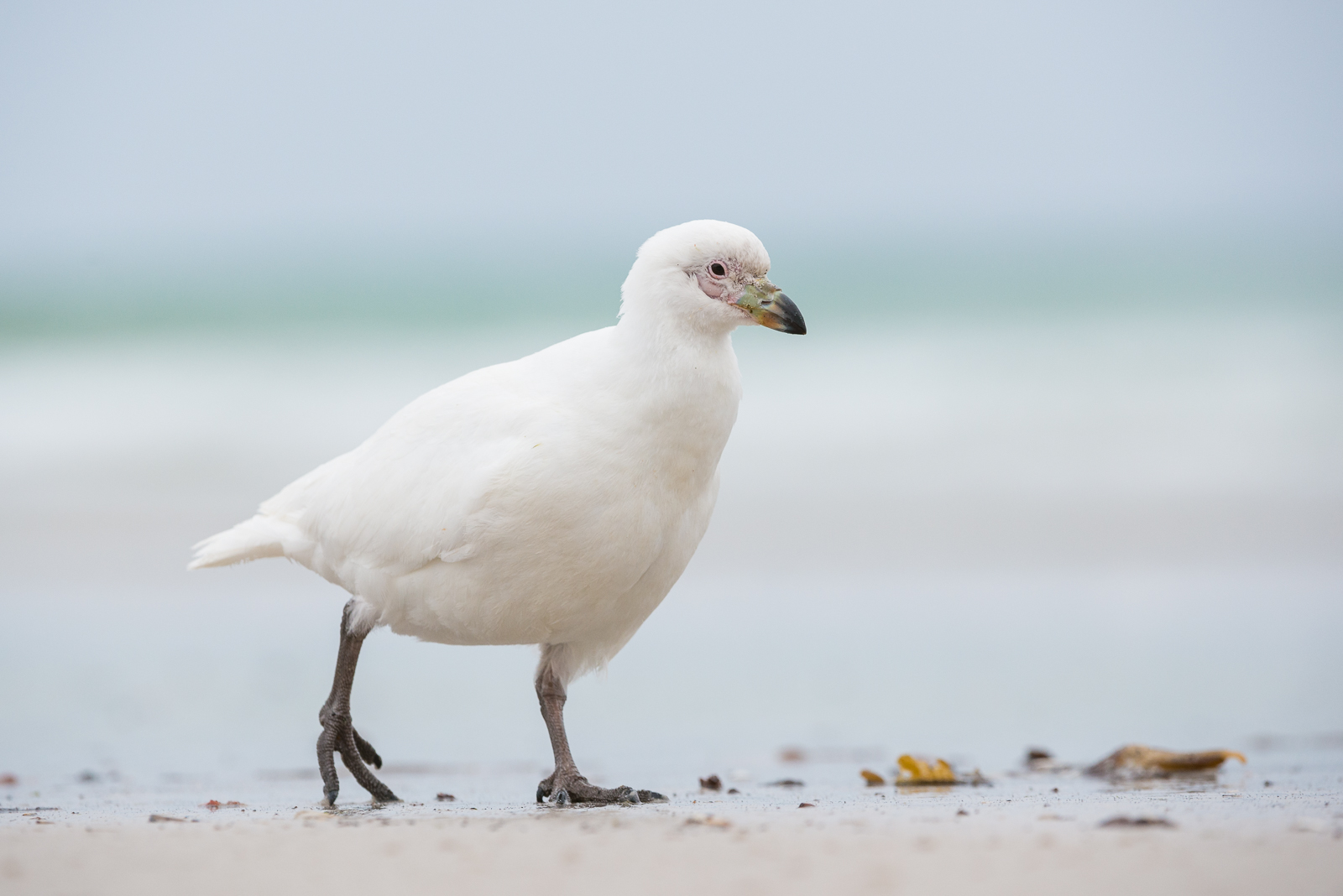
The pale-faced sheathbill is the only land bird native to the Antarctic continent. I photographed this one in the Falkland Islands. Also known as the snowy sheathbill, greater sheathbill and paddy, it’s certainly not going to win any beauty contests. That said, its looks are perhaps its most charming characteristic. Not having webbed feet, this shorebird does not fish but instead finds its food on land by scavenging. It will eat almost anything, including but not limited to regurgitated food from penguins, penguin eggs, and if the opportunity presents itself, penguin chicks. But that’s when it’s living clean. It will also eat carrion, animal feces, and, if and when available, human waste. It has even been known to eat tapeworms that have been living inside a penguin’s intestines. There’s probably a reason, I’ve never posted a pale-faced sheathbill. Tomorrow I promise to return with something slightly more adorable. Nikon D800 with Nikkor 200-400mm lens (at 330mm) ISO 800, f/5.6 at 1/1250th of a second.
One of the handful of white-handed gibbons that I saw while in Thailand. These guys come in two colors — darker, almost black fur like this one, and also a much lighter, beige color. This gibbon had been quickly moving through the canopy, calling his mate for quite a while as I was scurrying below trying to find an opening in the foliage to grab a shot or two. Nikon D500 with Nikkor 200-400mm lens (at 400mm) ISO 800, f/4 at 1/160th of a second.
I’ve posted a few images from this series in the past. Here’s another of a lone bighorn atop the eroded buttes of Badlands National Park in South Dakota. The bighorn being on the ridgeline allowed me to shoot with a wider telephoto, making the subject smaller in the overall composition and really communicating all that glorious environment. I was also able to use a graduated neutral density filter to hold the detail in the sky while preventing a full silhouette of the landscape. Nikon D800 with Nikkor 70-200mm lens (at 150mm) ISO 400, f/8 at 1/800th of a second, split graduated neutral density filter.
Usually, photographing an animal with its back to camera is the last thing I want. But occasionally, it works. This angle emphasizes those enormous ears, while also highlighting the namesake black tail. Photographed in the Anza-Borrego Desert State Park in southern California a few years back. Nikon D800 with Nikkor 200-400mm lens (at 400mm) ISO 800, f/4 at 1/1250th of a second.
A bit late on post today as my Internet has been down at home. Here’s another from the Venice Rookery in Florida where it is almost too easy to capture shorebirds in flight, usually with something dangling from the front of their beaks. Nikon D300 with Nikkor 200-400mm lens (at 400mm) ISO 400, f/8 at 1/4000th of a second.
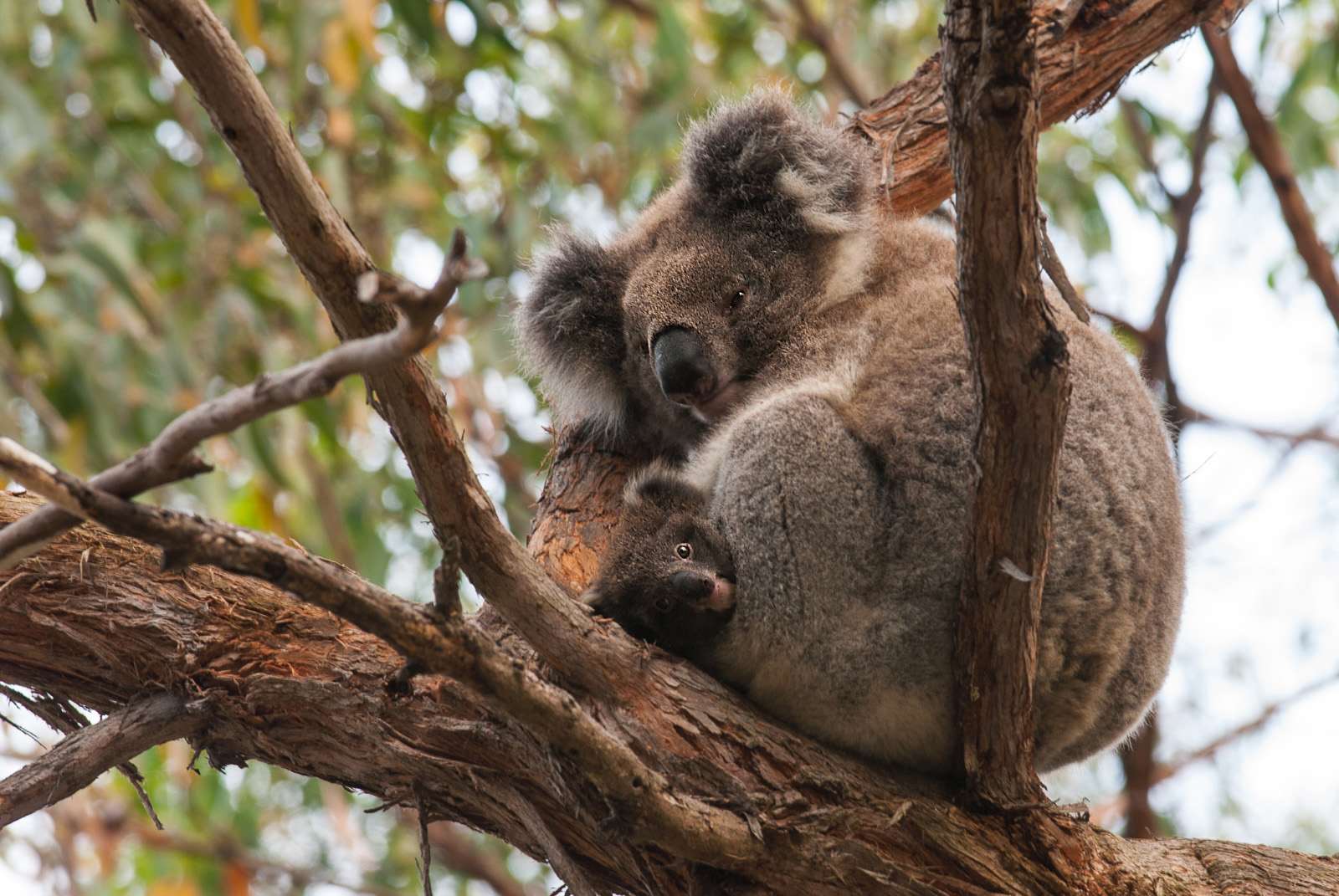
Sometimes I’m amazed at what I miss while out taking photos in the wild. This was one of those cases. I was so focused on capturing a sharp image of this koala in the dim light (1/10th of a second shutter) that I didn’t even notice that on the last few frames of the sequence, a baby popped its head out of the mother’s pouch to see what was going on. It wasn’t until I was reviewing the images later that I saw that little smiling face. Photographed along the Great Ocean Road in Lorne, Victoria, Australia. Nikon D200 with Nikkor 80-200mm lens (at 200mm) ISO 100, f/5.6 at 1/10th of a second.
I’ve posted a few shots of short-eared owls in the past, but always in flight. I liked the looks of this guy perched, as you get to see that nice feather vest he’s wearing. This was in Boundary Bay, just south of Vancouver. A great place for snowy owls, short-eared owls, northern harrier hawks and bald eagles. All four species show up in prolific numbers during the winter months. Nikon D800 with Nikkor 200-400mm lens (at 400mm) ISO 1250, f/5 at 1/1000th of a second.
Green sea turtles can be pretty relaxed around human swimmers. This guy seemed to be almost swimming alongside me, just off the beach at a hotel in Barbados. They are an endangered species, however, so best to let them approach rather than do the approaching. This is a rare shot captured with my non-pro/prosumer gear — the Nikon 1 AW1 underwater system. For a camera that receives a lot of criticism, it’s actually pretty remarkable that it goes underwater (an interchangeable lens camera no less) without a housing. Nikon 1 AW1 with Nikkor AW 11-27mm lens (at 11mm) ISO 160, f/4 at 1/500th of a second.
We use cookies to enhance your experience while using our website. If you are using our Services via a browser you can restrict, block or remove cookies through your web browser settings. We also use content and scripts from third parties that may use tracking technologies. You can selectively provide your consent below to allow such third party embeds. For complete information about the cookies we use, data we collect and how we process them, please check our Privacy Policy