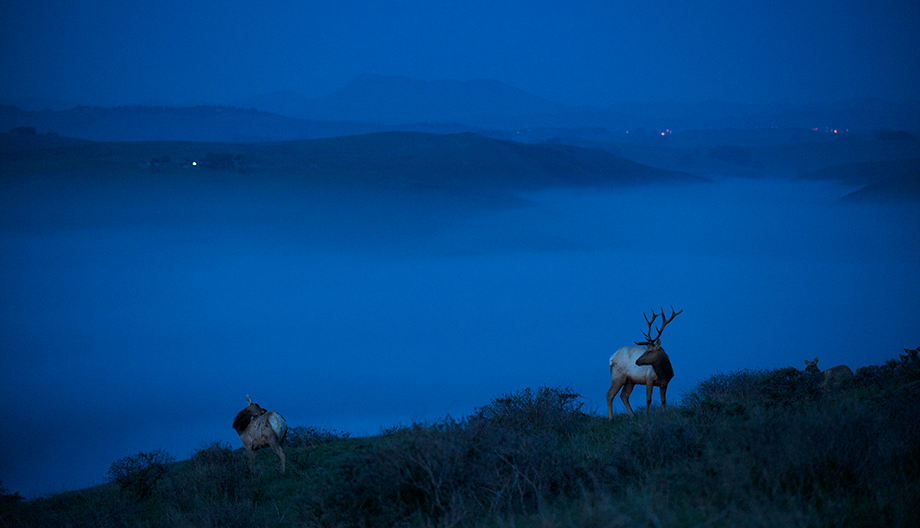
Point Reyes National Seashore isn’t that far north of San Francisco. In fact, the northern suburbs of the city can be seen below this ridge where elk often graze. It was well past sunset when I took this picture and I had to crank my ISO up to 3200 to have enough light to record the scene. A bed of fog (of course, it’s San Francisco) settled into the valley below as the elk began to wind down another day.
Nikon D700 with Nikkor 70-200mm lens (at 135mm) ISO 3200, f/2.8 at 1/25th of a second
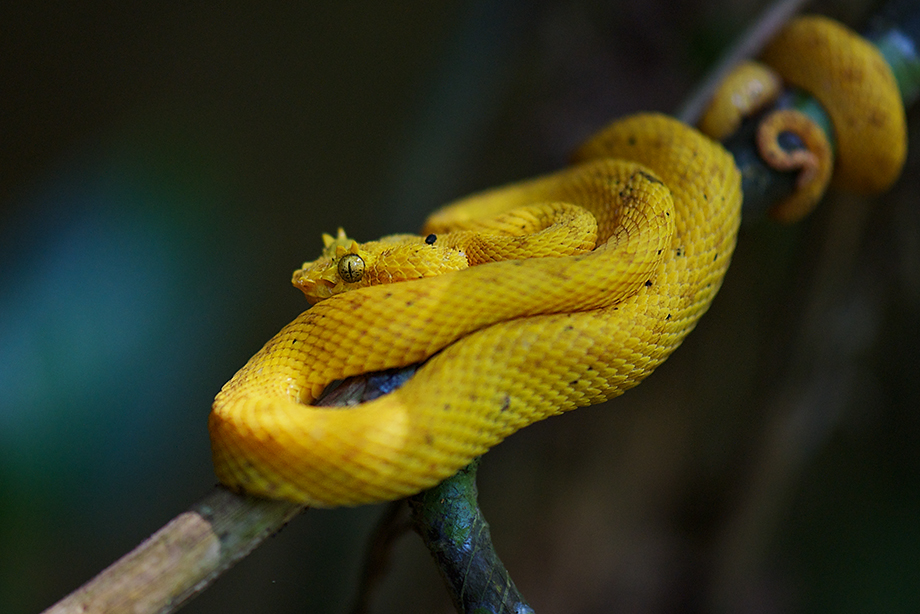
As I mentioned in a previous post, I saw four different eyelash vipers on the recent trip to Costa Rica — two yellow and two green. You can clearly see the “eyelashes” on this guy. They are actually raised scales above the eyes that are thought to aid in camouflage by breaking up the snake’s outline as it hides among the foliage. I’m not quite sure I get that explanation, but that’s what the experts say. I prefer the myth that the snake will mockingly flash its lashes by winking at victims after a strike. Apparently, this isn’t physically possible, but I still like the sound of it. Either way, eyelash vipers are not aggressive by nature, but if agitated can be deadly. Nikon D700 with Nikkor 105mm macro lens, ISO 1600, f/3.2 at 1/250th of a second
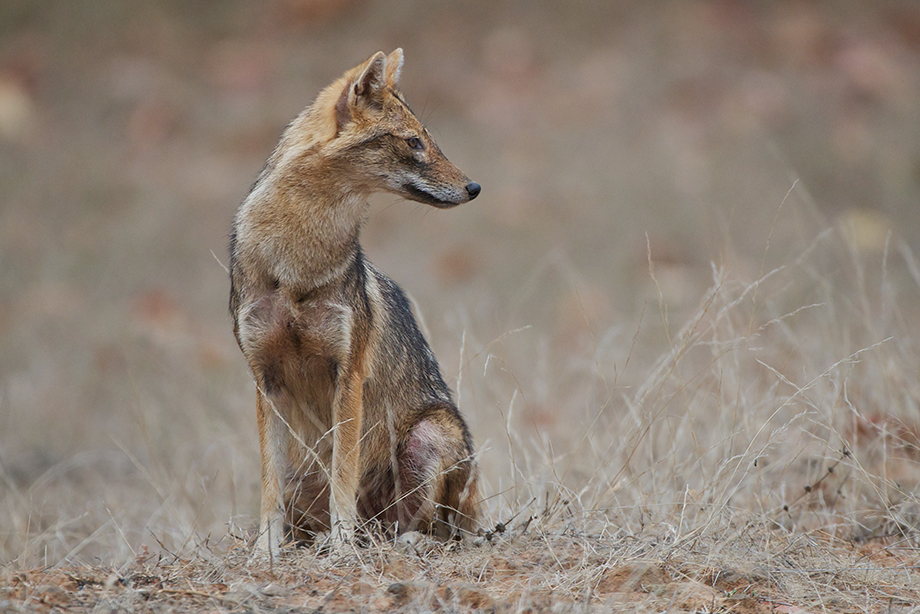
Every country seems to have it’s scrappy canine. For us, it’s the coyote. For India, it’s a close cousin of the coyote, the golden jackal. I photographed this one in Bandhavgarh National Park, which is in central India. Nikon D300 with Nikkor 200-400mm lens (at 400mm) ISO 800, f/4 at 1/400th of a second
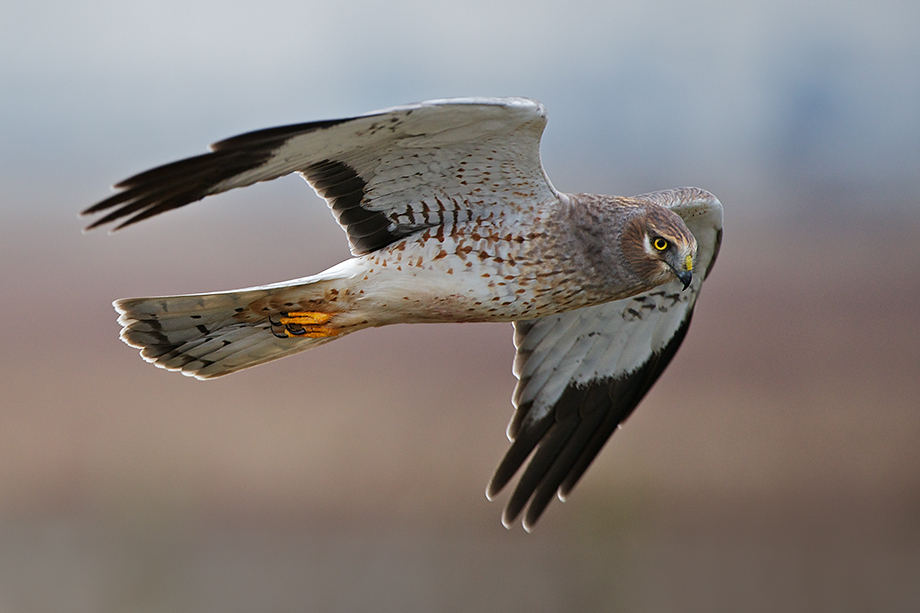
I photographed this northern harrier hawk last year on my snowy owl trip to British Columbia. There were quite a few of these hawks in the area, fighting with short eared owls for voles and mice. Nikon D800 with Nikkor 200-400mm lens (at 400mm) ISO 1000, f/4 at 1/1250th of a second
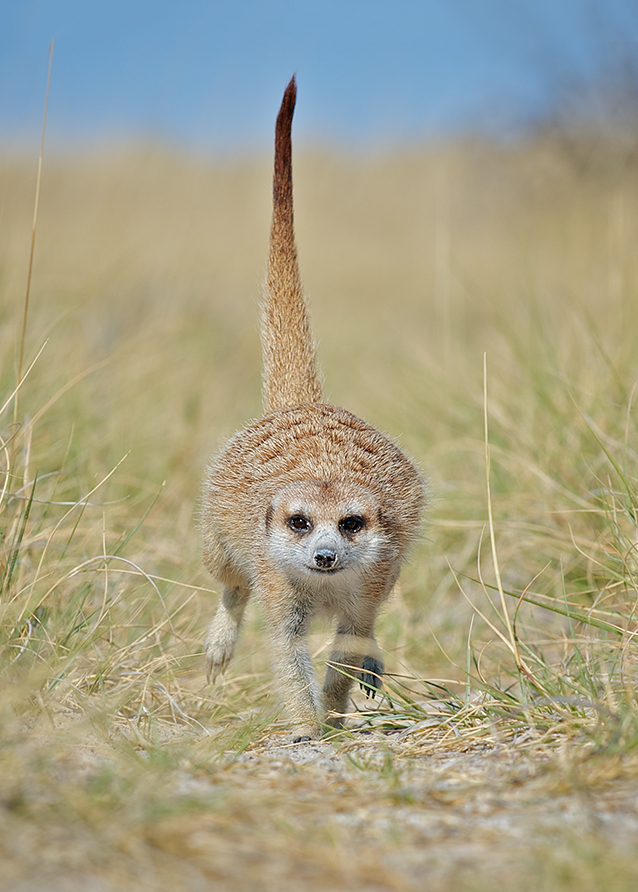
It’s been a while since I posted a meerkat. Here’s one that was running straight toward my camera. As usual when I get the chance, I was face down on the ground. It was a challenge capturing focus on these little guys — they’re pretty quick — but I was able to get quite a few shots like this during my three day stay at Makgadikgadi Pan in the Kalahari Desert of Botswana. Nikon D700 with Nikkor 70-200mm lens (at 200mm) ISO 400, f/8 at 1/1000th of a second
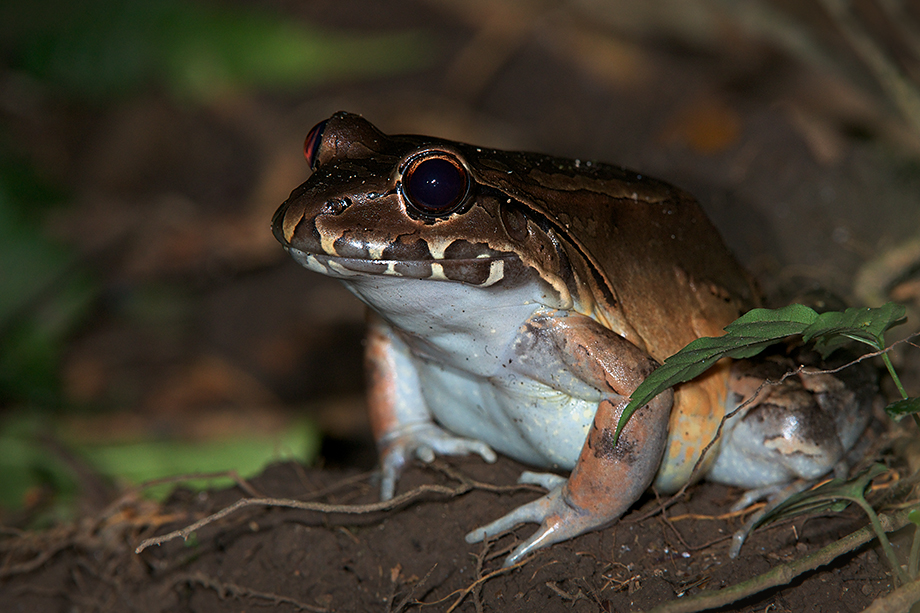
Meet the smoky jungle frog. These guys are big. Very big. They can grow to eight inches in length — and as you can tell from the picture, they pack quite a bit of girth into that length. They also happen to have a voracious appetite, eating frogs, lizards, snakes and even smaller mammals and birds. My guide told me that he once saw one eating a chicken. Nikon D800 with Nikkor 200-400mm lens (at 380mm) ISO 800, f/8 at 1/60th of a second, two Nikon SB-900 flash units
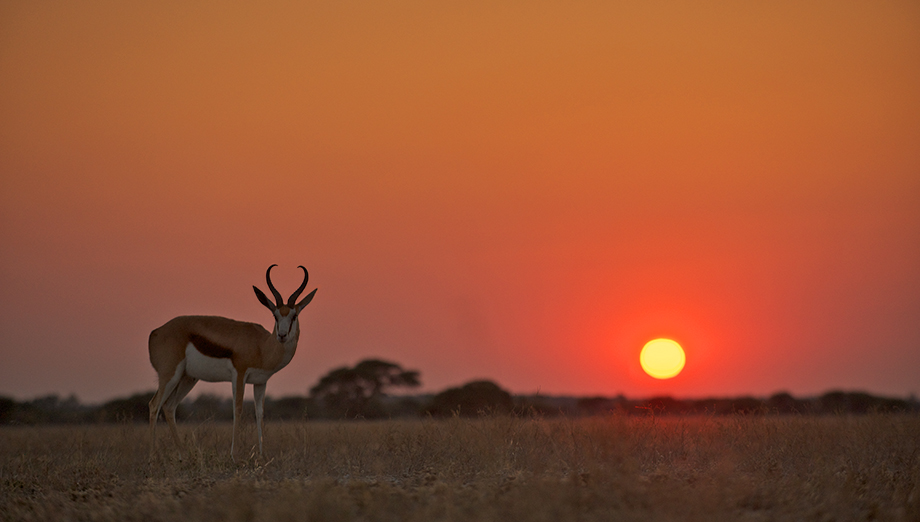
A springbok stops to pose for the camera in front of the rising sun in the Kalahari Desert. Nikon D700 with Nikkor 70-200mm lens (at 160mm) ISO 800, f/4 at 1/1600th of a second
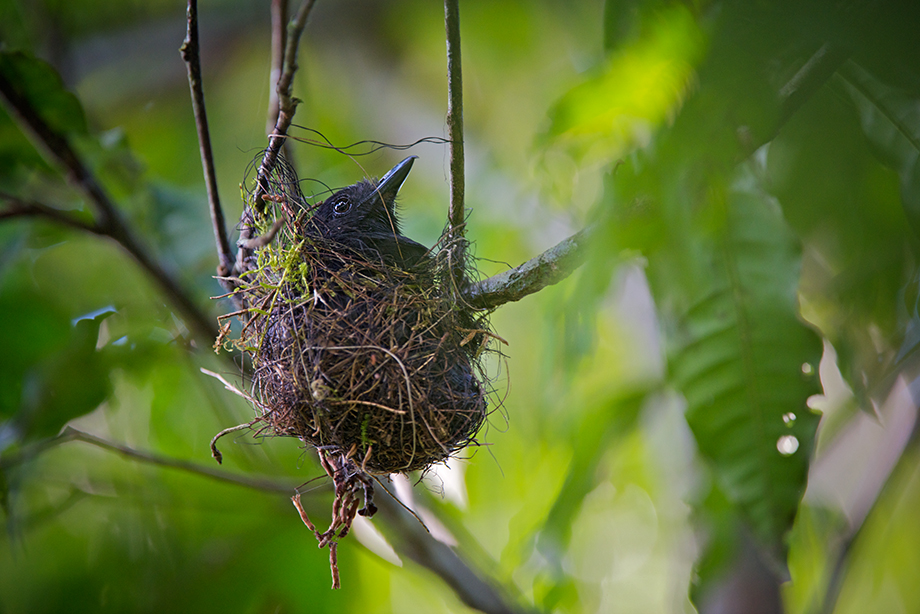
The next time I start complaining about the size of New York City apartments, I need to think of the black shouldered antshrike. This little black bird could barely fit in its tiny nest. As with many of my recent posts, it was photographed in Corcovado National Park in Costa Rica. Nikon D800 with Nikkor 200-400mm lens (at 400mm) ISO 1600, f/4 at 1/50th of a second
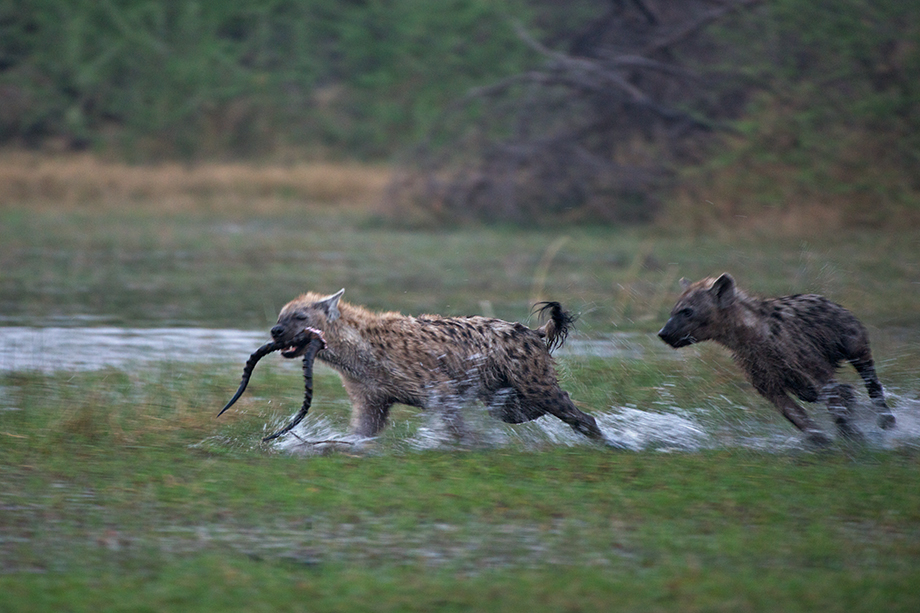
Here’s another one of spotted hyenas playing keep away with a pair of impala horns. This was taken first thing in the morning in a swampy area of northern Botswana. The light was very low, as was my shutter speed, so I was hoping for the hyenas to run parallel to me so that I could pan with their movement to capture some relatively sharp, motion-blurred action shots. Nikon D800 with Nikkor 200-400mm lens (at 400mm), f/4 at 1/80th of a second
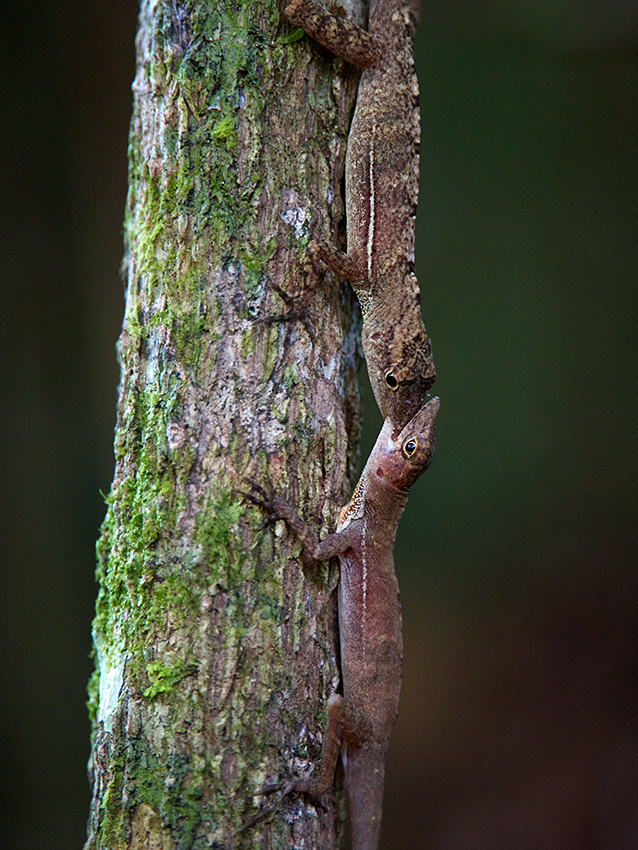
It seemed like everywhere I looked in Costa Rica’s Corcovado National Park I saw anole lizards. These two clearly had a difference of opinion about something. It was pretty dark in the forest, so I had to up the ISO to 3200 and still could only get a shutter speed of 1/40th of a second. Luckily the lizards would stop for a second or so at a time as they danced around the tree with their faces locked onto each other. There are nearly 400 different kinds of anole lizards, so not easy to pinpoint this exact species. Nikon D800 with Nikkor 200-400mm lens (at 400mm) ISO 3200, f/4 at 1/40th of a second
We use cookies to enhance your experience while using our website. If you are using our Services via a browser you can restrict, block or remove cookies through your web browser settings. We also use content and scripts from third parties that may use tracking technologies. You can selectively provide your consent below to allow such third party embeds. For complete information about the cookies we use, data we collect and how we process them, please check our Privacy Policy