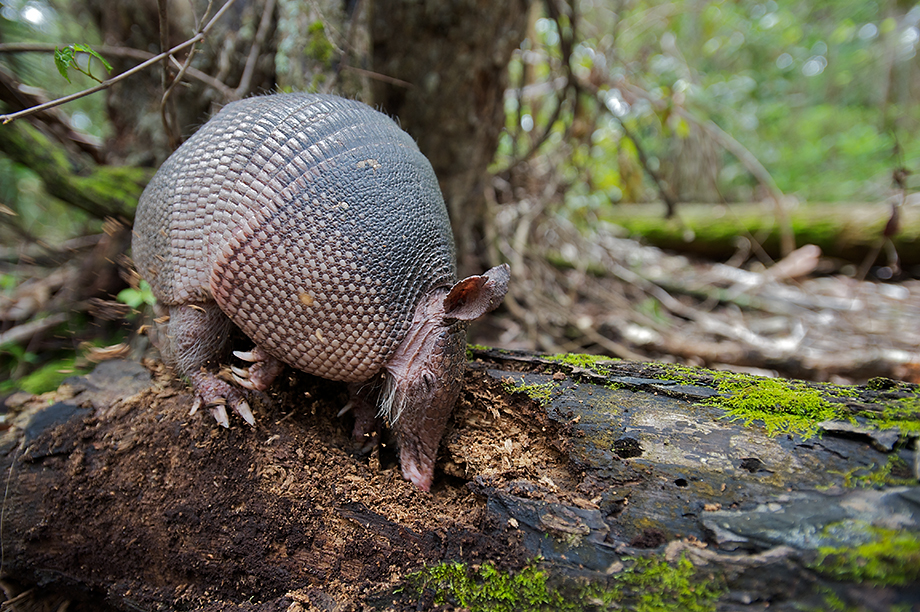
I spent quite a bit of time habituating this nine-banded armadillo on Merritt Island in Florida. Eventually it became comfortable enough with my presence to go about its business of digging frantically for grubs, termites, ants and other insects. Armadillos have very poor eyesight, but a great sense of smell and can detect prey through 8 inches of soil. If you look close, you can see the rotted bits of wood that the armadillo is tossing aside as it digs.
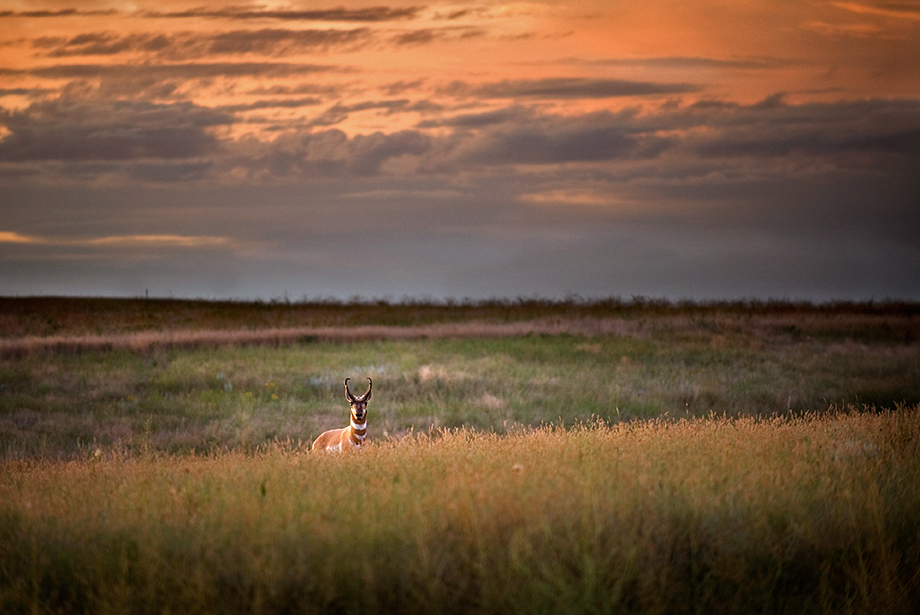
I captured this shot early one morning in Badlands National Park in South Dakota. The pronghorn was standing so still that I was able to take several exposures and then blend them together to hold all the detail in the sky while still exposing for the foreground.
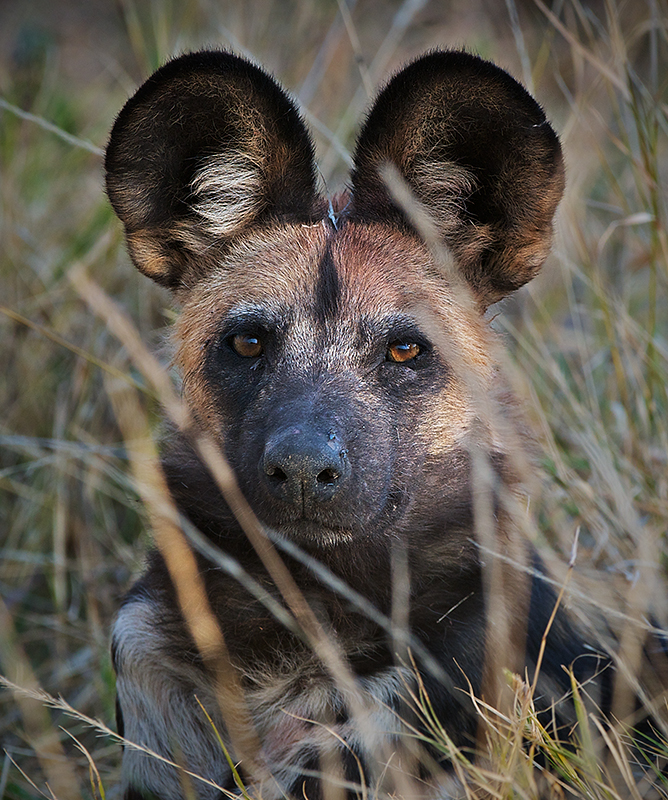
This is an African wild dog. Or, if you prefer, an African hunting dog. Or a Cape hunting dog. Or a painted dog. Or a painted wolf. Or a painted hunting dog. Or a spotted dog. Or an ornate wolf. It’s called all these things. It’s also in trouble in Africa and listed as endangered due to human overpopulation, habitat loss and predator control killing. I was lucky enough to find this guy and the rest of his pack of about twelve or so in the Linyanti Swamp area of Botswana.
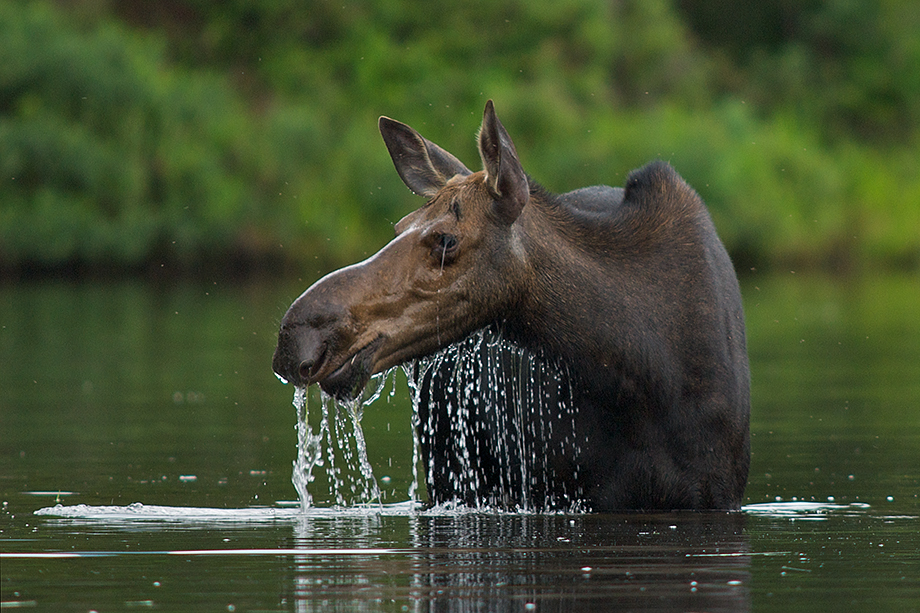
This one is from a trip to Maine a few years back. I was at Baxter State Park when I saw this moose cow in the middle of Sandy Stream Pond. Moose like the nutrient rich vegetation that sits on the bottom of the pond. She was out there for what seemed like an hour, grazing under water and allowing me to get many shots.
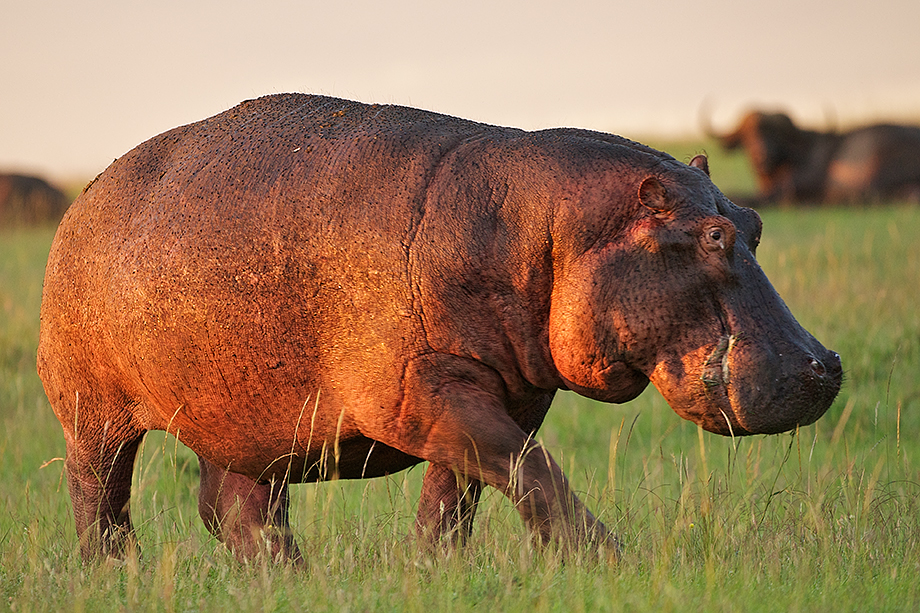
During the day, hippos rarely leave the water, but at night they typically sleep on land. They are very susceptible to sunburn and as soon as the sun starts to get hot, they get back in the water. This was first thing in the morning when the sun just broke the horizon and several hippos were out foraging on the plains of the Masai Mara in Kenya. In the background, a few buffalo keep a close watch on their often cantankerous neighbors.
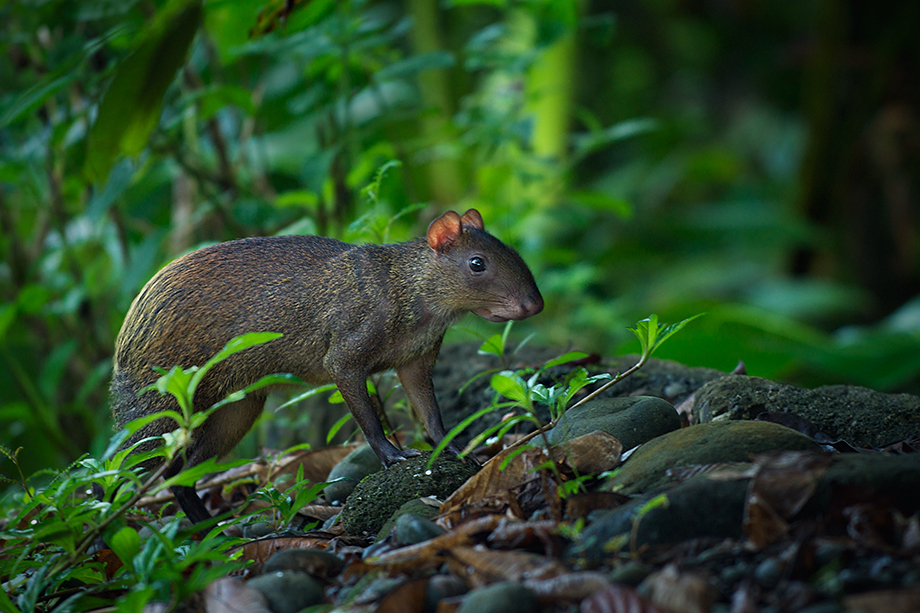
Agouti’s are native to Central America and resemble guinea pigs, but they are larger and with longer legs. This one was photographed early one morning in Pavones, Costa Rica. They are fairly common in rain forests and I saw quite a few while hiking throughout several areas of Costa Rica.
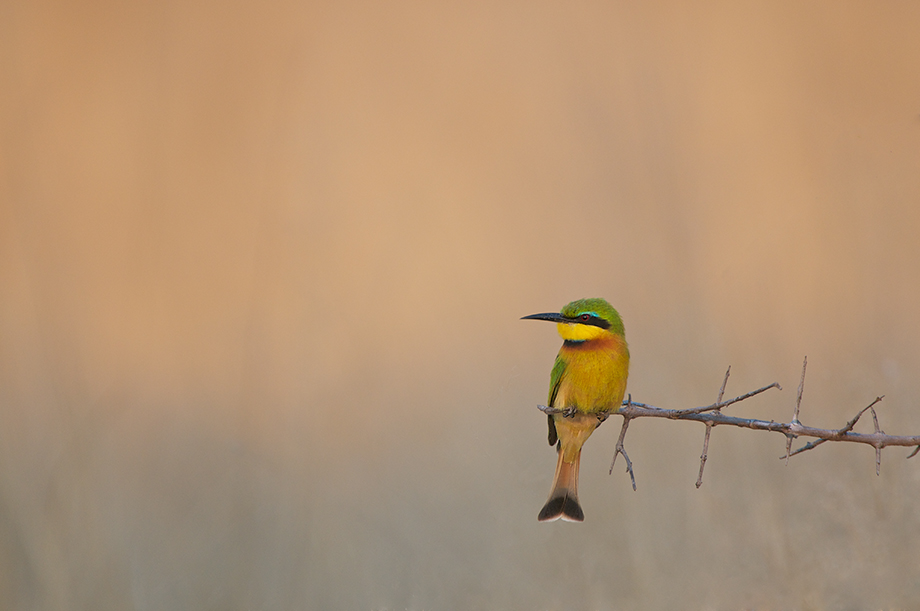
This little bird is called a little bee eater. They are fairly common throughout much of Africa. This one was in the Okavango Delta of Botswana. I liked the nice clean background and tried to include more of it in the composition.
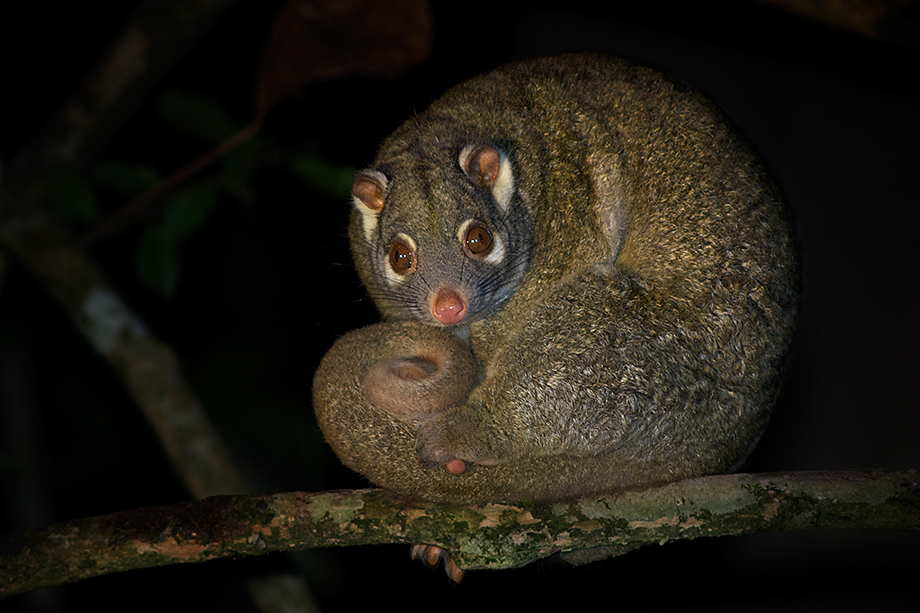
I figured why not keep things in Australia for another day. This is a green ringtail possum, also photographed in the Atherton Tablelands area of Queensland in the northeast area of the country. Like other possums, the green ringtail is strictly nocturnal. Unlike other possums, the green ringtail practices what is known as coprophagy. What is coprophagy you ask? The practice of eating one’s own feces. Here’s to not being a green ringtail possum.
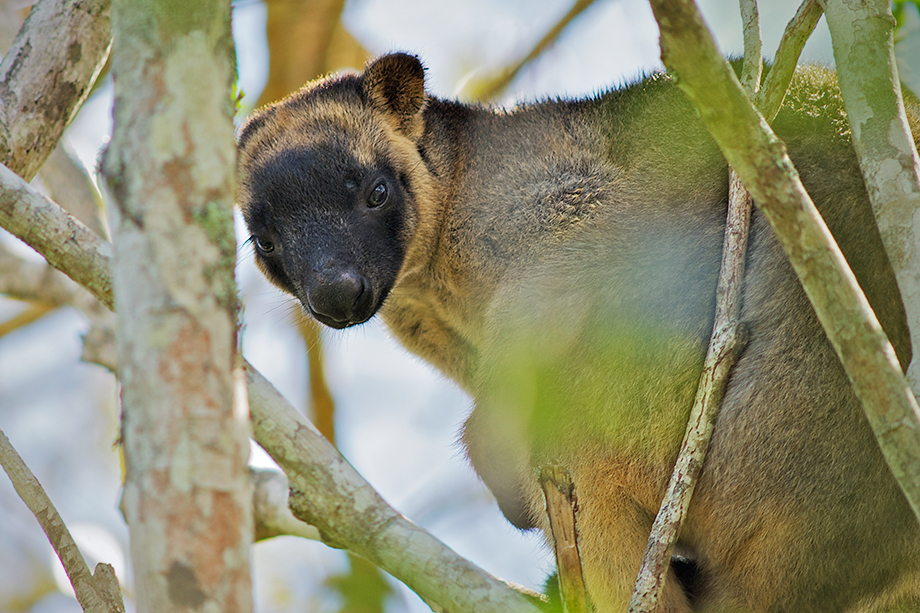
This is an oldie — and a rarity — from my trip to Australia back in 2005. I was searching for platypus early one morning in the town of Yungaburra when I spotted this Lumhotz’s tree kangaroo in a tree across the river. Usually nocturnal, this guy was up a little past his bedtime. They almost look more like a primate than a marsupial and they are only found in northeastern Queensland.
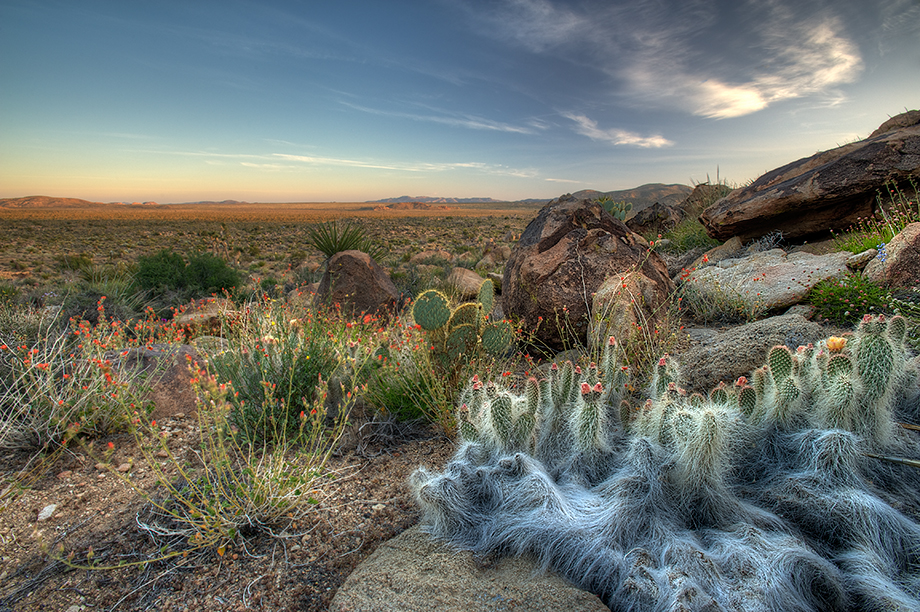
A little more than a year ago, I posted a very similar shot of the Joshua Tree landscape and the desert in bloom. This photo, however, shows more of that hairy prickly pear cactus in the foreground that kind of looks like an old man’s beard. The desert blooms very quickly and unpredictably. I was lucky on this trip to catch it in all its glory.
We use cookies to enhance your experience while using our website. If you are using our Services via a browser you can restrict, block or remove cookies through your web browser settings. We also use content and scripts from third parties that may use tracking technologies. You can selectively provide your consent below to allow such third party embeds. For complete information about the cookies we use, data we collect and how we process them, please check our Privacy Policy