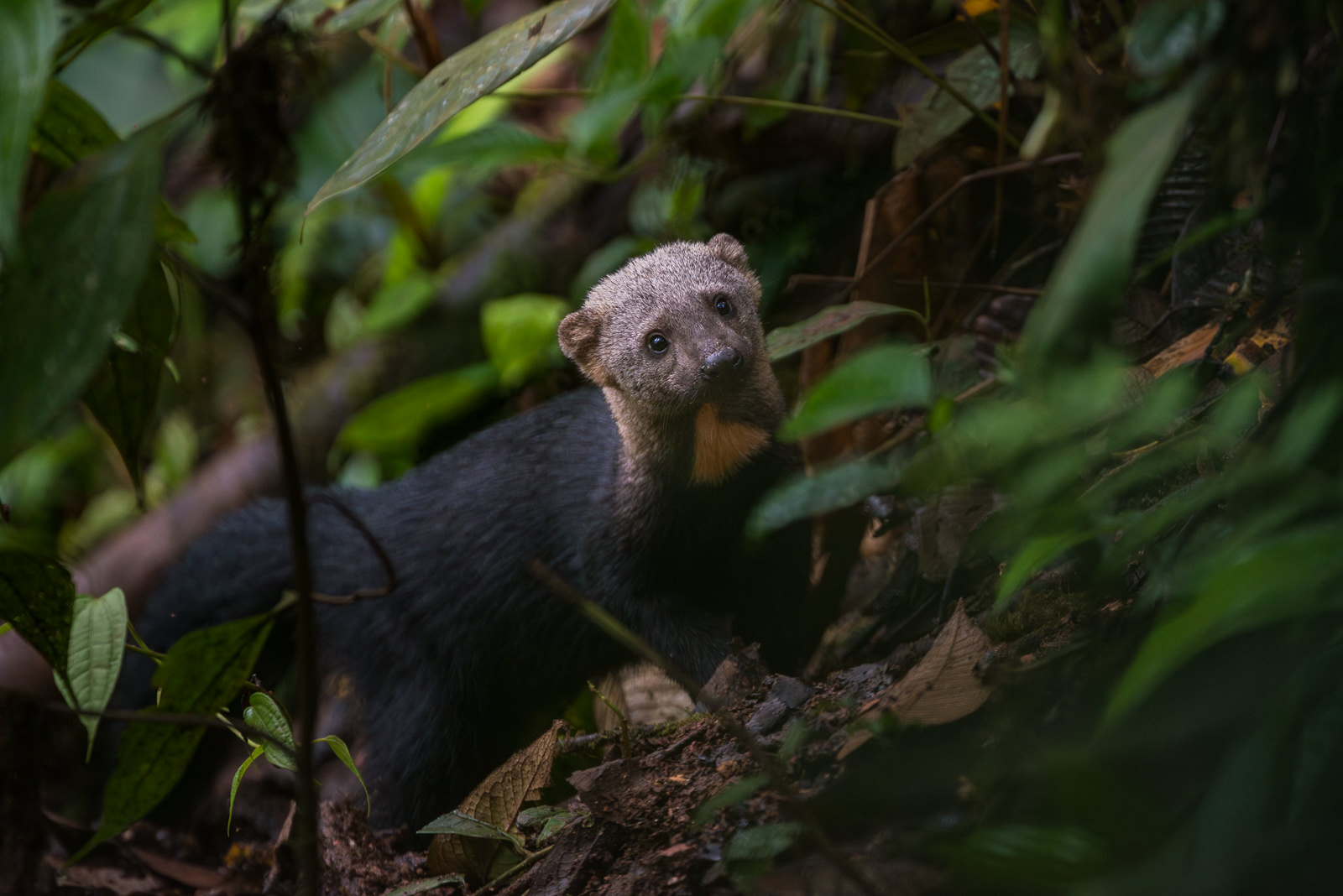
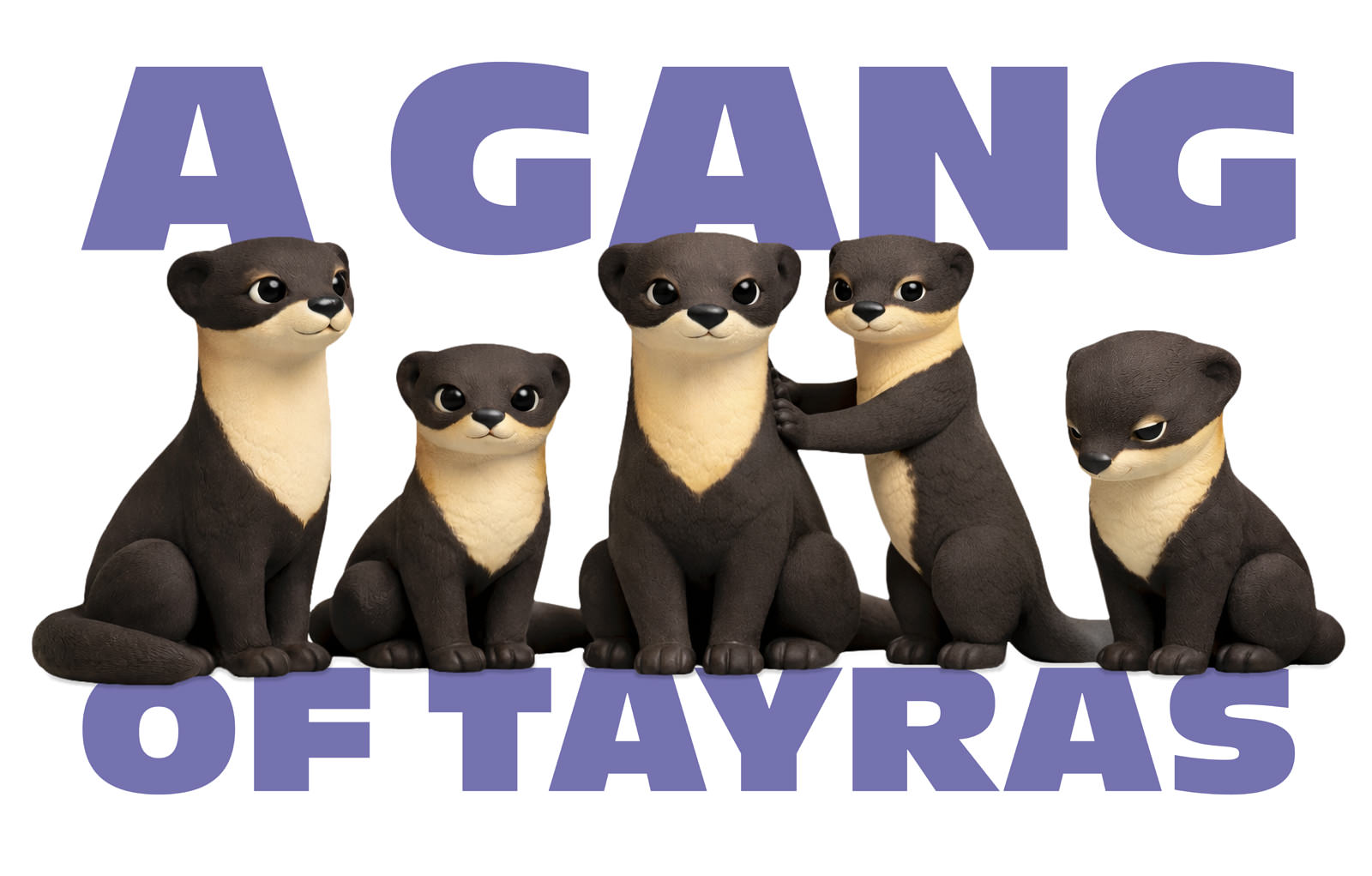
I’ve seen tayras a few times, but was only able to photograph them this one time. And when I say “them,” I mean this one individual. So again, not technically a gang. You need two more for that. Either way hope you’re all enjoying the wildlife collective name series and have checked out more at specieslimited.com. Tayras are sleek, weasel-like mammals found in Central and South American forests. Fast, curious, and highly adaptable, they are agile climbers that hunt small animals and raid fruit trees with equal enthusiasm. I photographed this one in the cloud forest of Ecuador. Nikon D800 with Nikkor 200-400mm lens (at 400mm) ISO 1600, f/4 at 1/125th of a second.
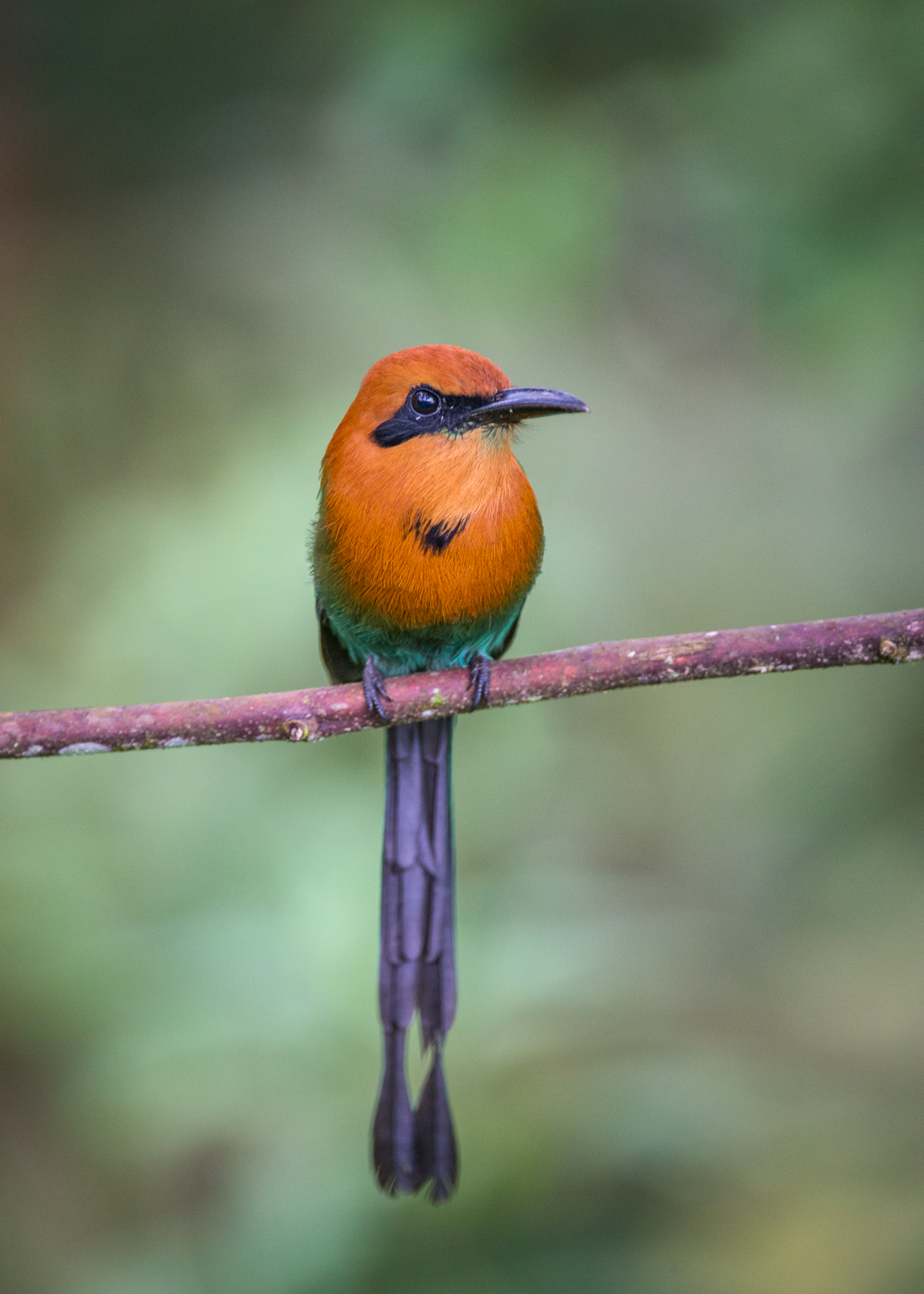
Motmots are always great to see on my travels to the Neotropics. Most of them have a distinctive racket tip tail. This is the rufous motmot, photographed in the cloud forest of Ecuador. Nikon D800 with Nikkor 200-400mm lens (at 400mm) ISO 1600, f/4 at 1/100th of a second.
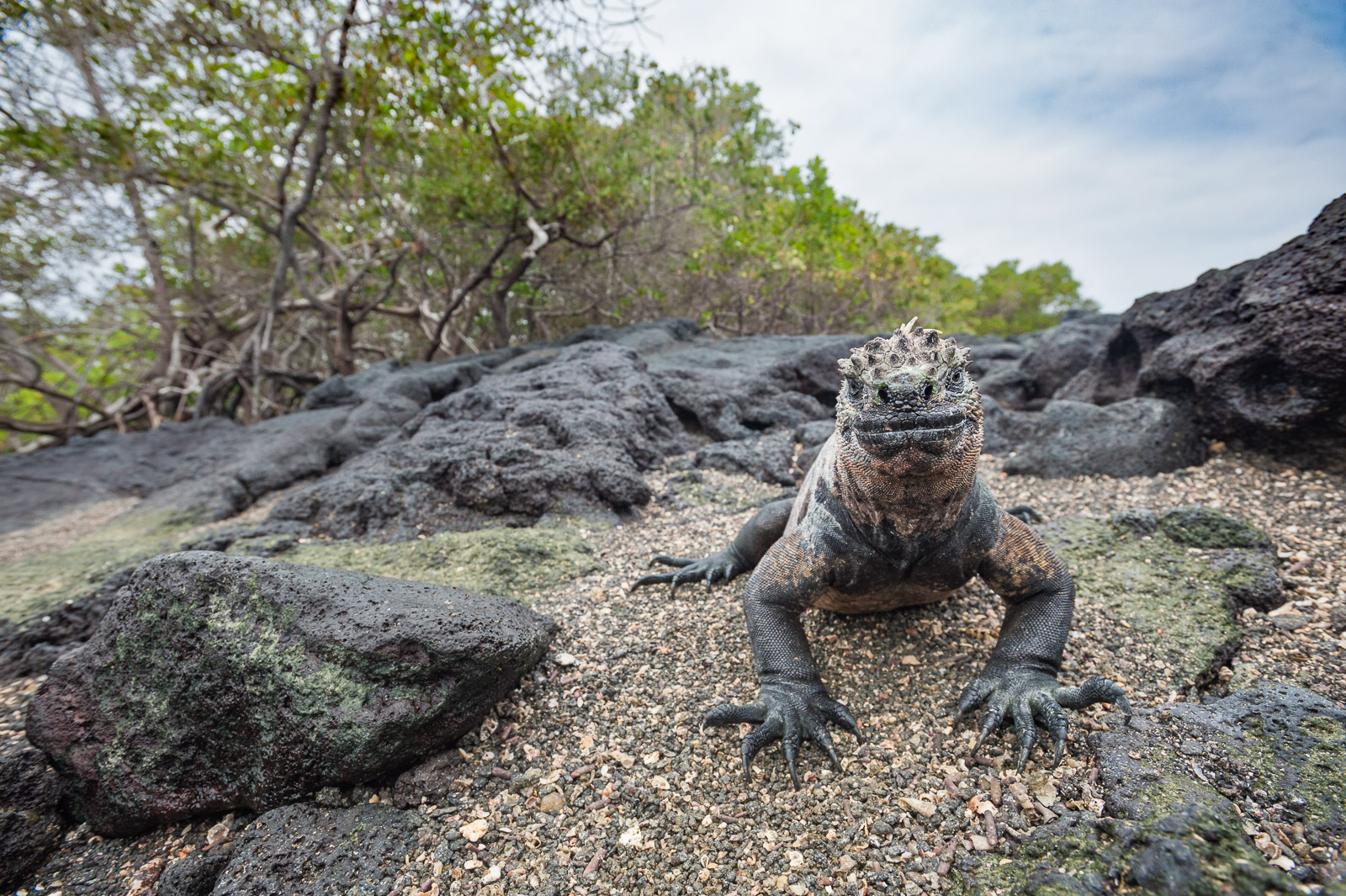
I met this handsome guy on our trip to the Galápagos Islands back in 2012. In fact, I met a lot of these guys. They’re everywhere in the Galápagos and each island has its own slight color variation. This one was on Fernandina Island where they tended to have a bit more orange mixed in with the black, along with a touch of green. As the name suggests, they live in and out of the water. They eat the seaweed and algae on the ocean floor but then return to land to spend a good portion of the day sunning themselves on the volcanic rock of the islands. Nikon D700 with Nikkor 17-35mm lens (at 17mm) ISO 400, f/8 at 1/250th of a second.
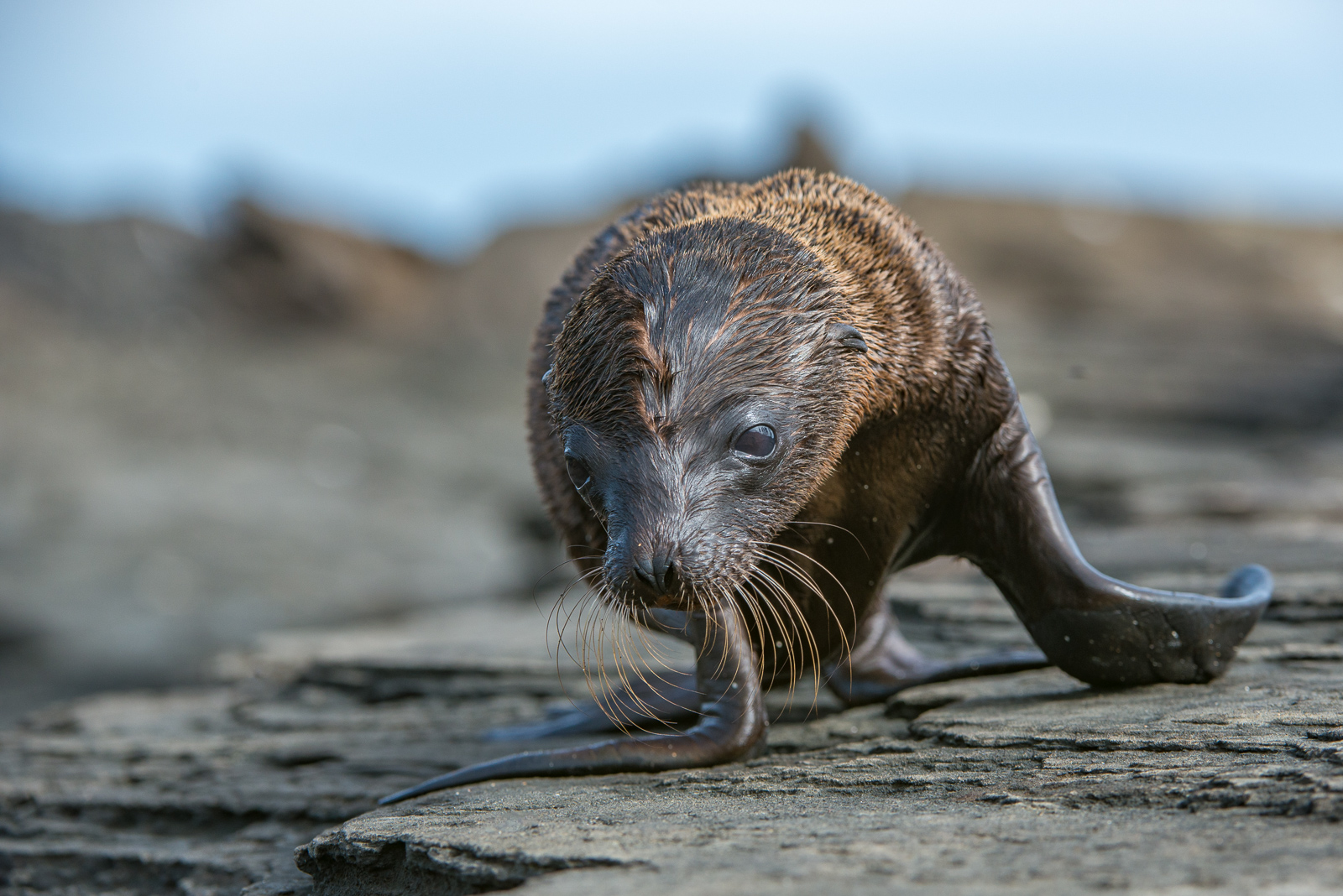
Galápagos sea lions are easy to find. You just have to go to the Galápagos Islands. We not only encountered them on land on each of the islands we visited, we also had the opportunity to swim with them every afternoon. This little guy was just learning how to use those flippers to move across the volcanic rock of Santiago Island. Nikon D800 with Nikkor 200-400mm lens (at 220mm), ISO 400, f/6.3 at 1/640th of a second.
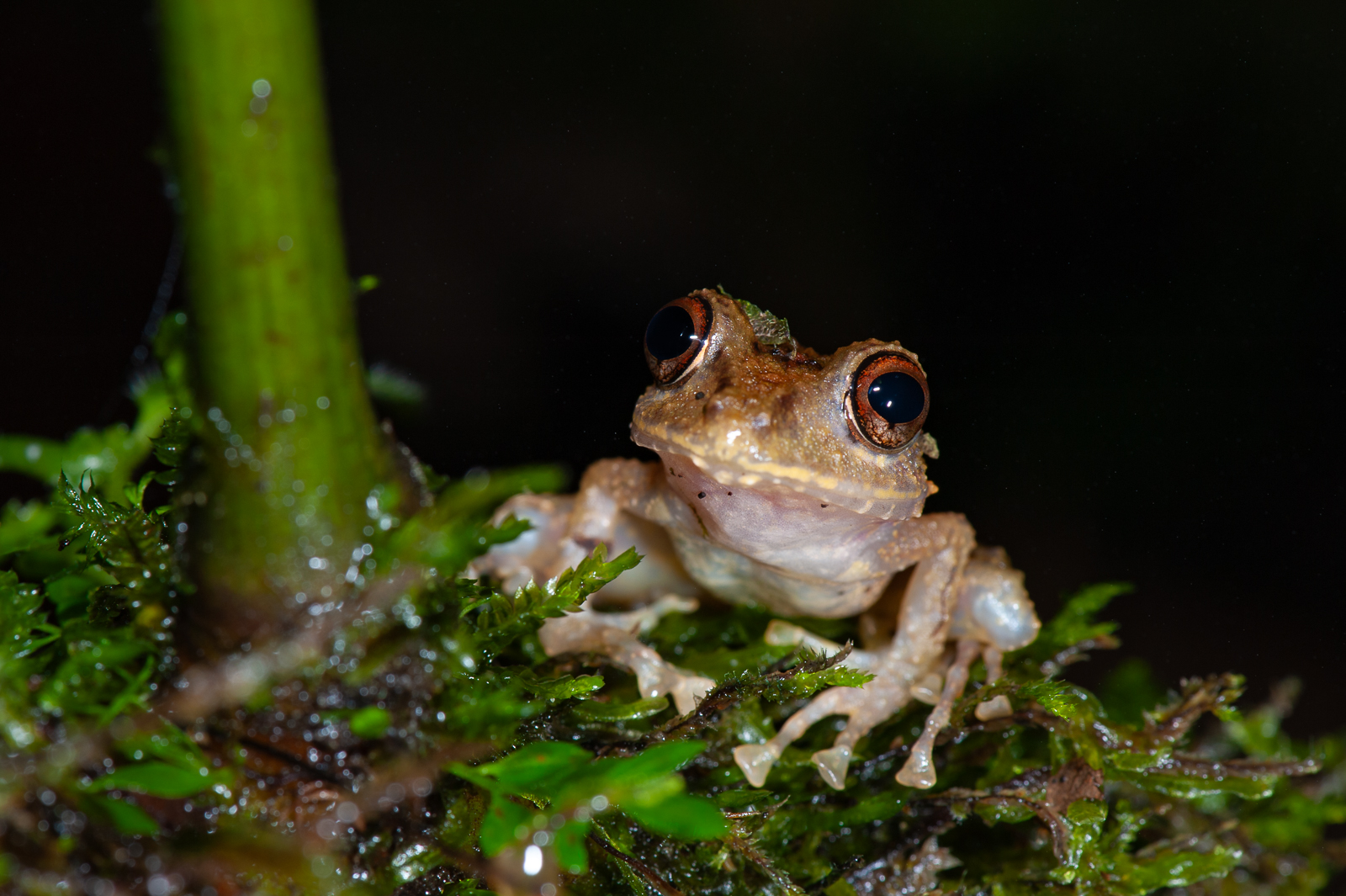
There are many species of rain frog in the cloud forests of South America. I’m not sure which species this is. All I can say is he/she was a tiny little thing we encountered on a nocturnal spotlighting walk in Ecuador. Nikon D700 with Nikkor 105mm macro lens, ISO 200, f/14 at 1/60th of a second, two Nikon SB-900 flash units.
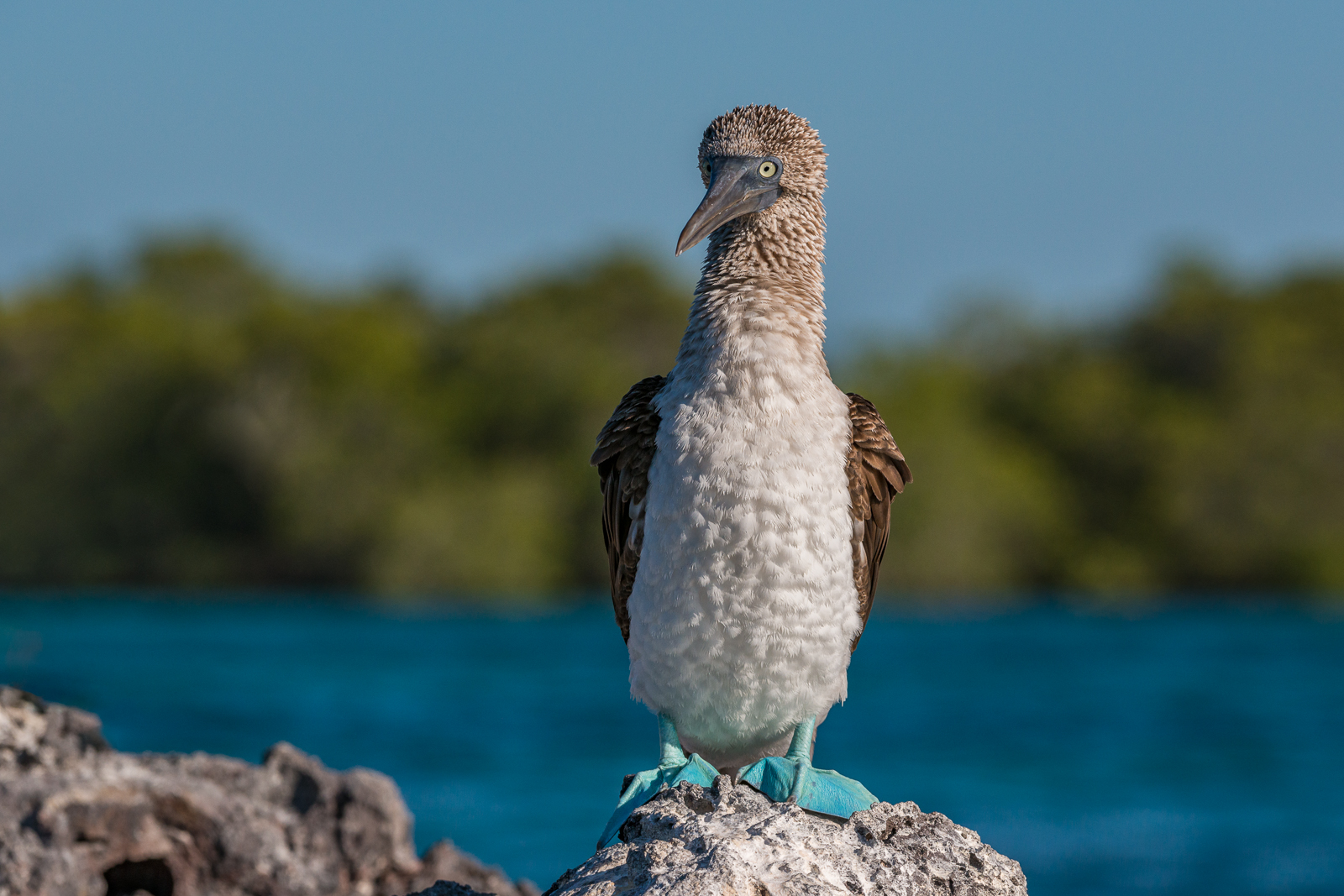
Nothing says Galápagos Islands quite like the blue-footed booby. Well, maybe the Darwin Finch. Or the giant tortoise. Or the Galápagos sea lion. They all make the Galápagos such a great place to visit. Incidentally, those blue feet have a purpose. They are a sexually selected trait. The males strut in front of the females lifting their feet up and down in an elaborate ritual. The best, bluest feet win the prize and pass that sexy blueness on to their offspring. Nikon D800 with Nikkor 200-400mm lens (at 280mm) ISO 400, f/8 at 1/2000th of a second.
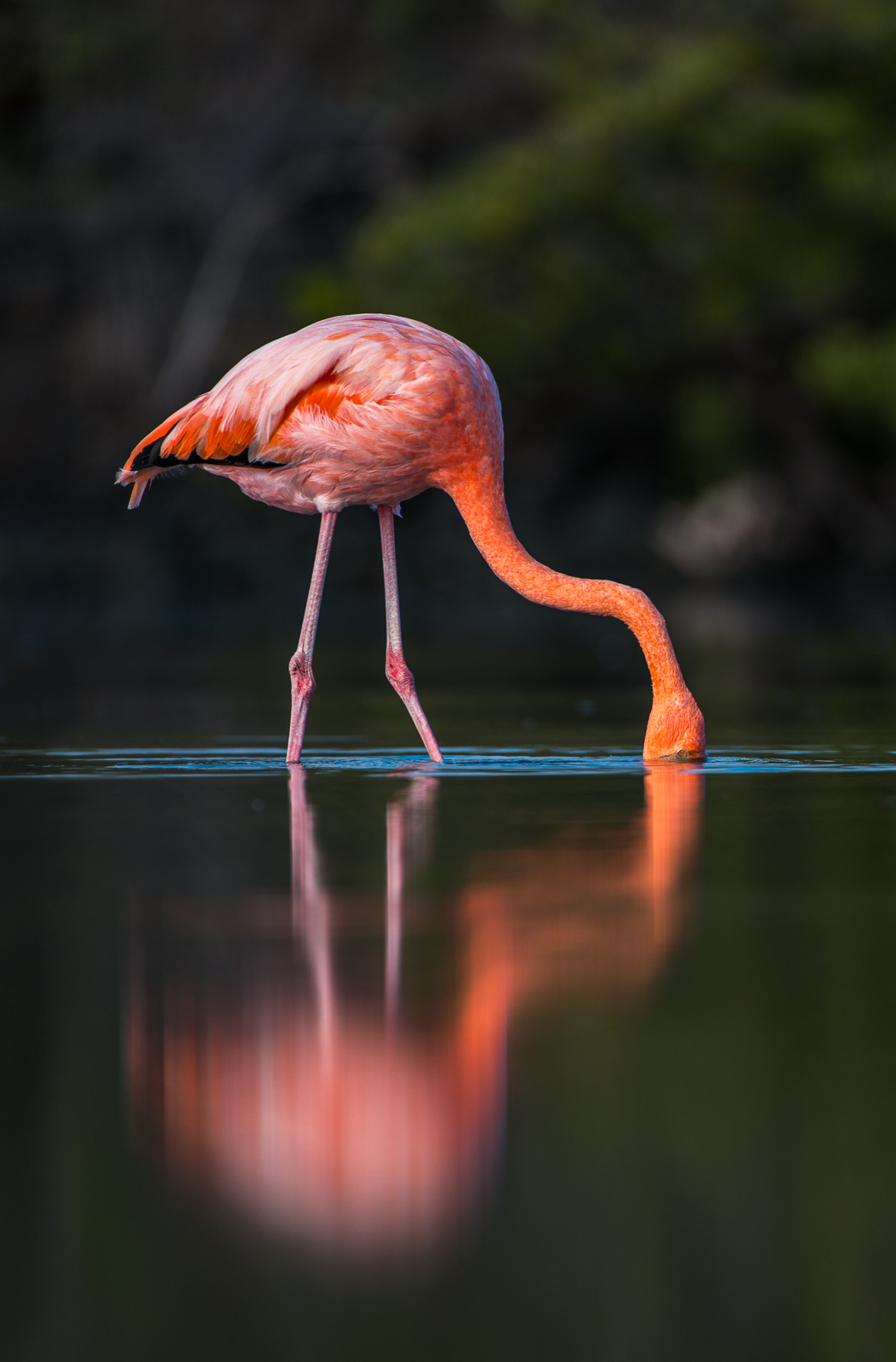
Usually I like to see the heads of my wildlife subjects, but in this case I made an exception. This is an American flamingo, photographed in the Galápagos Islands. It’s the only flamingo with a natural range that includes both North America and the Neotropical realm. Nikon D800 with Nikkor 200-400mm lens (at 400) ISO 400, f/4 at 1/1600th of a second.
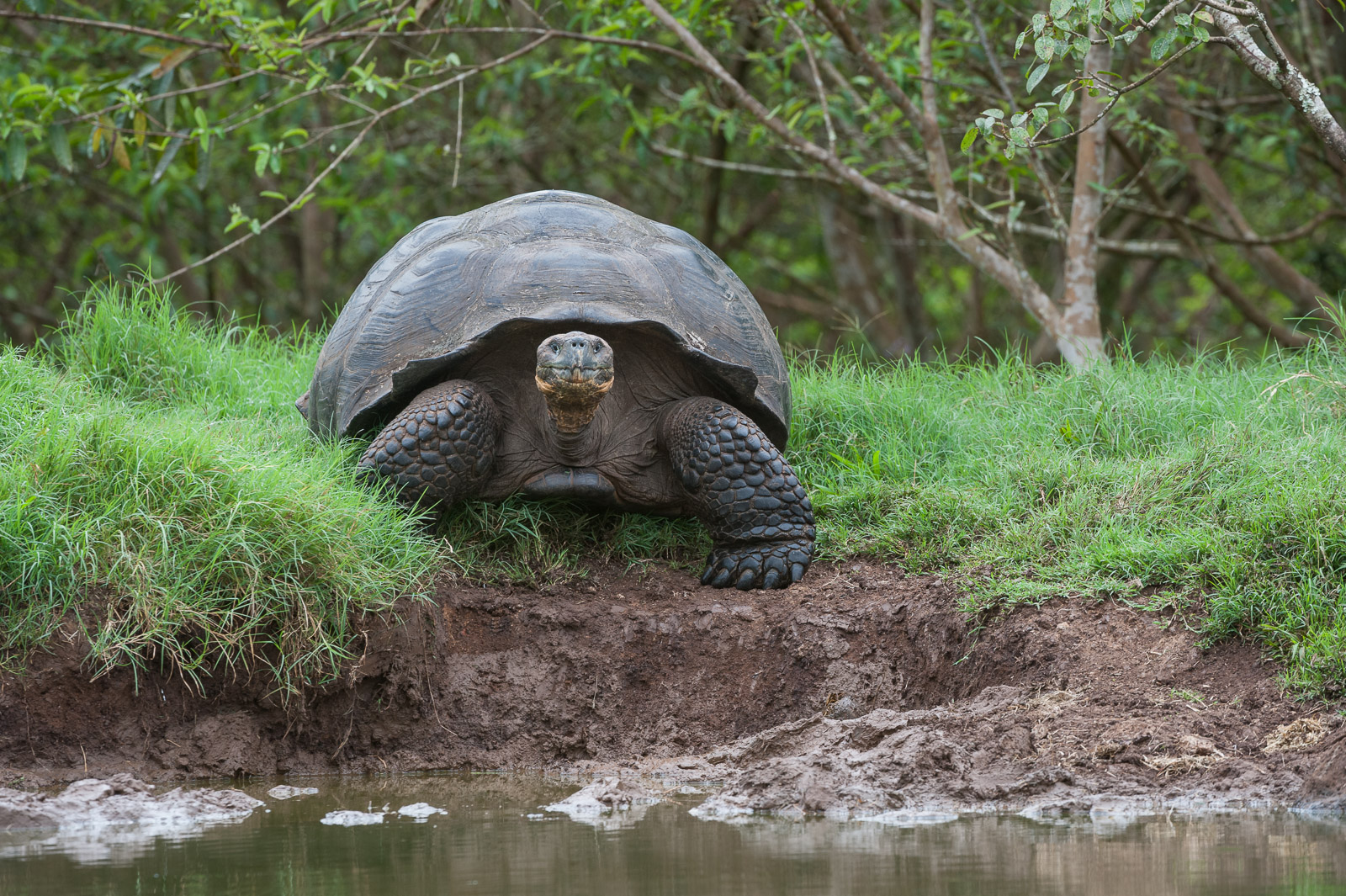
This image gets a little closer to showing a Galápagos giant tortoise in perspective. These guys are really big, weighing in at over 500 pounds. Photographed in the Santa Cruz highlands. Nikon D700 with Nikkor 200-400mm lens (at 400mm) ISO 800, f/8 at 1/160th of a second.
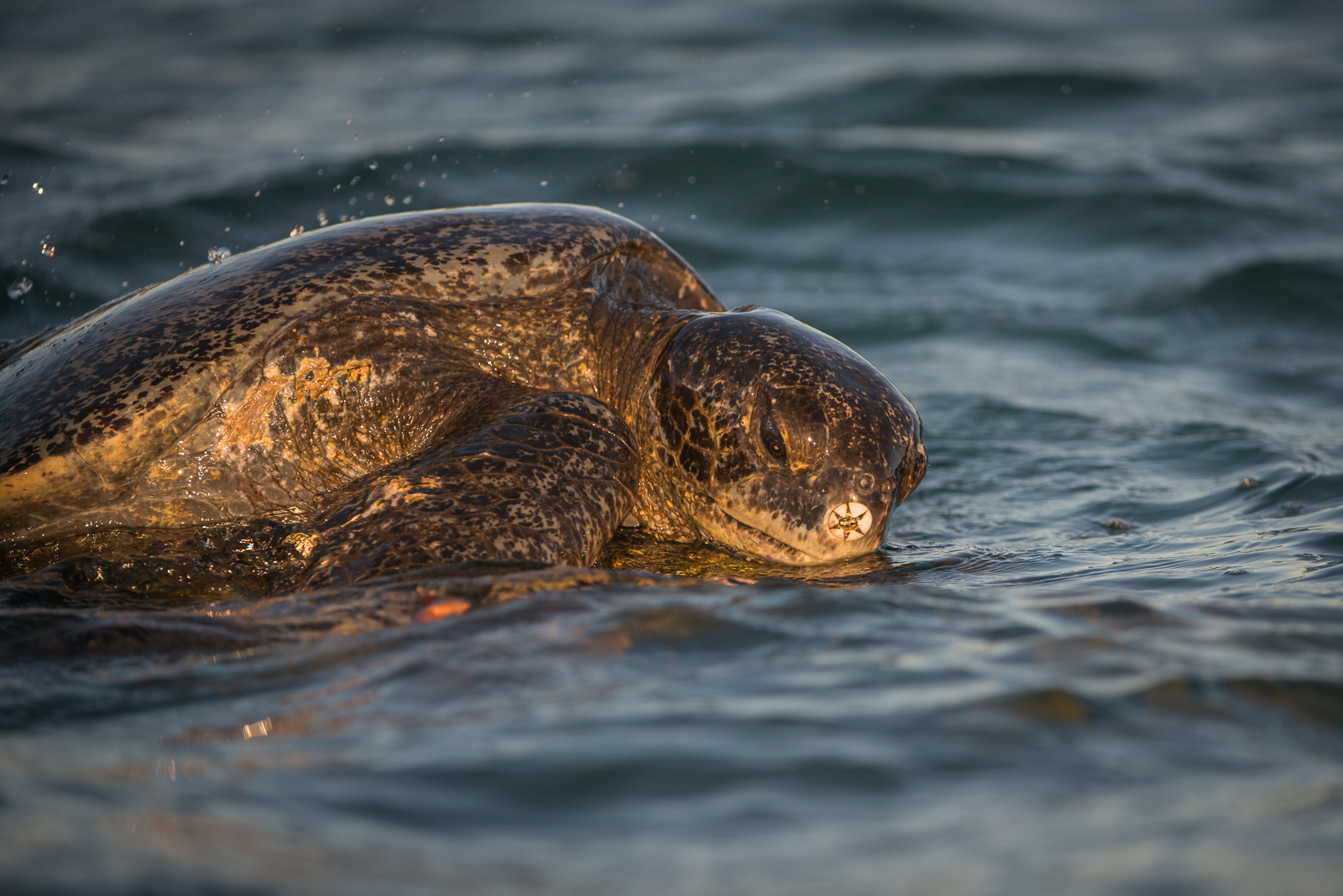
This is actually a Pacific green sea turtle, but that barnacle really picked a conspicuous spot to latch onto. Unfortunately for the turtle (or maybe not) barnacles never move once they attach to a hard surface. You can’t tell from this photo, but there’s a second turtle just under the water and the two were mating. Photographed off Isabella Island in the Galápagos Islands of Ecuador. Nikon D800 with Nikkor 200-400mm lens (at 280mm) ISO 800, f/4 at 1/3200th of a second.
We use cookies to enhance your experience while using our website. If you are using our Services via a browser you can restrict, block or remove cookies through your web browser settings. We also use content and scripts from third parties that may use tracking technologies. You can selectively provide your consent below to allow such third party embeds. For complete information about the cookies we use, data we collect and how we process them, please check our Privacy Policy