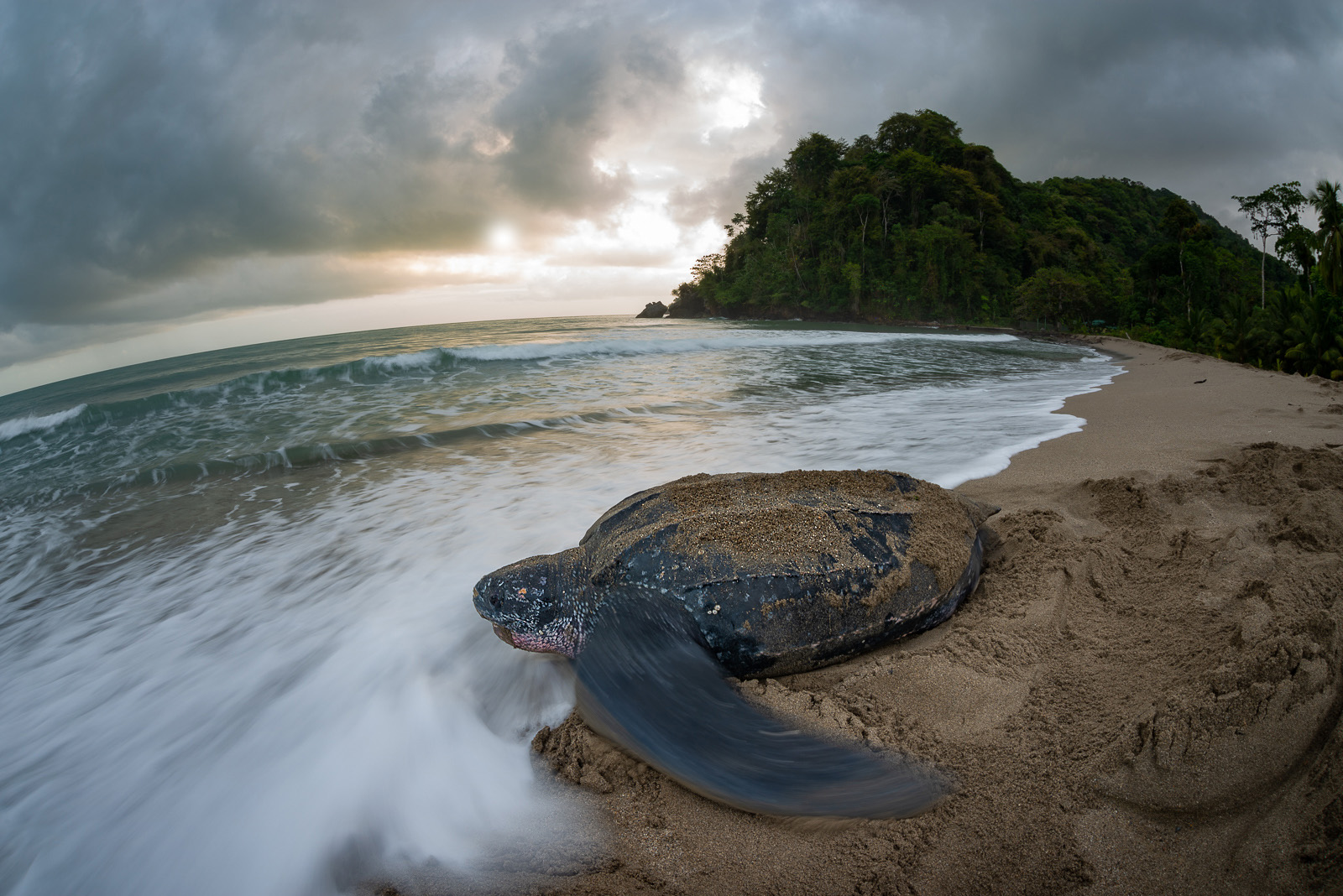
Emerging from the ocean under cover of night, female leatherback turtles, sometimes over 1,000 pounds, slowly haul themselves up the beach to dig a deep nest with their powerful rear flippers. They lay around 80 to 100 soft, ping-pong-ball-sized eggs, then carefully cover them with sand to hide them from predators. Once the task is complete, they lumber back to sea, leaving the next generation to incubate and hatch on their own. Nikon D800 with Sigma 15mm fisheye lens, ISO 50, f/22 at 1/3 of a second.
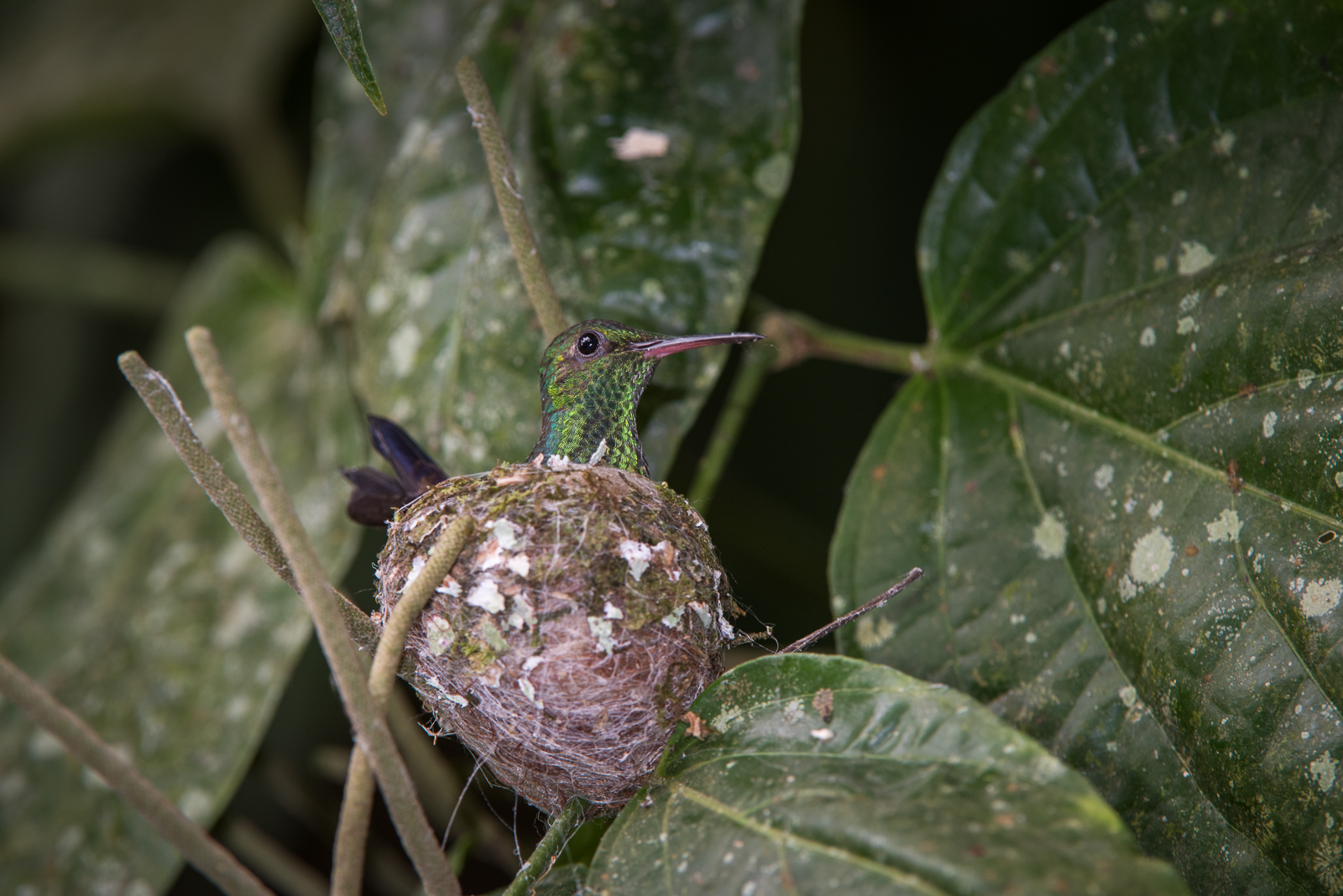
I spotted this copper rumped hummingbird in its nest while visiting the highlands of Trinidad. Hummingbird nests are very small. About the size of a golf ball, but intricately woven from soft plant fibers, spider silk, and bits of lichen for camouflage. The spider silk gives the nest flexibility, allowing it to stretch as the chicks grow. Typically built on thin branches or sheltered spots, the nests are marvels of engineering, designed to hold two jellybean-sized eggs. They can be very tough to spot, blending seamlessly into their surroundings. Nikon D810 with Nikkor 200-400mm lens (at 400mm), ISO 400, f/8 at 1/60th of a second.
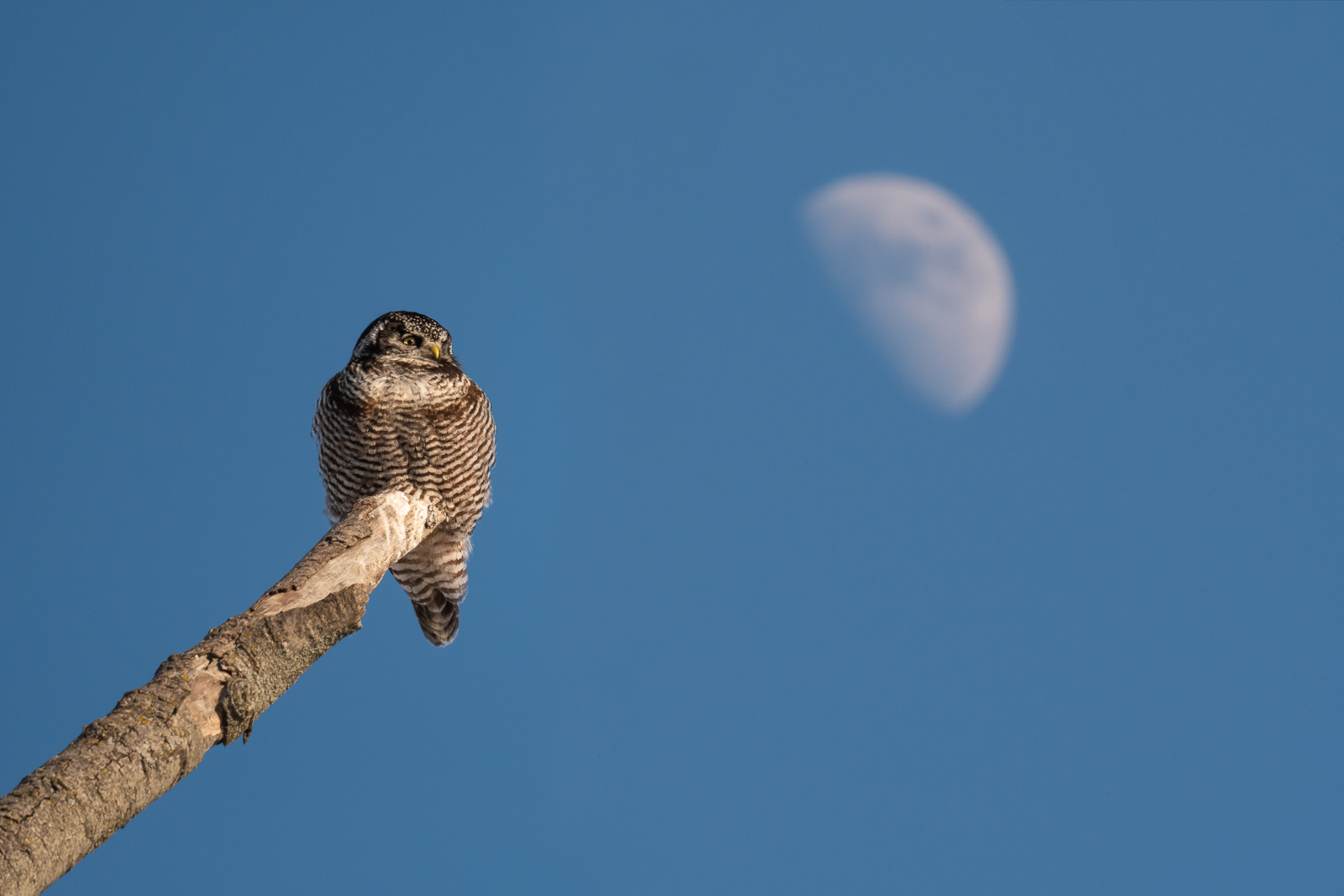
I started the year with a trip to northern Minnesota and got a few good looks at a northern hawk owl.
In February, I was featured on a follow-up story on Fox 61 News.
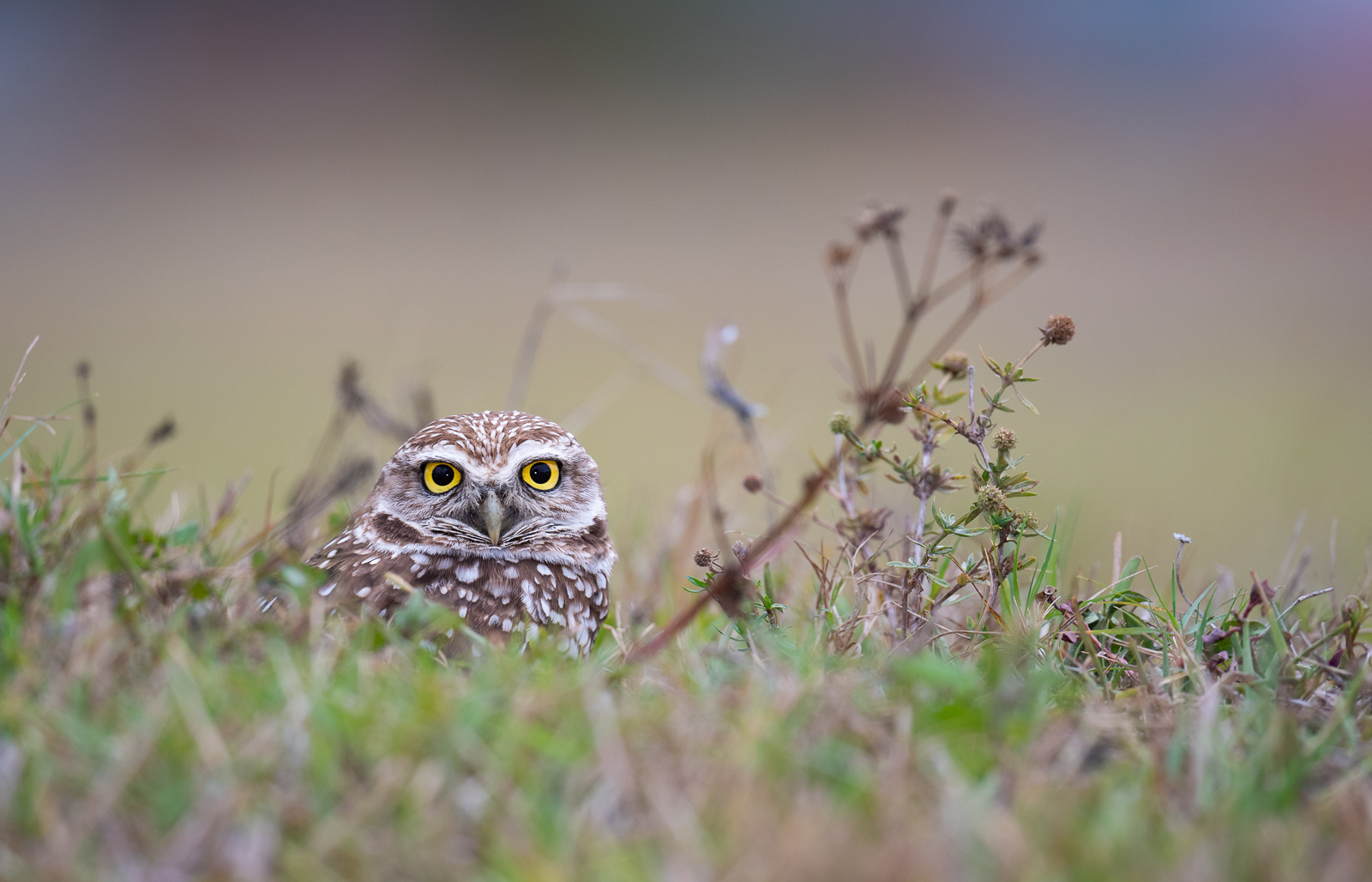
In March, I ran into a few regulars down in Florida, including a burrowing owl…
And a great blue heron with breakfast.
In April, I traveled to Peru for the second time in two years to see what I could find in the northern Amazon basin. I certainly wasn’t expecting a dark morph of a southern tamandua.
I also got great looks at sloths, including this rather hungry three-toed sloth.
On my trip to Peru in 2022, I missed out on the Uakari poison frog, but I found him this time.
I also finally found Mowgli, a rather friendly woolly monkey.
Back home in June, I found a few suburban beaver dams near my house.
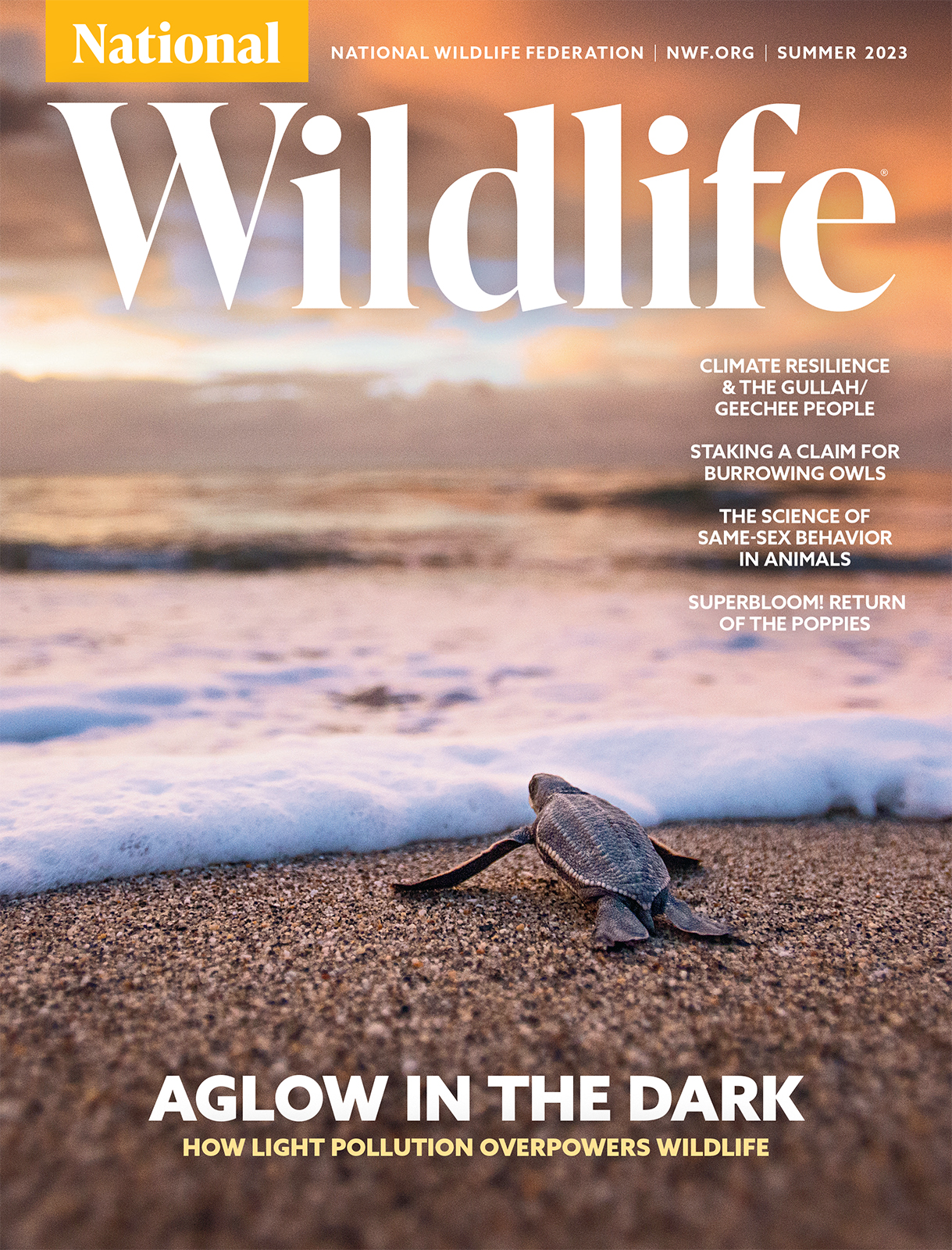
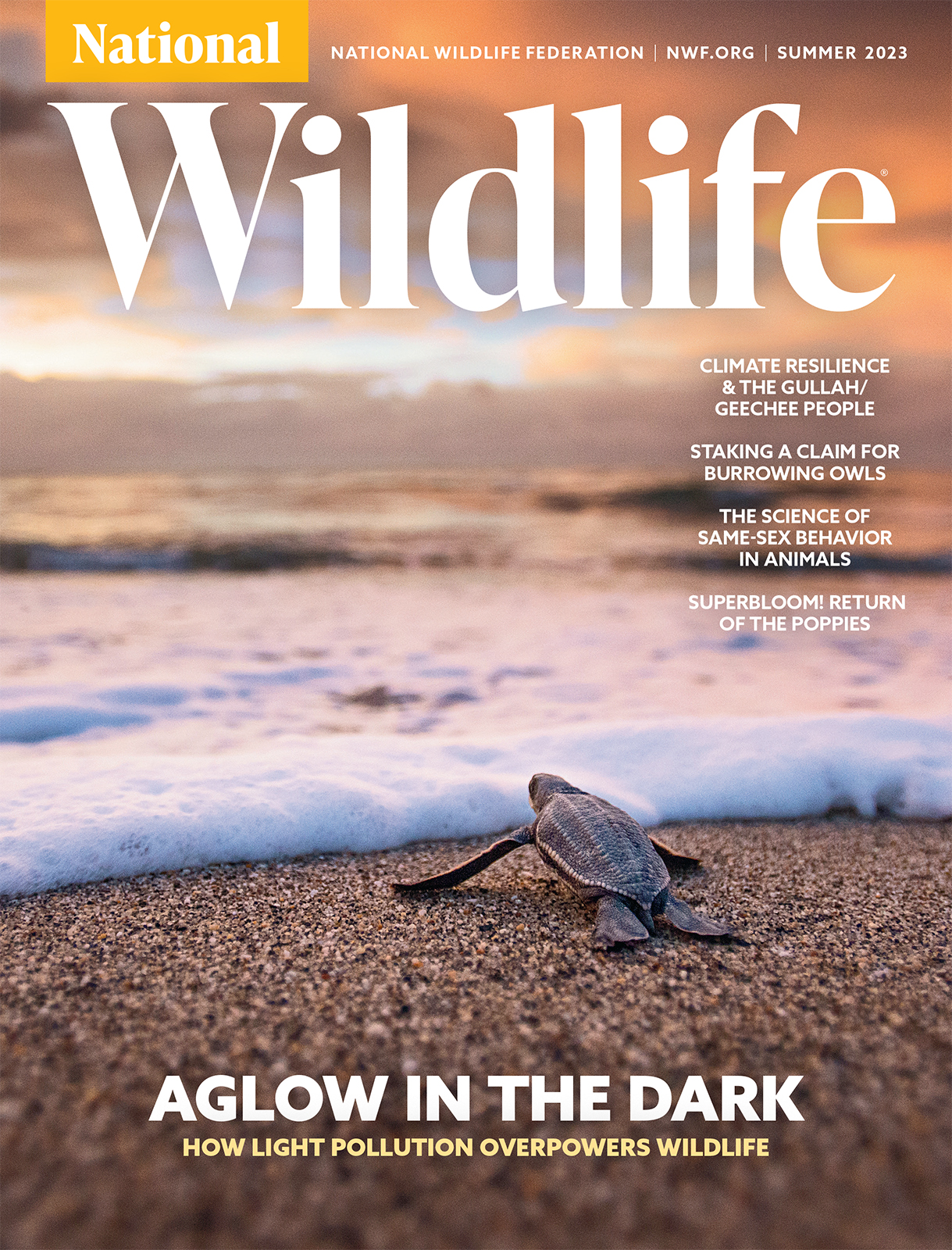
And was honored to have my image of a leatherback hatchling on the cover of National Wildlife magazine’s summer issue.
We led another tour to Africa in late June/early July where I captured these rhinos on day one in Kenya.
Toward the end of the trip, it was back to Uganda for mountain gorillas, including this playful two-year old.
My camera trap continued to record all the backyard action, and in November captured this young black bear out for a stroll in the middle of the day.
Just back from Africa this afternoon. Great trip but still need to download all images. In the meantime, the Summer 2023 issue of National Wildlife magazine came out while I was away. The cover features my image of a leatherback sea turtle hatchling photographed in Trinidad a few years back. A link to the digital issue can be found here.
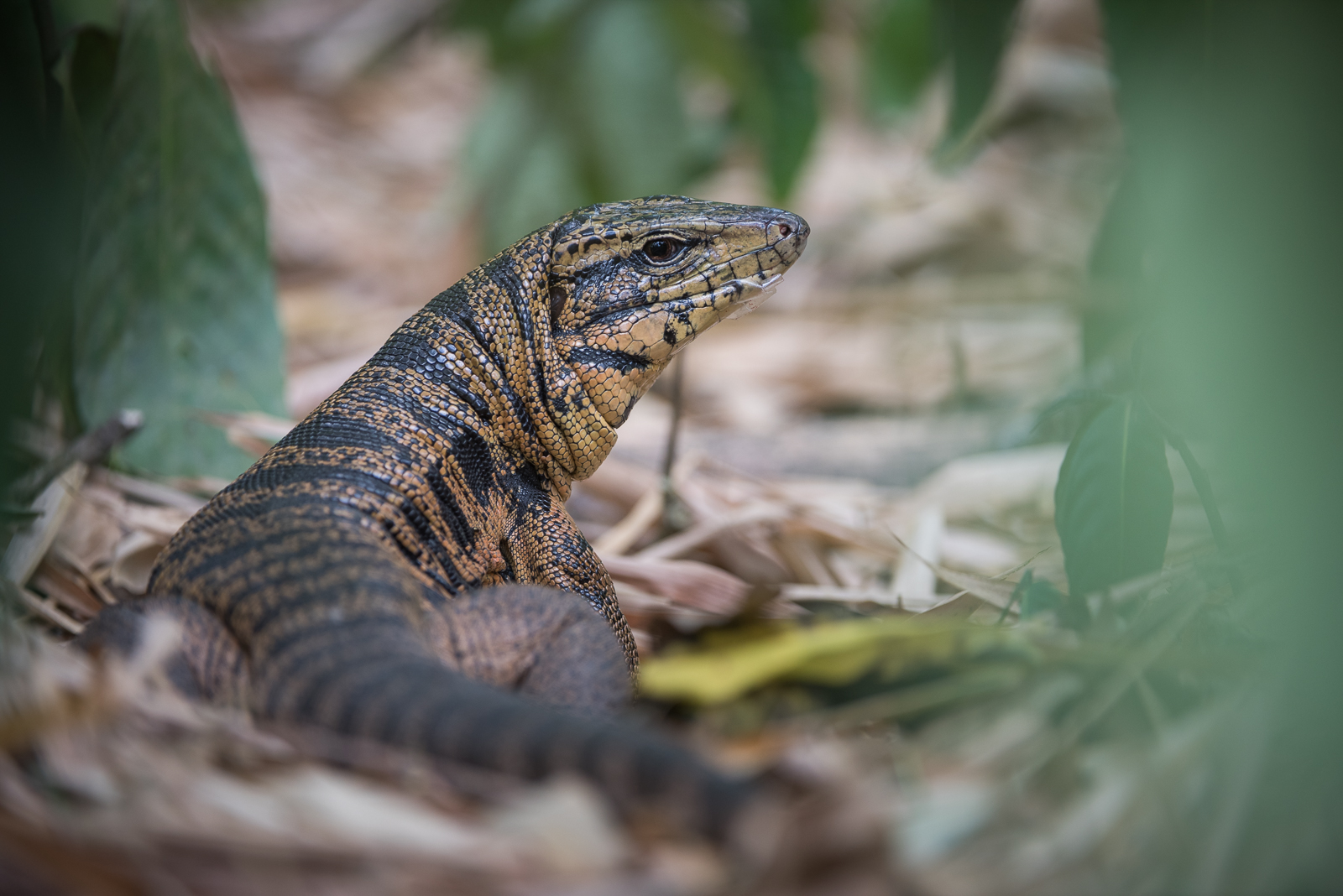
The golden tegu is a large lizard, growing to 3 feet and weighing 9 pounds. I came across this one in Trinidad. He was working his way through a rat, which was hidden in that leaf litter. Nikon D810 with Nikkor 200-400mm lens (at 290mm) ISO 400, f/4 at 1/100th of a second.
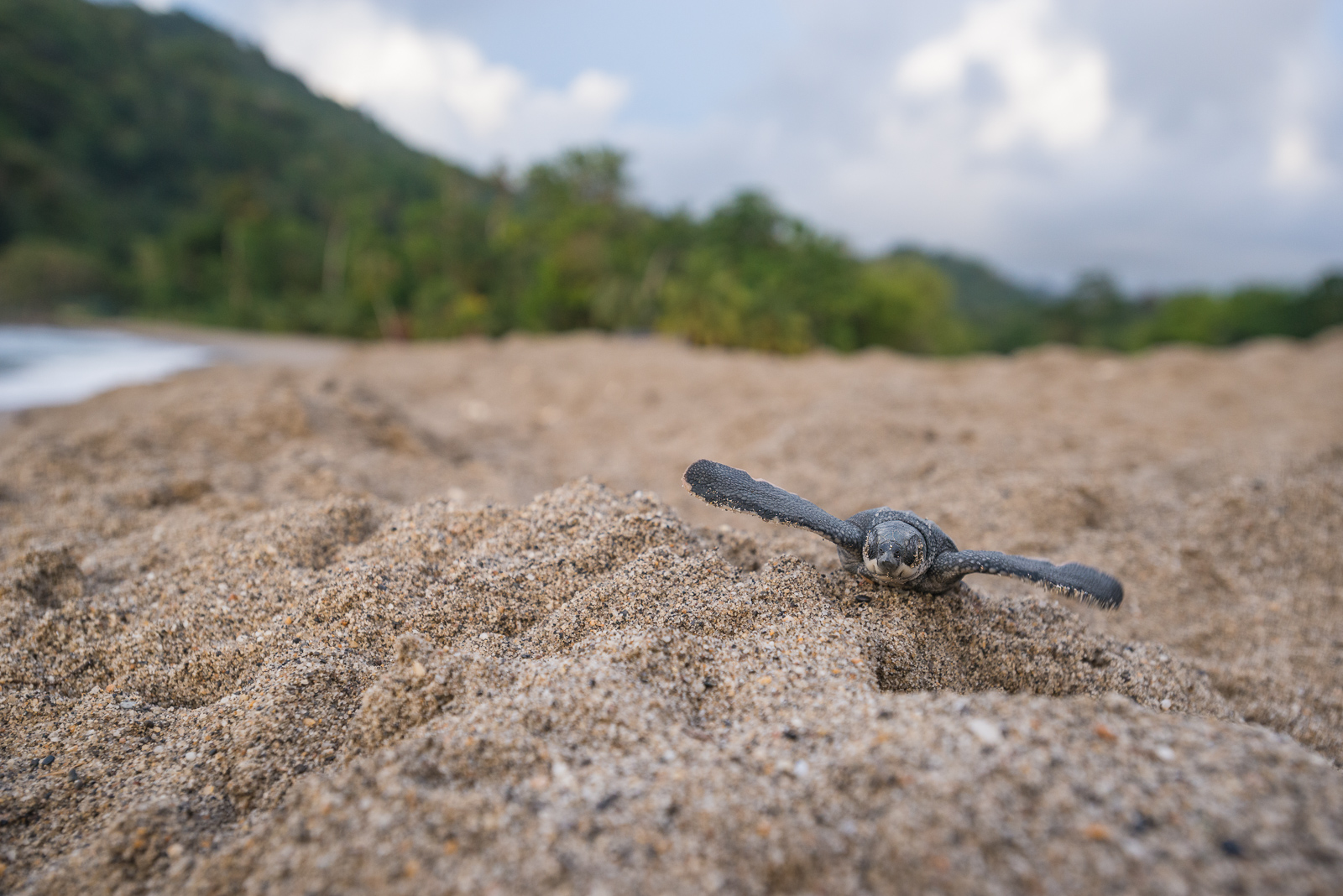
This leatherback hatchling had just emerged from beneath the sand (along with about 80 siblings) and was making the perilous dash to the ocean. Not only were there many vultures waiting for the opportunity to strike, the terrain wasn’t exactly hospitable. My presence kept the vultures away and the little turtle summoned up the energy to navigate the mounds of sand left by the mothers who were laying their eggs the night before. Nikon D800 with Nikkor 17-35mm lens (at 35mm) ISO 800, f/5 at 1/400th of a second.
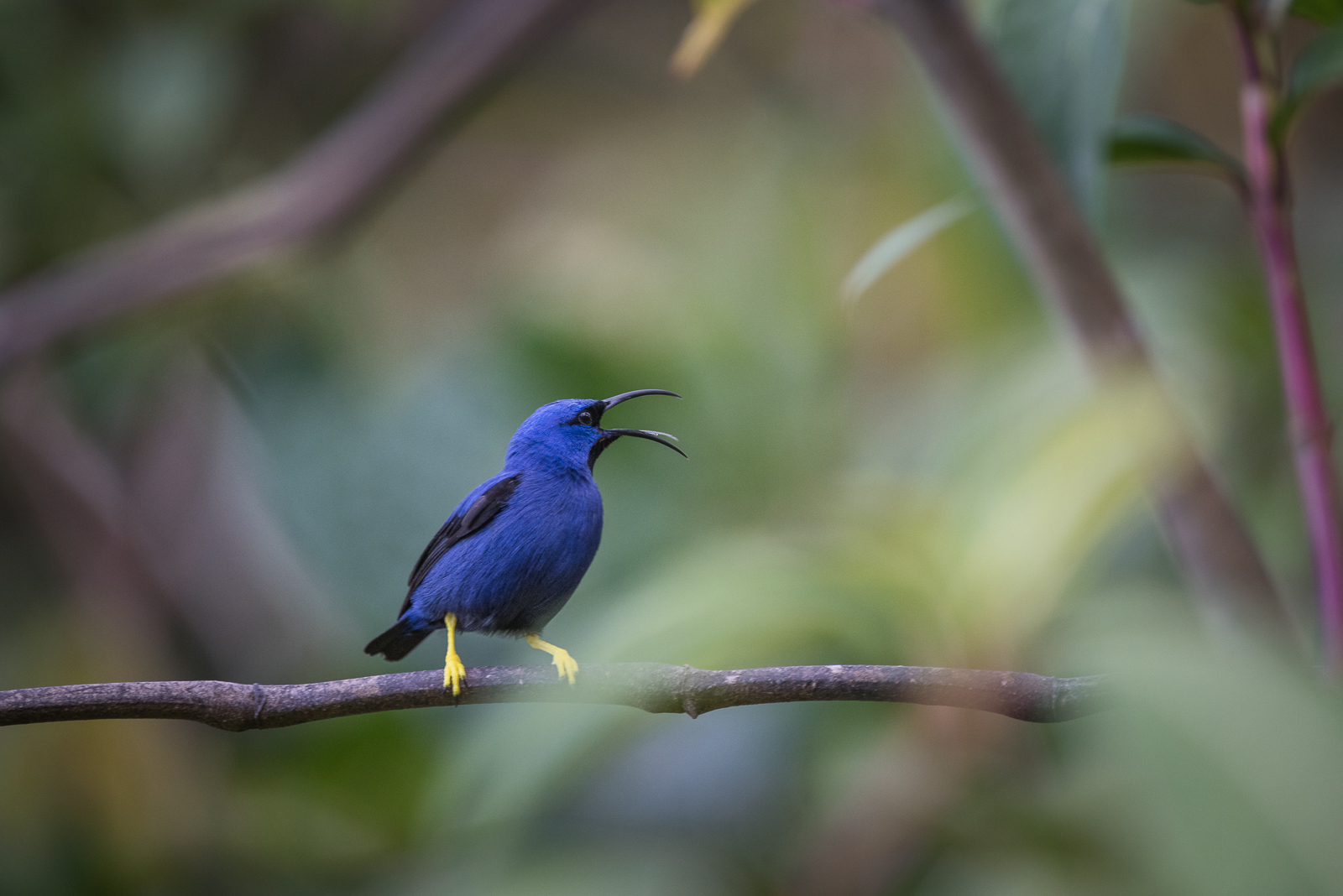
Purple honeycreepers are small little things — not all that much bigger than a hummingbird. They are in the tanager family and live throughout the northern half of South America and into the Caribbean. I photographed this one in Trinidad. Nikon D810 with Nikkor 200-400mm lens (at 400mm) ISO 800, f/4 at 1/400th of a second.
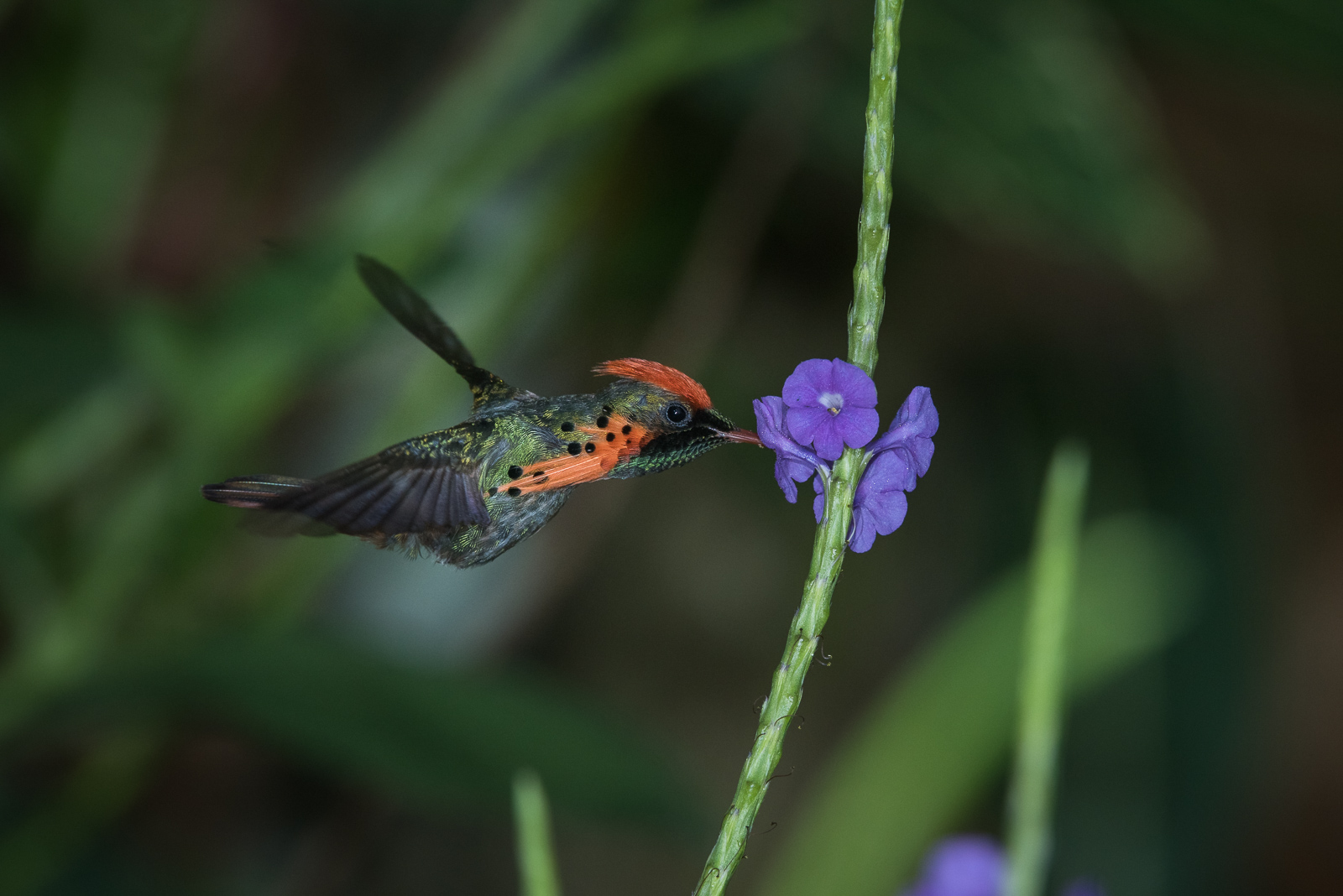
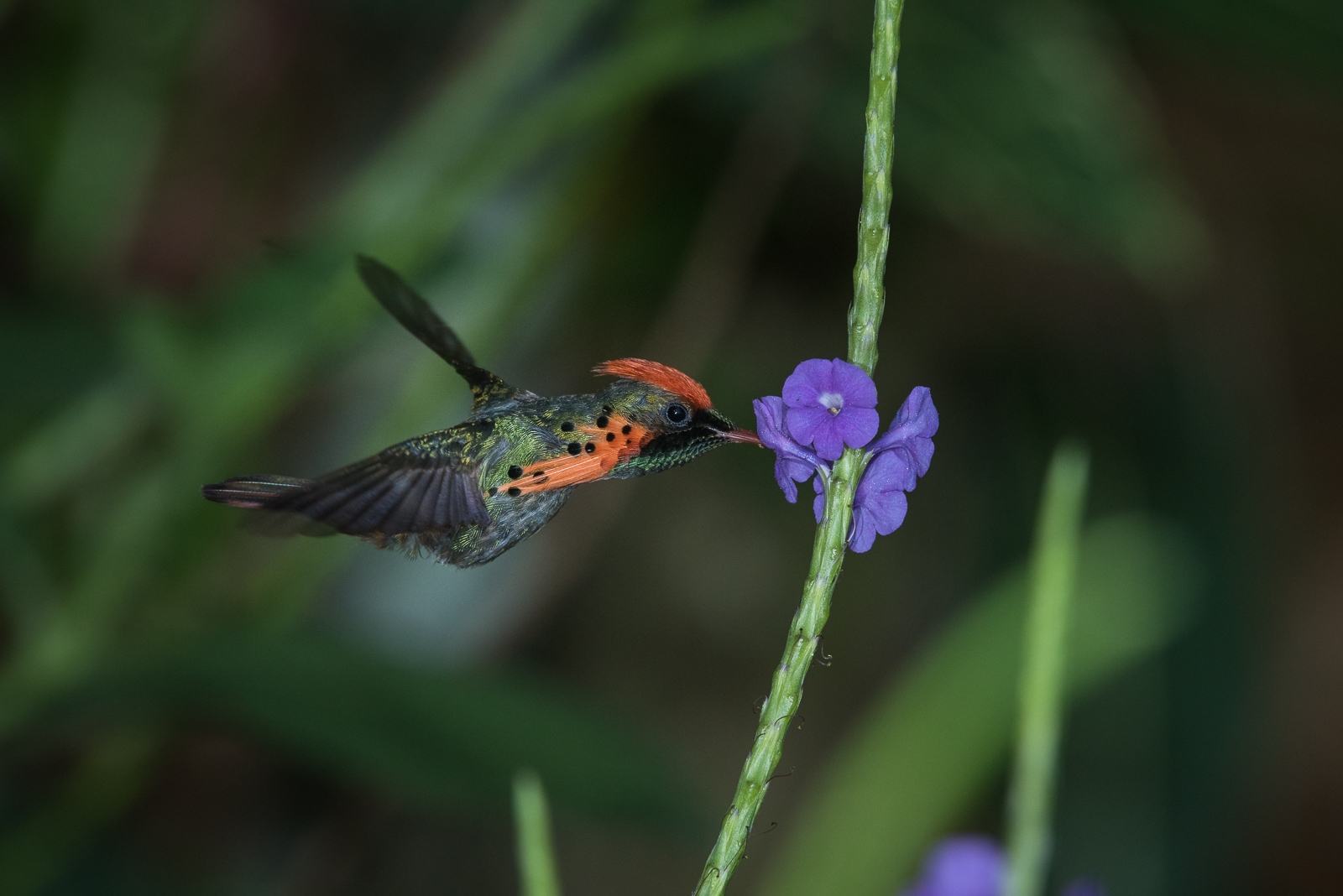
Hummingbirds are small. The tufted coquette is small for a hummingbird. These guys almost looked like large bees as they buzzed around the flowers at the Asa Wright Nature Center in Trinidad. I didn’t see too many of them but was able to grab a handful of shots nonetheless. The males exhibit brighter colors than the females, characterized by that great tuft of orange on the head and those spotted throat feathers. Nikon D810 with Nikkor 200-400mm lens (at 400mm) ISO 800, f/13 at 1/250th of a second.
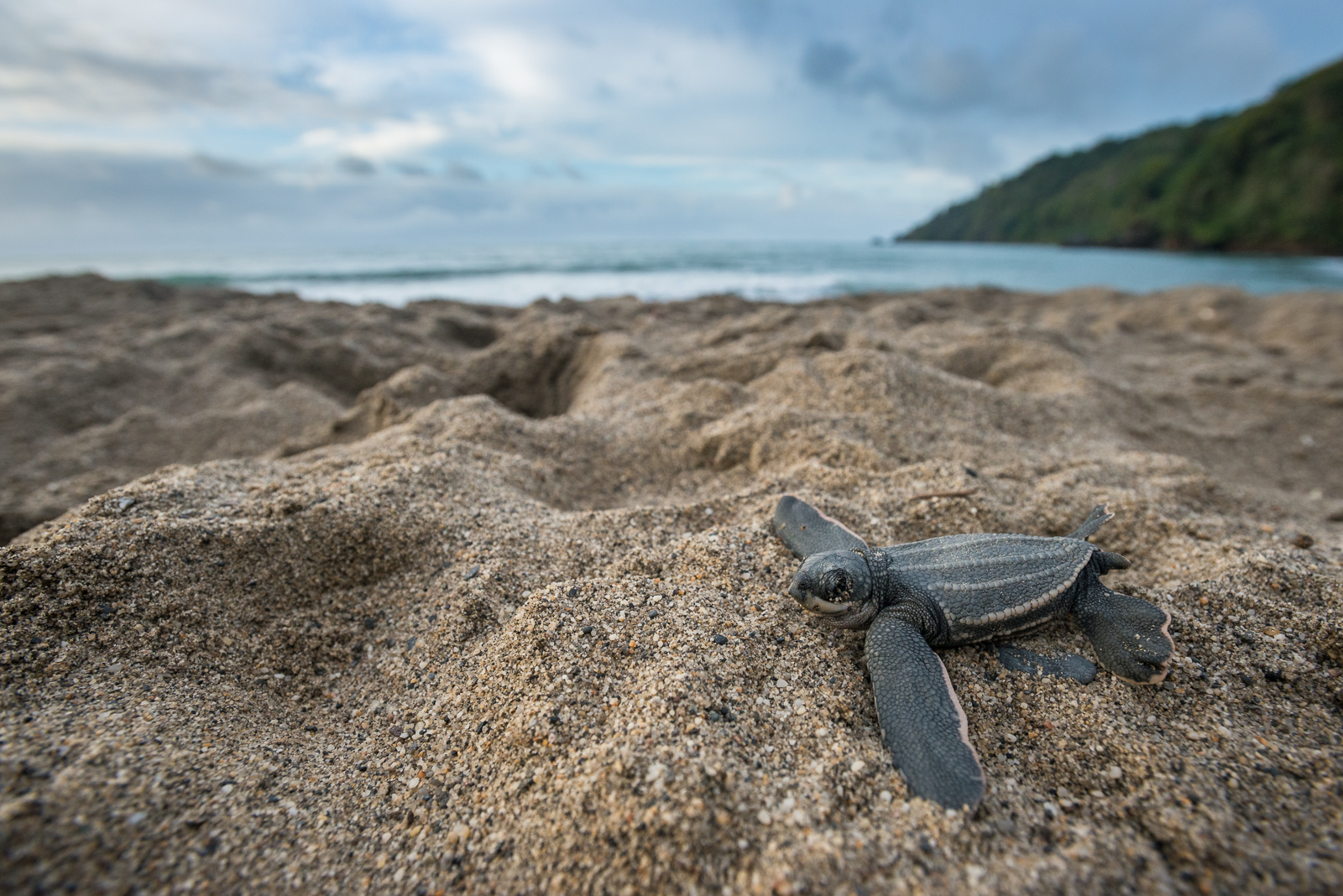
A leatherback hatchling — just hatched — gets its bearings before making the arduous dash to the sea. Photographed in Grande Riviere on the island of Trinidad. Nikon D800 with Nikkor 17-35mm lens (at 17mm) ISO 800, f/5 at 1/640th of a second.
A female leatherback turtle heads home after a night of laying eggs on Grande Riviera Beach in Trinidad. These turtles return to the very beach that they were born, 15 to 25 years later, to lay their eggs. After an incubation period of roughly 60 days, the eggs will hatch and the mad dash for survival will begin for the next generation of leatherbacks. I used a slow shutter speed with the camera mounted on a tripod to selectively blur the flipper and the surf. Nikon D800 with Sigma 15mm fisheye lens, ISO 50, f/18 at .3 seconds.
We use cookies to enhance your experience while using our website. If you are using our Services via a browser you can restrict, block or remove cookies through your web browser settings. We also use content and scripts from third parties that may use tracking technologies. You can selectively provide your consent below to allow such third party embeds. For complete information about the cookies we use, data we collect and how we process them, please check our Privacy Policy