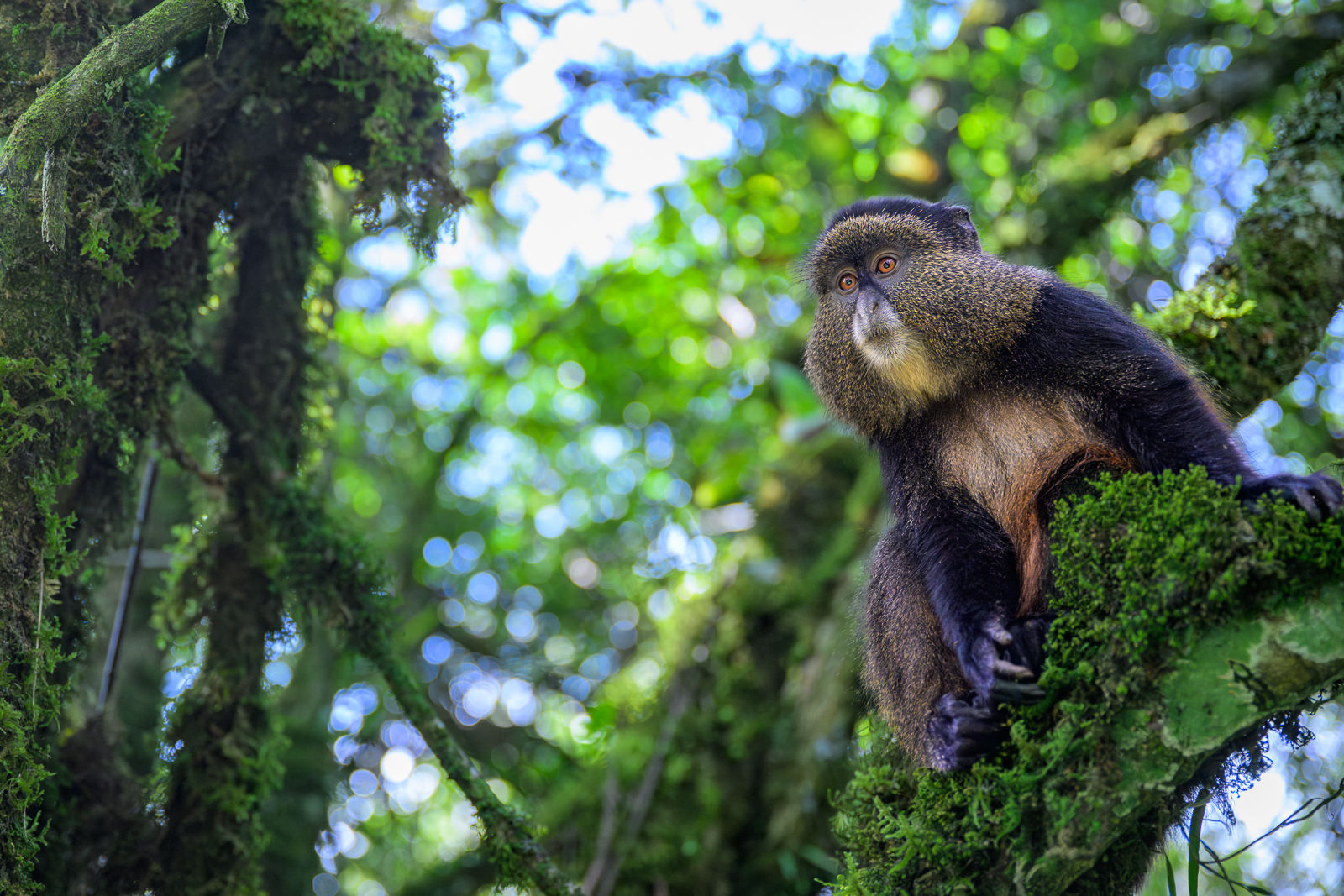
On our trips to Uganda and Rwanda to see mountain gorillas, we always like to build in an extra day to trek to see another endangered primate — the golden monkey. The live in high-altitude bamboo forests where they specialize in feeding on bamboo shoots, making them one of the few primates adapted to this unique mountain habitat.Nikon Z8 with Nikkor 24-70mm lens (at 53mm) ISO 1800, f/2.8 at 1/1250th of a second.
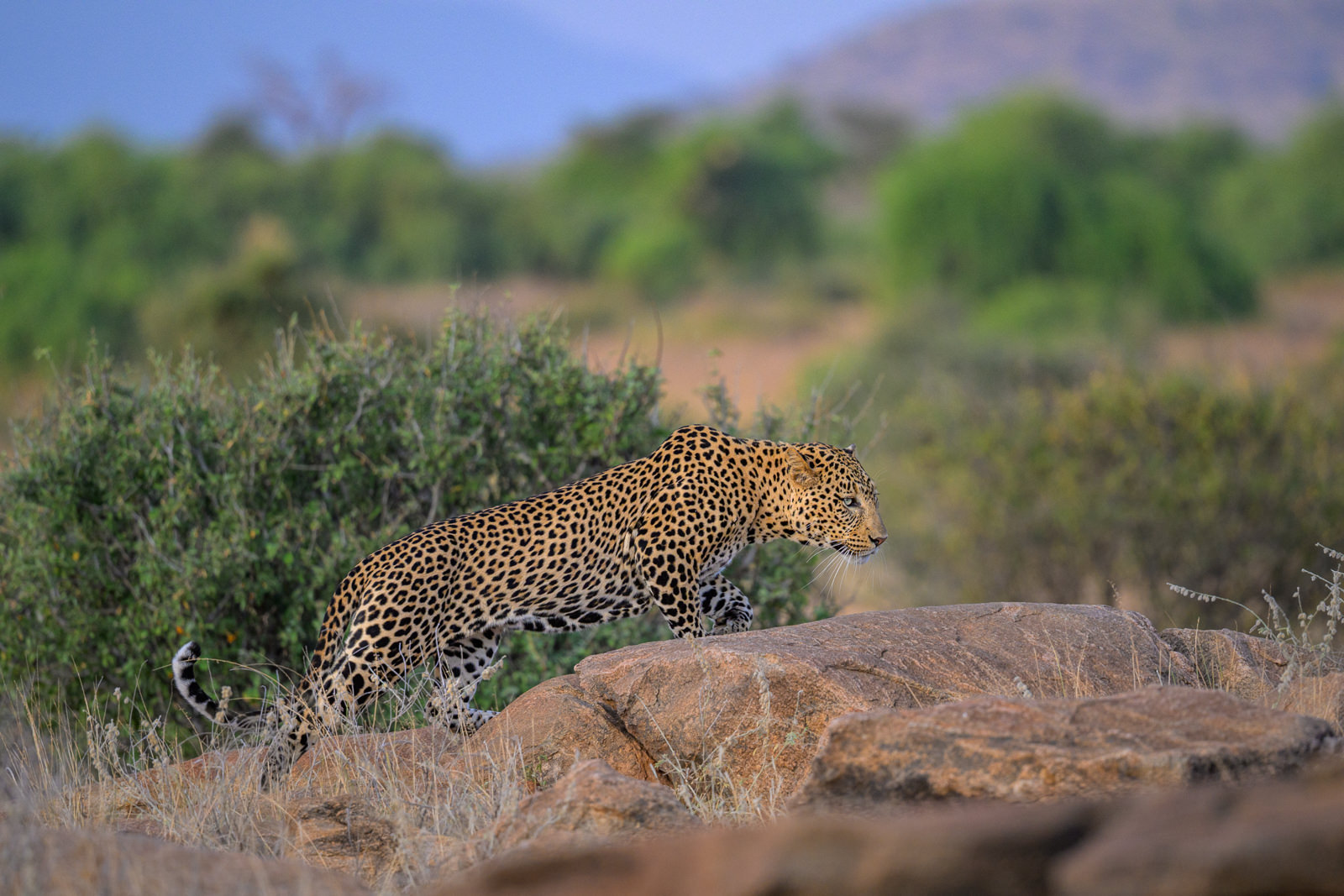
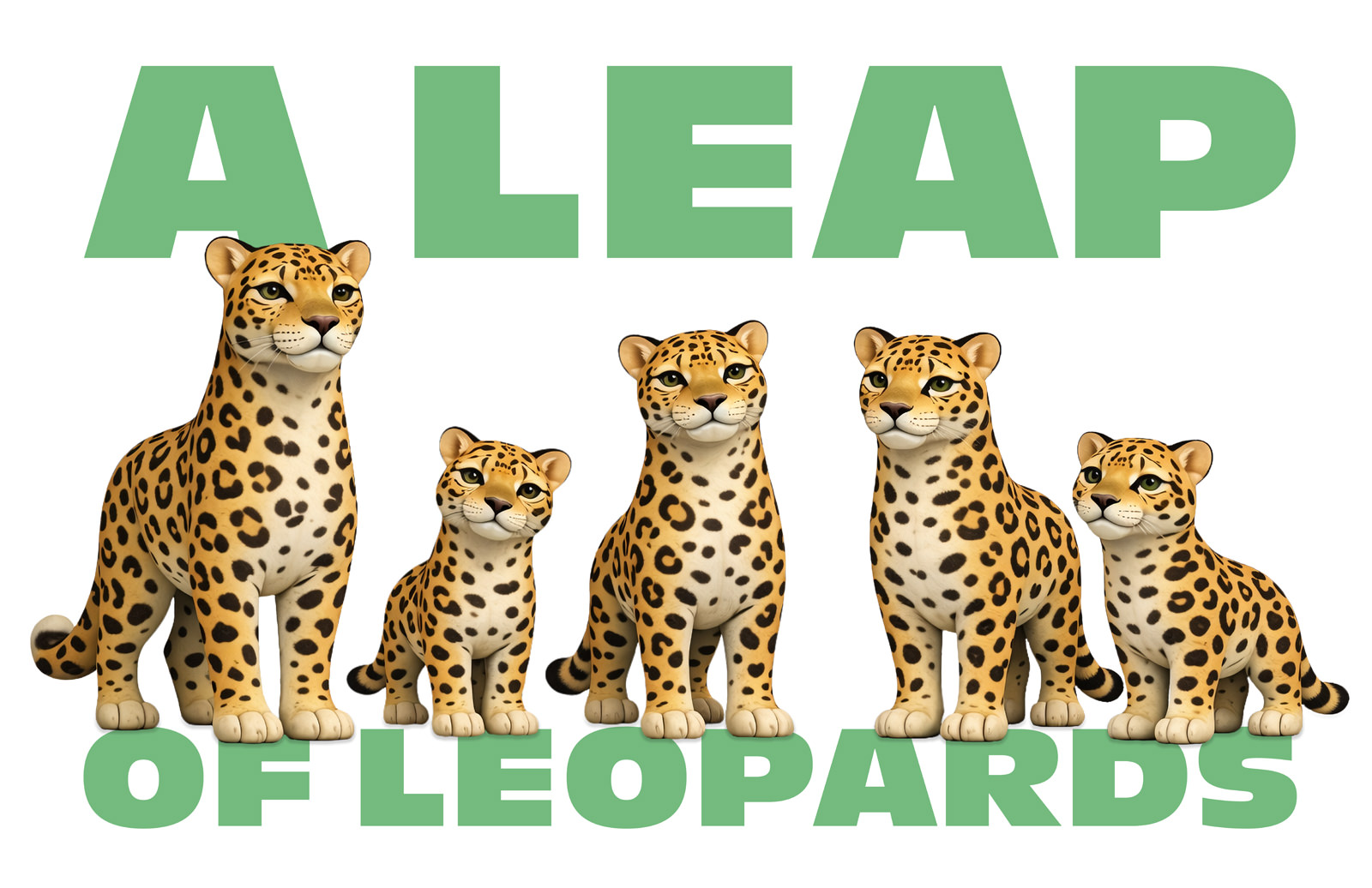
Leopards are almost always solitary unless it’s a mother with her offspring, or two adults come together to mate. I’ve seen lots of leopards over the years, but only once have I seen more than one at a time and that was a mother with her almost-full-size cub. But as with most species, they do have a fun name for a group of them. Leopards are incredibly powerful jumpers, capable of launching themselves into trees or onto prey with sudden force, so “leap” fits the bill. I photographed this solitary adult male this past June in Kenya. To get your Leap of Leopards merchandise, visit Species Limited. Nikon Z8 with Nikkor 500mm PF lens, ISO 1400, f/5.6 at 1/1600th of a second.
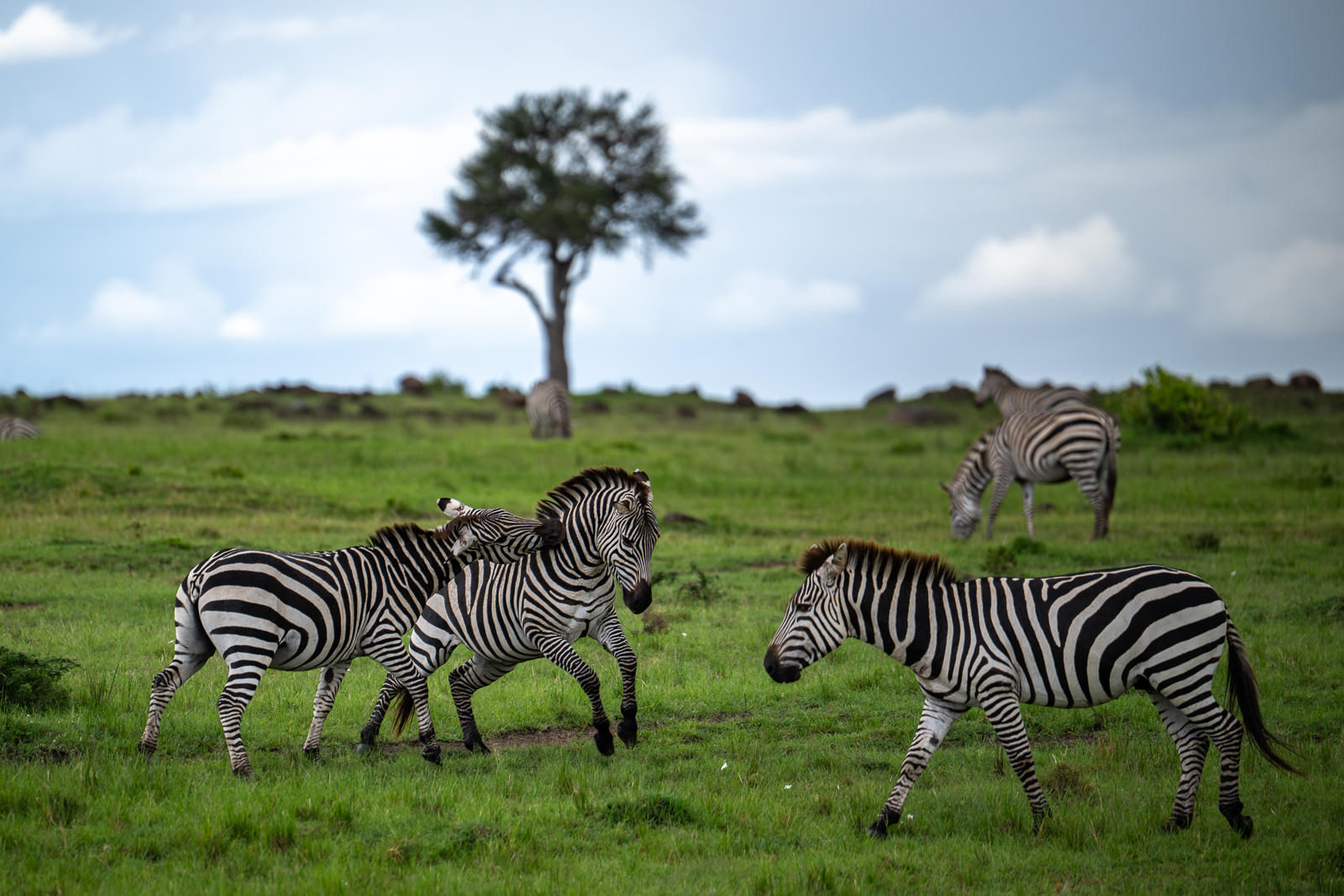
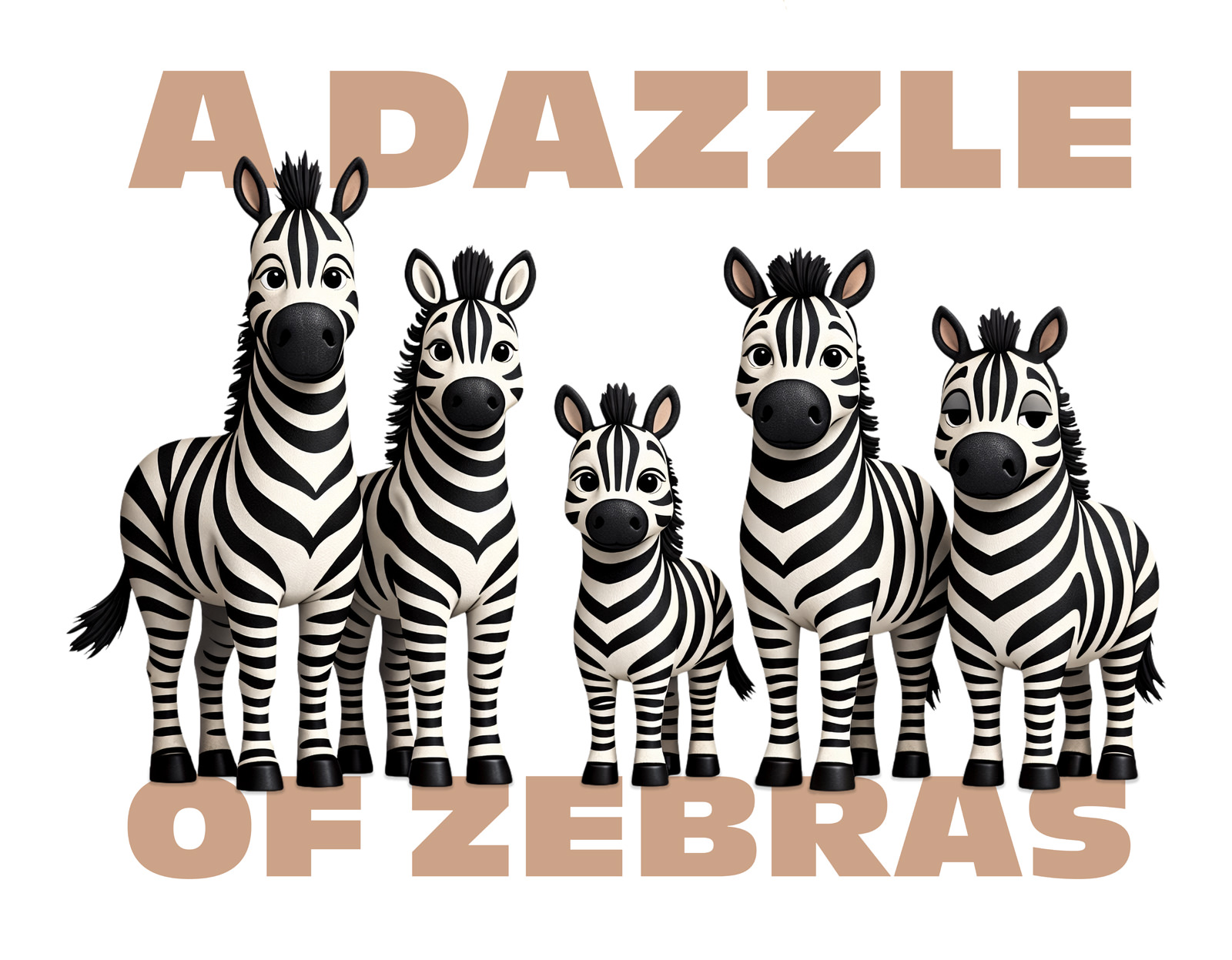
A group of zebras is called a dazzle because of the visual effect their black-and-white stripes create when they stand or move together. When clustered in a herd, the overlapping stripes can blur into a confusing pattern, making it difficult for predators to single out one individual, especially when the zebras are running. Nikon Z8 with Nikkor 70-200mm lens (at 200mm) ISO 100, f/2.8 at 1/1000th of a second.
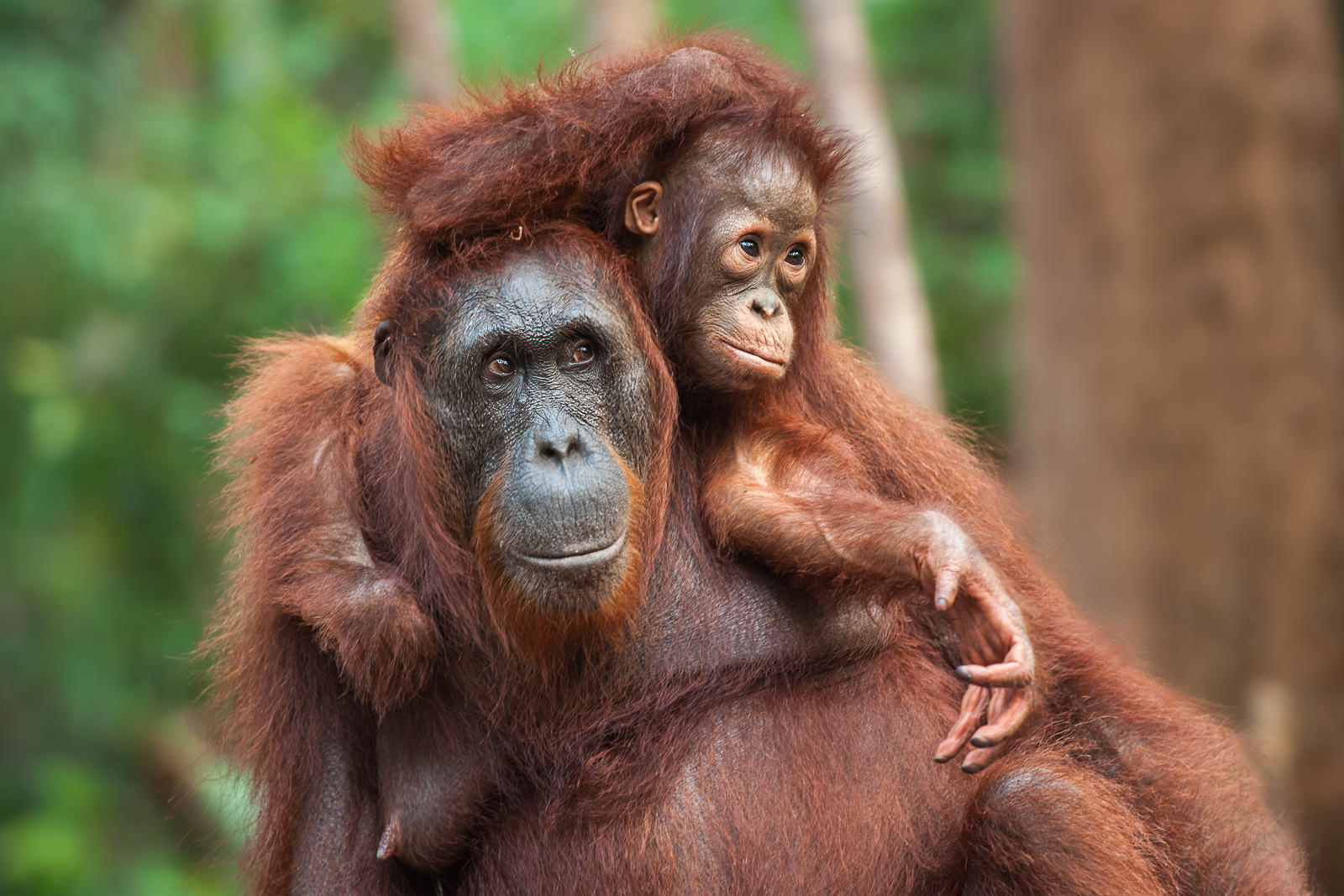
Perhaps my favorite of the wildlife group names — a buffoonery of orangutans. The term buffoonery comes from old perceptions of orangutans as comical or clownish due to their expressive faces, gangly limbs, and slow, deliberate movements that can appear exaggerated or humorous to human observers. In reality, orangutans are deeply intelligent, solitary primates with complex behaviors and problem-solving skills. Photographed in Indonesian Borneo. To get a buffoonery t-shirt, baby bodysuit or coffee mug, visit specieslimited.com. Nikon D700 with Nikkor 70-200mm lens (at 190mm) ISO 800, f/4.5 at 1/80th of a second.
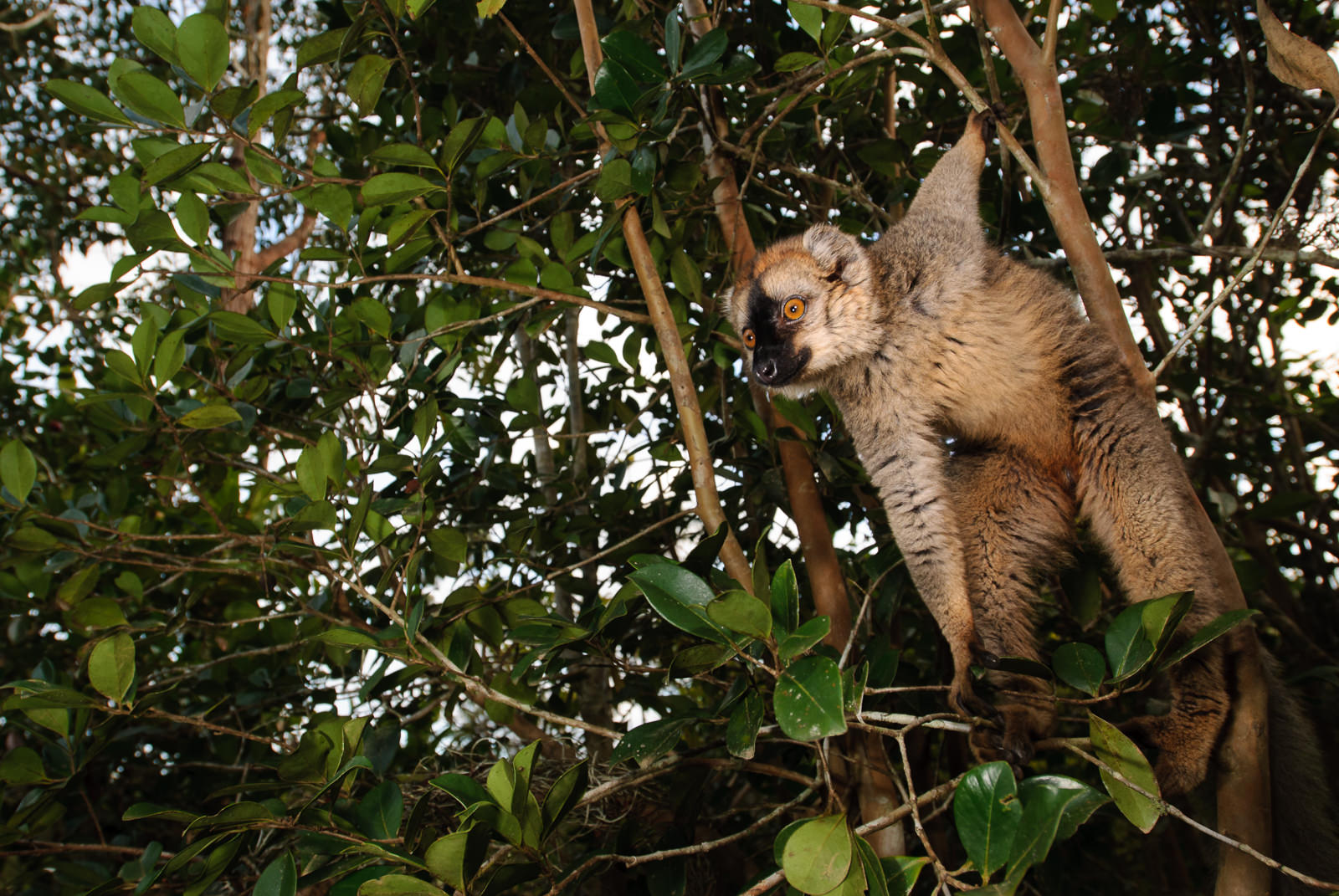
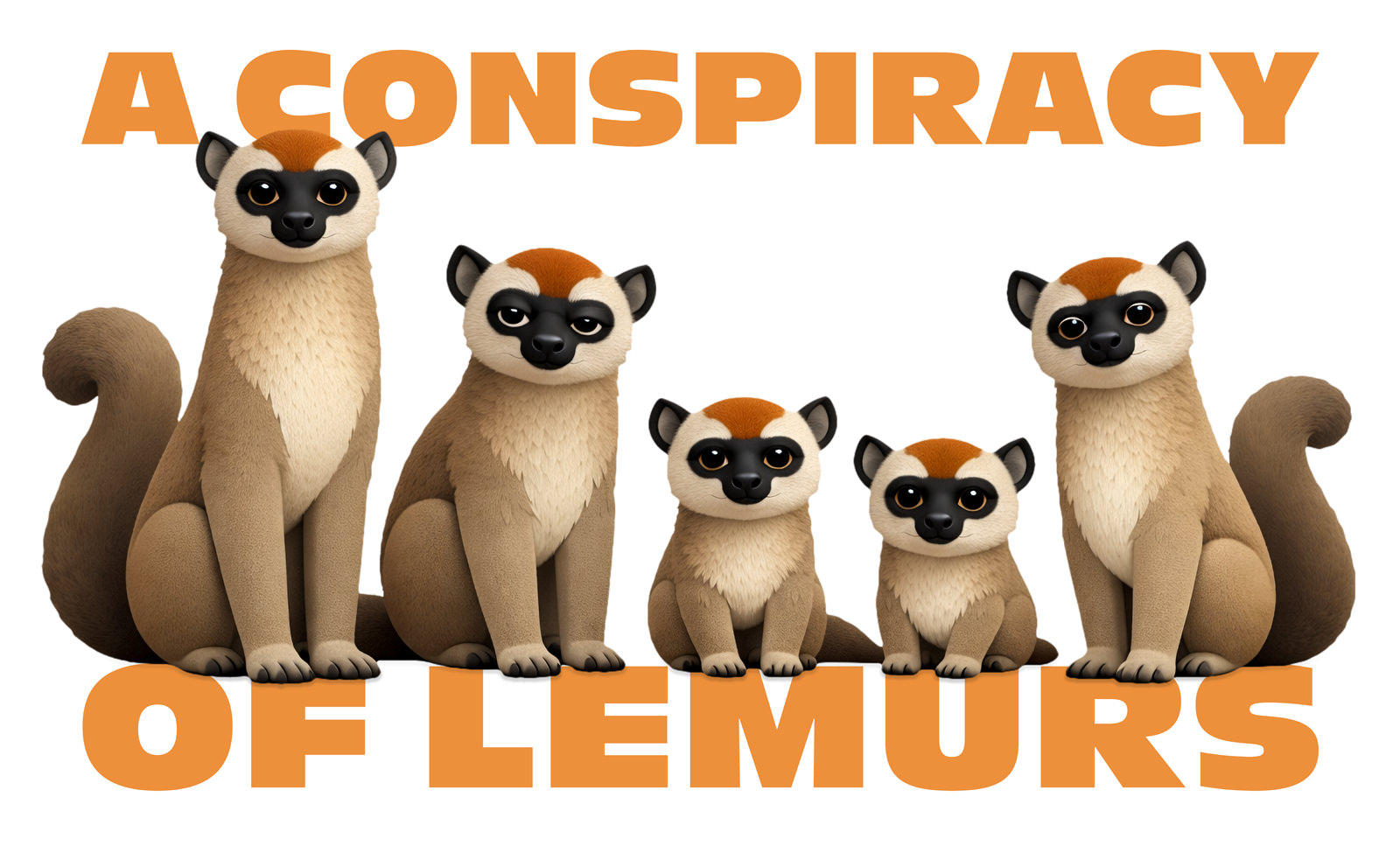
The term for a group of lemurs likely comes from the way lemurs move together silently through the trees, with watchful eyes and coordinated behavior that can seem secretive or mischievous. The eerie calls of some species like the indri, especially at night, might have added to that mysterious reputation. While not used in scientific contexts, “conspiracy” has stuck in popular culture because it captures the intriguing, otherworldly vibe of lemur groups. Karen and I are looking to put a group together for a Madagascar trip in September of 2027. Reach out if interested. And head to specieslimited.com to get your Conspiracy of Lemurs onesie, toddler tee or coffee mug. Nikon D200 with Nikkor 17-35mm lens (at 17mm) ISO 200, f/5.6 at 1/60th of a second, two Nikon SB-600 flash units.
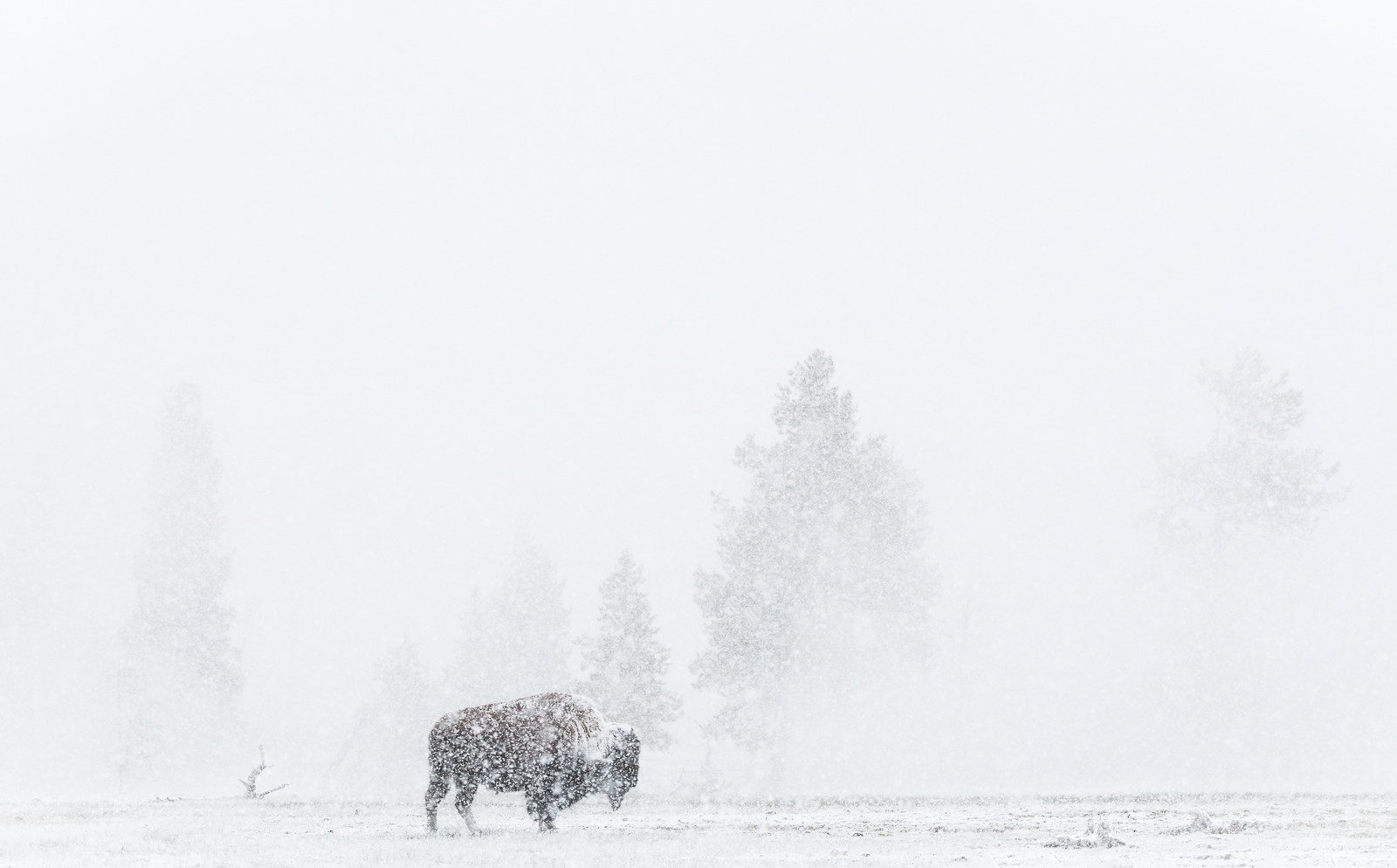
Seemed like a good day to resurface this old shot from Yellowstone during a springtime blizzard back in 2011. We’re looking at about two feet outside my window today (and still snowing). Hope everyone is keeping safe and warm. Nikon D300 with Nikkor 200-400mm lens (at 200mm) ISO 800, f/7.1 at 1/400th of a second.
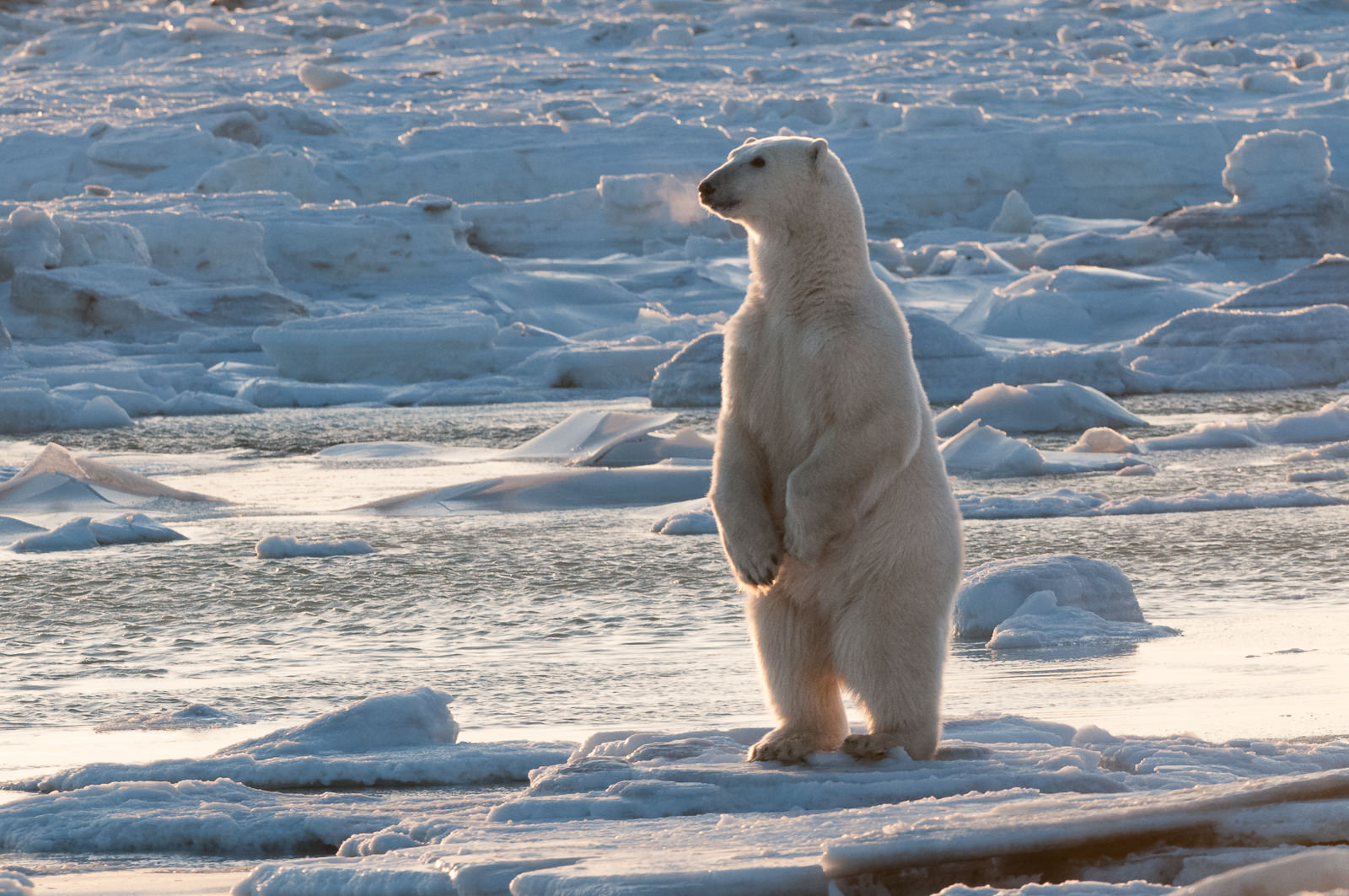
Happy first day of winter. Always my favorite day because starting on the 22nd, the day start getting longer again. This polar bear was photographed back in November of 2010, standing on a sea ice in the Hudson Bay up in northern Manitoba, Canada. Nikon D300 with Nikkor 200-400mm lens (at 290mm) ISO 800, f/8 at 1/640th of a second.
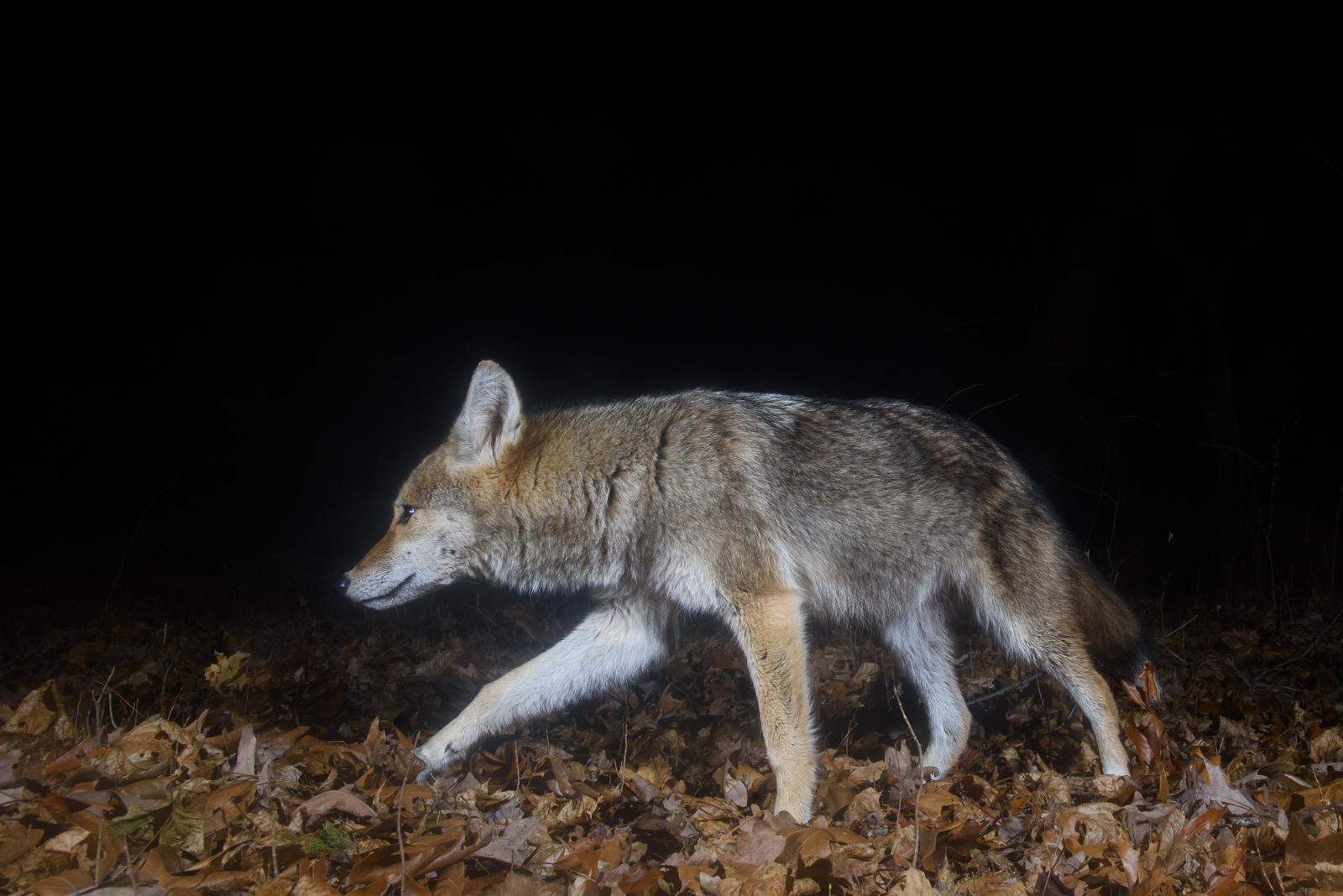
While I was sharing all those posts of mothers and babies, there was a bit of action up at the backyard camera trap. I’ve heard a lot of coyote yipping going on back there in the woods, but coyotes, being wily and all, are really good at walking around and avoiding the camera. This guy, however, took a nice basic profile shot of himself. Nikon D810 with Nikkor 17-35mm lens (at 25mm) ISO 500, f/14 at 1/200th of a second, Cognisys camera box, trail monitor and flash units.
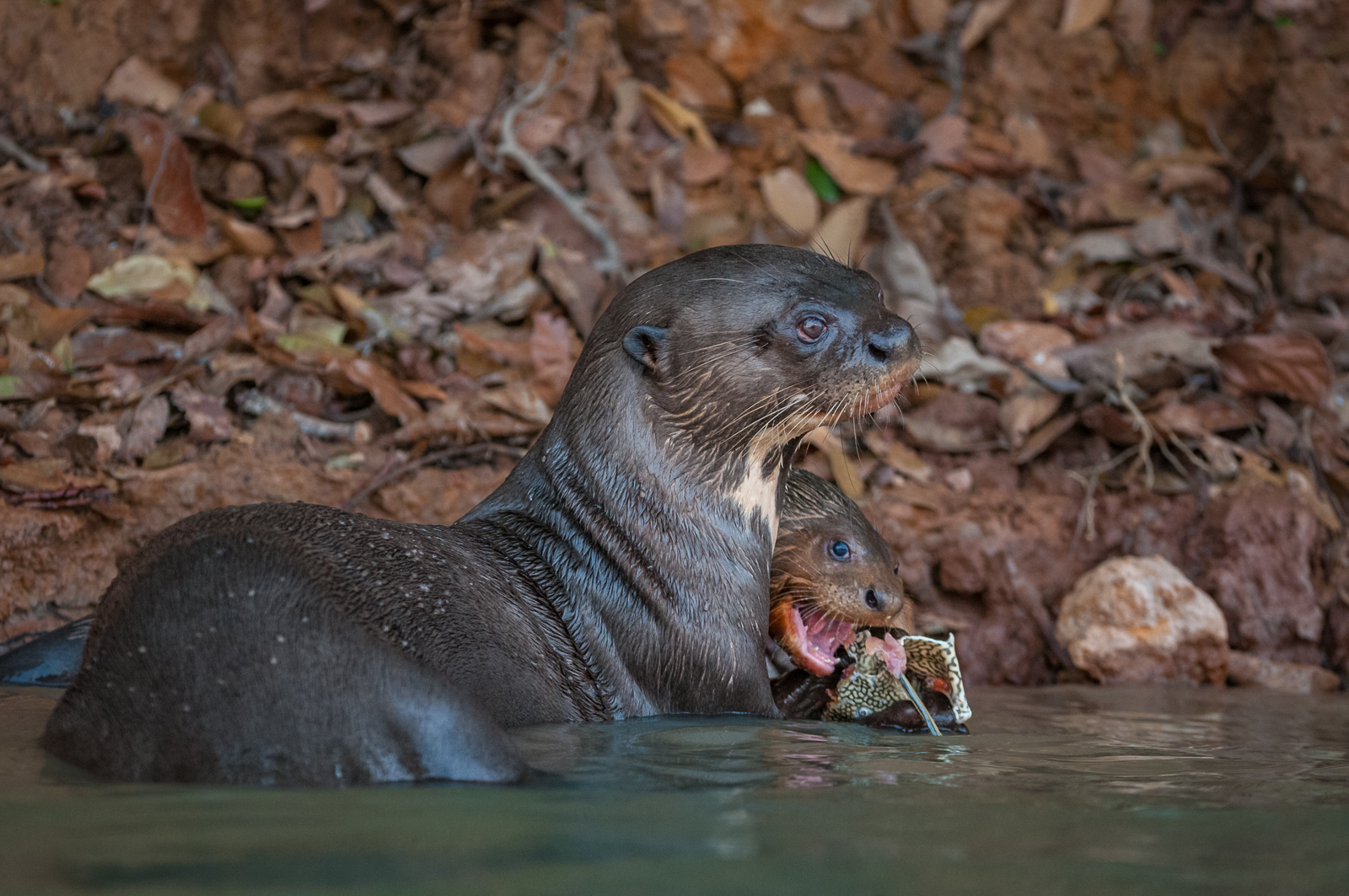
Okay everyone, last day to get your orders in for Christmas delivery. Just go to www.specieslimited.com and find the perfect gift for any wildlife lover. This is a giant river otter with her pup that I photographed in the Pantanal of Brazil. Nikon D300 with Nikkor 200-400mm lens (at 270mm) ISO 800, f/4 at 1/320th of a second.
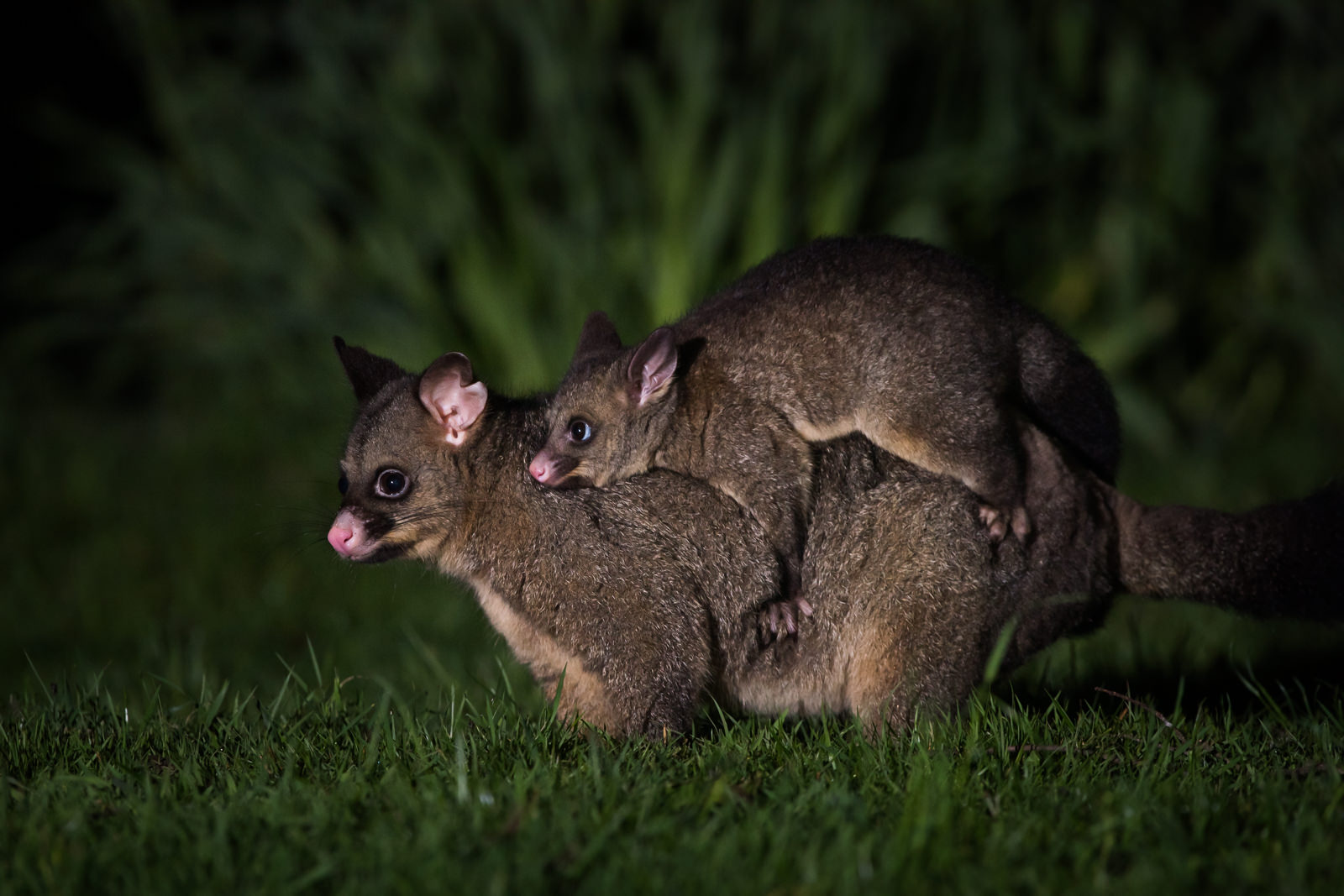
Two days left for Christmas delivery at www.specieslimited.com. Here’s another mother and baby in the wild that didn’t make this year’s cut for the calendar. That joey was rather large and likely in the final stages of riding on mom’s back. Photographed in Tasmania back in 2015. Nikon D810 with Nikkor 200-400mm lens (at 400mm) ISO 800, f/7.1 at 1/200th of a second.
We use cookies to enhance your experience while using our website. If you are using our Services via a browser you can restrict, block or remove cookies through your web browser settings. We also use content and scripts from third parties that may use tracking technologies. You can selectively provide your consent below to allow such third party embeds. For complete information about the cookies we use, data we collect and how we process them, please check our Privacy Policy