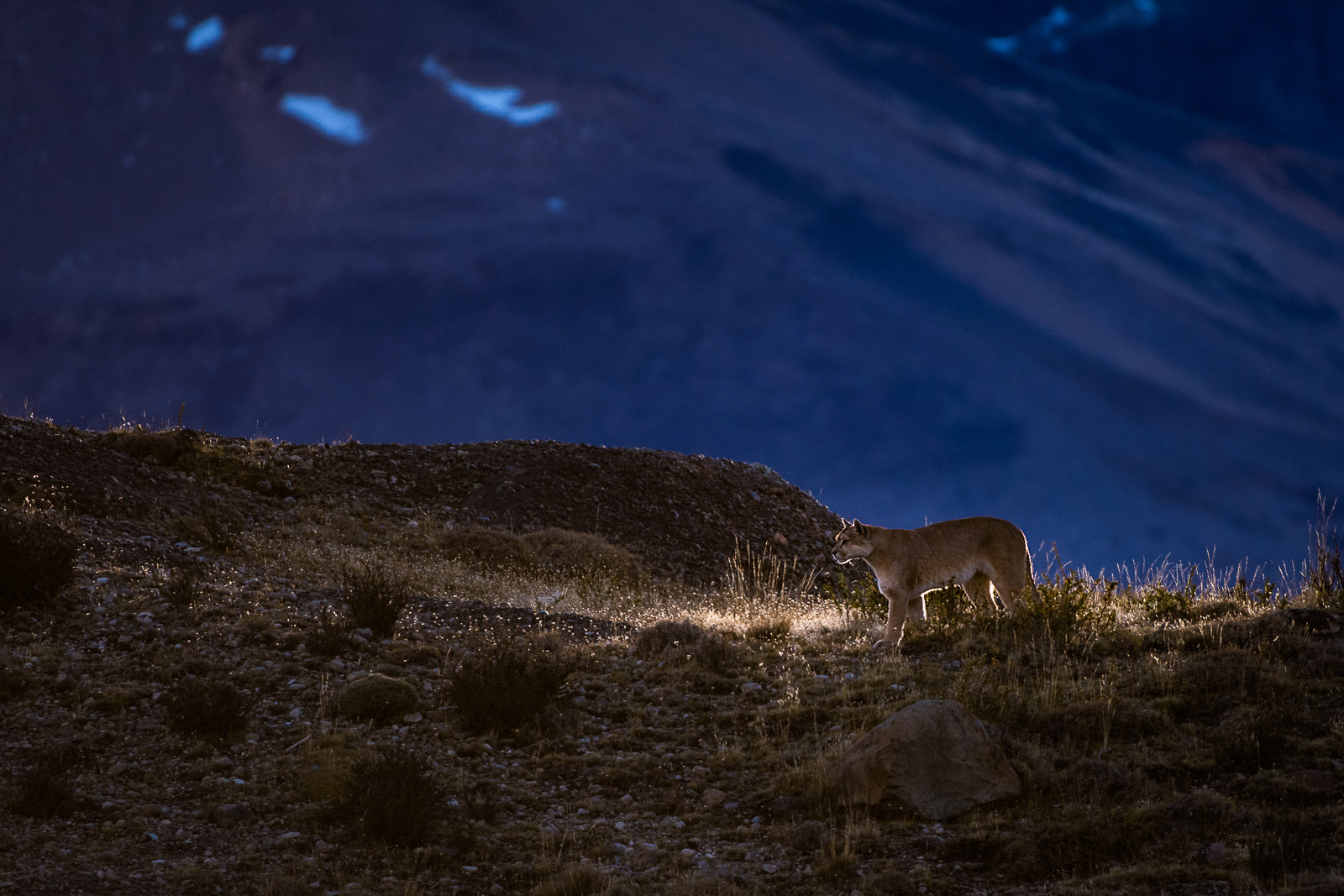
As I mentioned in a post last week, it rained a lot in Patagonia. In fact, almost the entire time I was there. But when the sun did peek through the clouds, it provided some dramatic light to go along with the dramatic scenery. In this instance, the shaft of light acted as both a spotlight and a backlight as the puma crossed in front of the massive face of Cerro Paine Chico. Nikon D500 with Nikkor 200-400mm lens (at 400mm) ISO 800, f/4 at 1/1250th of a second
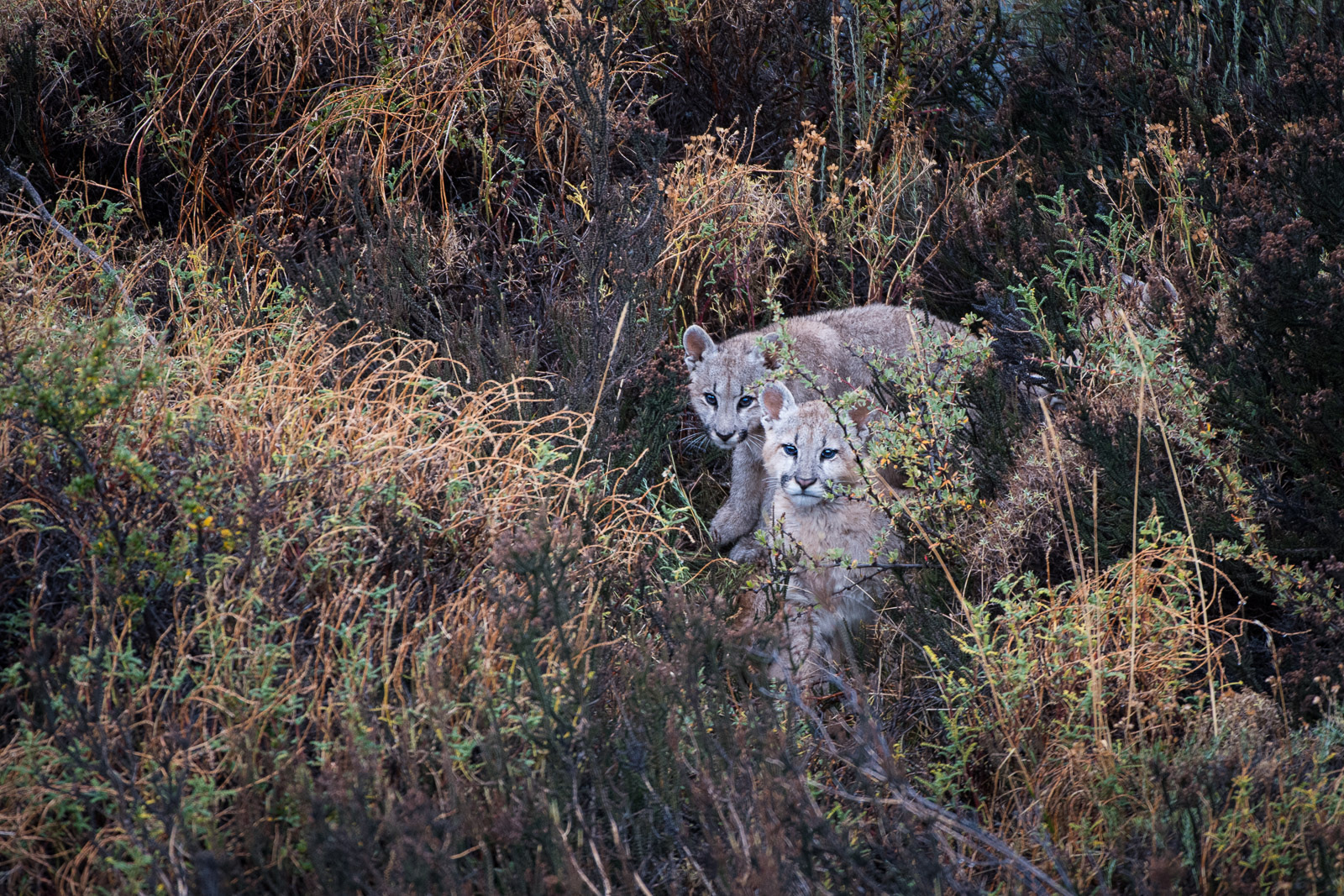
I had mentioned in a previous post that I saw a mother puma with three cubs. It was tough getting a good angle on the little guys, but they did take a quick break from their rainy nap to look up at the cliff that I was standing on. At least two of them did. You can just barely see the ears of the third cub over to the right (or that might be the mother). The cubs were about four months old and still had a bit of blue color to their eyes and spots on their fur. Nikon D500 with Nikkor 200-400mm lens (at 400mm) ISO 800, f/4 at 1/250th of a second
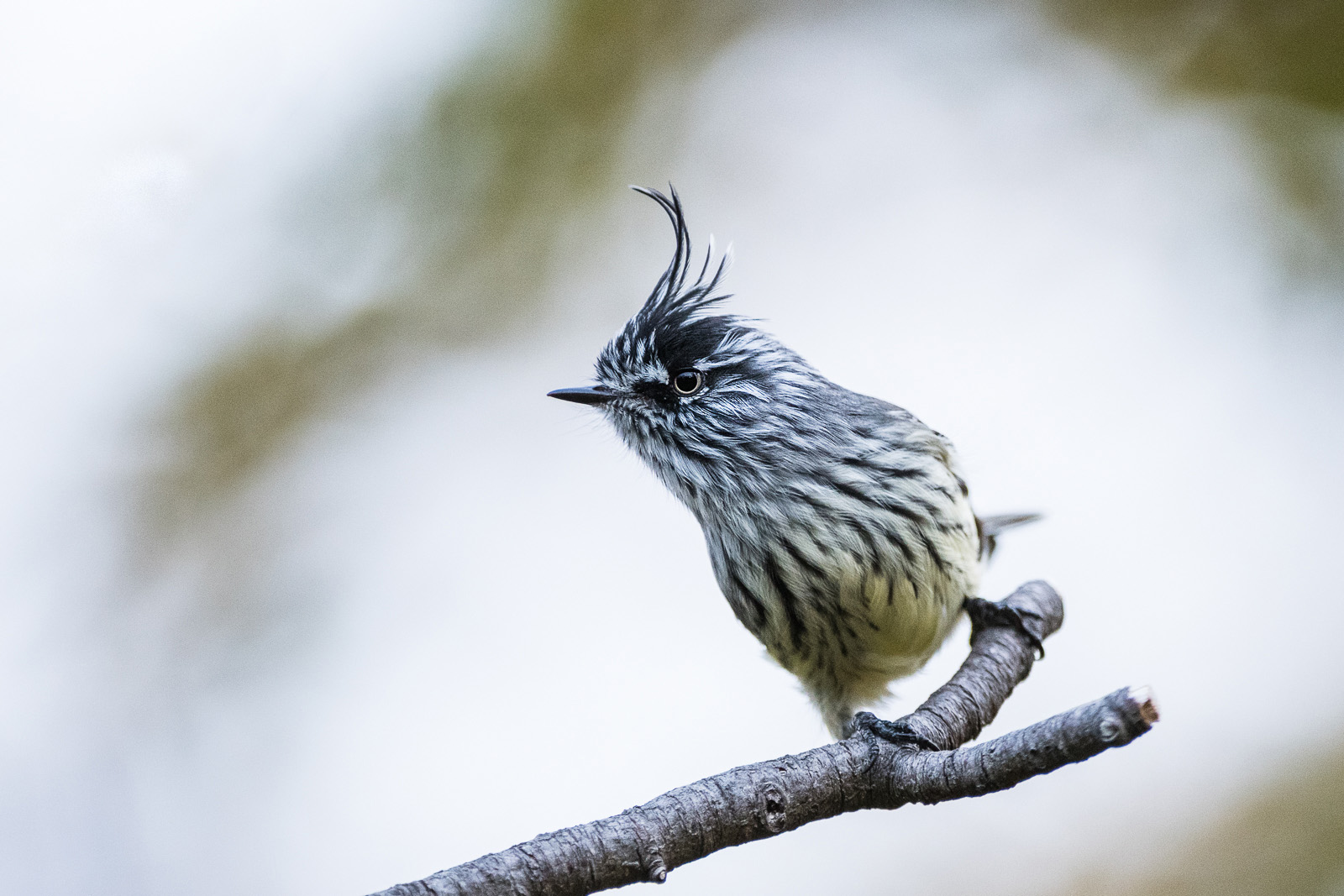
There were several interesting birds that I was able to photograph in Chile. This was one of my favorites — the tufted tit tyrant. They were very quick, but I eventually captured a few shots displaying their characteristic head tufts. Nikon D500 with Nikkor 200-400mm lens (at 400mm) ISO 1600, f/4 at 1/500th of a second
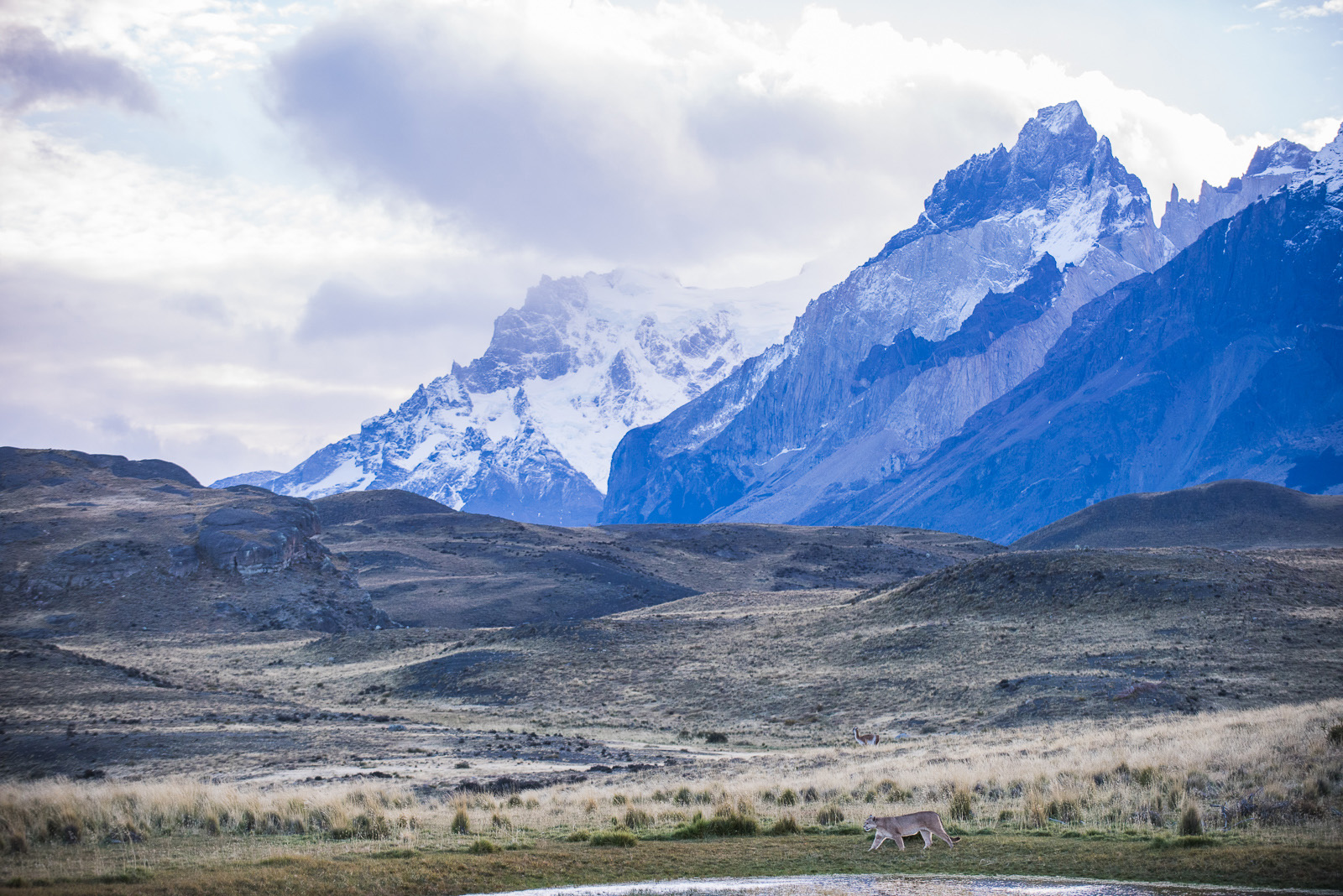
The centerpiece of Torres Del Paine is the grouping of mountains consisting of two massive peaks (Small Paine to the right and Large Paine to the left) the sharp points known as the horns tucked in behind, and the iconic towers that give the park its name (the towers aren’t visible in this photo but they are to the right of frame). More on the unique geology of these mountains in a future post but for now, another puma can be seen down below, as well as an unsuspecting guanaco just above the puma. Nikon D810 with Nikkor 70-200mm lens (at 120mm) ISO 800, f/4 At 1/1600th of a second
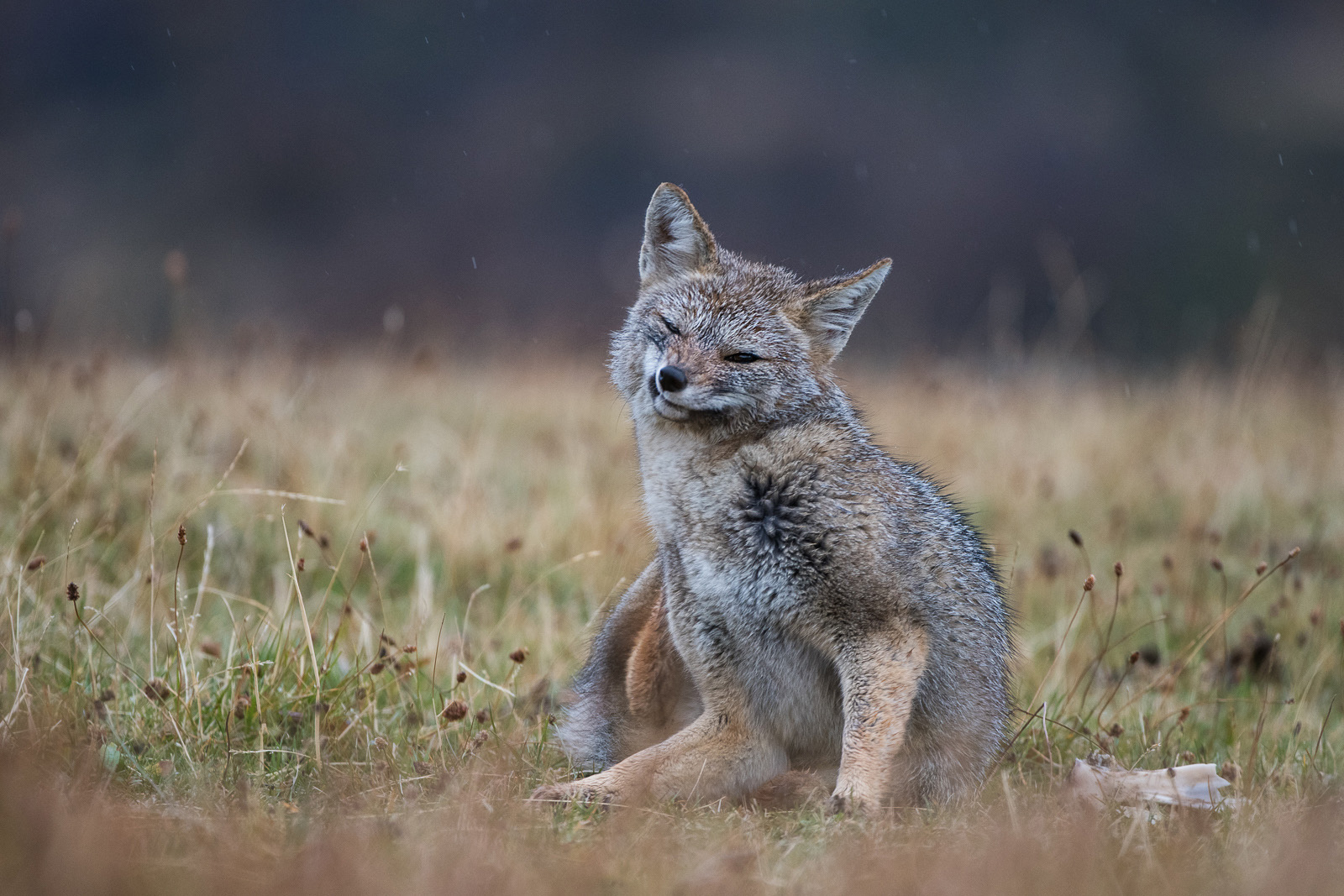
There are two species of fox that live in Torres Del Paine. The culpeo (or Andean red fox) and the more common Patagonian fox — also known as the South American gray fox. This is the latter. He was enjoying a good scratch after scavenging the remains of a guanaco carcass. Nikon D500 with Nikkor 200-400mm lens (at 360mm) ISO 800, f/4 at 1/640th of a second
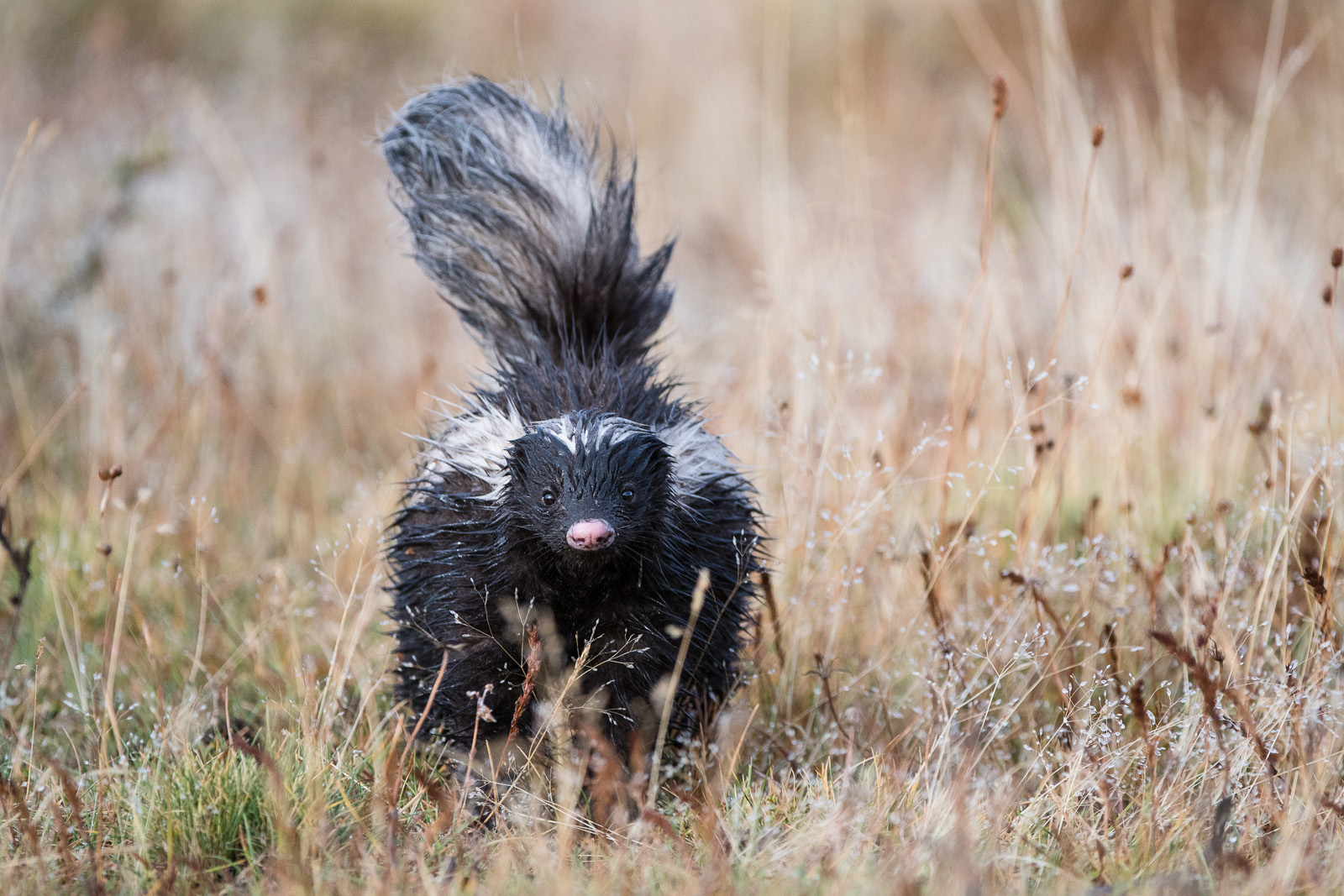
My trip to Patagonia was all about the pumas, but there were many other species to be seen in Torres Del Paine, both furred and feathered. My favorite among them was the Patagonian hog-nosed skunk. I really wanted a few shots of this animal and was finally granted the opportunity on my final night in the park. They spend almost all their waking hours with their noses firmly planted in the ground, foraging for whatever it is they forage for. I was told their spray striking range is about ten feet on a windless day so I was cautious not to get too close when this skunk finally lifted up and started to regard me with suspicion. After sniffing the air a few times and growing comfortable with the snapping of my shutter, the skunk went back to foraging and wandered off into deeper brush. Nikon D500 with Nikkor 200-400mm lens (at 330mm) ISO 800, f/4 at 1/3200th of a second
This is the third puma I was able to photograph in Torres Del Paine National Park in Chile — a mother of three cubs. In this image, she’s lookin back at her cubs to make sure they are following close behind as she heads off in search of dinner. We were viewing them from up on a cliff and then hiked quickly in the direction they were headed and photographed them a few more times as they walked along a beach and then disappeared. Nikon D500 with Nikkor 200-400mm lens (at 400mm) ISO 800, f/4 at 1/500th of a second
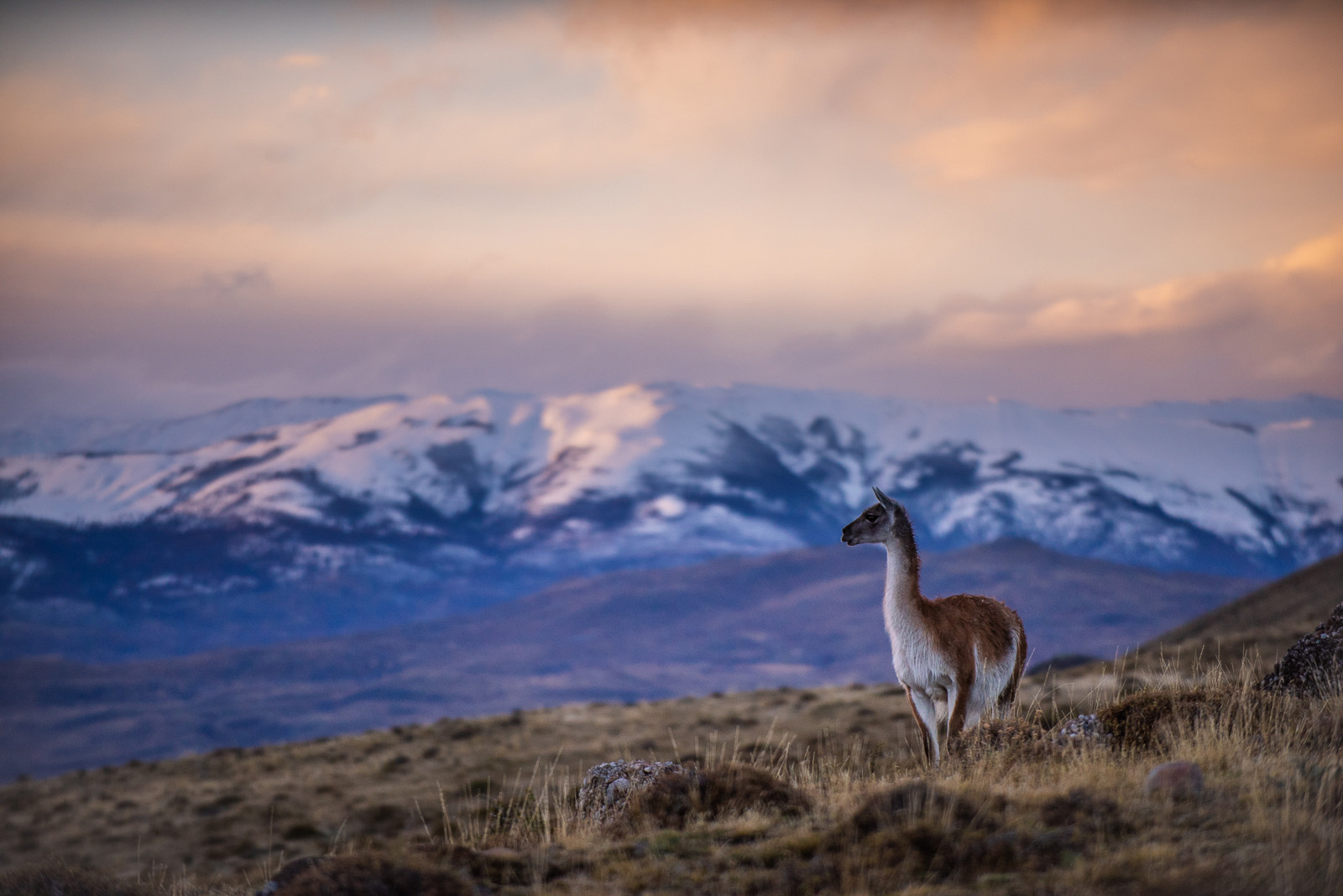
Meet the guanaco. Easily the most commonly seen animal in Torres Del Paine (pronounced Pine-ay, by the way). Their ubiquity, and iconic shape upon the landscape reminded me a bit of photographing bison in Yellowstone. And like bison, they can be found individually or in large herds. This guanaco was keeping a close watch on a puma that had just unsuccessfully chased a herd further down the mountain. Guanacos can outrun pumas, but fall prey to the puma’s ambush tactics. As I often do, I used a graduated neutral density filter to hold the detail in the sky while exposing for the foreground. Nikon D810 with Nikkor 70-200mm lens (at 200mm) ISO 800, f/4 at 1/1600th of a second, three stop graduated neutral density filter
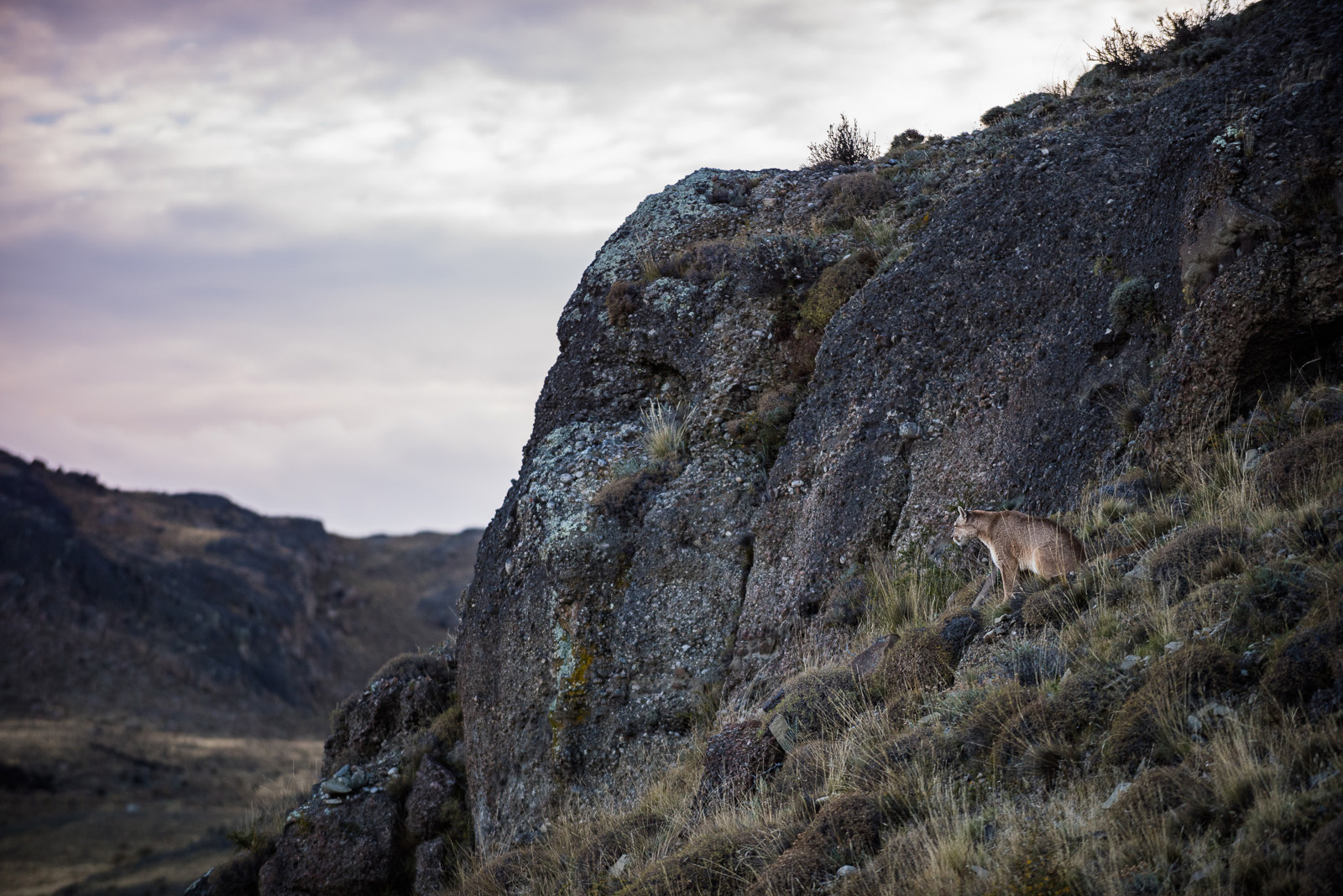
This is the puma that was the most tolerant of our presence and therefore the most photogenic. We spotted her on two separate days and she acted as if she didn’t even see us while going about her business of resting in the grass, drinking from water holes and stalking guanacos — the lama-like creatures that were seemingly everywhere. Often times I’m trying to get closer to wildlife for tighter shots. In Patagonia I was constantly going wider to include more of the habitat and scenery. Thus was the case for this shot as the puma stopped for a moment to survey her territory before heading down the hill to feast on a guanaco kill she had hidden at the bottom. Nikon D810 with Nikkor 70-200mm lens (at 200mm) ISO 800, f/4 at 1/1250th of a second
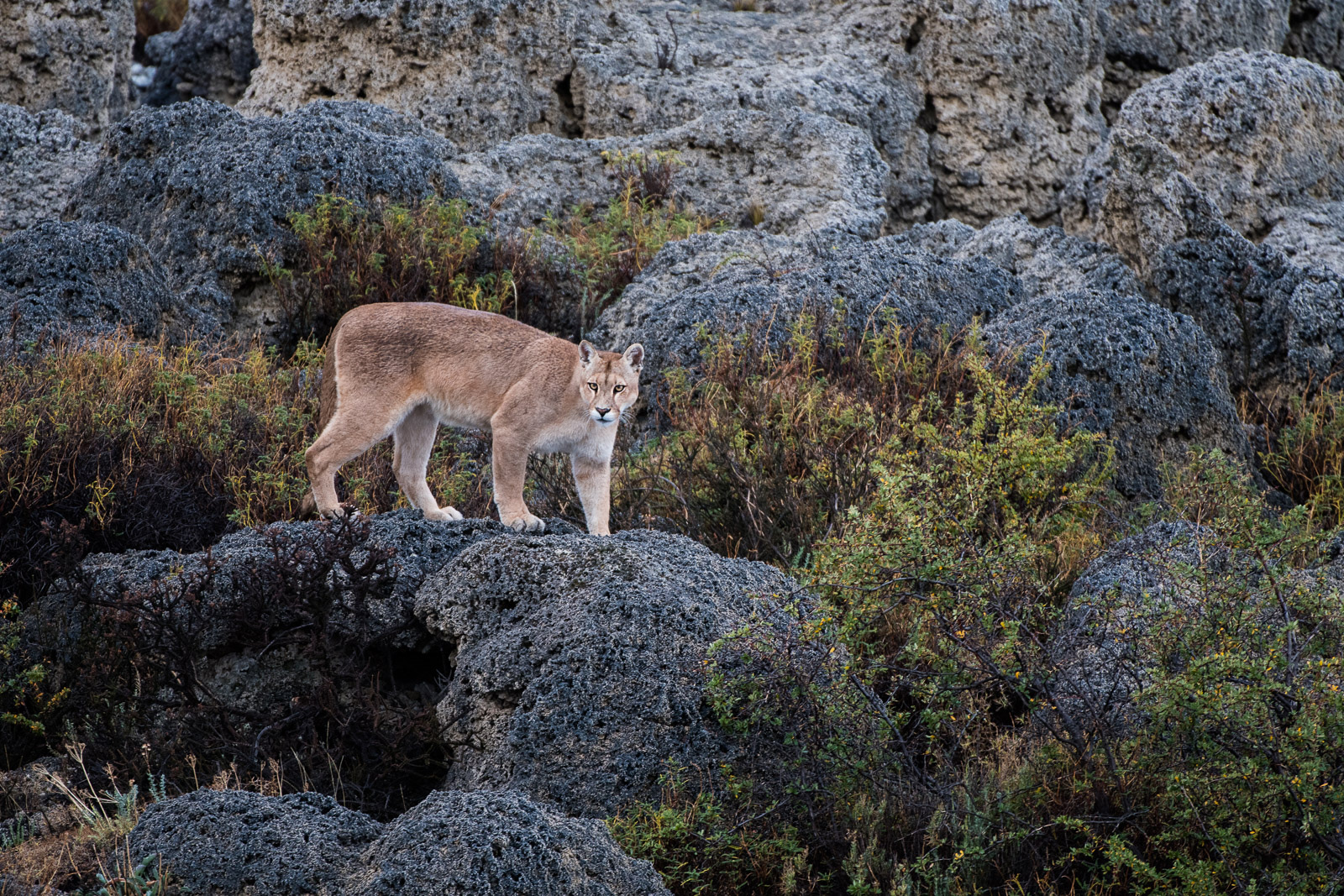
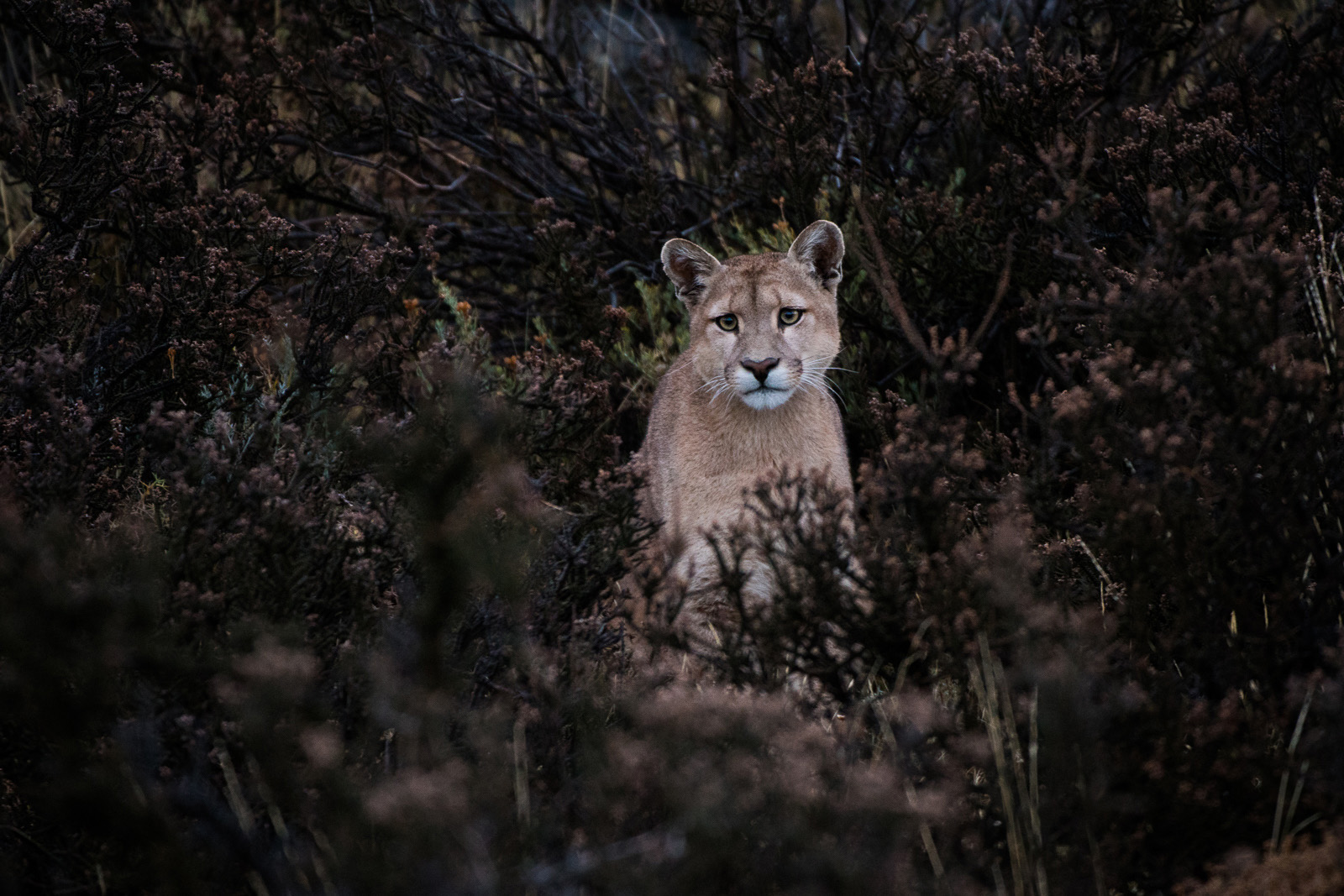
Just back from my journey to the bottom of South America. And quite a journey it was, starting with the fact that my flight was cancelled and rebooked five times just a few days before I was scheduled to depart — this courtesy of a prolonged, day-to-day crew strike on Latam Airlines. It was looking like I’d have to cancel the trip altogether, but I was finally able to find alternate flights on other airlines, albeit with multiple lengthy layovers. But I finally made it there and Chilean Patagonia with its spectacular Torres Del Paine National Park did not disappoint. And this despite the fact that of my roughly 140 hours in the park, it rained and sleeted and gale force winded for about 135 of them. But that didn’t stop my search for pumas. And the glorious few breaks in the weather had a knack for showing up at precisely the same time the pumas did. All in, I saw eight cats — a mother with three cubs and four solitary females. This young female was the second of my sightings, but the first I was able to get a good look at. It was the very end of a frustrating and very wet first day in the park and the light was fading fast. We scrambled blindly up a hill per the radio-signaled instructions of our excellent tracker, who was on an adjacent hill and monitoring the action from above. All I saw was black bush everywhere (that’s literally the common name for all that dark scrub surrounding the puma — Mata negra — black bush in Spanish). For the life of me I couldn’t see what my guide was telling me was 20 yards in front of me. And then she nervously popped up, regarded us for about ten seconds before disappearing in the other direction. Being a new cat to the tracker and appearing a bit scared, we decided to let her go without any further pursuit. Artistically, this isn’t the best photo of my trip, but it was my first decent shot of a puma in the wild and I love that sweet look on her face. You know… sweet for the most lethal predator in Patagonia. Nikon D500 with Nikkor 200-400mm lens (at 400mm) ISO 2500, f/4 at 1/160th of a second
We use cookies to enhance your experience while using our website. If you are using our Services via a browser you can restrict, block or remove cookies through your web browser settings. We also use content and scripts from third parties that may use tracking technologies. You can selectively provide your consent below to allow such third party embeds. For complete information about the cookies we use, data we collect and how we process them, please check our Privacy Policy