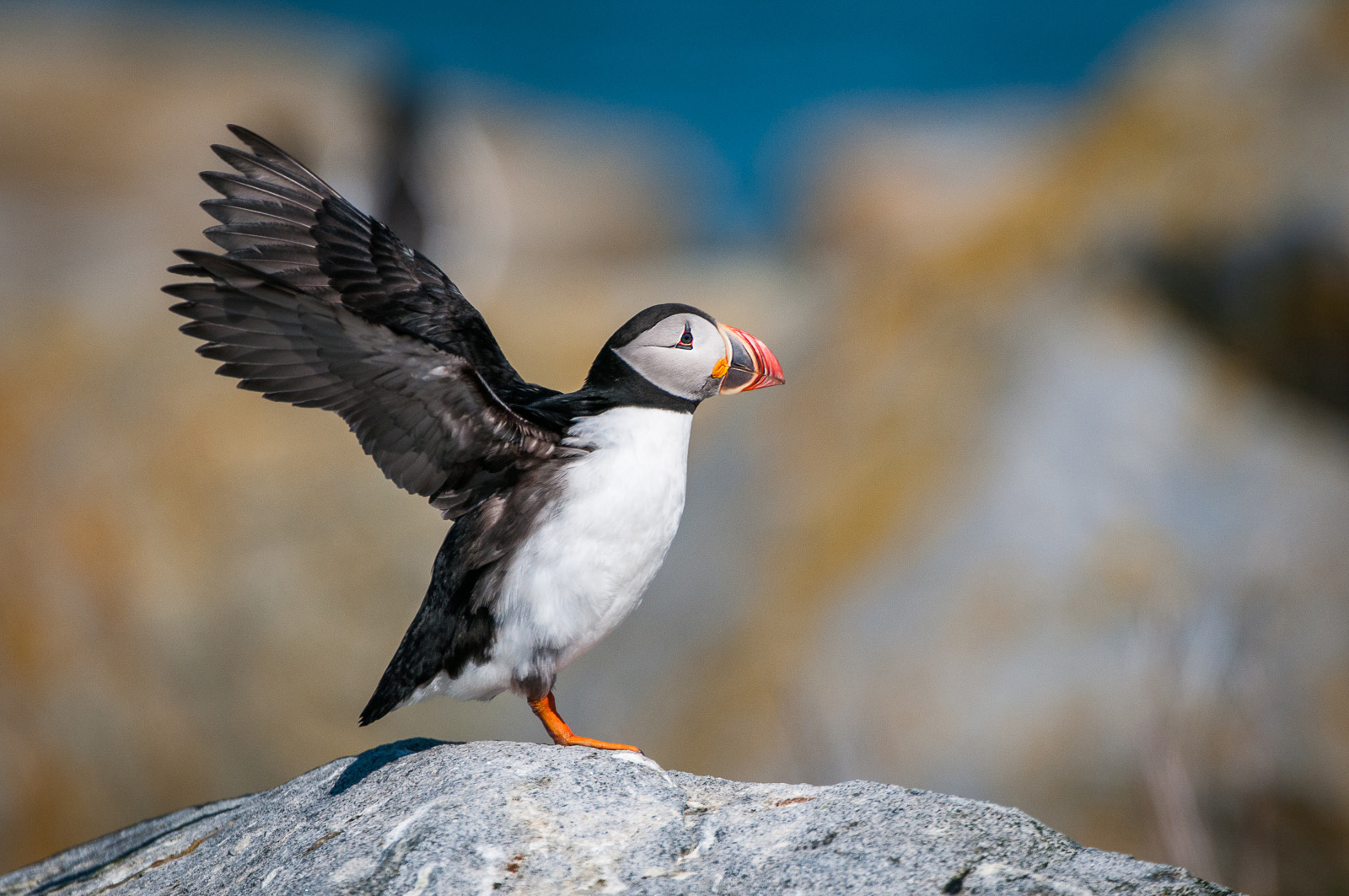
It’s getting to be that time of year again that Atlantic puffins return to their nesting sites along the Maine coast. I photographed this one a while back on Machias Seal Island. Nikon D300 with Nikkor 200-400mm lens (at 400mm) ISO 400, f/4 at 1/5000th of a second
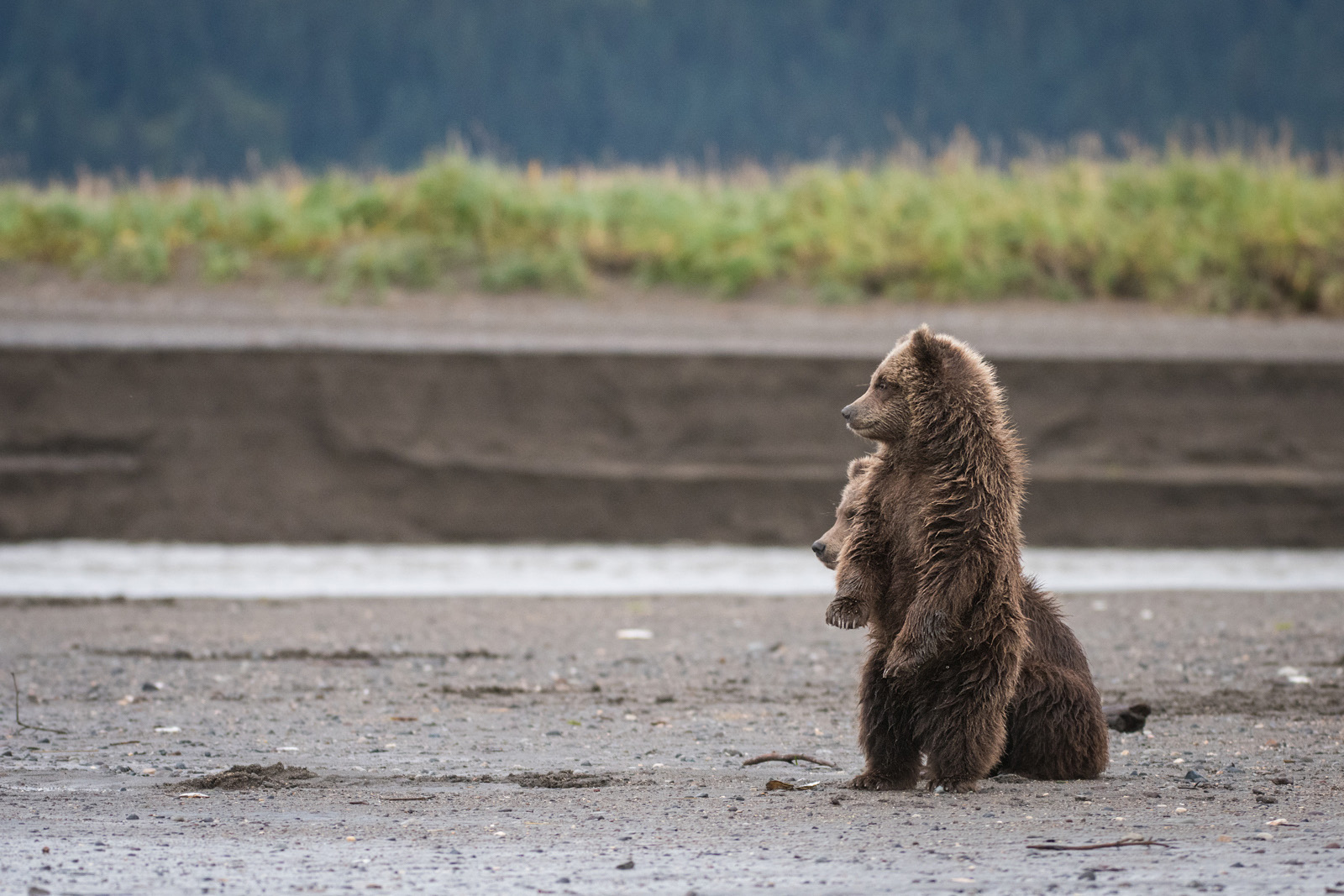
Plenty still to share from Patagonia, but thought I’d start mixing in images from other locations. This brown bear cub was keeping a watchful eye on mom as she was busy fishing for breakfast. From my trip last September to Lake Clark National Park in Alaska. Nikon D500 with Nikkor 200-400m lens (at 200mm) ISO 1600, f/4 at 1/500th of a second
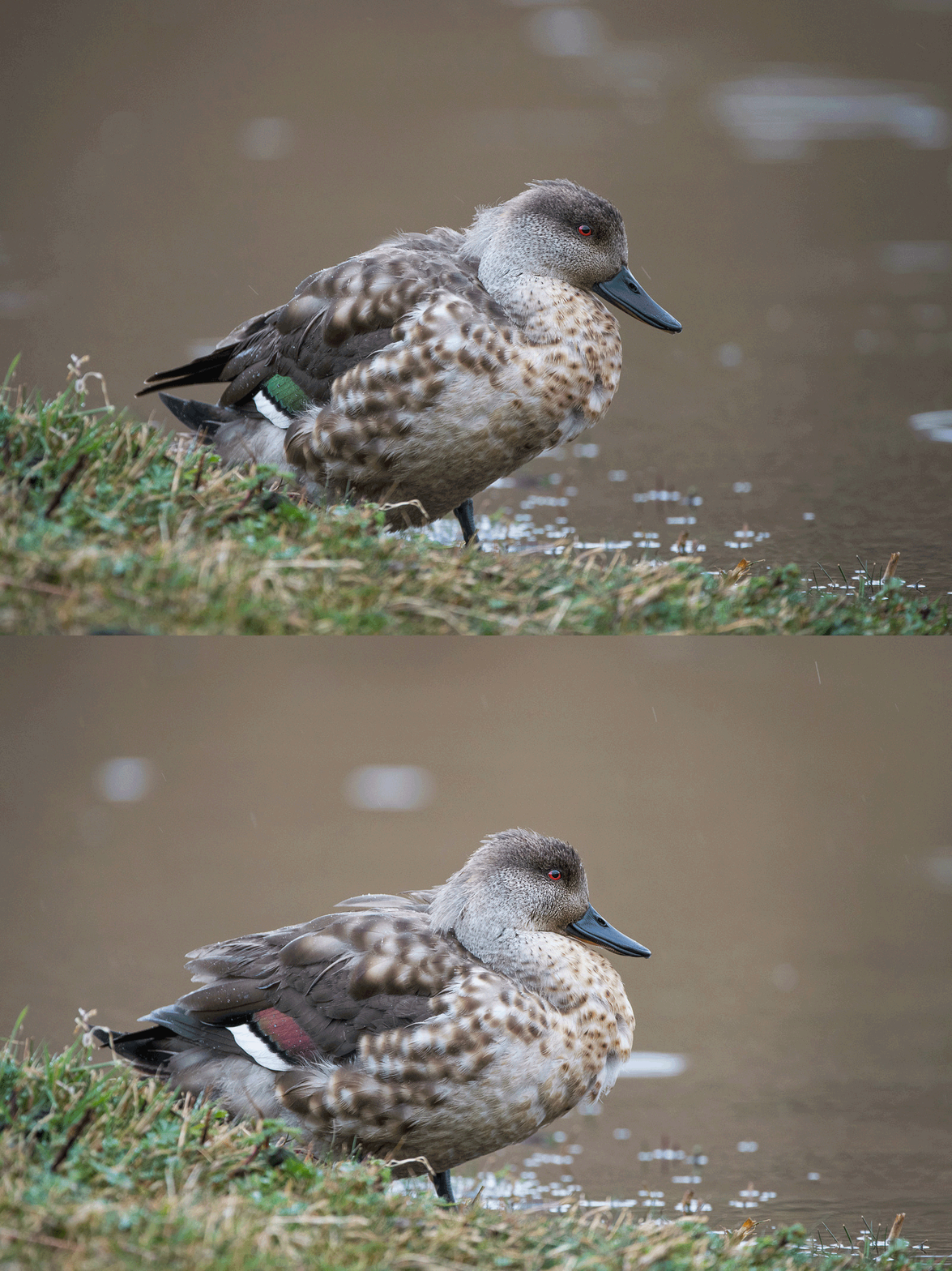
The two photos making up this gif are of the same crested duck, taken from the same spot. But as the duck moved slightly, those colorful feathers on the back side changed from a maroonish to a deep green and then back again. They’re called the speculum feathers. Many ducks have them and they are often iridescent, allowing changes in color based on wing position, angle of view and lighting conditions. Nikon D500 with Nikkor 200-400mm lens (at 380mm) ISO 800, f/4 at 1/400th of a second
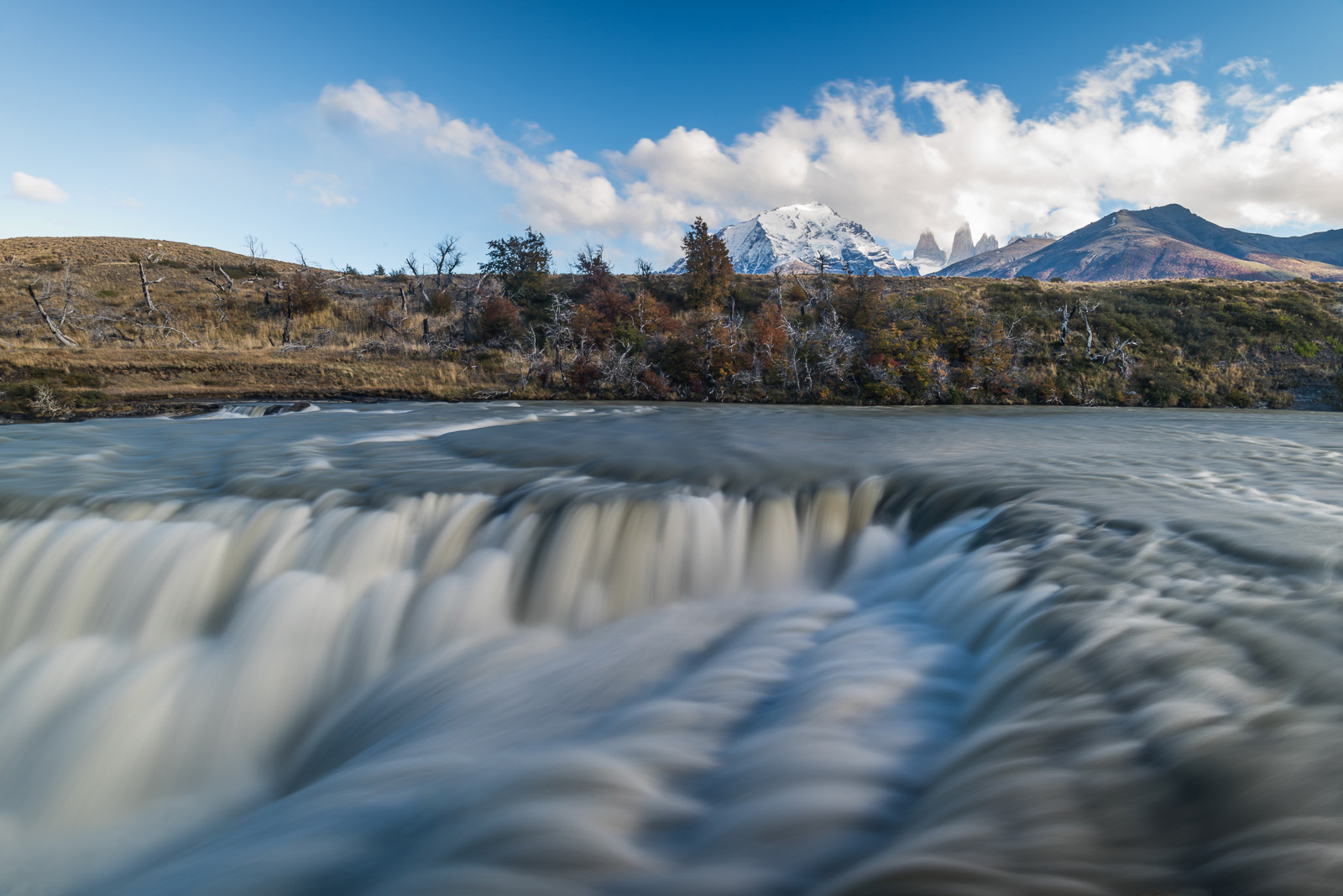
With all the spectacular scenery in Torres Del Paine, it was tough not really having the time to get proper landscape shots. The hours of best light were spent tracking pumas so I had to grab landscapes where and when I could. Usually I would never shoot in the middle of the day like this, but with a polarizing filter, plus a 3 stop neutral density filter, and a bit of cloud cover, I was able to slow down the shutter enough to make this view of a waterfall interesting. In the background is the Cordillera Paine, the centerpiece grouping of towers, horns and peaks that give the park its name. Nikon D810 with Nikkor 17-35mm lens (at 19mm) ISO 31, f/16 at 2.5 seconds
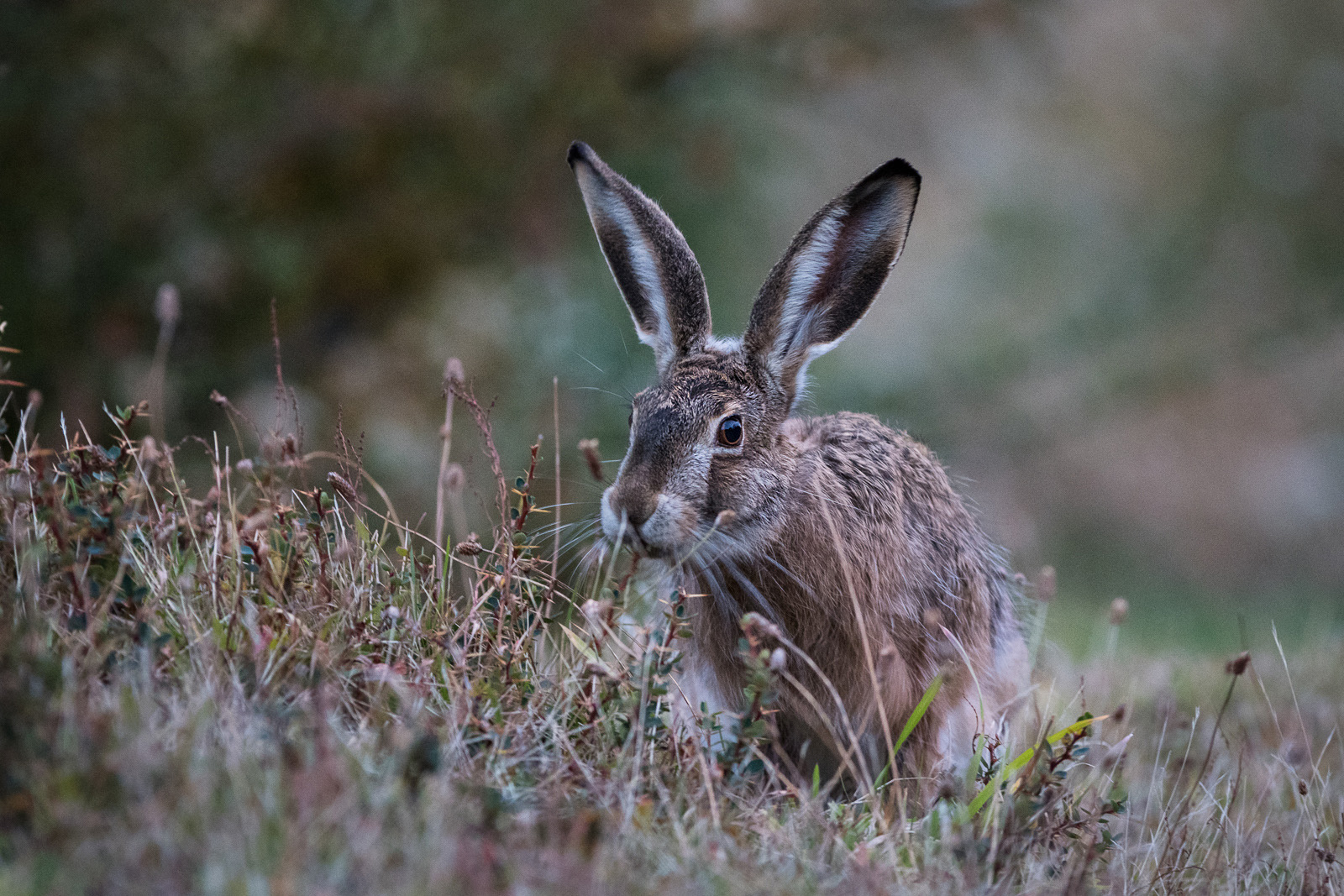
The European hare is a non-native species in Patagonia. Quite often, introduced species wreak havoc on their new environment, but in the case of this guy, all seems fine — at least in Torres Del Paine National Park (I’ve read of problems elsewhere where they cause damage to orchards, plantations, etc, and compete for grazing with cattle). But in the park, European hares add a bit of variety to the diet of pumas and don’t appear to have any ill effect on native species of fauna or flora. They are mostly nocturnal and were all over the front lawn of our lodge at night, but I was able to photograph this guy in the last light of the day. Nikon D500 with Nikkor 200-400mm lens (at 270mm) ISO 3200, f/4 at 1/60th of a second
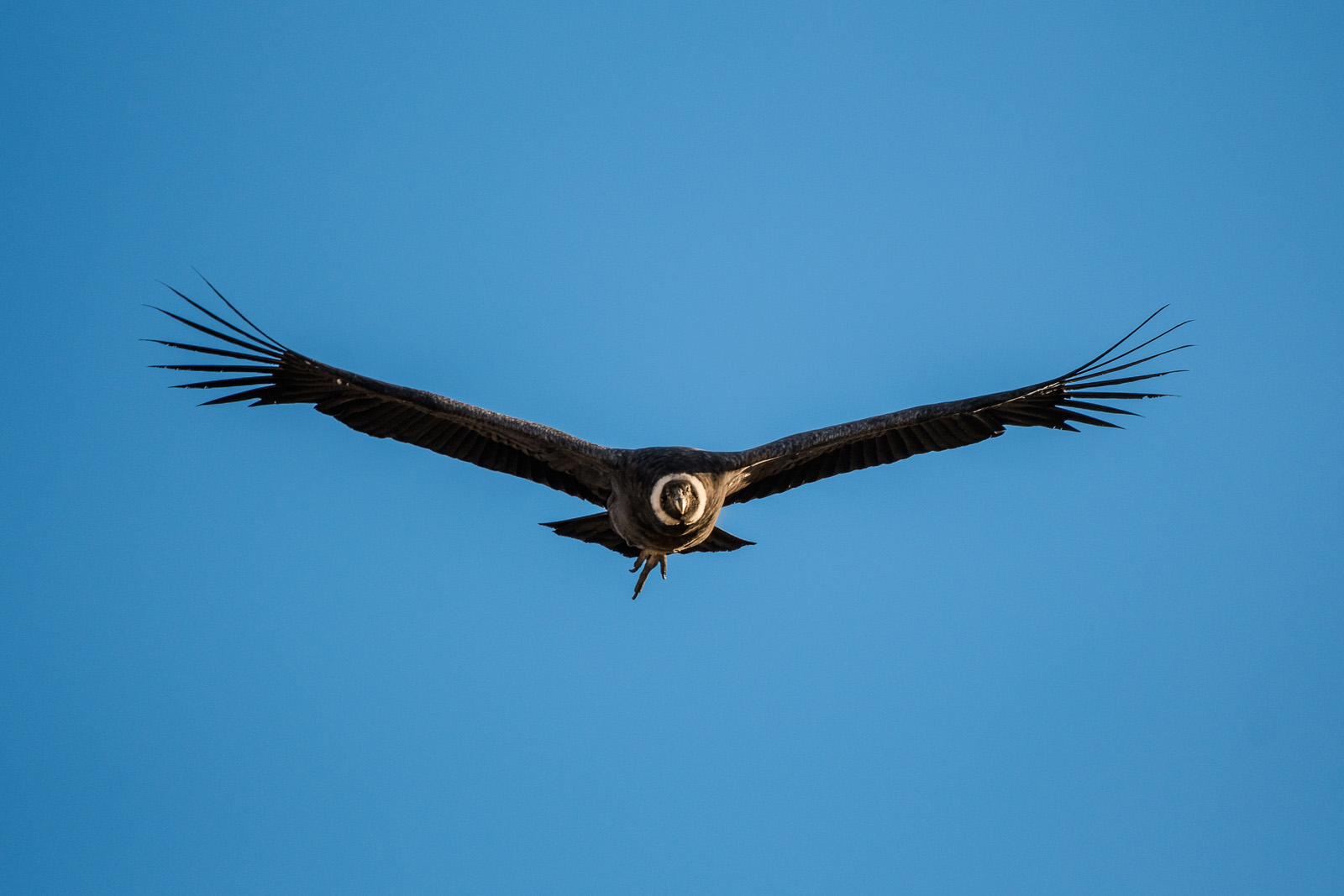
The puma may rule the land in Patagonia, but the condor rules the sky. This is a large bird. Very large. With a nearly 11 foot wingspan and weighing upwards of 33 pounds, it is the largest flying bird in the world. We saw quite a few of them, but they only occasionally came down from on high for a closer look at us. This was one of those occasions. Nikon D500 with Nikkor 200-400mm lens (at 400mm) ISO 400, f/4 at 1/50000th of a second
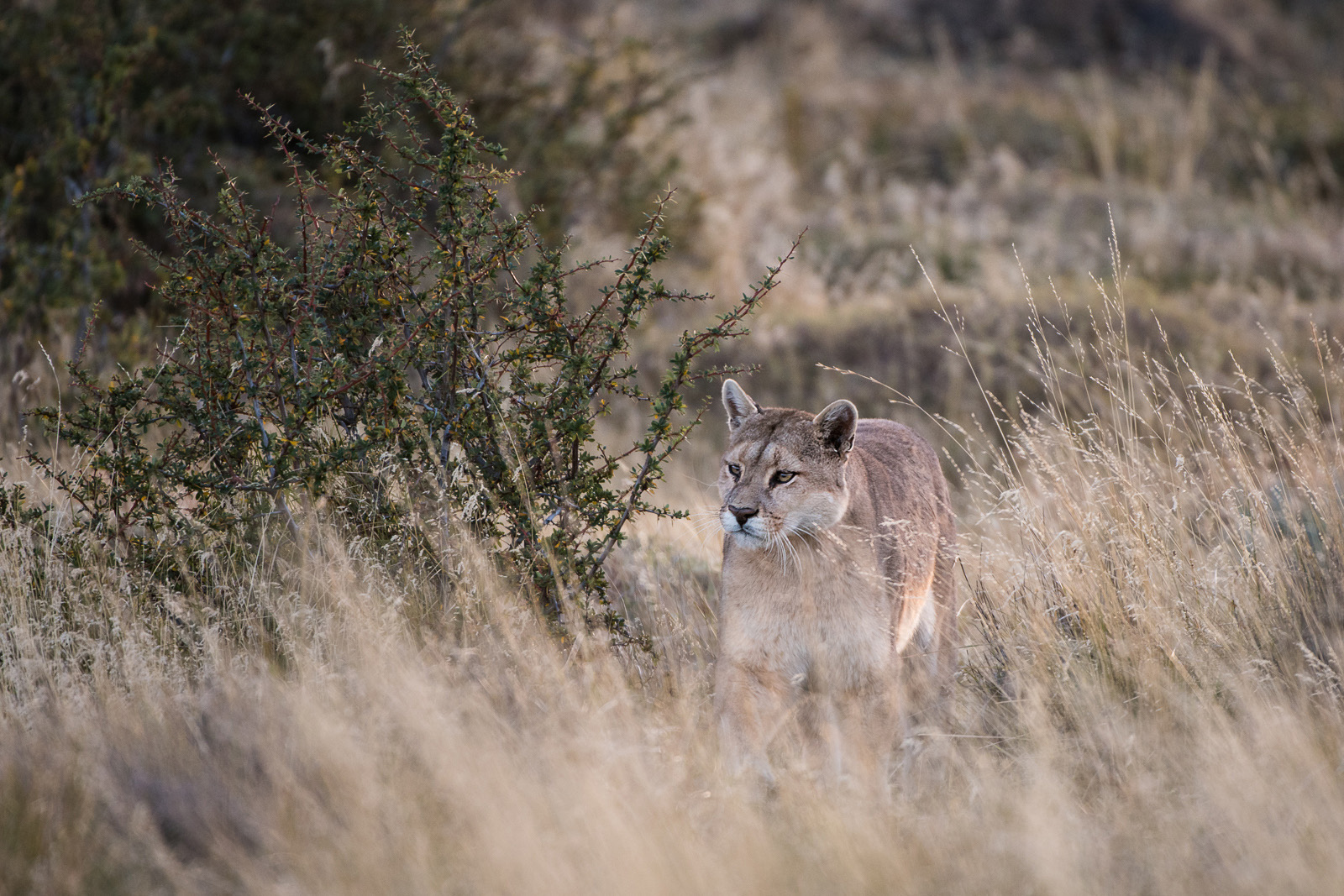
I figured I’d keep going with the Patagonia photos for one more week before mixing in the rest of the world. We tracked parallel to this puma for about 20-30 minutes as she slowly made her way to a previously killed guanaco. Most of the shots I got of her were in profile, but occasionally she walked toward camera and graced us with a clear view amidst all that tall grass. You can see how easily they blend in with their environment. Nikon D500 with Nikkor 200-400mm lens (at 400mm) ISO 800, f/4 at 1/500th of a second
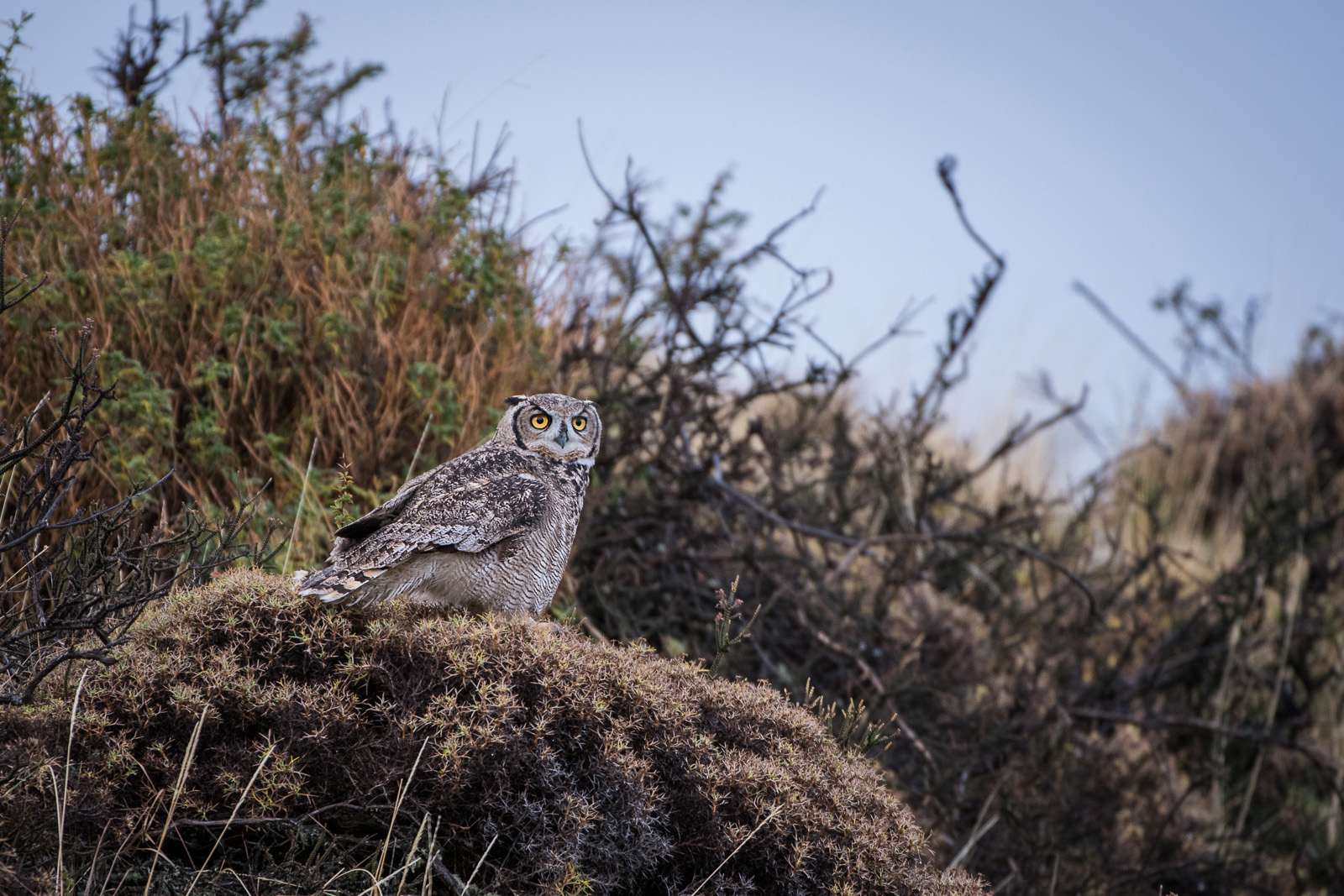
This was the only owl that I saw while in Patagonia. A good find, no doubt, but he/she did distract me just long enough that I took my eye off the mother puma and her cubs that we had been tracking and they somehow slipped away without notice. Also known as the lesser horned owl, the Magellanic horned owl was originally thought to be a subspecies of the great horned owl, but now has been designated as a seperate species altogether. Nikon D500 with Nikkor 200-400mm lens (at 400mm) ISO 800, f/4 at 1/500th of a second
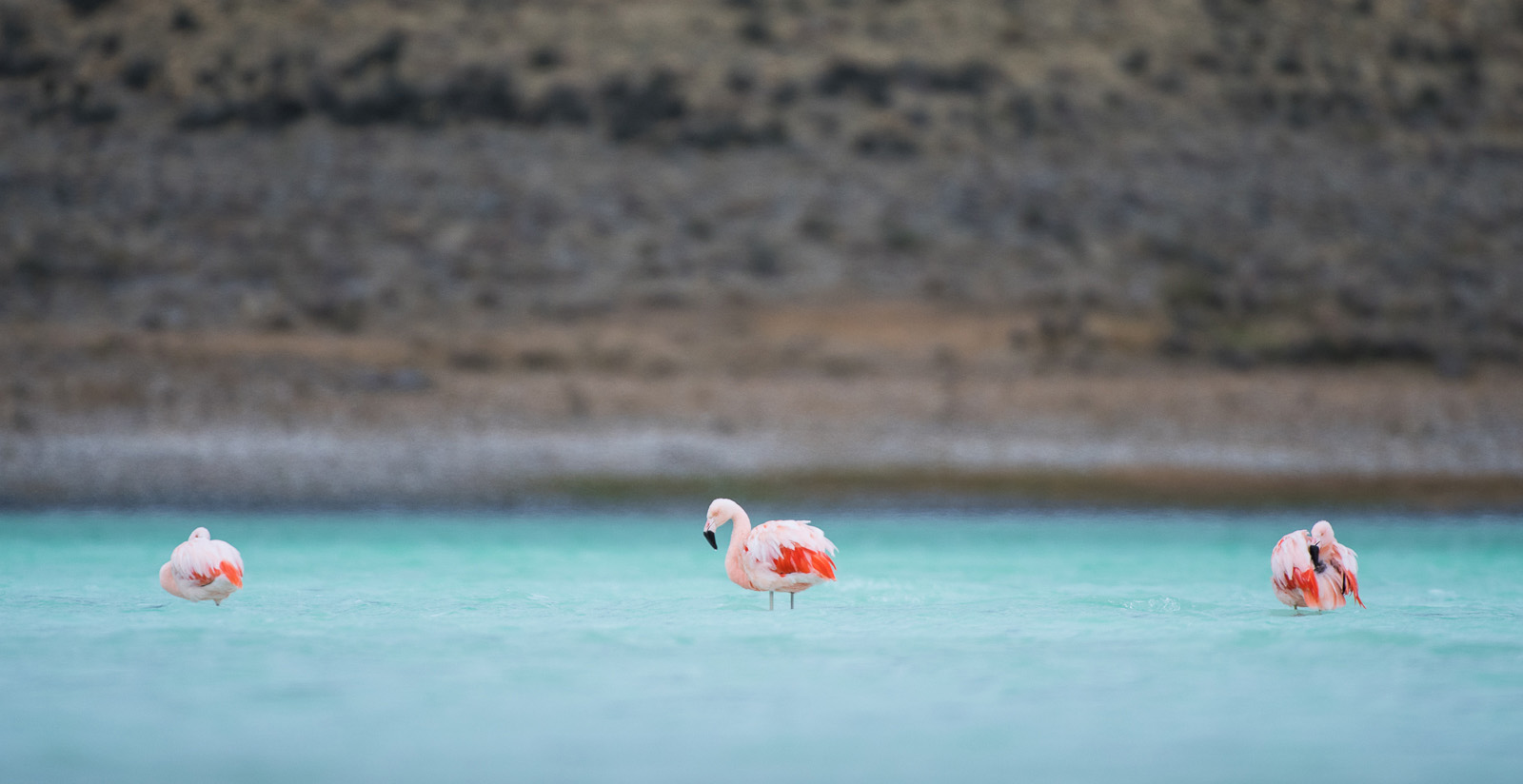
It seemed each lake in Torres Del Paine National Park had its own unique shade of blue or green — due to the sediment in the water. A nice contrast to the Chilean flamingos, that although not everywhere, were a fairly common sight. Nikon D500 with Nikkor 200-400mm lens (at 400mm) ISO 400, f/4 at 1/800th of a second
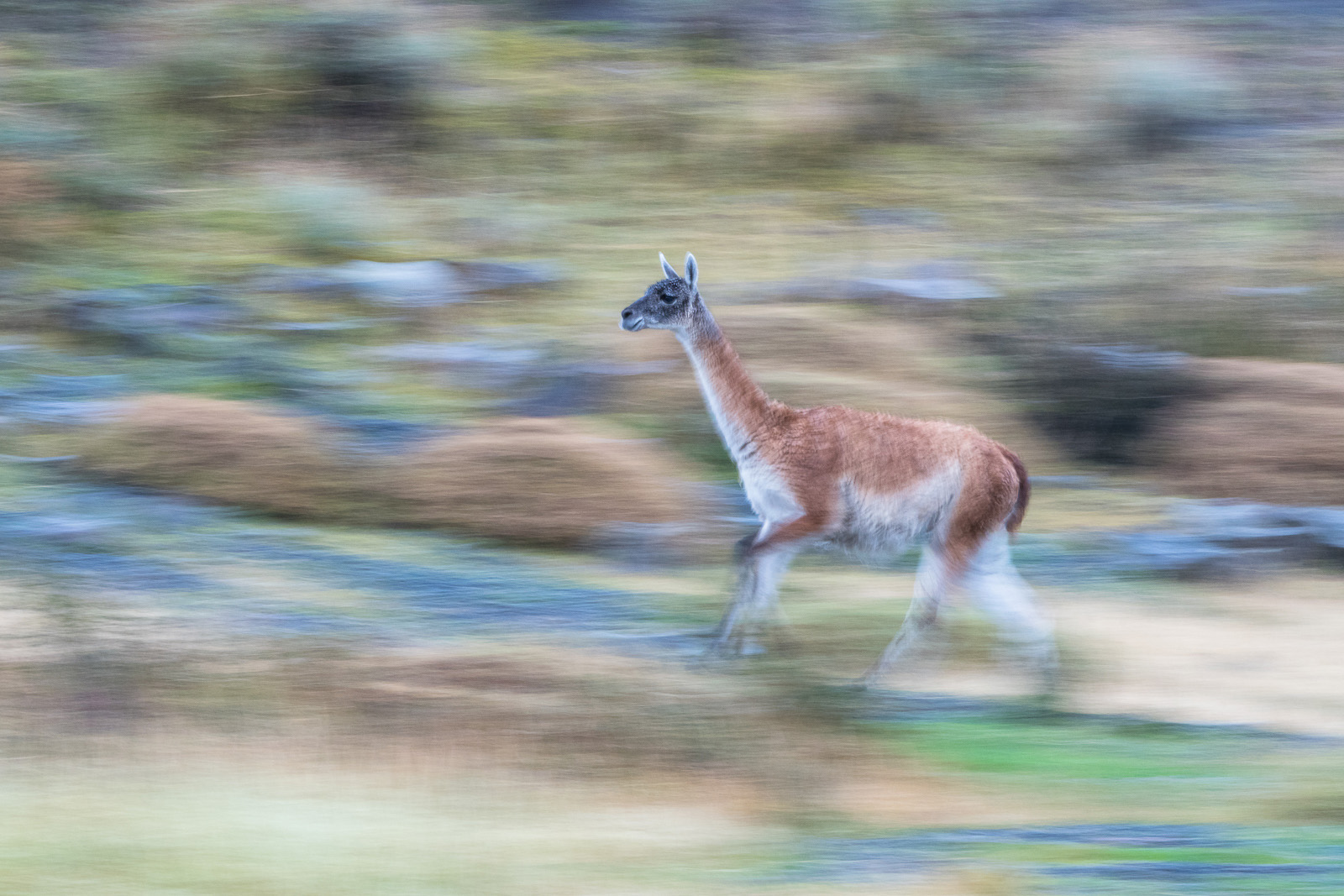
I always try to grab a few slow-shutter panning shots when I can. Guanacos were so ubiquitous in Torres Del Paine that it made it easy to experiment. In this case, 1/15th of a second seemed to be the perfect speed. Nikon D500 with Nikkor 200-400mm lens (at 310mm) ISO 800, f/20 at 1/15th of a second
We use cookies to enhance your experience while using our website. If you are using our Services via a browser you can restrict, block or remove cookies through your web browser settings. We also use content and scripts from third parties that may use tracking technologies. You can selectively provide your consent below to allow such third party embeds. For complete information about the cookies we use, data we collect and how we process them, please check our Privacy Policy