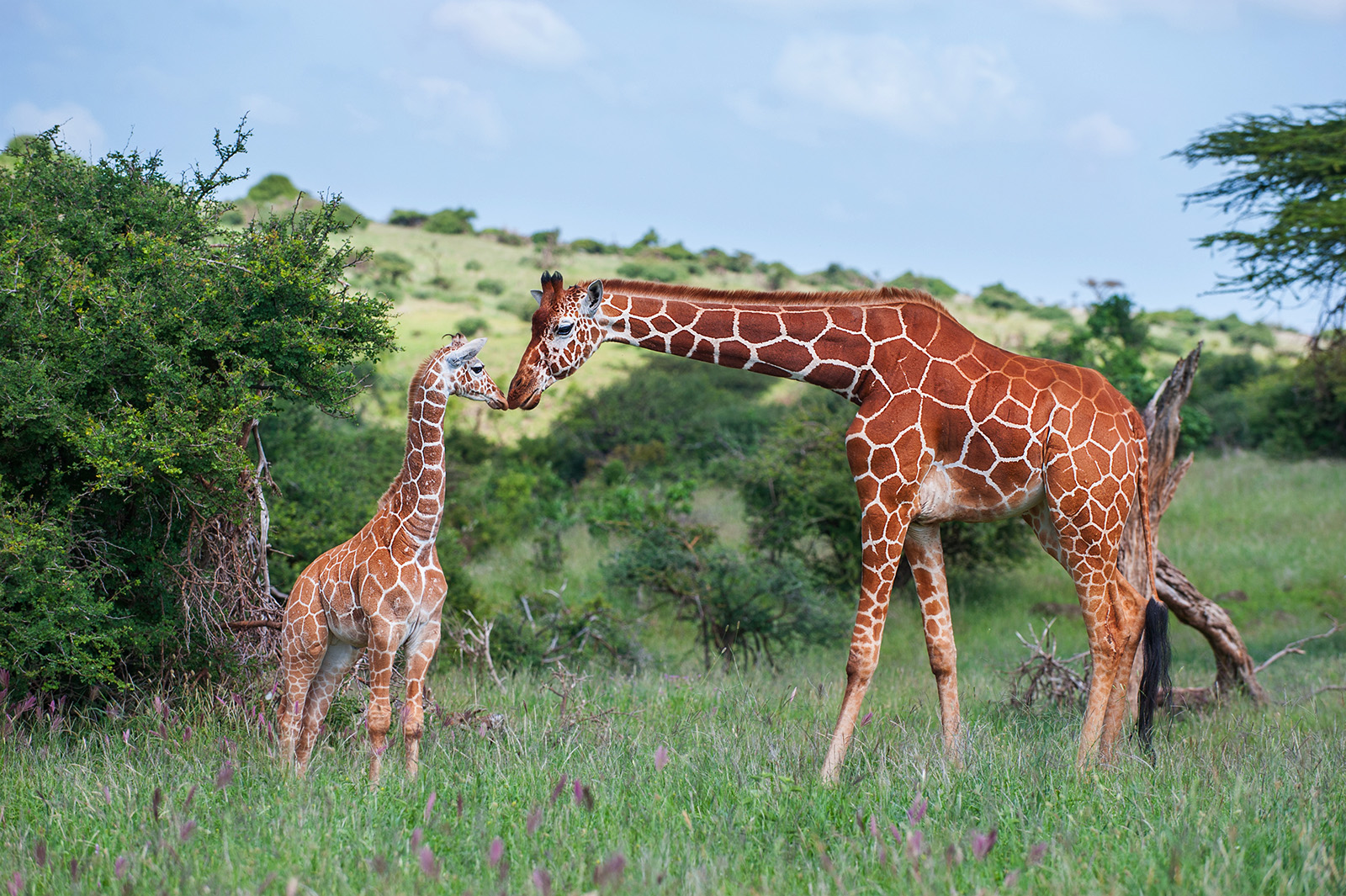
About five years ago, I posted a closer crop of this mother reticulated giraffe and her baby. Here’s a wider view which I think I now like better. I was in Kenya in November, the time of the short rains, which meant plenty of great clouds and lush green rolling hills — the perfect backdrop for all the great wildlife. Nikon D700 with Nikkor 70-200mm lens (at 150mm) ISO 400, f/4.5 at 1/1600th of a second
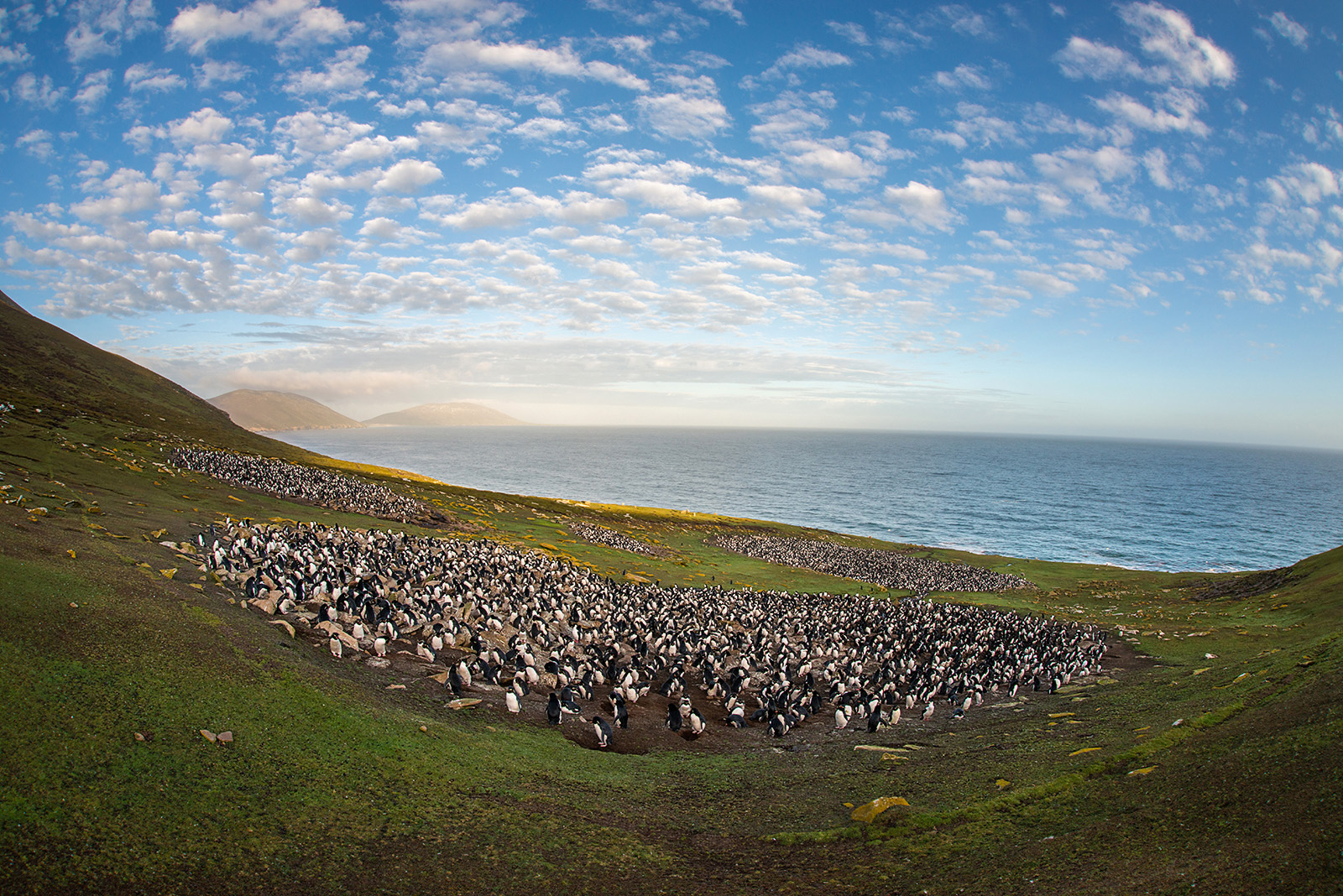
With my 15 millimeter fisheye lens, I was able to capture the three main groups of rockhopper penguins that live in this colony on Saunders Island in the Falkland Islands. It was great to have this place completely to myself when I visited in October of 2014. Nikon D800 with Sigma 15mm fisheye lens, ISO 200, f/18 at 1/100th of a second
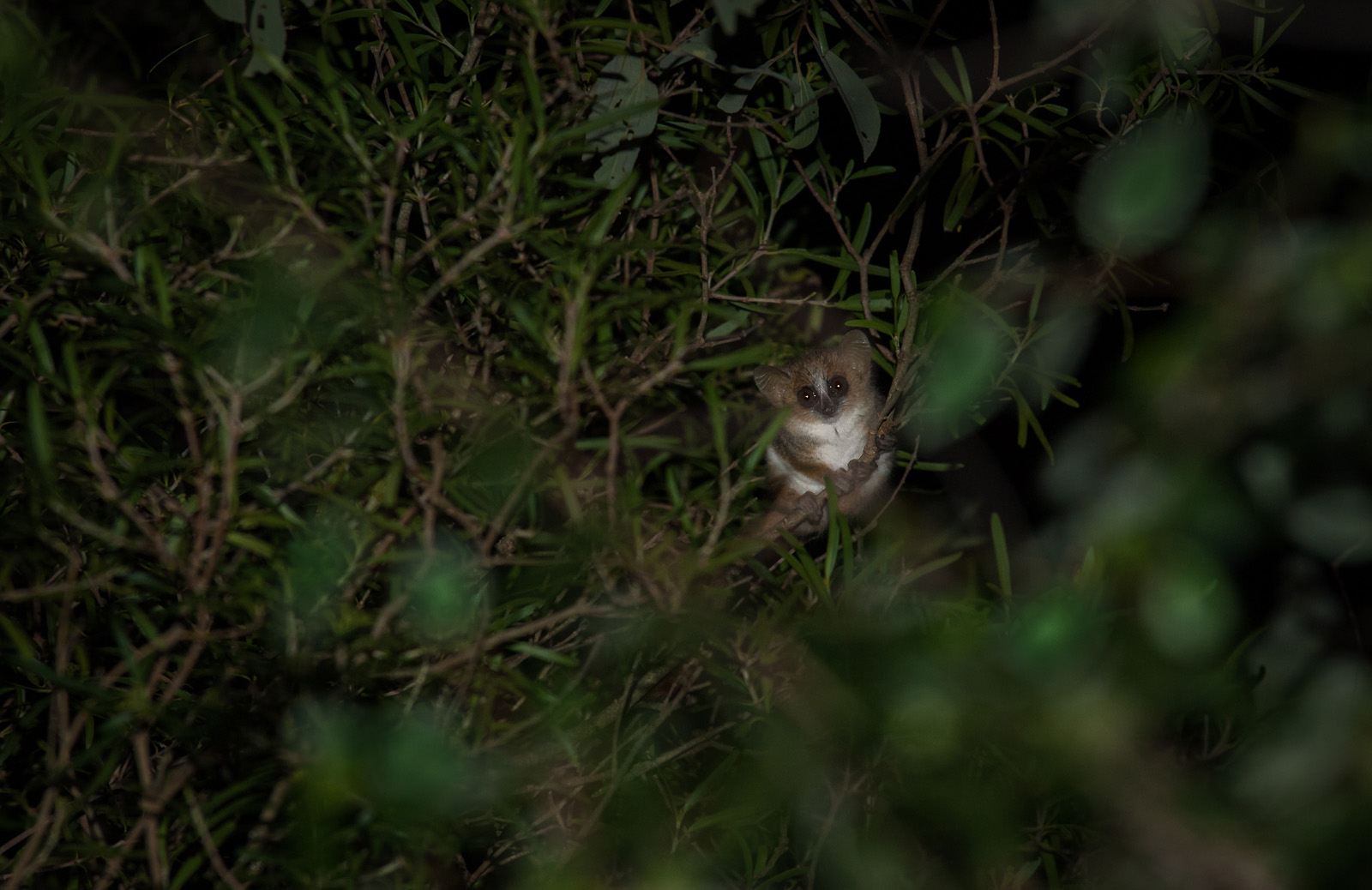
Mouse lemurs are one of the smallest primates in the world, although the gray mouse lemur is the largest of the mouse lemurs. Still, they measure just ten inches in length, half of which is the tail, and weigh about two ounces. They are strictly nocturnal and quick little guys so were difficult to photograph. This one stopped for just a second to check me out and I was able to get the shot. Like all lemurs, they are found only in Madagascar and the surrounding islands. Nikon D200 with Nikkor 80-200mm lens (at 200mm) ISO 200, f/4.5 at 1/60th of a second, Nikon SB-600 flash
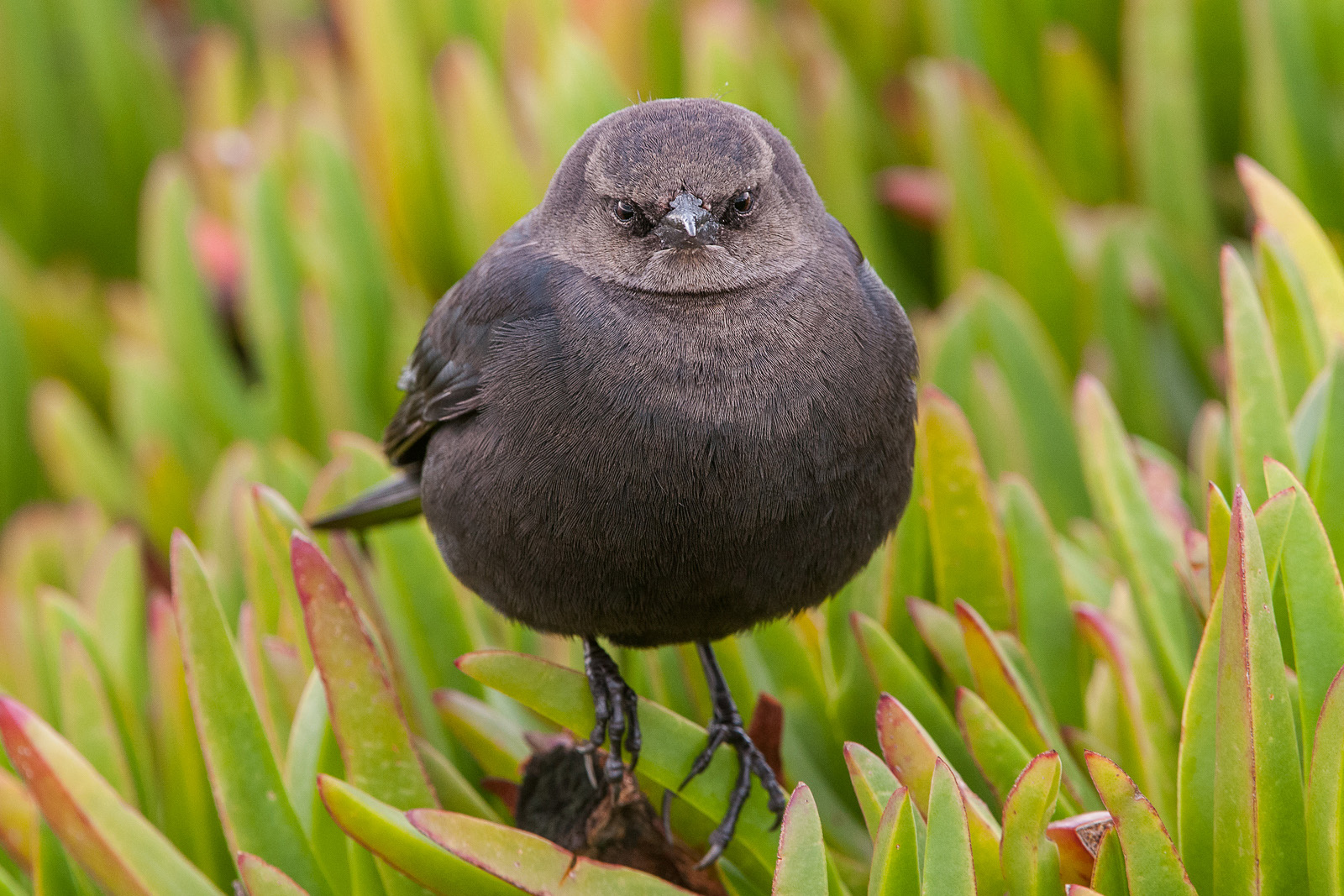
I believe this to be a female Brewer’s blackbird, but can’t be sure. Regardless, she had quite a scowl on her face as she stared me down from her perch in the vegetation above the oceanside cliffs in Santa Cruz, California. Nikon D300 with Nikkor 200-400mm lens (at 400mm) ISO 800, f/6.3 at 1/200th of a second
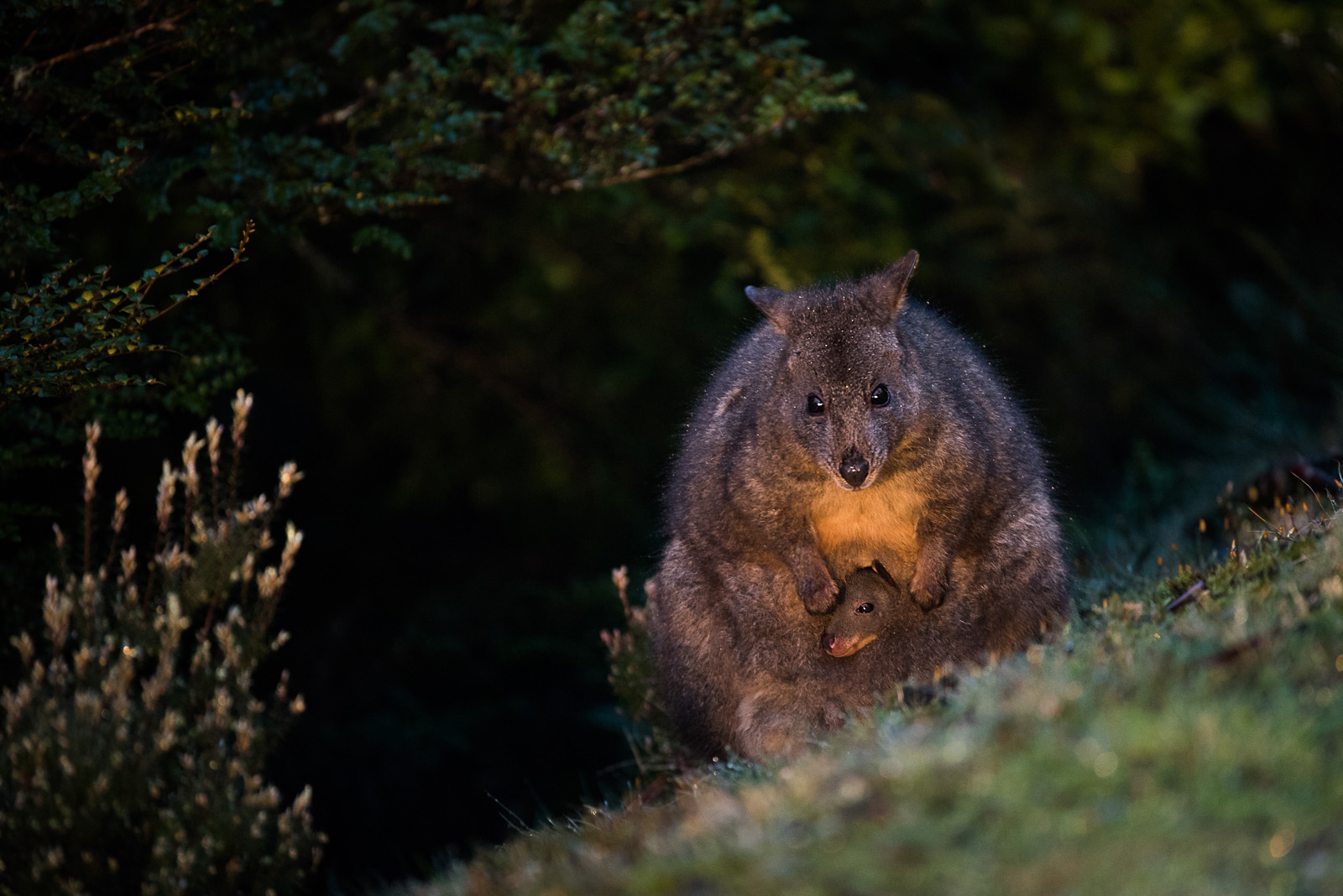
Macropods are any of the marsupials in the kangaroo family. Pademelons are very small macropods. This mother and her joey were foraging along the side of the road in Cradle Mountain National Park in Tasmania. I used the light from my car’s headlights to illuminate the animals as daylight quickly turned into night. Nikon D810 with Nikkor 200-400mm lens (at 400mm) ISO 3200, f/4 at 1/40th of a second
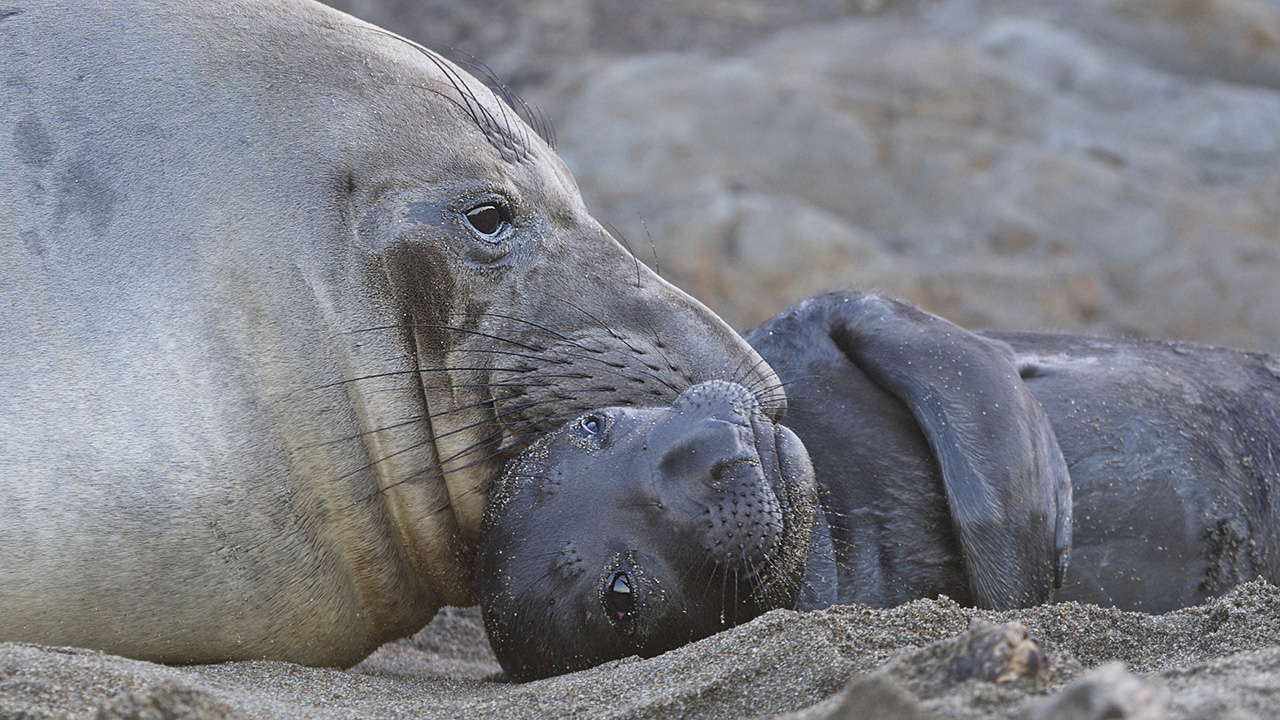
There are two species of elephant seal, the southern, which I photographed in the Falkland Islands and the northern, which are common up and down the California coast. This mother and her pup are northern elephant seals. On this particular beach near San Simeon, California, there were about fifty or so mothers, all with a single newborn pup. Nikon D300 with Nikkor 200-400mm lens (at 270mm) ISO 400, f/5 at 1/125th of a second
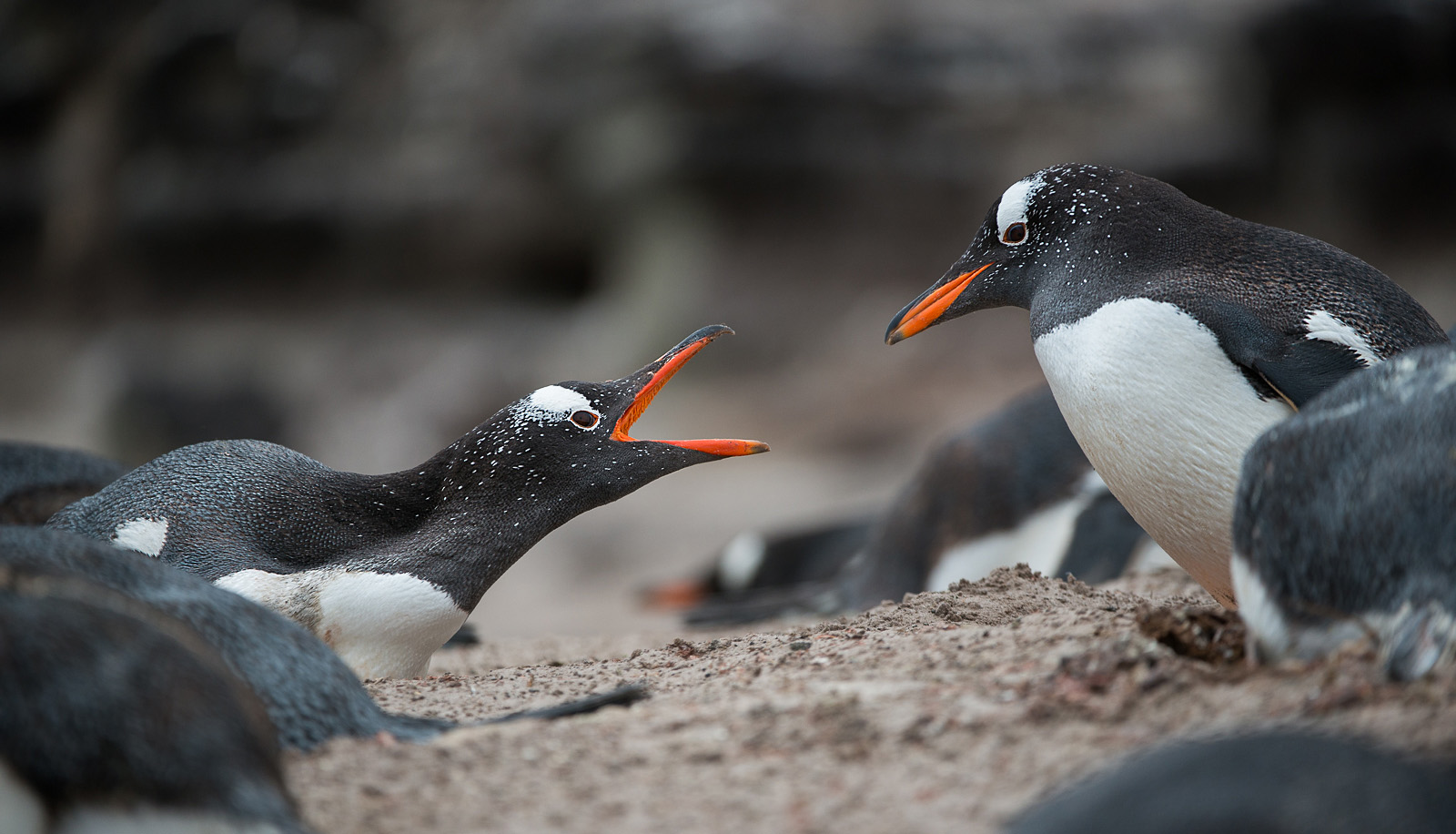
Penguin colonies seem to be a constant source of bickering. And this colony on Saunders Island in the Falklands was no different. I zoomed in on these two gentoo penguins as they were having a few words with each other amongst all the other squabbling going on all around them. Nikon D800 with Nikkor 200-400mm lens (at 340mm) ISO 800, f/4 at 1/1000th of a second
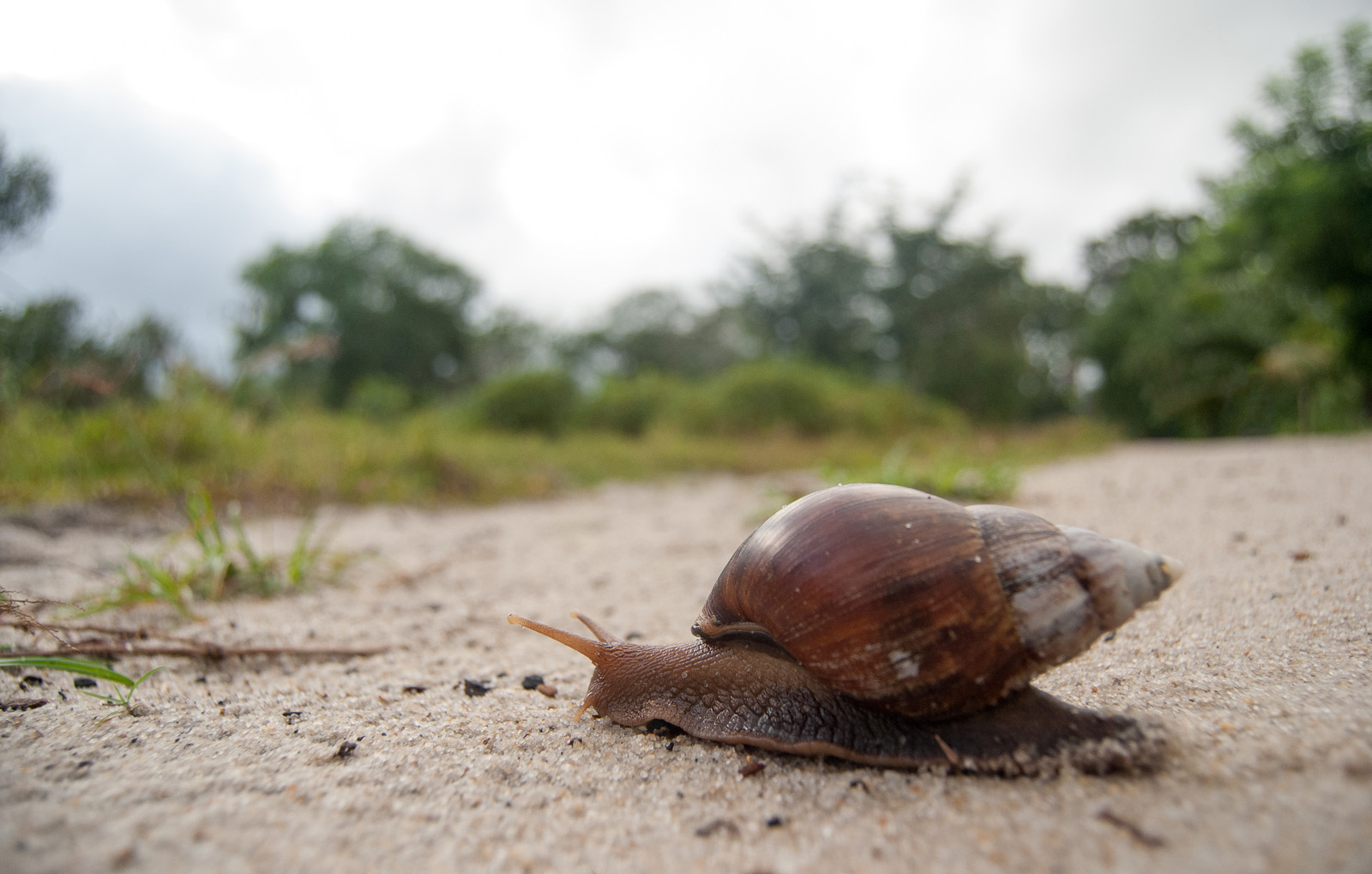
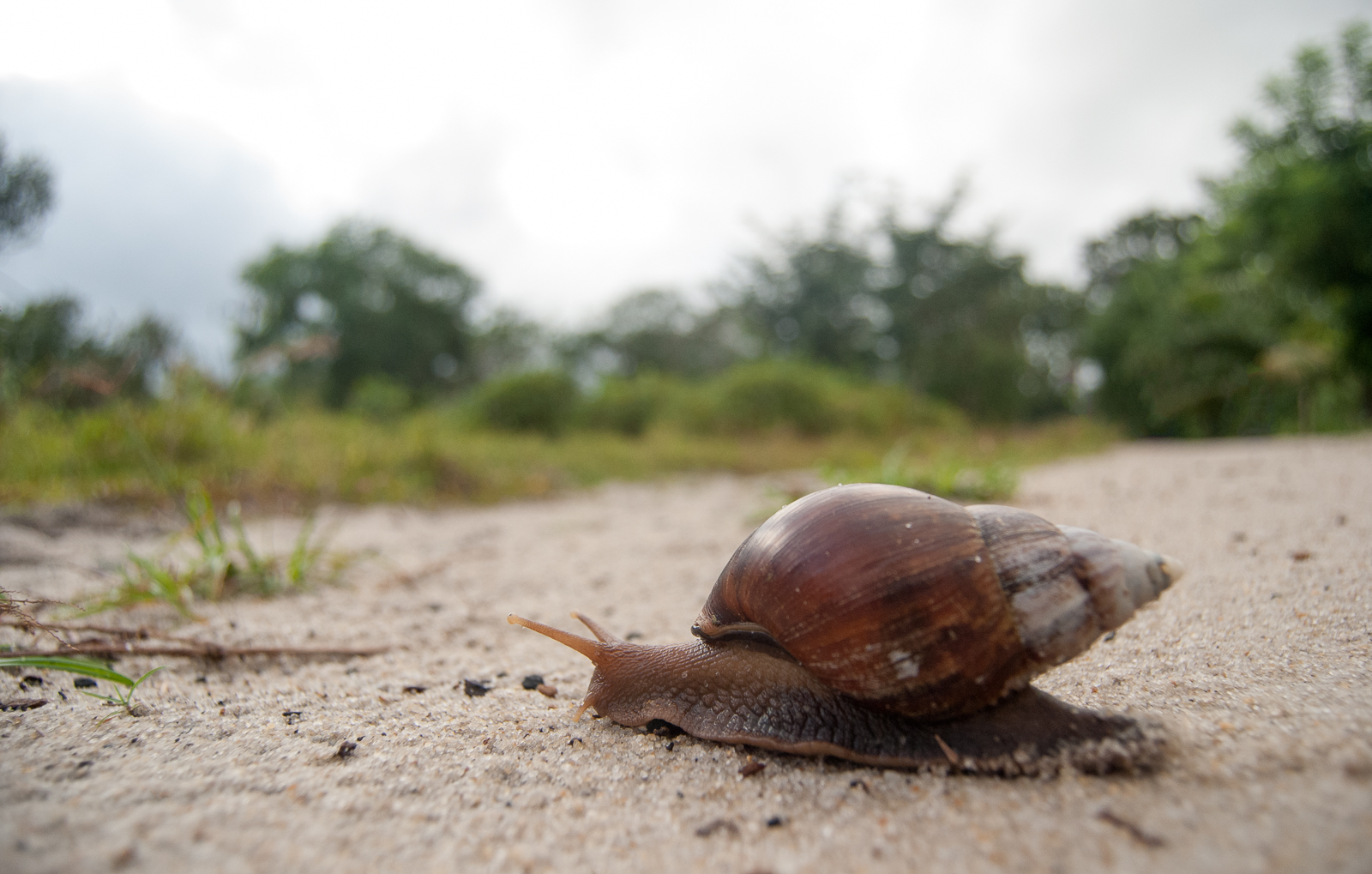
Something a little different today. This is an African giant snail. They can grow to as big as eight inches in length. This one was making its way across a sandy trail in the town of Maroantsetra in Madagascar. Nikon D40X with Nikkor 18-55mm lens (at 18mm) ISO 400, f/4 at 1/640th of a second
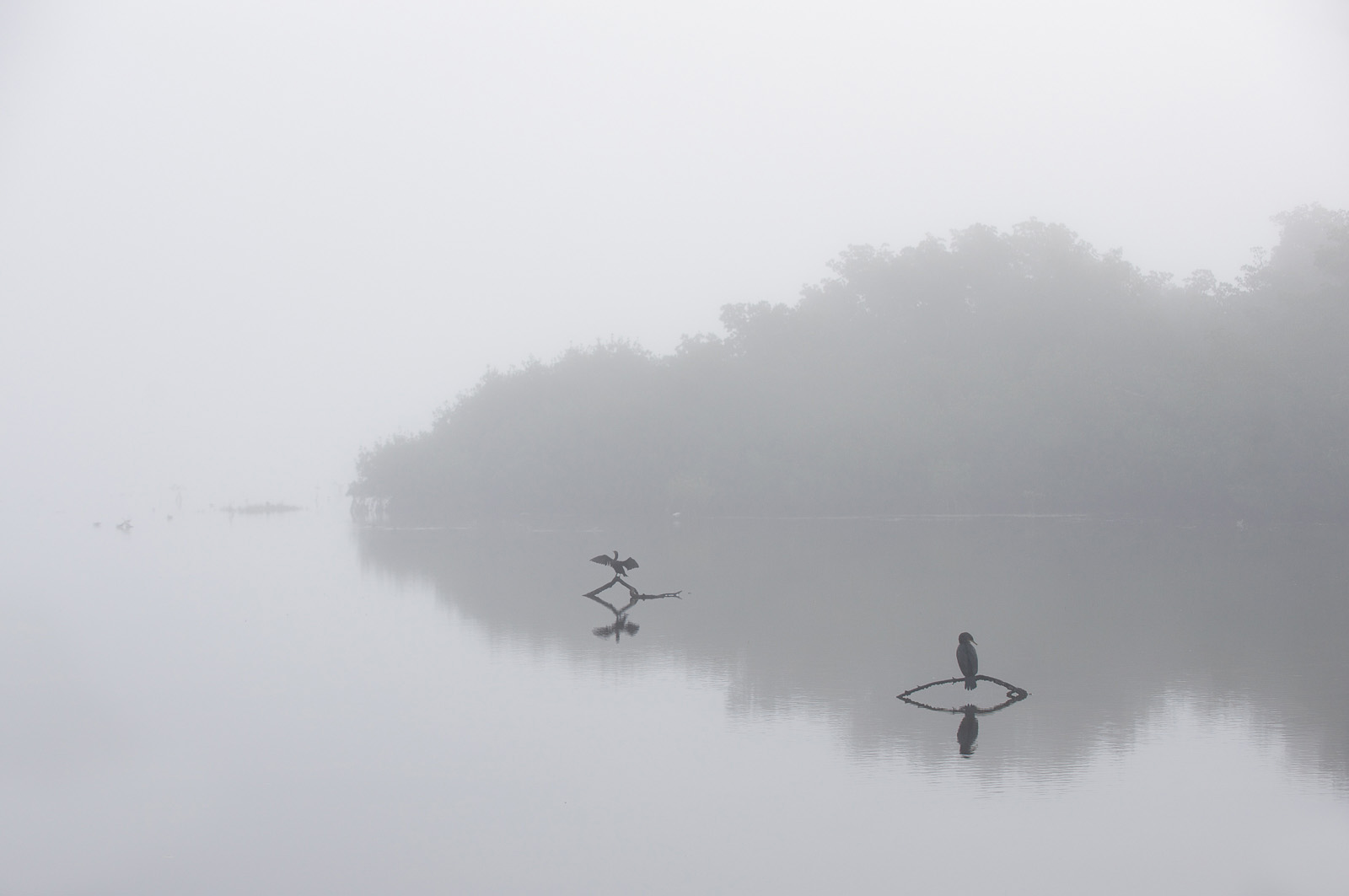
It looked like it would be a difficult day to photograph birds because of all the fog, but it ended up yielding some nice atmospheric shots, like these two cormorants perched near the water’s surface at Ding Darling National Wildlife Refuge in Sanibel Island, Florida. Nikon D700 with Nikkor 70-200mm lens (at 80mm) ISO 400, f/4.5 at 1/2000th of a second
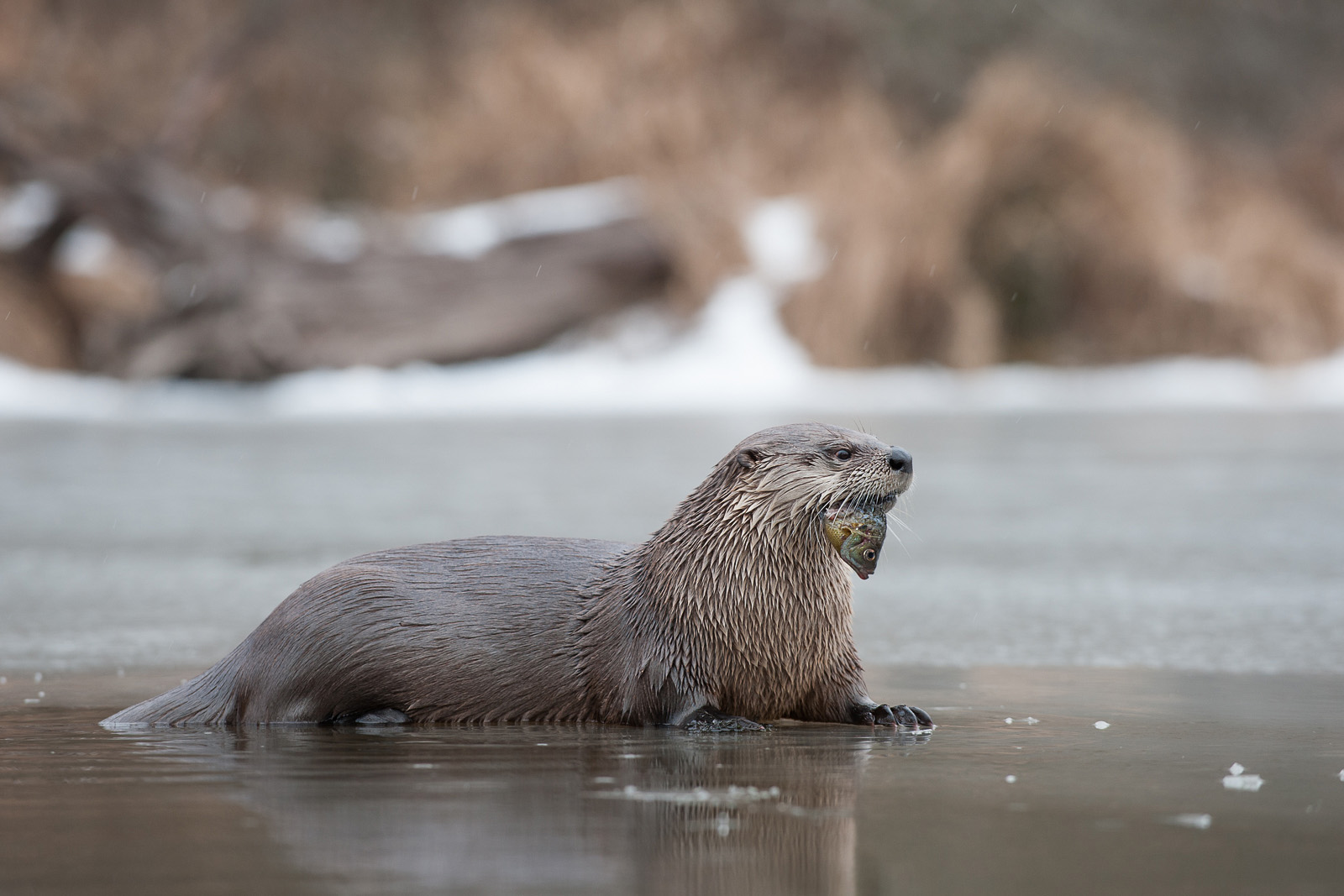
As I’ve mentioned before, Muscatatuck in Indiana is one of the best places in the country to photograph river otters. They can be found all year round, but I like to go in the winter when they come out on the ice to rest and to eat fish. For this shot, I was laying belly down on the edge of the ice with my camera on the ground. The otter was unusually tolerant of my close approach. Part of that might have had to do with the fact that it was raining and the sound of my shutter was dampened. Nikon D700 with Nikkor 70-200mm lens (at 200mm) ISO 400, f/5 at 1/500th of a second
We use cookies to enhance your experience while using our website. If you are using our Services via a browser you can restrict, block or remove cookies through your web browser settings. We also use content and scripts from third parties that may use tracking technologies. You can selectively provide your consent below to allow such third party embeds. For complete information about the cookies we use, data we collect and how we process them, please check our Privacy Policy