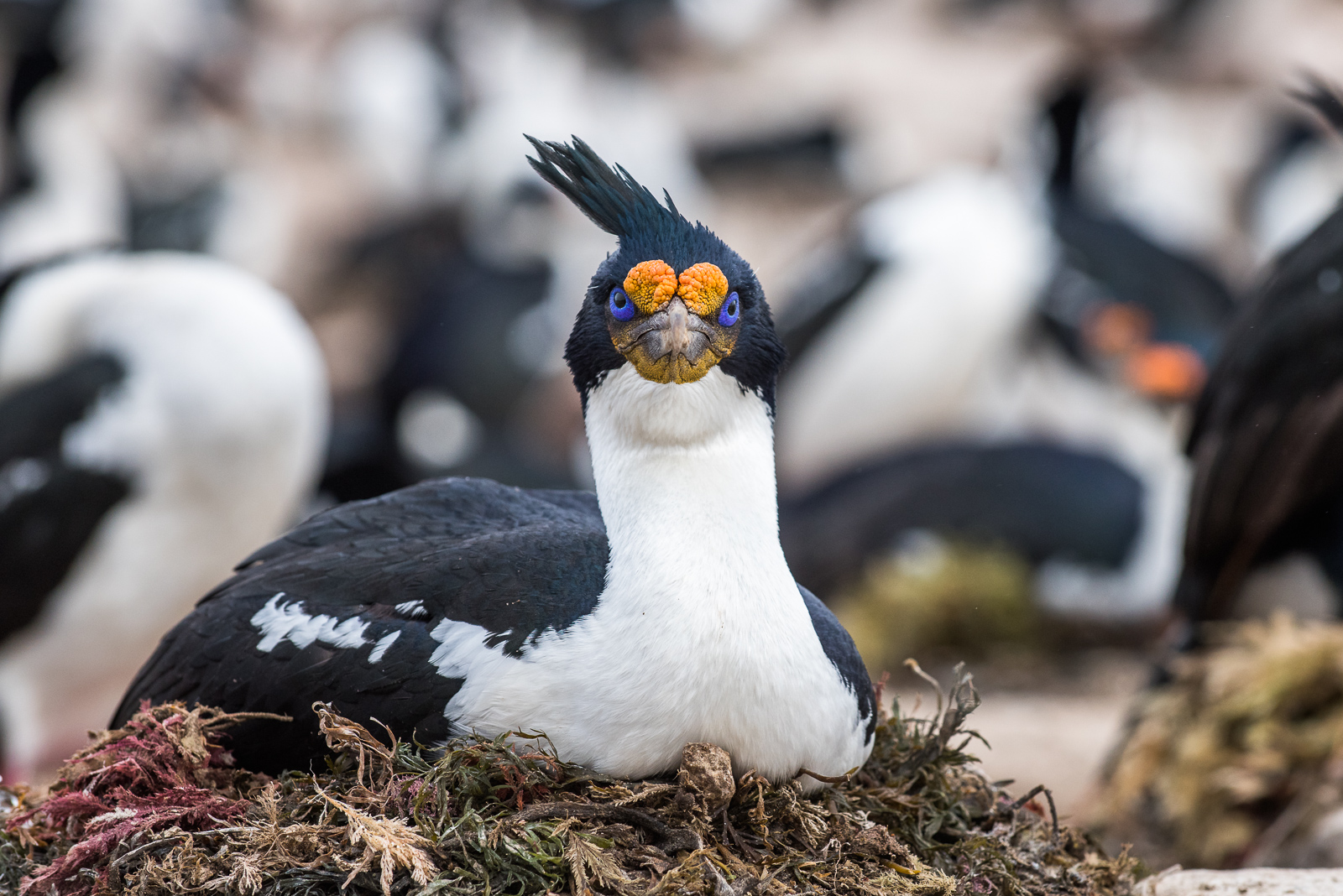
This is the colorful, yet odd looking, imperial shag — also known as the imperial cormorant. They were nesting on the southern edge of Sea Lion Island in the Falklands. All day, they would fly out to sea before returning with a beak full of kelp. Nikon D810 with Nikkor 70-200mm lens (at 175mm) ISO 400, f/5.6 at 1/2000th of a second
Also known as the crab-eating macaque, these monkeys have a long history of living alongside humans. In the past, they’ve been seen as both pests, and as sacred. They are now best known for their role in medical research. I met this young macaque just outside my bungalow while staying in Tanjung Puting National Park in Borneo, Indonesia. My next post will be next Wednesday as I’ll be taking a long weekend to go visit family. Nikon D700 with Nikkor 70-200mm lens (at 200mm) ISO 800, f/2.8 at 1/250th of a second
This wombat was scurrying along as the sun hit the horizon late one afternoon. I was on Maria Island, a bit of a Noah’s Arc of Tasmanian wildlife, just off the southeast coast. Nikon D810 with Nikkor 200-400mm lens (at 400mm) ISO 400, f/4 at 1/400th of a second
Always nice to see these giant creatures with plenty of room to roam. The Ol Pajeta Conservancy in Kenya, where I took this photo, is an interesting place. During the colonial days, the 90,000 acres of land were used for cattle grazing (wild animals, at the time, were deemed to have no value to landowners and they were displaced for the most part by ranchers). Elephants, however, always used the land as a transit route. Eventually, cattle ranching became less profitable, and it became too expensive to continually repair the fences that the elephants inevitably destroyed. Over the years, several different conservation groups have helped return the land to its wild origins. Today, it not only is inhabited by elephants, but by many other African plains animals, including the big five (elephants, lions, leopards, buffalo and rhino). Nikon D700 with Nikkor 70-200mm lens (at 170mm) ISO 400, f/2.8 at 1/1000th of a second
These two mountain goat kids had been playing with each other for quite a while, unmindful of any adult supervision. Eventually, they looked up to see that mom and company had moved further up the mountain. I caught them hurrying to catch up as the sun dipped below the clouds near the top of Mount Evans in Colorado last summer. Nikon D810 with Nikkor 17-35mm lens (at 32mm) ISO 800, f/4 at 1/800th of a second
This little black bear cub stopped to give himself a quick cleaning before continuing up the tree. As I’ve mentioned before, black bears can either be black, blonde, or cinnamon (like this guy), and many shades in-between. Nikon D800 with Nikkor 200-400mm lens (at 400mm) ISO 400, f/4 at 1/640th of a second
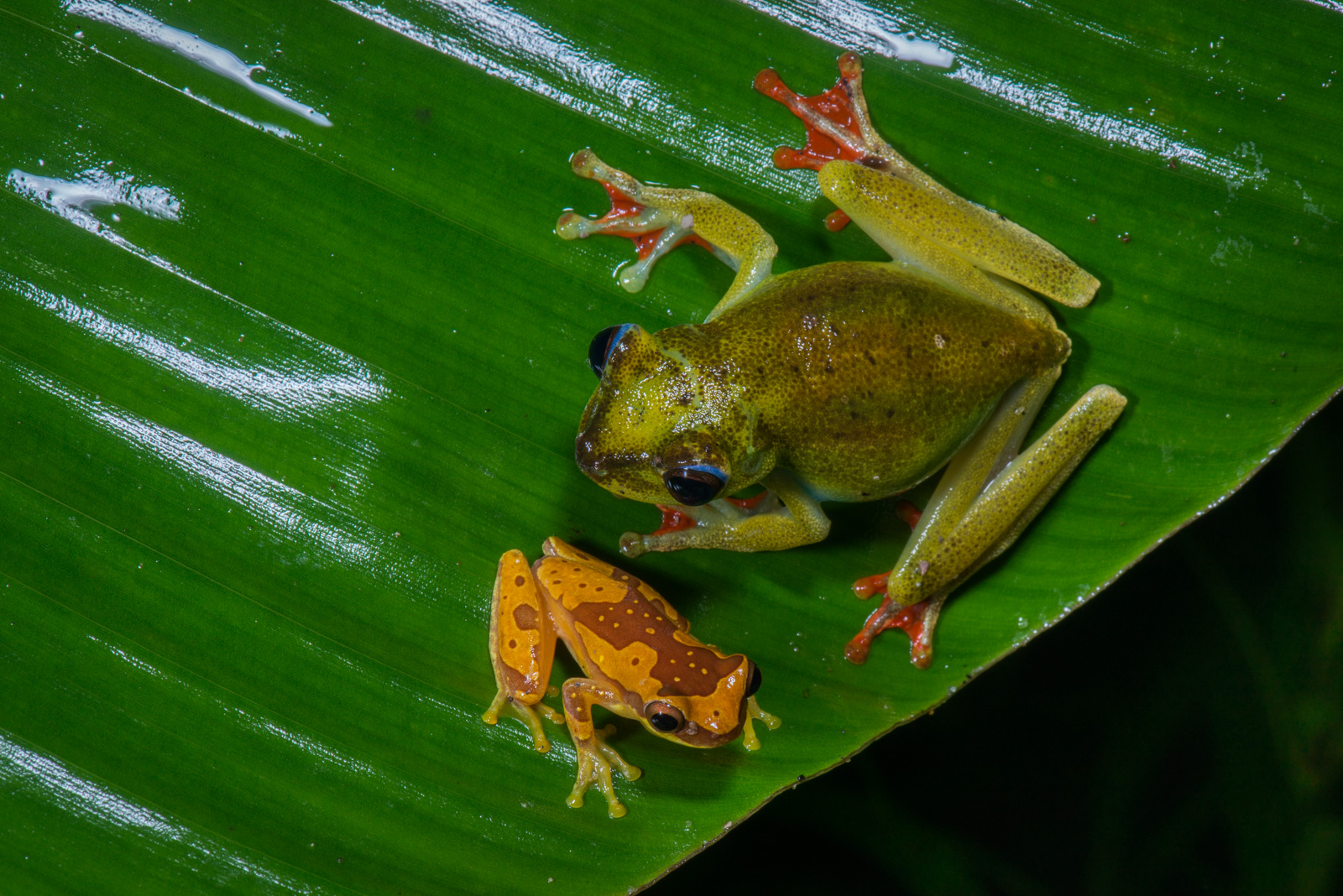
I previously posted a canal zone tree frog and an hourglass tree frog from my trip to Panama. But not in the same photo on the same leaf. These two completely unrelated frogs seemed perfectly content to be sharing the same real estate. This one goes out to the other frog lover in my family, my sister Mo, in honor of her birthday on Sunday — a double shot of the Friday frog. Nikon D800 with Nikkor 105mm macro lens, ISO 200, f/25 at 1/60th of a second, two Nikon SB-900 flash units
Here’s another Bennett’s wallaby from my Tasmania trip. These guys are active during the day, but are even more active at night. I captured this shot well after the sun had set over Narawntapu National Park on the extreme northern coast. I used a slow shutter speed and high ISO to record the ambient light, while using a flash to freeze the wallaby. Nikon D800 with Nikkor 70-200mm lens (at 98mm) ISO 1600, f/5.6 at 1/30th of a second, Nikon SB-900 flash
The Carolina anole is one of those animals — and there are lots of them — that goes by more than one name, including, in this case, the green anole, American anole and red-throated anole. It is also sometimes called the American chameleon, which is odd because it isn’t a chameleon at all, but it does have the chameleon-like ability to change colors. And in this shot, the little guy is giving me a chameleon-like stare down. This is another one from Fourth of July weekend down in Florida, this time at the Corkscrew Swamp Sanctuary near Naples. Nikon D810 with Nikkor 200-400mm lens (at 340mm) ISO 800, f/4 at 1/250th of a second
I met this mother orangutan and her baby on my trip to Borneo back in 2009. Within Tanjung Puting National Park, there are several former research centers so even though the orangutans are wild, they are used to human presence and quite habituated. Frame filling shots like this were relatively easy. Nikon D300 with Nikkor 200-400mm lens (at 200mm) ISO 800, f/7.1 at 1/80th of a second
We use cookies to enhance your experience while using our website. If you are using our Services via a browser you can restrict, block or remove cookies through your web browser settings. We also use content and scripts from third parties that may use tracking technologies. You can selectively provide your consent below to allow such third party embeds. For complete information about the cookies we use, data we collect and how we process them, please check our Privacy Policy