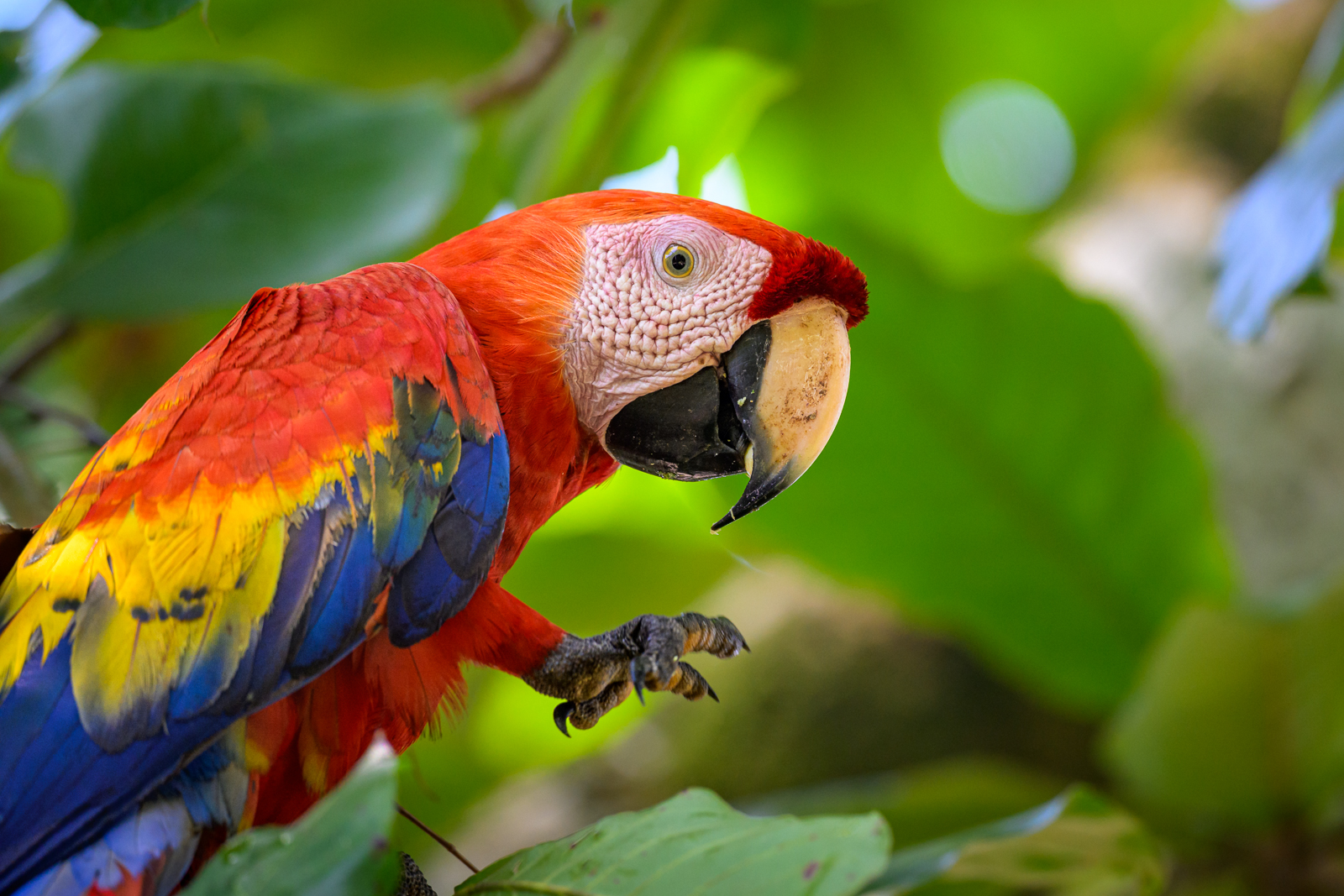
The scarlet macaw is truly one of the most brilliantly colored birds in the world. They are also highly intelligent and form strong lifelong bonds. They can either be seen flying in synchronized pairs or in noisy flocks. Known for their powerful beaks, they can crack open the toughest nuts and seeds with ease. Scarlet macaws also play a crucial role in their ecosystem by dispersing seeds across the forest. Sadly, habitat loss and the illegal pet trade have made them locally endangered in parts of their range. Nikon Z8 with Nikkor 500mm PF lens, ISO 1250, f/5.6 at 1/400th of a second.
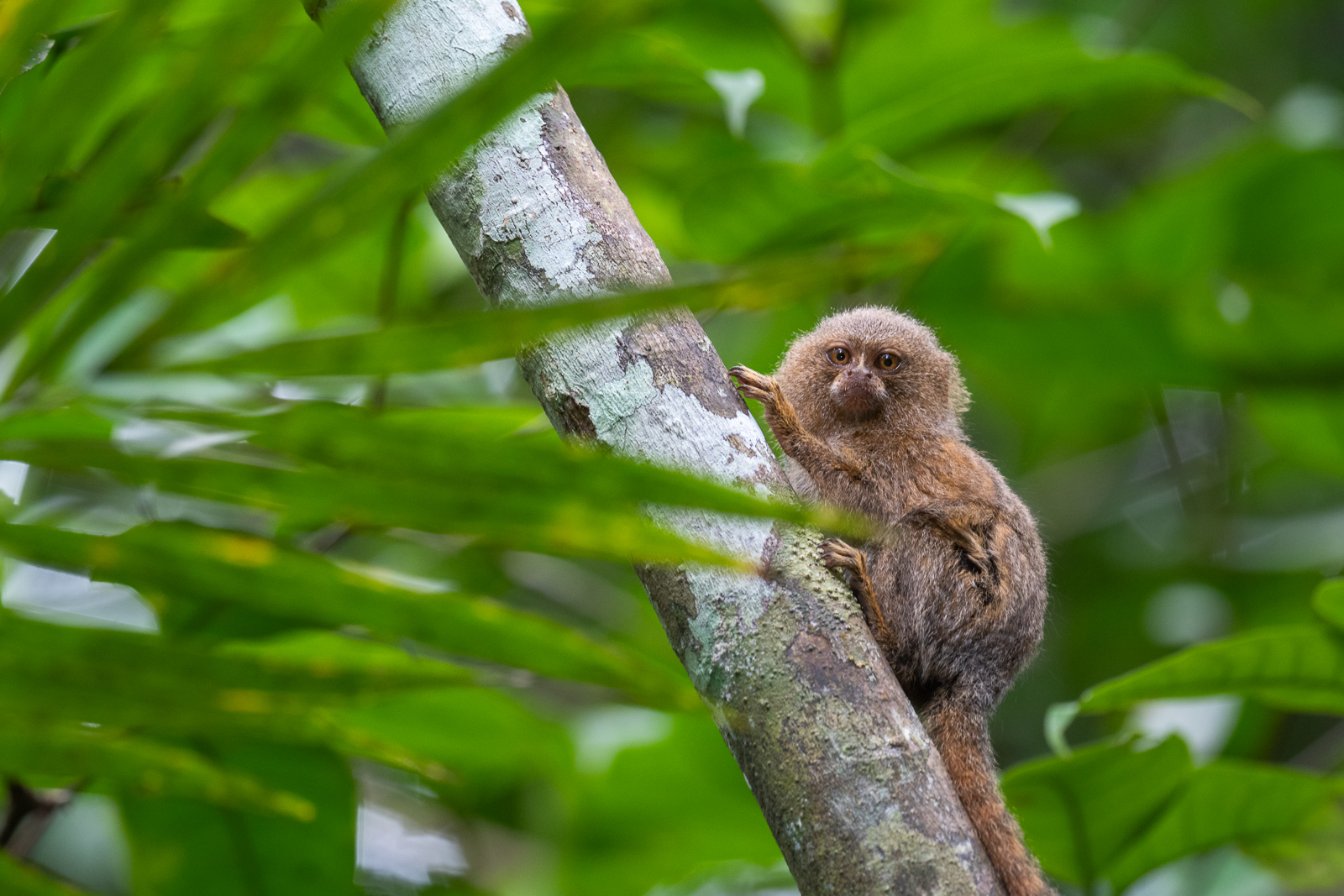
The pygmy marmoset (Cebuella pygmaea) is the world’s smallest monkey, measuring just 5 to 6 inches long (excluding its tail). Native to the Amazon rainforest, it lives high in the trees and feeds mainly on tree sap and gum, which it extracts using specialized lower teeth. Despite its tiny size, the pygmy marmoset is incredibly agile, capable of leaping great distances between branches. Its high-pitched calls help keep family members in touch through the dense forest canopy. Photo captured in Loreto, Peru in the upper Amazon basin. Nikon D500 with Nikkor 500mm PF lens, ISO 800, f/5.6 at 1/160th of a second.
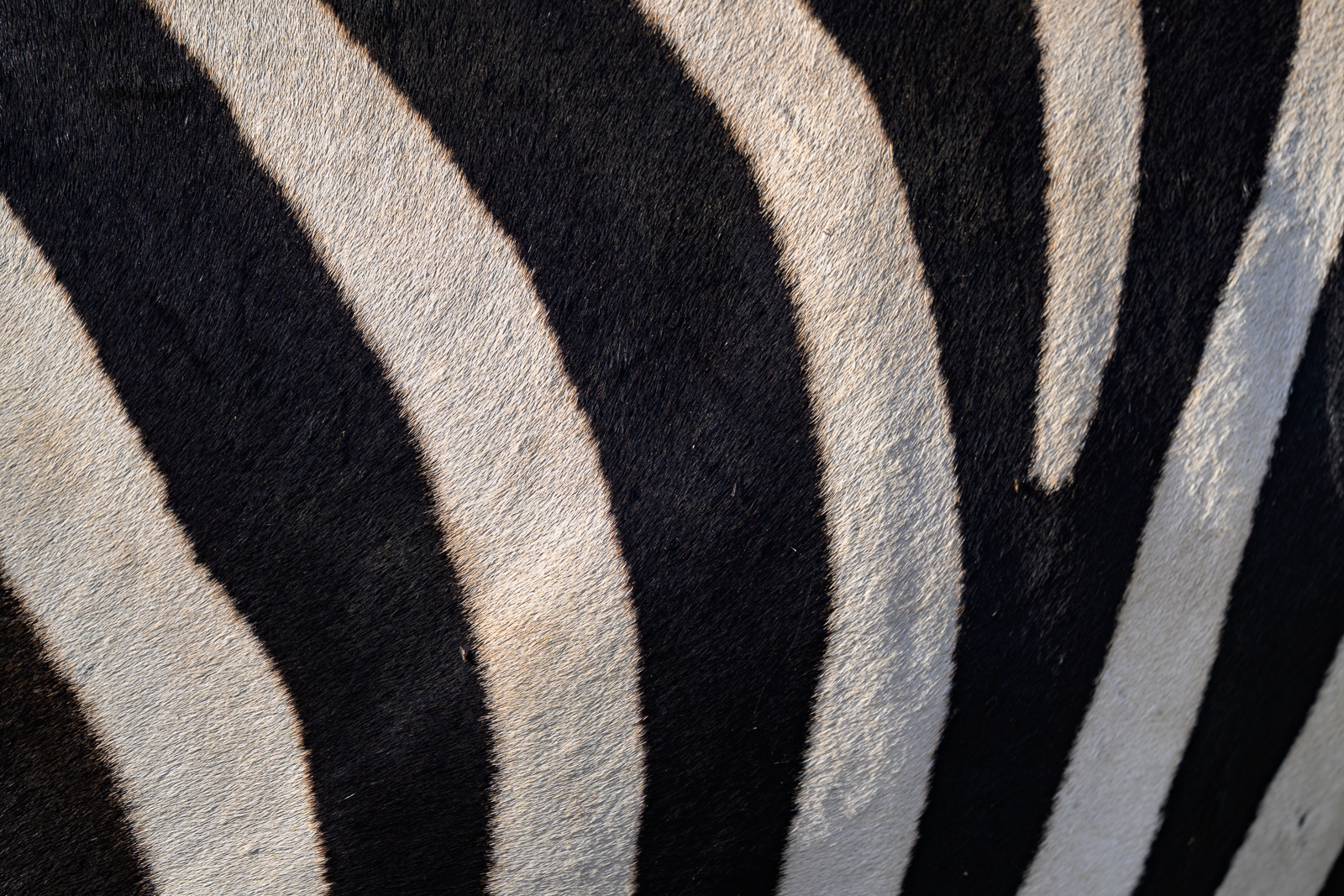
Probably more than you’ll ever need to know about a zebra’s coat, but here goes — the skin is black beneath its fur, and the stripes are formed by black and white hairs growing from follicles that contain melanocyte cells. The melanocytes are activated to produce melanin in the areas that form black stripes, while the melanocytes are deactivated in the areas that form white stripes, resulting in an absence of melanin for the white hairs. But why? The black and white stripes serve multiple purposes, though scientists are still debating exactly which is most important. One leading theory is that the stripes confuse biting insects like tsetse flies and horseflies, which struggle to land on the high-contrast patterns. The stripes may also help with thermoregulation. White hairs reflect sunlight while black hairs absorb it, creating micro-air currents that cool the skin. Additionally, the patterns may offer camouflage in tall grasses and help zebras recognize one another at a distance. And when a group is being pursued by a predator, all those stripes running together can prove very confusing. So now you know. Have a great weekend everyone. Nikon Z8 with Nikkor 500mm PF lens, ISO 180, f/5.6 at 1/640th of a second.
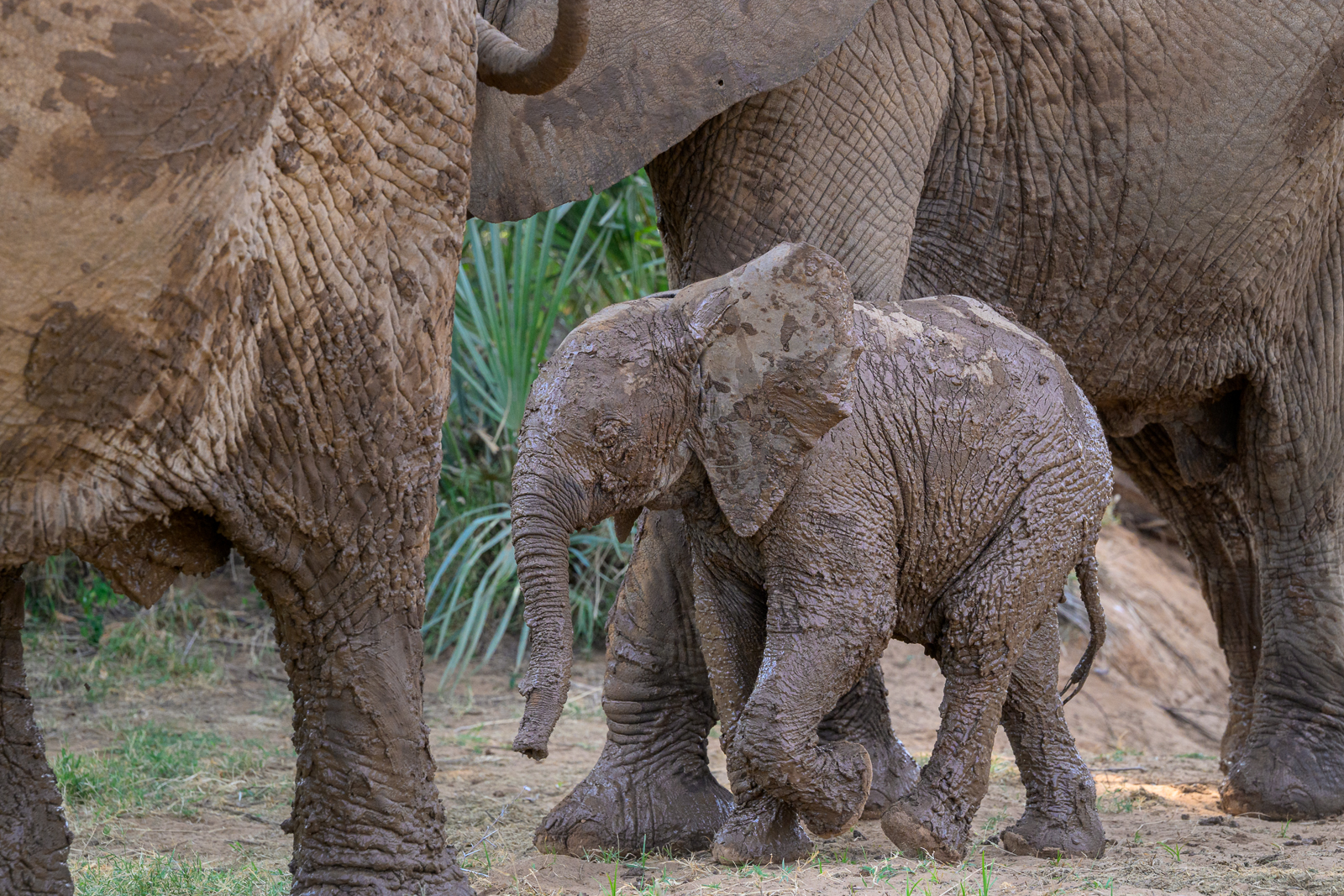
Elephants wallow in mud to protect their skin from the sun and biting insects. The mud acts like a natural sunscreen and bug repellent. It also helps cool them down, since elephants don’t sweat. For baby elephants, wallowing is especially important because their skin is more sensitive and they overheat more easily. Plus, it’s just plain fun. Young elephants love to splash, slide, and play in the mud as part of their social development. And it certainly looks like this little one was having a lot of fun. Nikon Z8 with Nikkor 70-200mm lens (at 145mm) ISO 2500, f/5.6 at 1/1600th of a second.
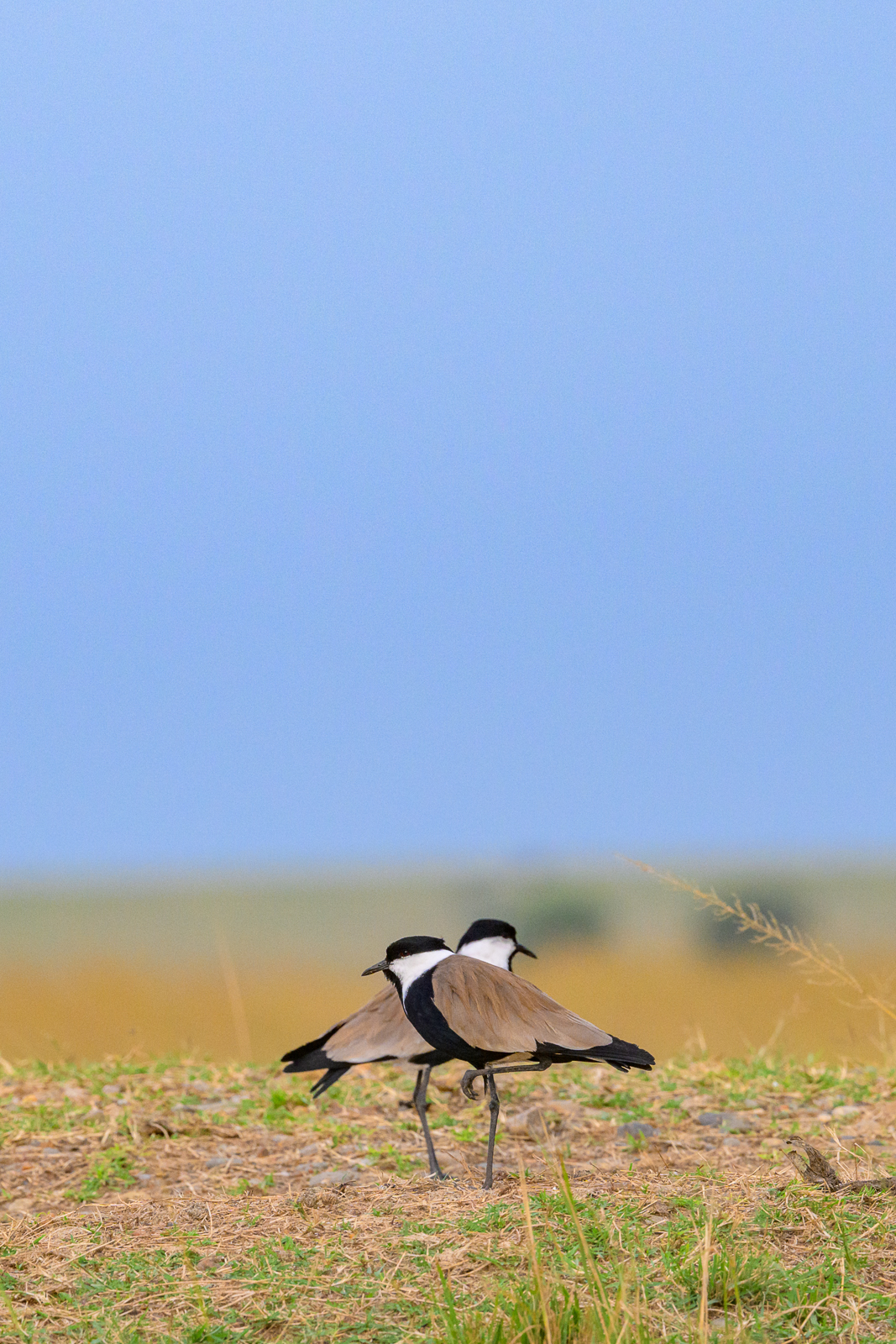
I try not to overlook any creatures we encounter on our safaris (within reason, of course). These are spur-winged lapwings, also known as spur-winged plovers. They’re often seen near freshwater lakes, marshes, and riverbanks. The name comes from the small, sharp spur on each wing, which they use to defend territory and nest. With bold black-and-white plumage, a chestnut back, and red eyes, they are both elegant and aggressive, unafraid to confront much larger intruders. Nikon Z8 with Nikkor 500mm PF lens, ISO 1100, f/10 at 1/500th of a second.
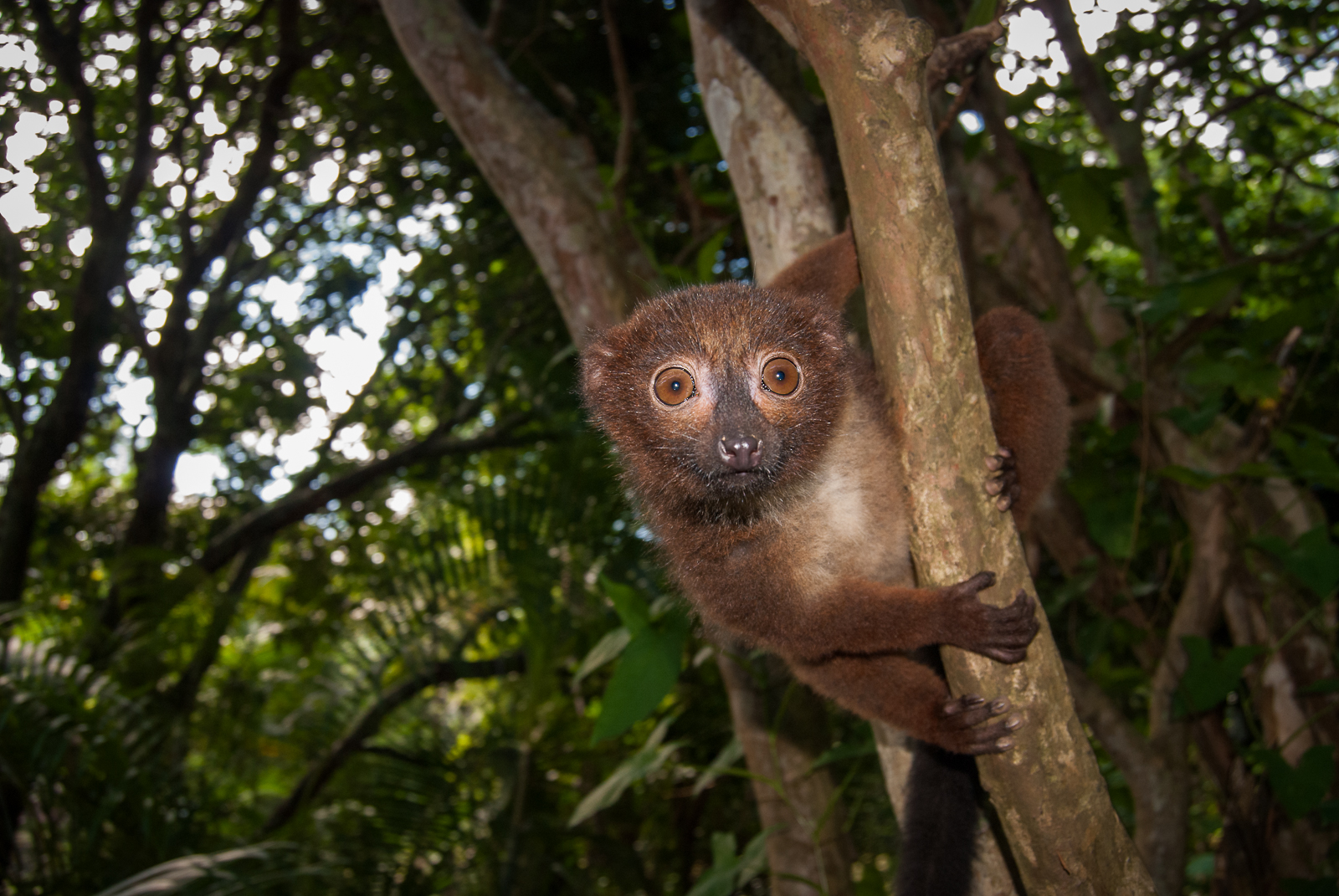
Earlier today, I was working on an itinerary for an upcoming trip to Madagascar with Crane Wildlife Tours. And by upcoming I mean fall of 2027. But it still got me excited to think about returning to my favorite country for wildlife. This image was taken on my first trip to the island nation back in 2007. Red-bellied lemurs are a medium-sized primate native to the eastern rainforests. Males have a distinctive reddish-brown belly, while females are usually duller in color. These lemurs are arboreal and live in small family groups, feeding mainly on fruit, leaves, and flowers. If you’d like to join us on the “upcoming” trip, please get in touch as the few remaining slots will likely go fast. Nikon D40X with Nikkor 18-55mm lens (at 18mm) ISO 400, f/5 at 1/60th of a second.
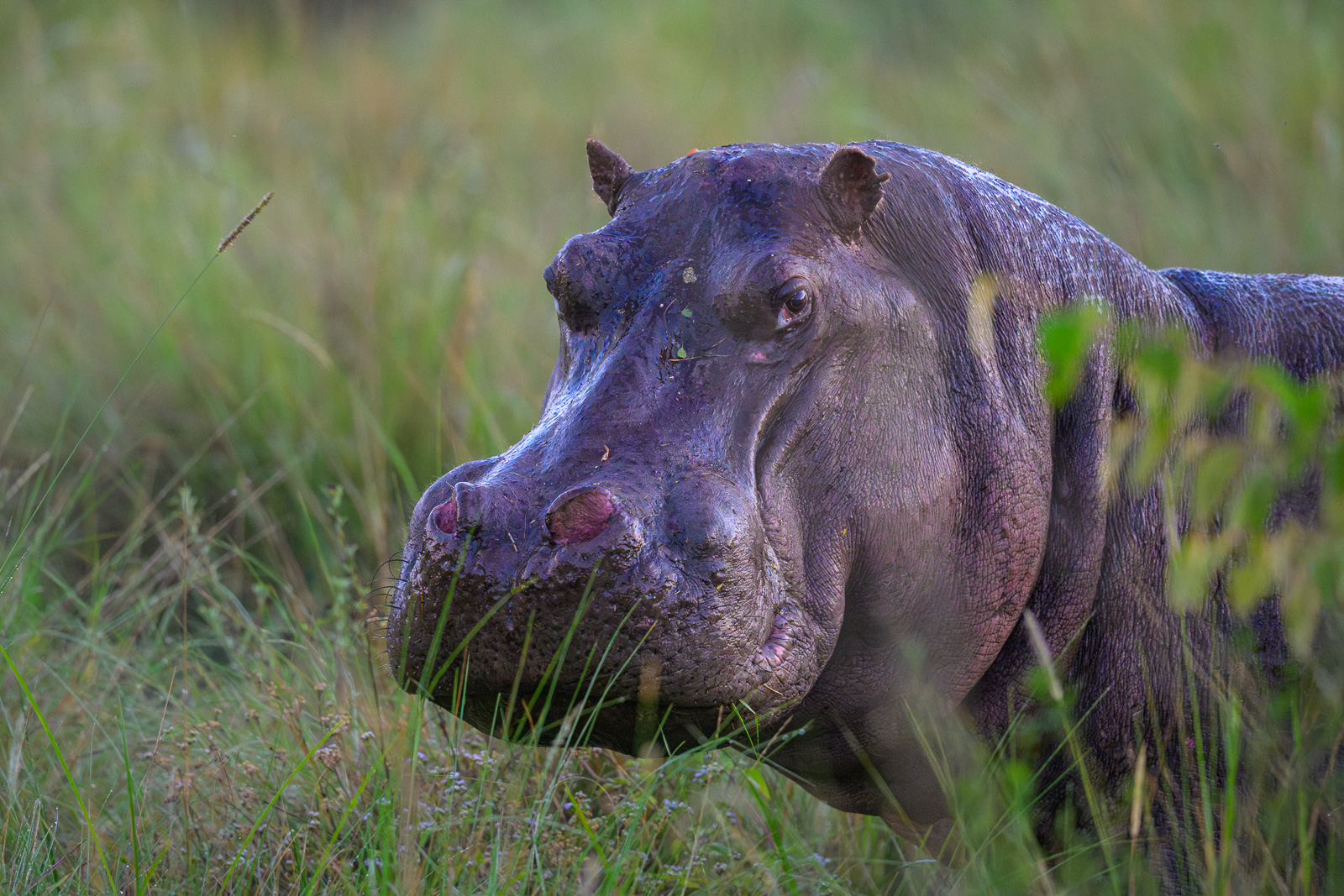
Some days just call for a portrait of the massive head of a hippopotamus. We saw this guy as we were leaving for the airstrip on our last day in the Masai Mara back in June. Always nice to see them out of the water (and at such close range). In case you’re wondering, a hippo’s head can be 3 feet wide and weigh up to 500 pounds.Nikon Z8 with Nikkor 500mm PF lens, ISO 8000, f/5.6 at 1/250th of a second.
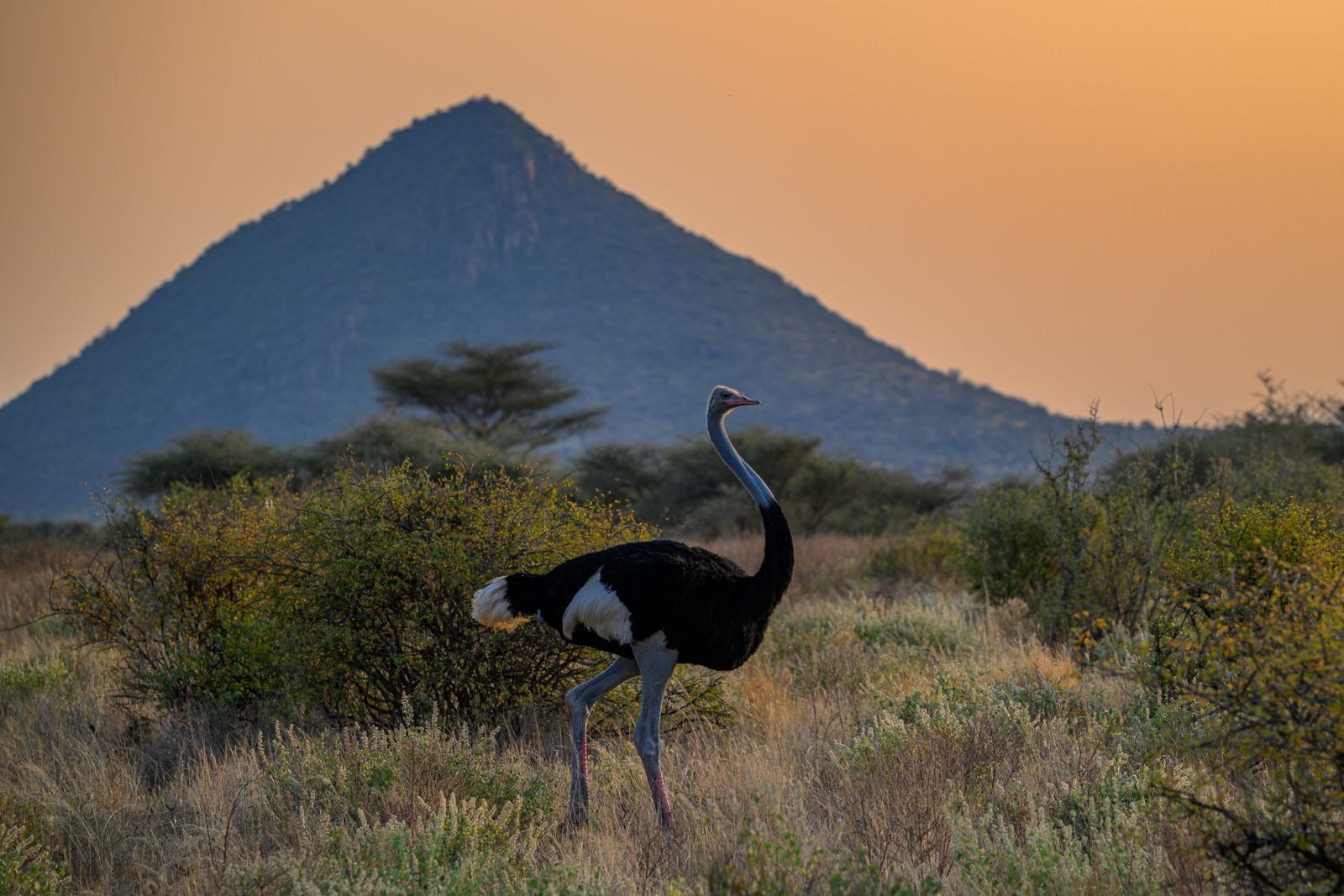
Another of the specialties of northern Kenya is the Somali ostrich. Males, like this one, have bluish legs and neck on either side of that ball of black and white feathers. My sister and I got out early with our guide and caught this one strutting in front of Samburu’s iconic pyramid-shaped mountain. Nikon Z8 with Nikkor 70-200mm lens (at 165mm) ISO 220, f/5.6 at 1/500th of a second.
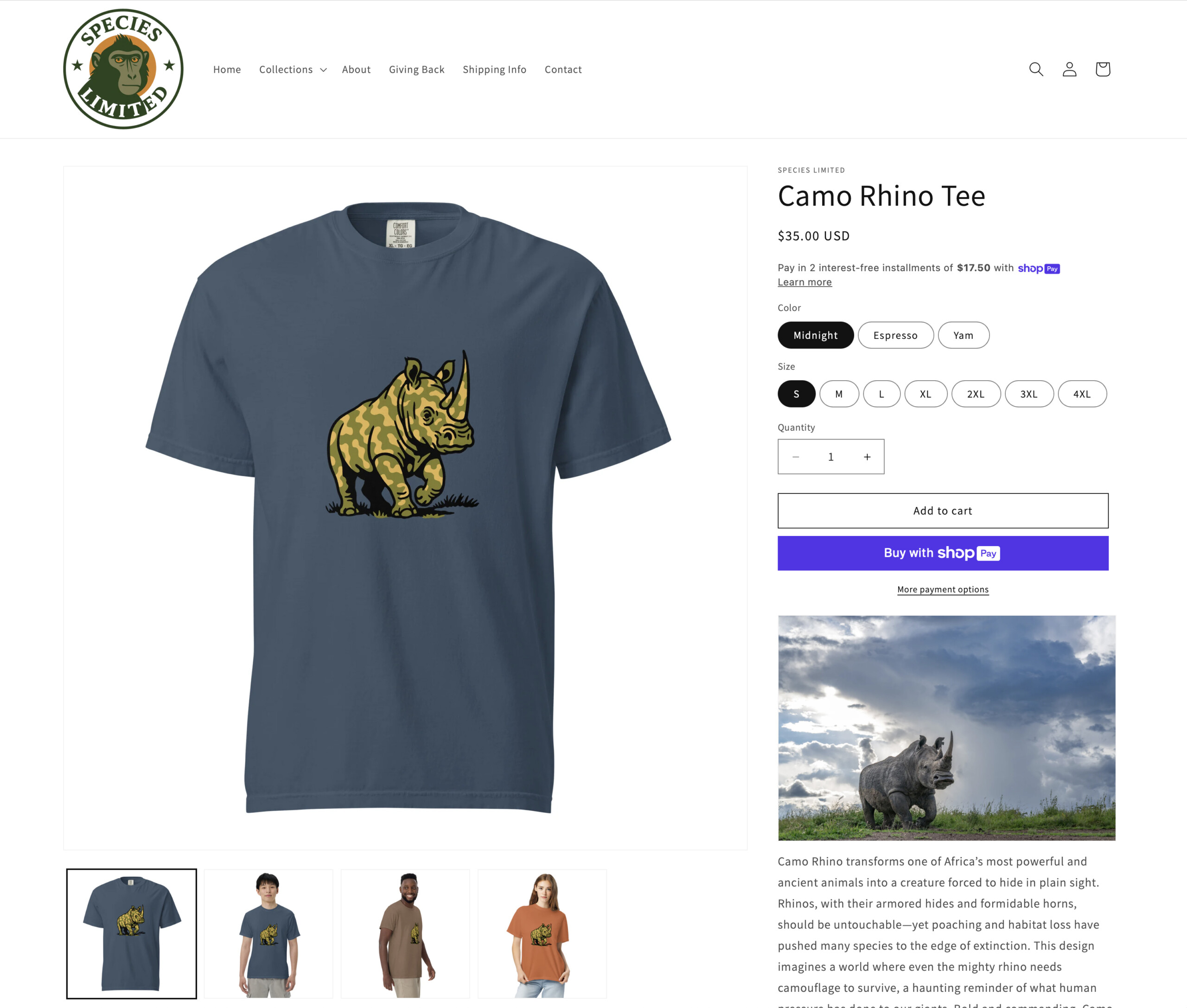
After almost three decades photographing wildlife in all corners of the world, I’ve launched something new. It’s called Species Limited, a collection of T-shirts based on the animals I’ve spent my life documenting. Each design begins with one of my photographs. Some are stylized and reimagined, like the screengrab of the camouflaged rhino above. Others take a more graphic, documentary approach. All of them aim to raise awareness, and, in some cases, directly support conservation. This is just the start and still very much a work in progress. The first wave includes forty-six designs in four collections. Over time I plan to expand the line to include hats, stickers, prints, and more. And eventually, I want to tie each product to a specific conservation effort around the globe. Today, just three of the designs support a cause — such as the Camo Elephant Tee which donates 10% of profits to the Reteti Elephant Sanctuary in northern Kenya, a place we visit on Crane Wildlife Tours. If you’d like to take a look or show support, the site is now live at: specieslimited.com
Thanks as always for following along, and for caring about the wild world out there.
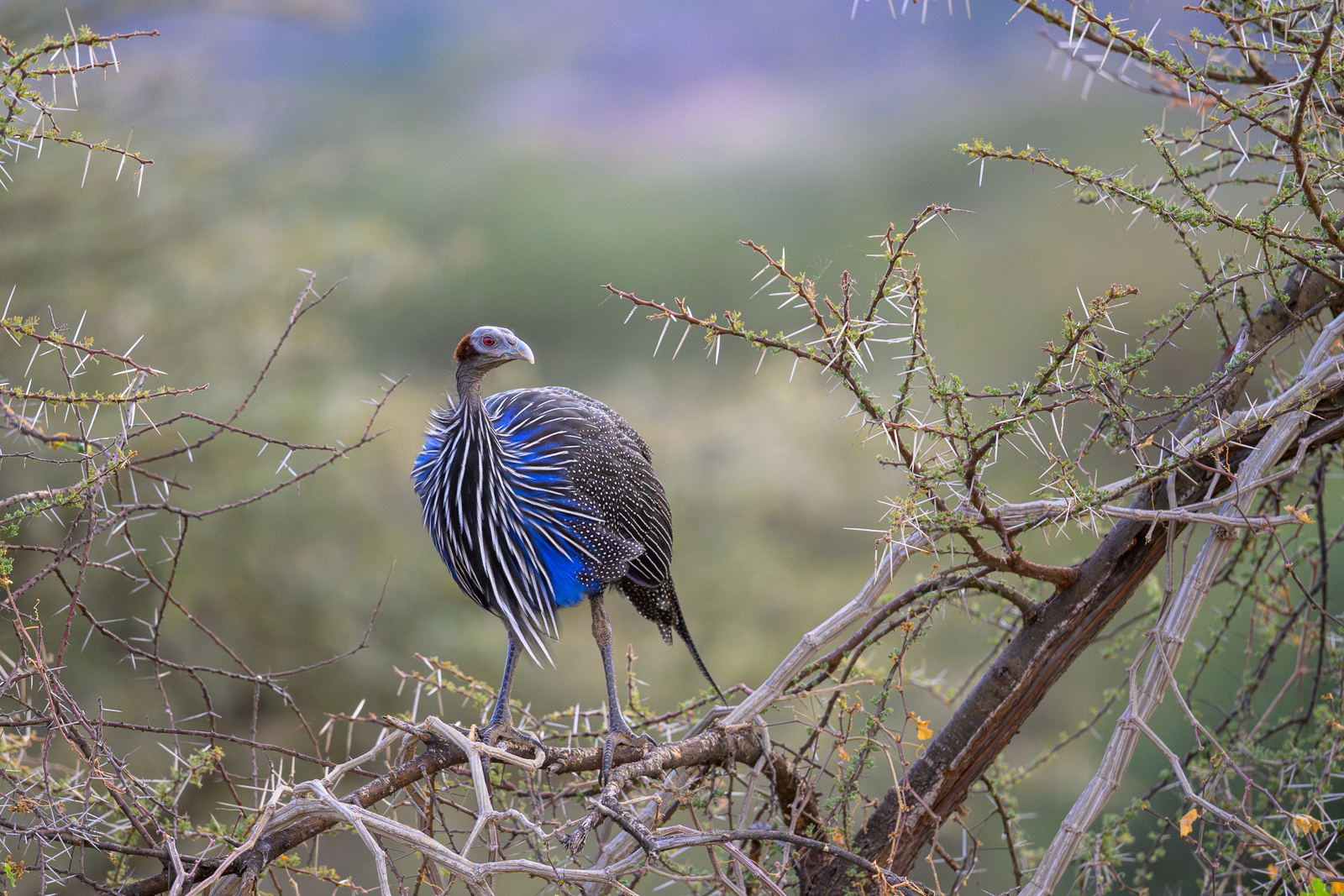
Here’s another look at a vulturine guineafowl. These guys are a specialty of Samburu National Reserve in the north of Kenya. Odd looking? Yes. Beautiful? Also yes. Nikon Z8 with Nikkor 500mm PF lens, ISO 4000, f/5.6 at 1/1600th of a second.
We use cookies to enhance your experience while using our website. If you are using our Services via a browser you can restrict, block or remove cookies through your web browser settings. We also use content and scripts from third parties that may use tracking technologies. You can selectively provide your consent below to allow such third party embeds. For complete information about the cookies we use, data we collect and how we process them, please check our Privacy Policy