This white rhino calf was making all sorts of crazy faces at us. Young rhinos are very playful and act almost like energetic golden retriever pups as they bounce around in the grass. This one was photographed in Lewa, Wildlife Conservancy in Kenya. Nikon D300 with Nikkor 200-400mm lens (at 400mm) ISO 800, f/4 at 1/250th of a second
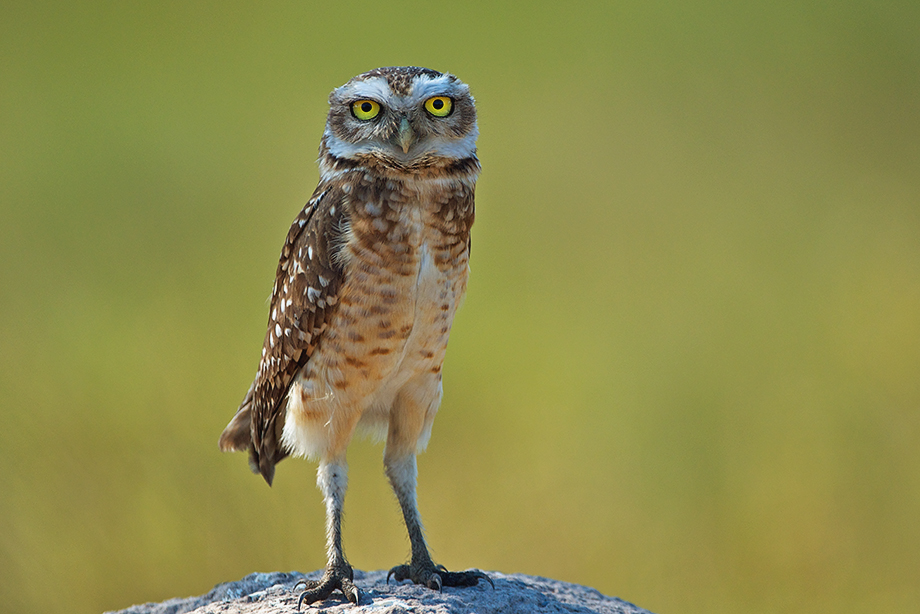
Okay, I realize that I just posted a Brazilian burrowing owl a few weeks ago, but this is a completely different owl. And c’mon, who couldn’t use another burrowing owl to start the morning? Enjoy. Nikon D300 with Nikkor 200-400mm lens (at 380mm) ISO 400, f/4 at 1/1250th of a second (-1/3 stop ev)
I saw quite a few of these little green day geckos in Madagascar. As the name would suggest, they are active mainly during the day (most other geckos are nocturnal). I saw this one scurrying down a tree in the dry western forest of Ankarafantsika National Park. Nikon D200 with Nikkor 17-35mm lens (at 17mm) ISO 200, f/5.6 at 1/60th of a second (-2/3 stop ev) Nikon SB-800 flash
This coyote was working on a carcass that was buried beneath the ridge line of the snow. Perhaps the coyote chanced upon an elk or deer that couldn’t make it through the harsh Yellowstone winter. Or, more likely, wolves had abandoned a kill that subsequently got buried beneath the drifting snow. Either way, the coyote kept a watchful eye on me as it feasted away. Nikon D300 with Nikkor 200-400mm lens (400mm) ISO 400, f/7.1 at 1/640th of a second (plus 1.33 stops ev)
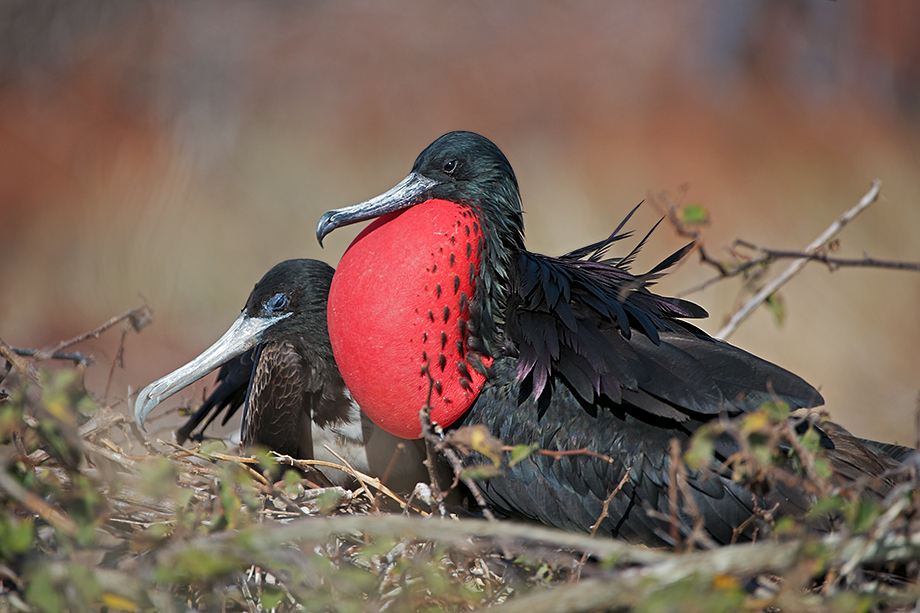
The male magnificent frigatebird and its balloon-like red throat pouch is one of the iconic images of the Galapagos Islands. The males will inflate their pouches during the mating season to attract females. This guy seems to have been successful in his mission. Nikon D800 with Nikkor 200-400mm lens (at 400mm) ISO 400, f/4 at 1/3200th of a second (-1/3 stop ev)
As any long time subscriber to my blog can attest, I’m a big fan of the spectral tarsier. Here’s another look at these little primates from the island of Sulawesi in Indonesia — this time I couldn’t help but think of Dr. Evil from the Austin Power’s movies — “One million dollars.” Nikon D300 with Nikkor 200-400mm lens (at 240mm) ISO 200, f/10 at 1/60th of a second, Nikon SB-800 flash
Lewa Wildlife Conservancy in Kenya is a great place to see the critically endangered rhinoceros. Lewa is home to both black and white rhinos. I captured these two white rhinos on our last morning in the park. Nikon D700 with Nikkor 70-200mm lens (at 200mm) ISO 400, f/4 at 1/2000th of a second
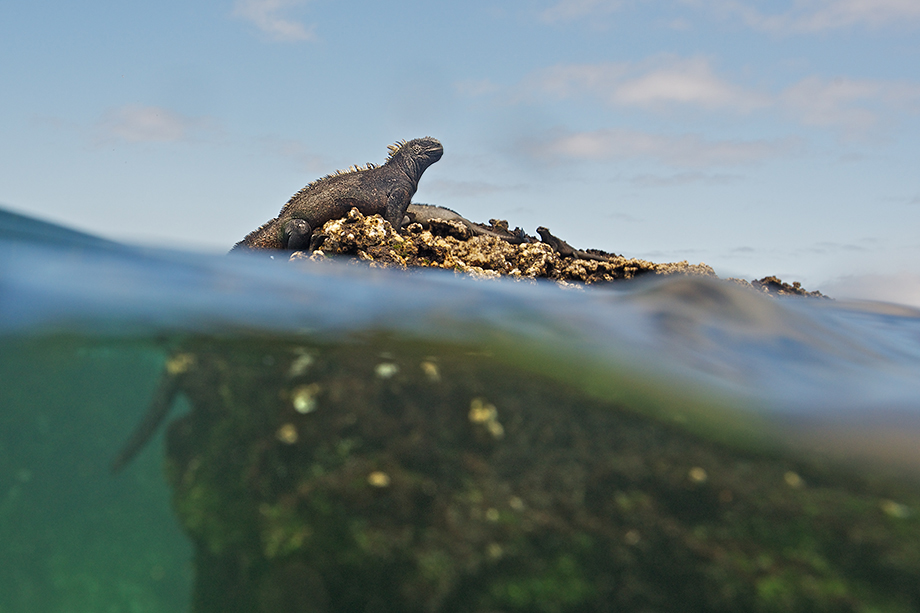
Marine iguanas seem to be everywhere in the Galapagos Islands. While snorkeling one day, I came across these guys, sunning themselves while their tails dangled in the water. Marine iguanas have longer tails than their land counterparts, allowing them to easily move through the water. Nikon D800 with Nikkor 17-35mm lens (at 35mm) ISO 400, f/10 at 1/500th of a second, Ikelite housing with 8 inch dome port
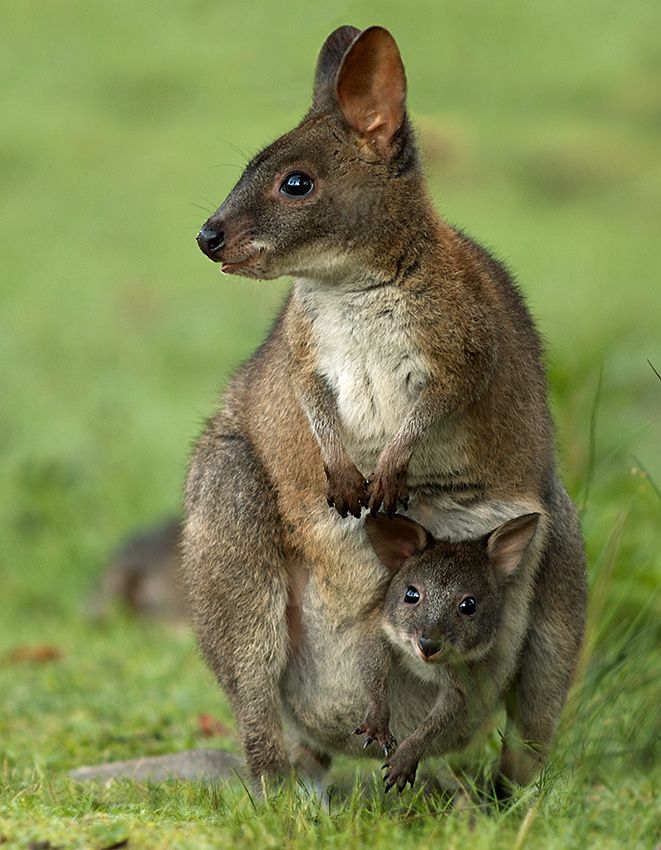
The very first macropod that I saw in Australia was a pademelon (never thought I’d write that sentence, but there it is and I kind of like it). Macropods — if you didn’t know already — are all of Australia’s kangaroo-like marsupials, including wallabies, kangaroos, tree kangaroos and, of course, this young lady and her joey — the pademelons. Pademelons are the smallest of the macropods and a full grown adult isn’t much more than two feet tall. Nikon D200 with Nikkor 600mm lens, ISO 200, f/5.6 at 1/200th of a second
This is an old one — from 2002 when I lived in my car for a year and traveled to all 50 states. Very simple. Just sand, sky and sun, but that’s what I like about it. I was searching for desert kit foxes at the time in White Sands National Monument in New Mexico. I came across quite a few fox tracks, but no foxes. This was taken before I had my first digital camera when I used to shoot slides — so I don’t have all the specific camera data. I do know that I was using a Nikon F100 camera with a 17-35mm lens, I was shooting Fuji Provia 100 speed film and was using a small aperture (probably f/22).
We use cookies to enhance your experience while using our website. If you are using our Services via a browser you can restrict, block or remove cookies through your web browser settings. We also use content and scripts from third parties that may use tracking technologies. You can selectively provide your consent below to allow such third party embeds. For complete information about the cookies we use, data we collect and how we process them, please check our Privacy Policy