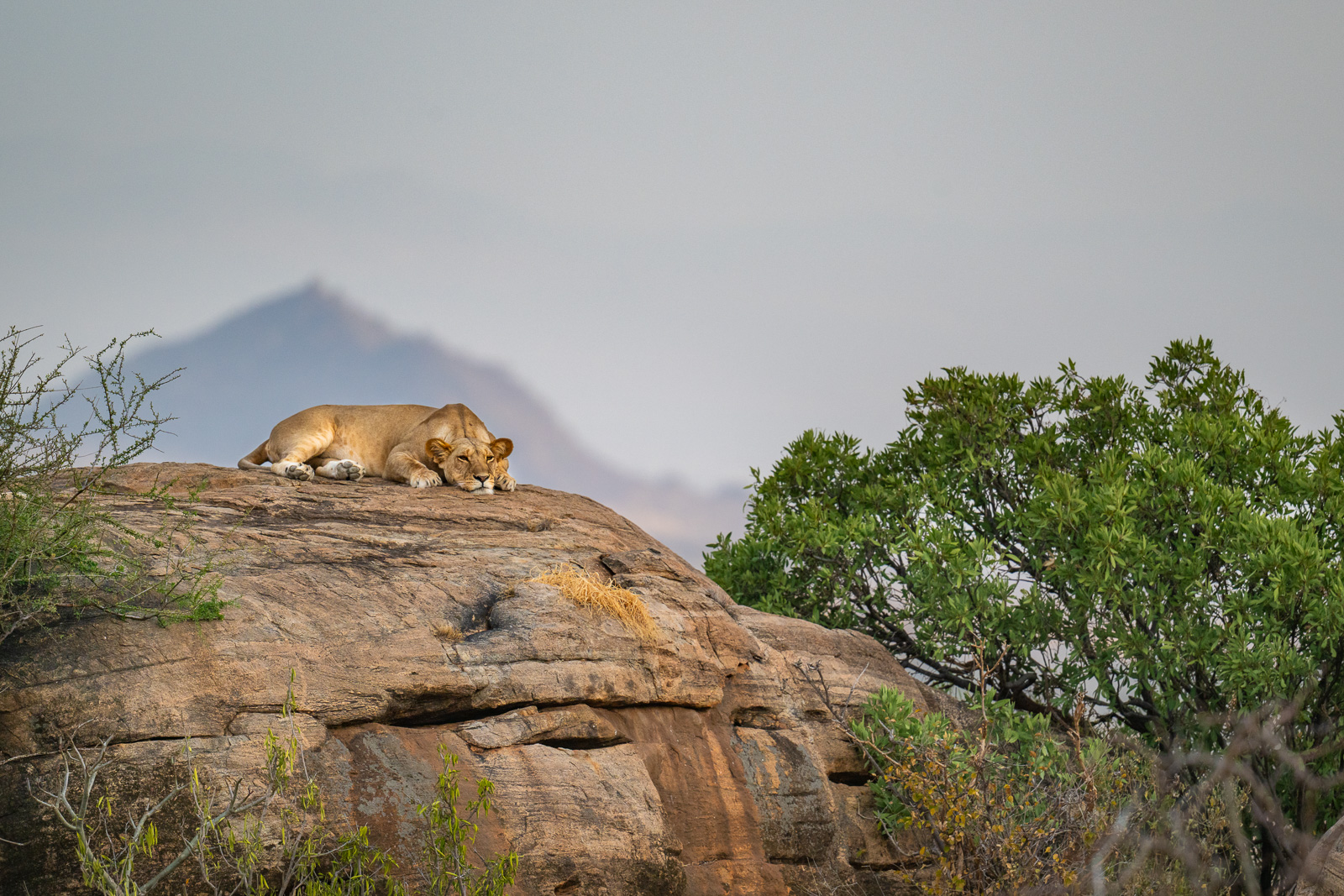
Sleepy Lioness
A lioness takes a late-day snooze, but keeps her eye on any interesting developments out on the savanna. Nikon Z8 with Nikkor 500mm PF lens, ISO 500, f/5.6 at 1/800th of a second.


A lioness takes a late-day snooze, but keeps her eye on any interesting developments out on the savanna. Nikon Z8 with Nikkor 500mm PF lens, ISO 500, f/5.6 at 1/800th of a second.
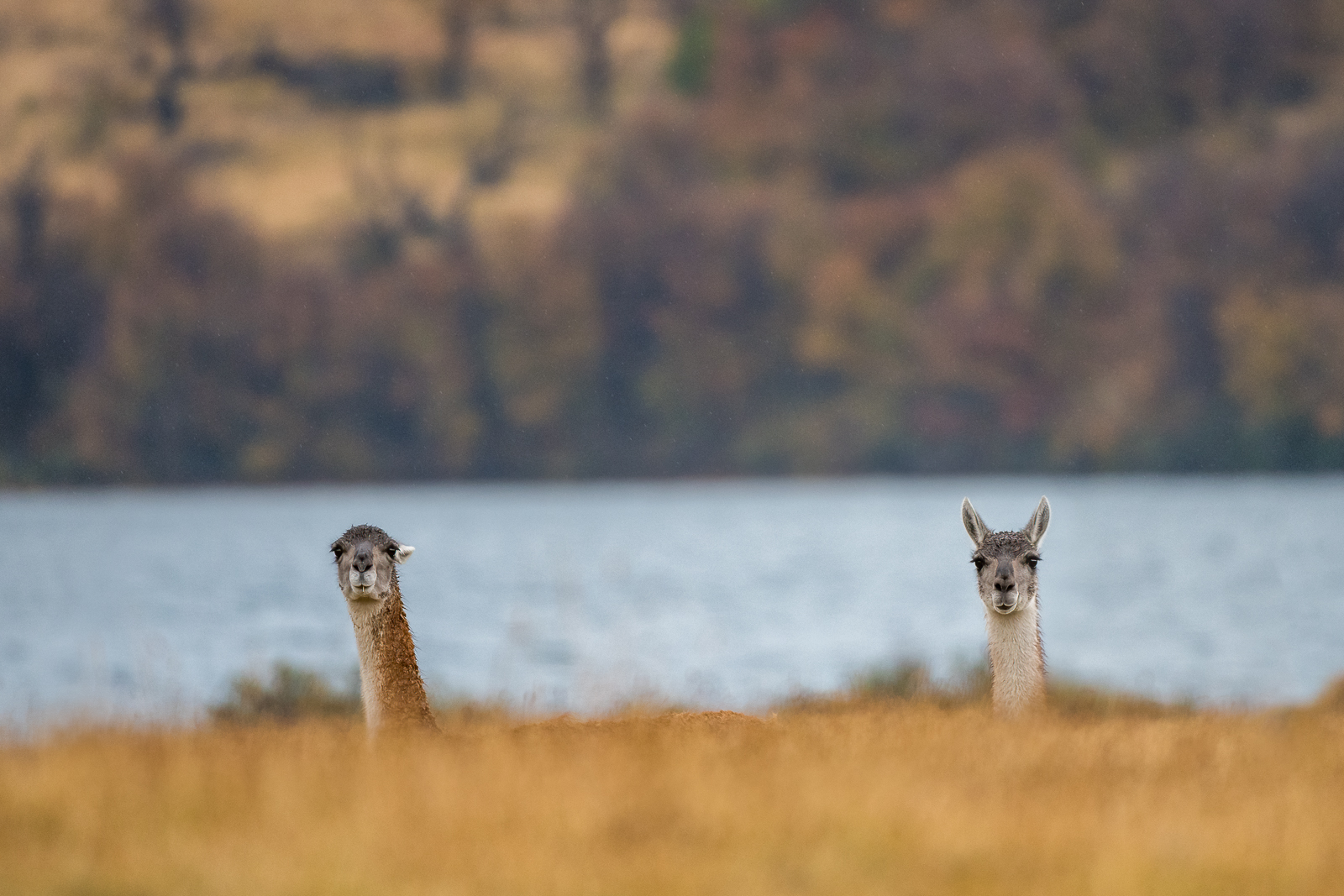
These two guanacos (relatives of the llama) were resting on the ground as a light but steady rain fell on the Patagonian landscape. I got as low as I could to capture just their heads popping up over a small hill. Amazing to me how much the one on the right looks like a kangaroo. They are actually in the camel family, and well… they look like camels too. Nikon D500 with Nikkor 200-400mm lens (at 400mm) ISO 800, f/4 at 1/640th of a second.
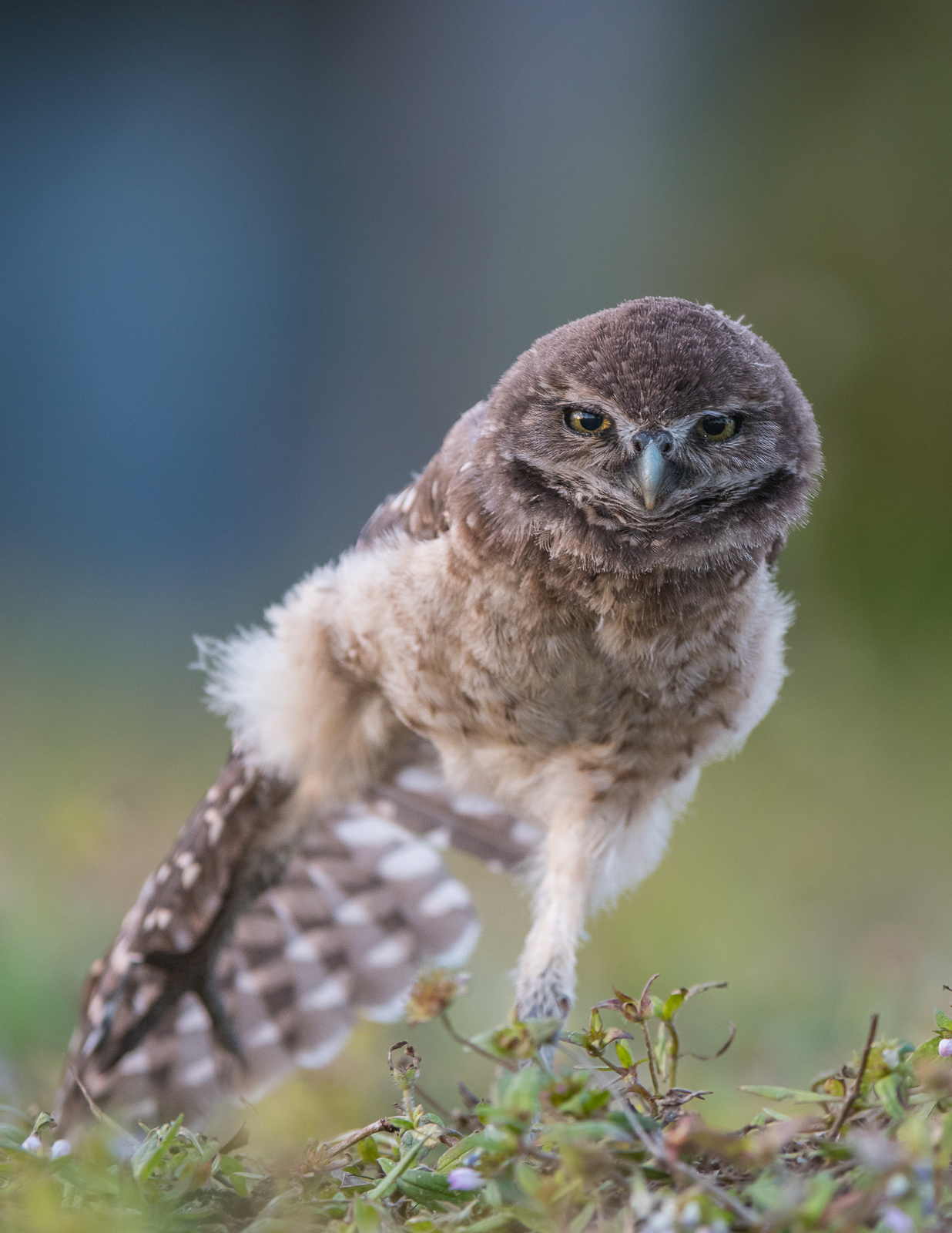
A little burrowing owl was having a nice stretch with that right leg. These diurnal owls that live in the ground are fairly widespread throughout the Americas. An especially large population of them live in Cape Coral, Florida in and amongst all the suburban population. Nikon D500 with Nikkor 200-400mm lens (at 280mm) ISO 800, f/4 at 1/160th of a second.
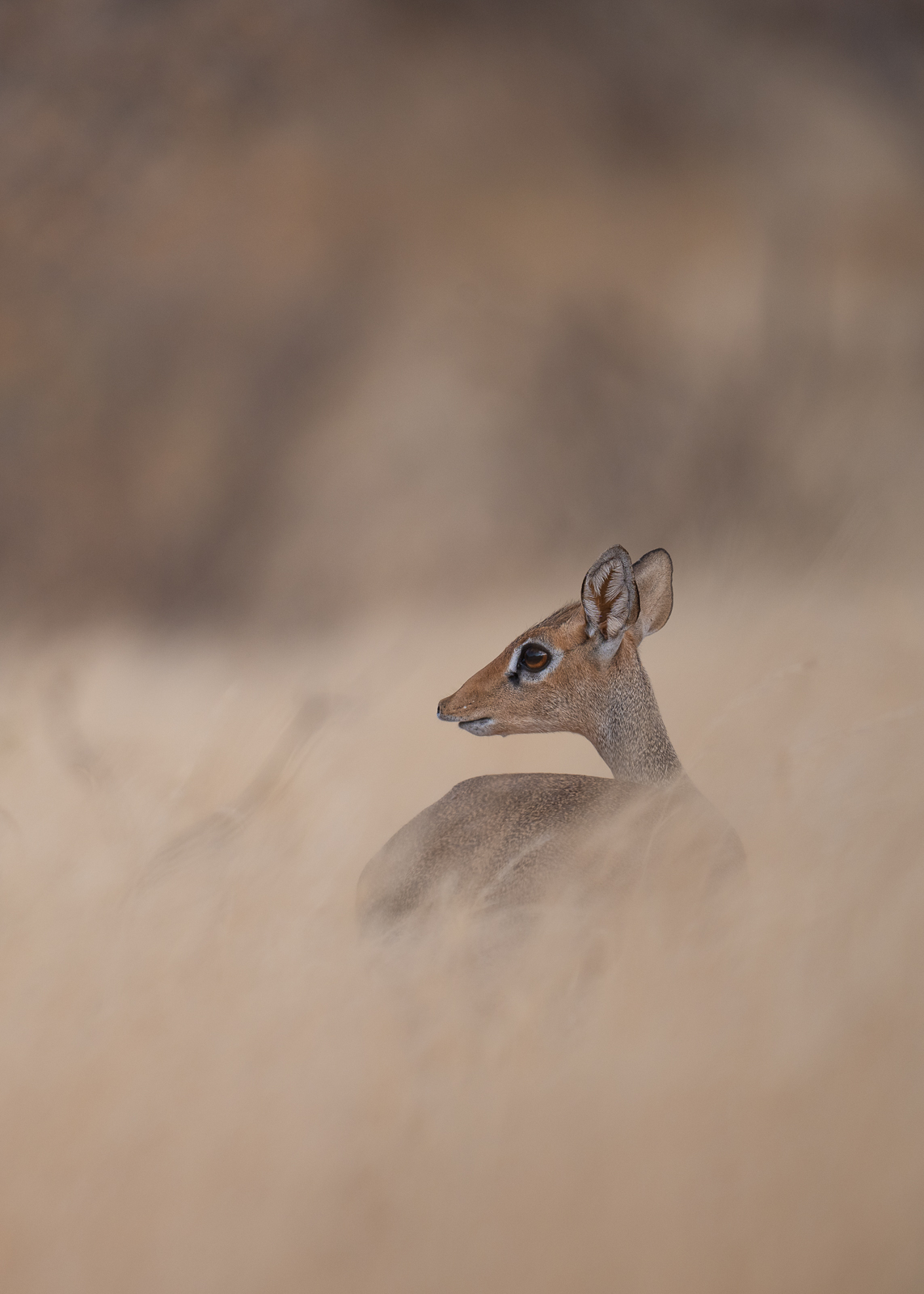
We saw two different species of dik dik while recently in Kenya. The Gunther’s dik dik and the Kirk’s. This is the latter. At least I think it is. They are very similar looking and can be hard to distinguish. Either way, I always love a setting where I can essentially blur everything out except for the subject. In this case, our low angle took care of the foreground, while the background distance and a relatively large aperture took care of the rest. Nikon Z8 with Nikkor 500mm PF lens, ISO 280, f/5.6 at 1/1000th of a second.
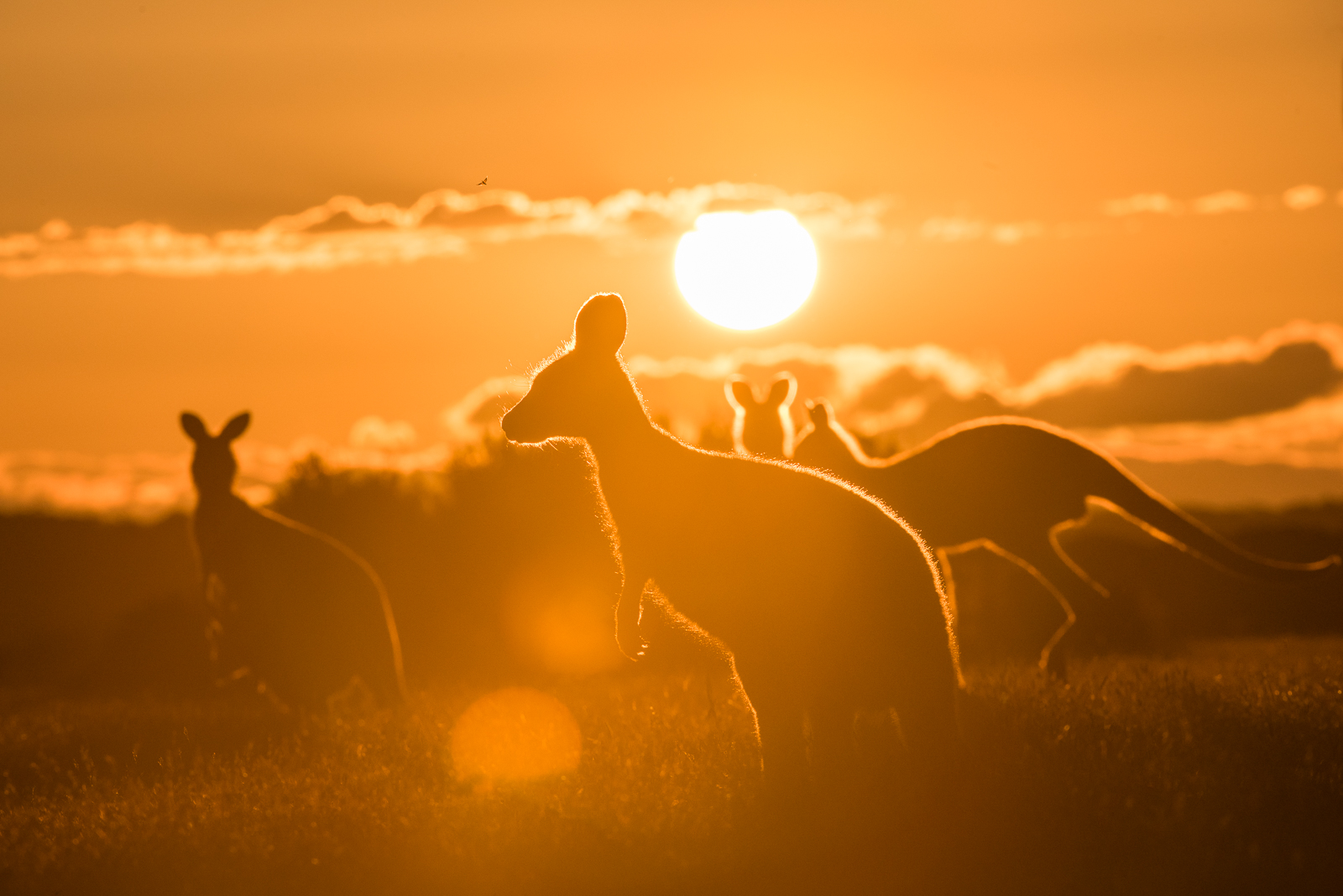
The sun was slowly setting when I came across this troop of kangaroos (also known as a mob or a court) in northern Tasmania. I liked in this shot that I was able to capture the main room in profile, two looking forward, one hopping and even a joey in a pouch — a lot to take in without any detail in any of the faces. These are eastern grey kangaroos, known locally as foresters. Nikon D810 with Nikkor 200-400mm lens (at 330mm) ISO 400, f/16 at 1/2000th of a second.
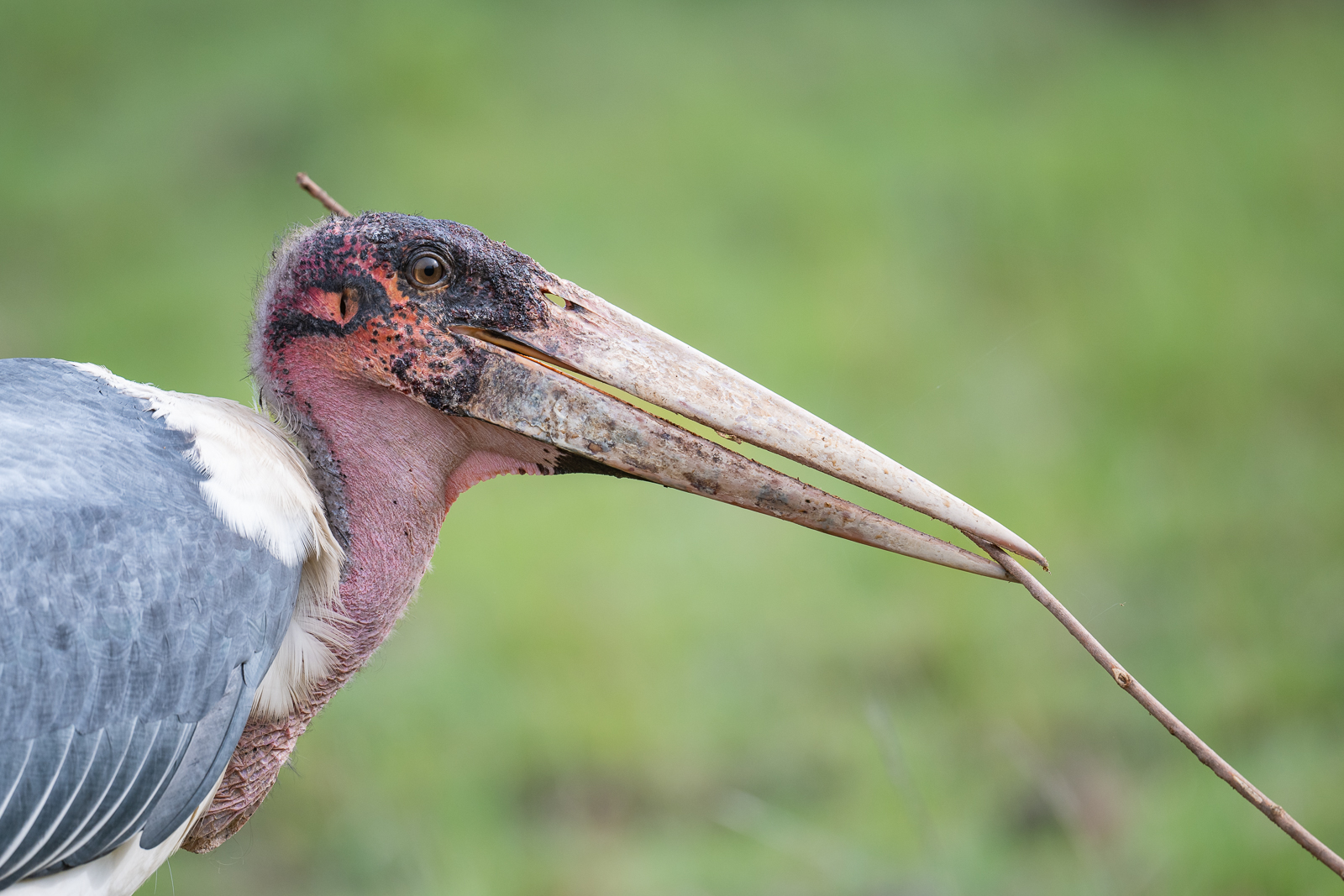
While on safari, a lot is made of the traditional Big Five (lion, leopard, rhino, elephant and buffalo). There’s also the Little Five (lion ant, leopard tortoise, rhinoceros beetle, elephant shrew and buffalo weaver). And then there’s the “Ugly Five.” Rounding out a list that includes the warthog, vulture, wildebeest and hyena is this handsome guy, the marabou stork. I suppose it doesn’t help that marabou storks are patient scavengers and often seen hanging around garbage dumps. They are very large birds — among the largest in the world with a wingspan of 11 feet — and are nicknamed the Undertaker due to their resemblance to an old slumped figure wearing a cloak. Nikon Z8 with Nikkor 500mm FP lens, ISO 450, f/5.6 at 1/640th of a second.
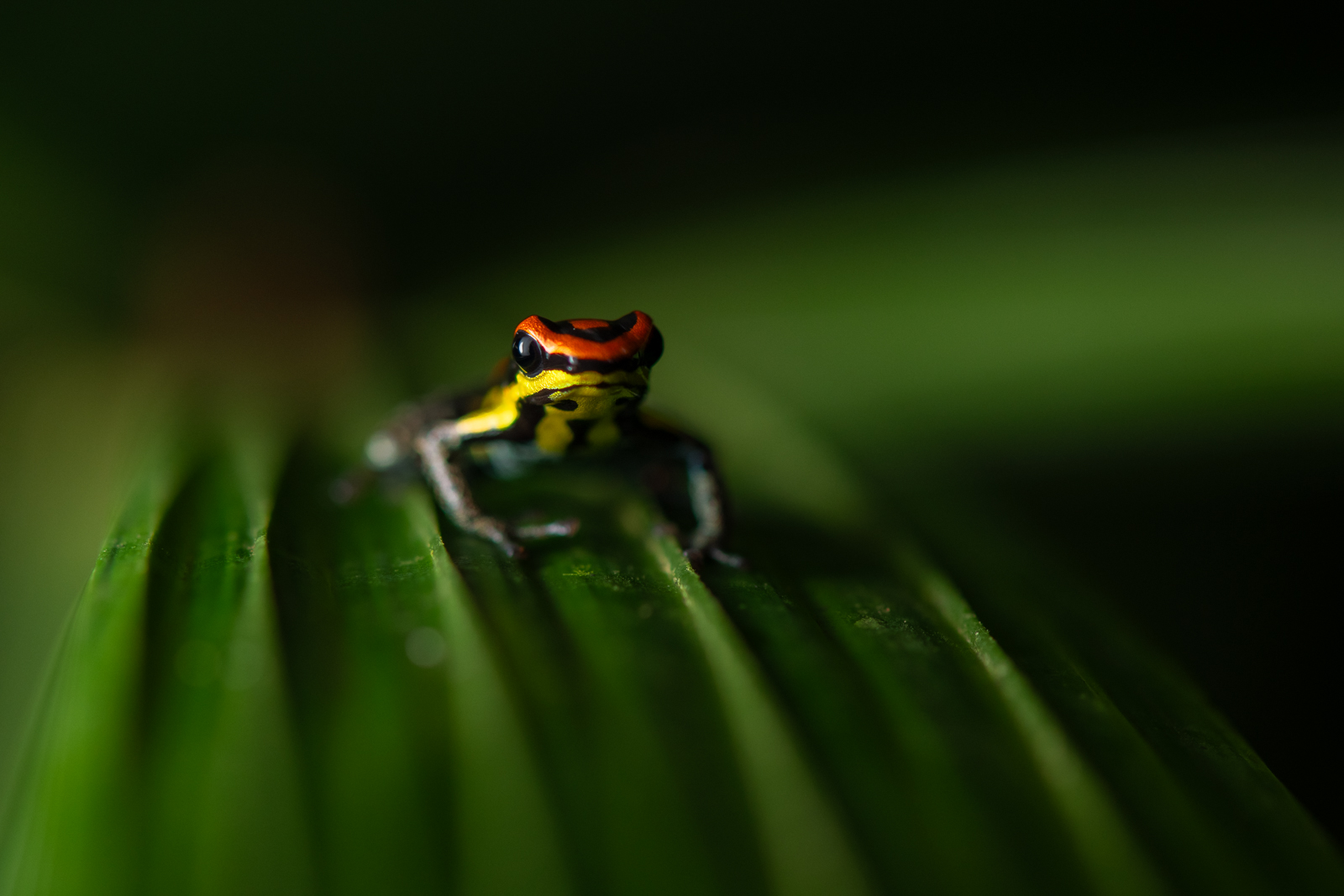
I only saw two of these Uakari poison frogs while in Peru earlier in the year. I had hoped to capture some wide angle macro shots, but the conditions weren’t right and the two frogs were a bit more camera shy than most tree frogs and poison dart frogs that I’ve photographed in the past. I resorted to my 105mm macro and flash to capture this one. Nikon D850 with Nikkor 105mm macro lens, ISO 400, f/5.6 at 1/60th of a second, Godox V860iii flash with Westcott soft box.
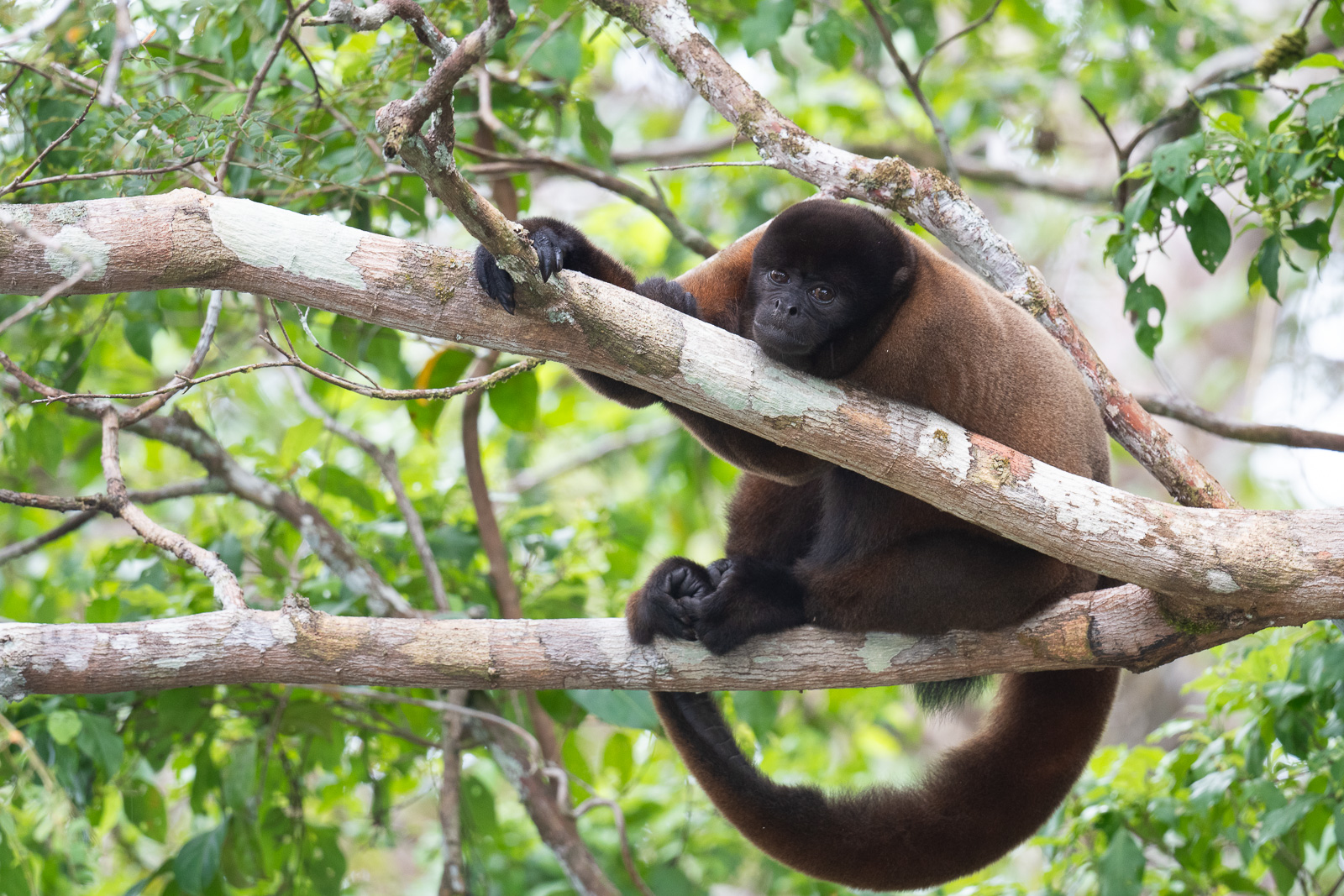
I mentioned this woolly monkey before. His mother and father both spent time in captivity. That said, he was born in the wild, was never in captivity and never fed by humans. But he has a natural trust of people and would often come around the lodge and perform for us. Here, I caught him taking a break from all the play. Nikon D500 with Nikkor 500mm PF lens, ISO 800, f/5.6 at 1/160th of a second, Godox fill flash.
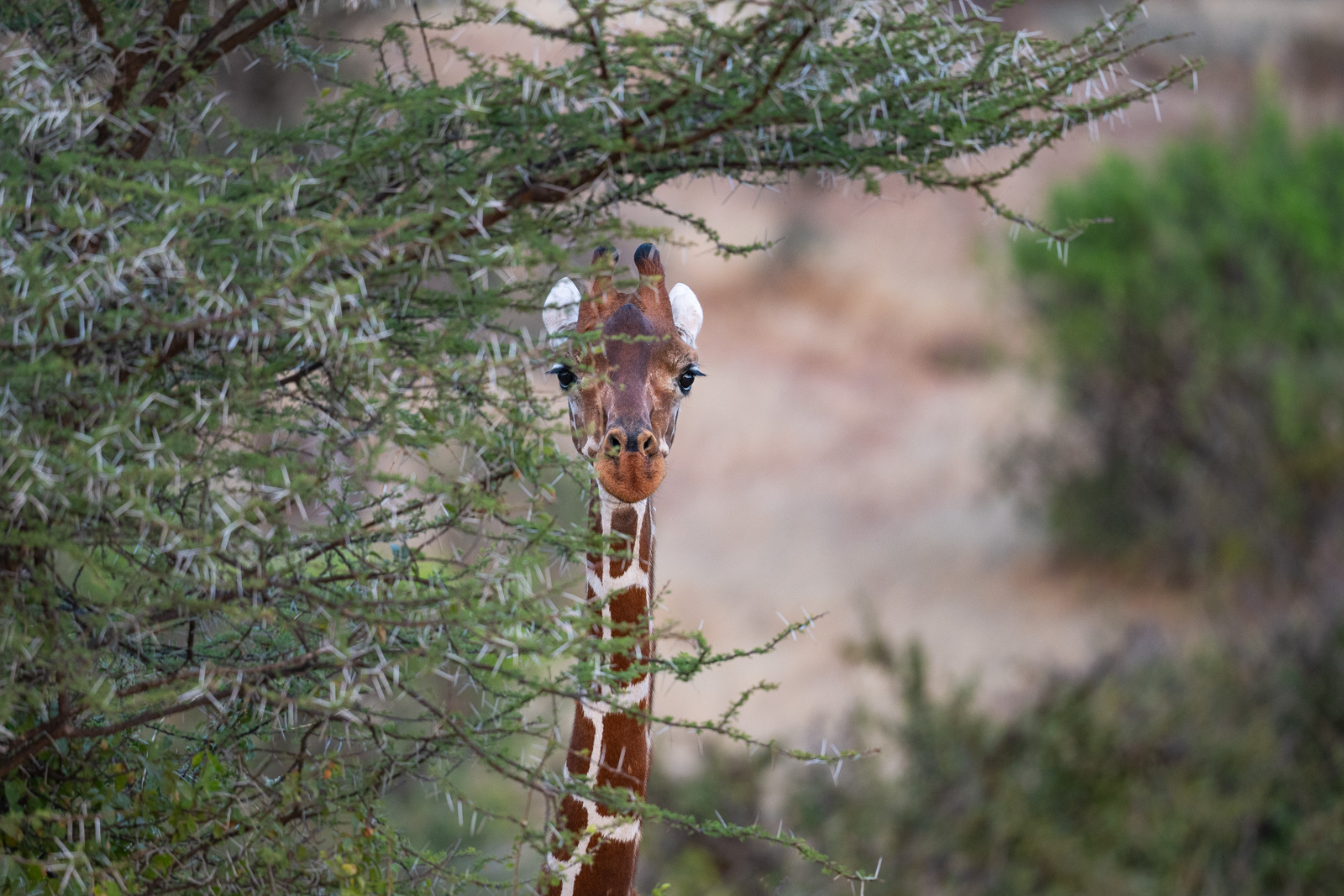
On our Kenya trips, we see two species of giraffe, the Masai giraffe in the south and the reticulated in the north. This is the latter. Reticulated giraffes have darker patches of color, which are more geometric shaped with well defined edges. Although it looks like this young one was trying to hide, it was doing what they do — eating thorny acacia tree branches. Nikon Z8 with Nikkor 500mm PF lens, ISO 1000, f/5.6 at 1/125th of a second.
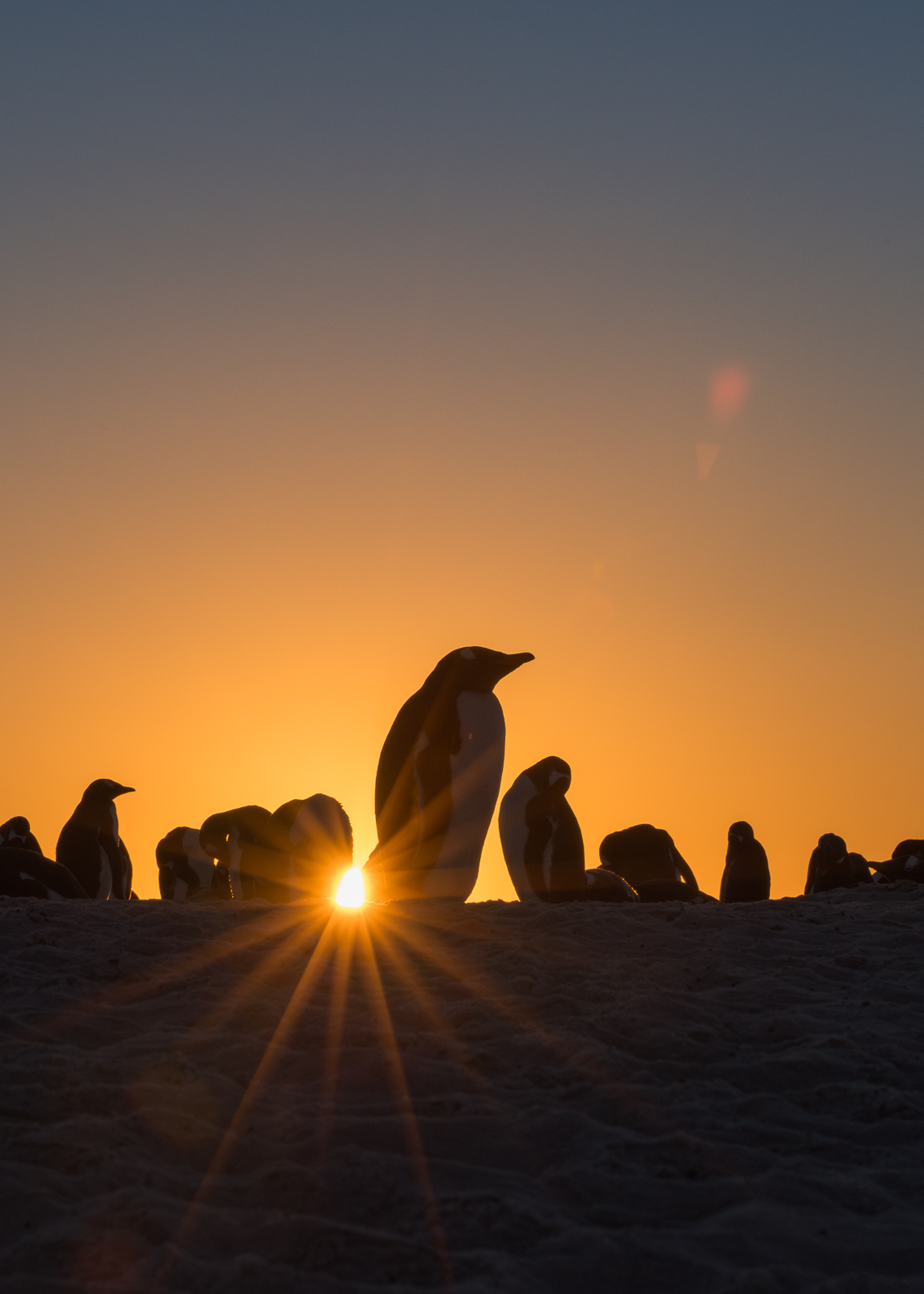
I took this one on Sea Lion Island in the Falkland Islands back in 2014. The trick to getting a nice starburst is to place the sun on the edge of a foreground object and use a very small aperture. I also like to add a little detail to my silhouettes when I can. That slight amount of light on the sand and penguins gives the shot a bit more depth. Nikon D810 with Nikkor 70-200mm lens (at 78mm) ISO 800, f/22 at 1/500th of a second.