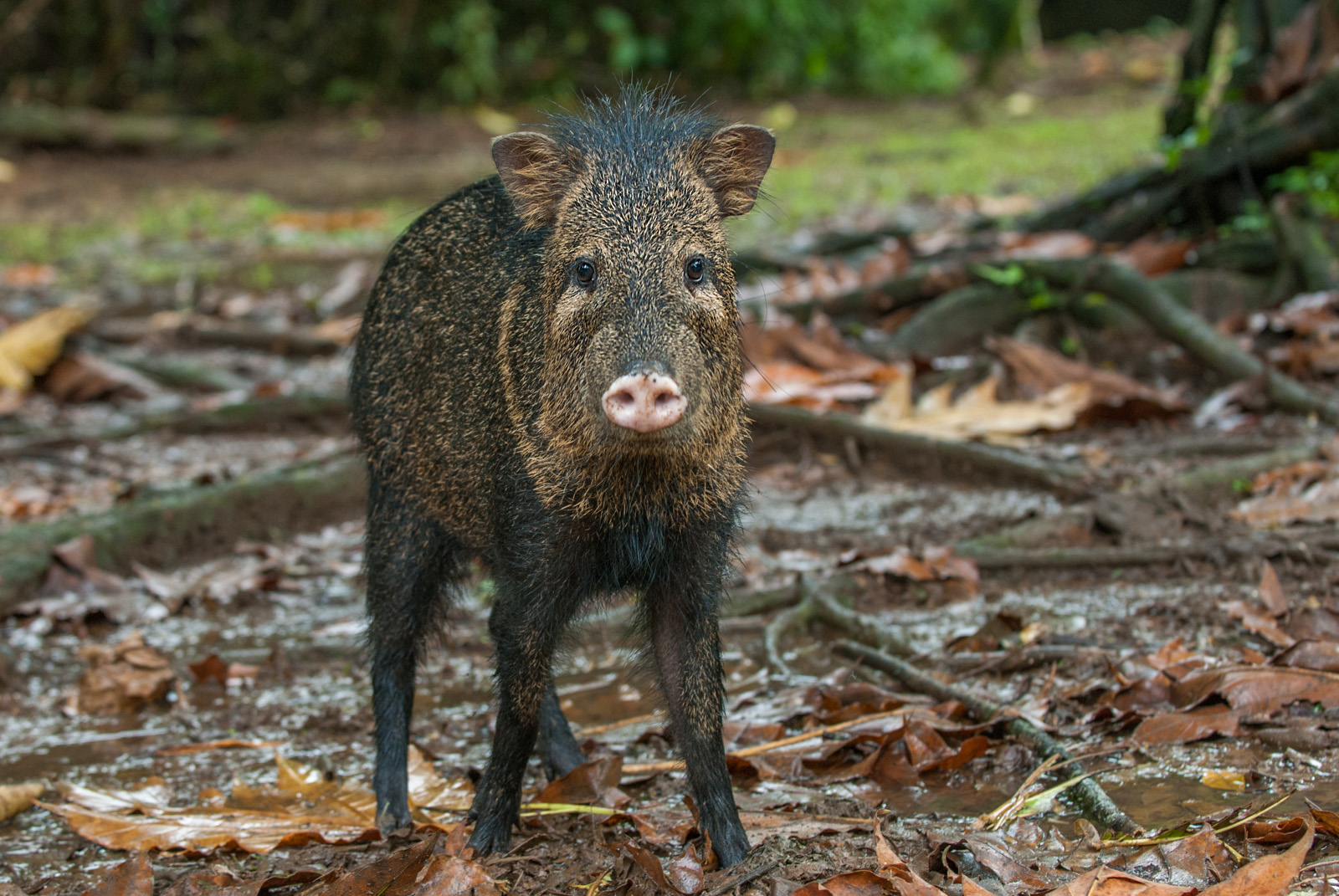
A couple of months ago I posted a young collared peccary. Here’s an adult of the species. These guys are somewhat related to pigs but are no longer classified in the same family. Photographed in La Selva, Costa Rica. Nikon D200 with Nikkor 70-200mm lens (at 70mm) ISO 400, f/4 at 1/80th of a second
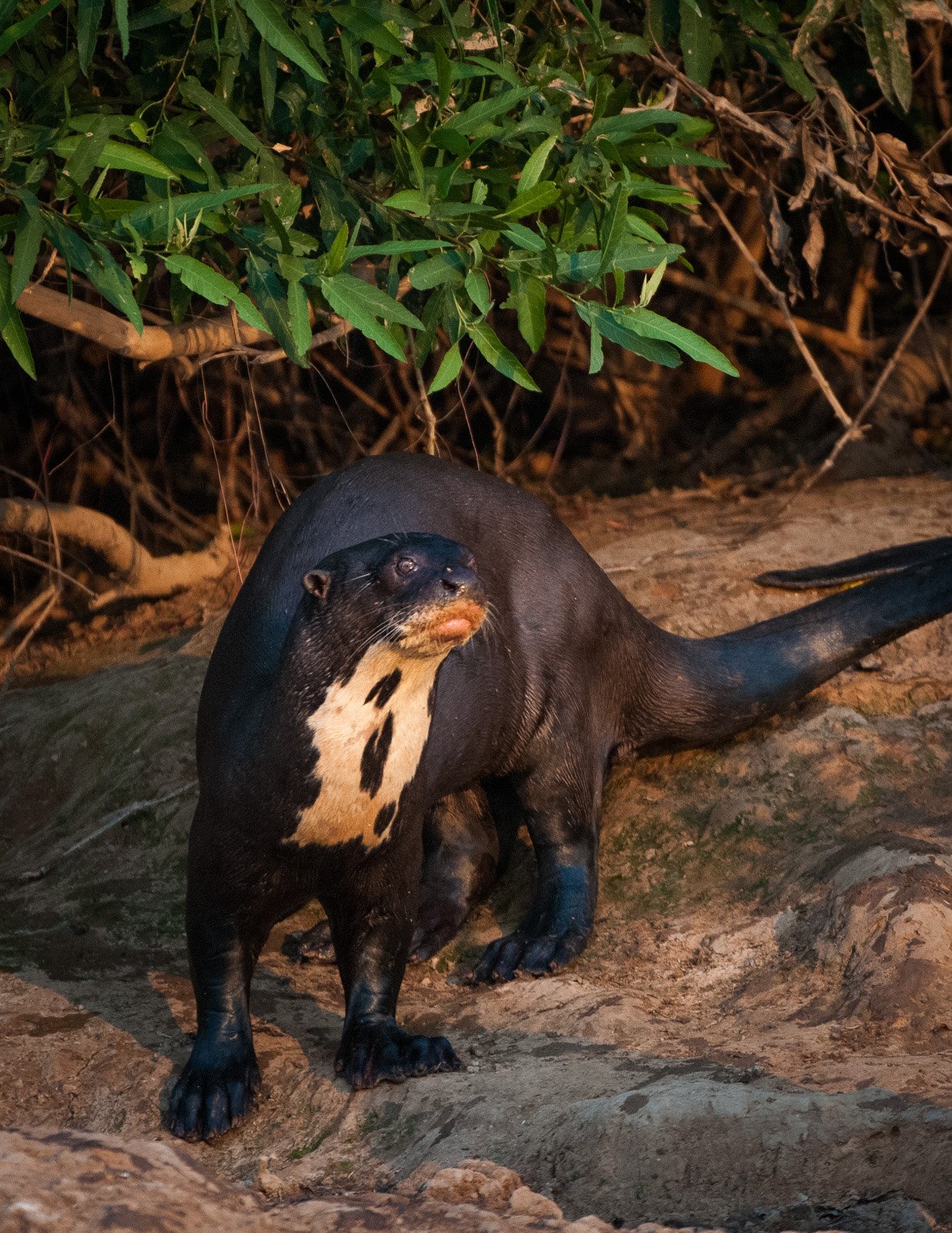
The giant river otter, or simply giant otter, is the largest member of the weasel family (also known as mustelids). They can grow to six feet in length and are very imposing creatures when seen out of the water like this, resting on a riverbank. This shot also shows off the characteristic white patch on the chest of the giant otter. Photo taken from a boat while searching for jaguars in the Pantanal of Brazil. Nikon D300 with Nikkor 200-400mm lens (at 400mm) ISO 1600, f/4 at 1/1250th of a second
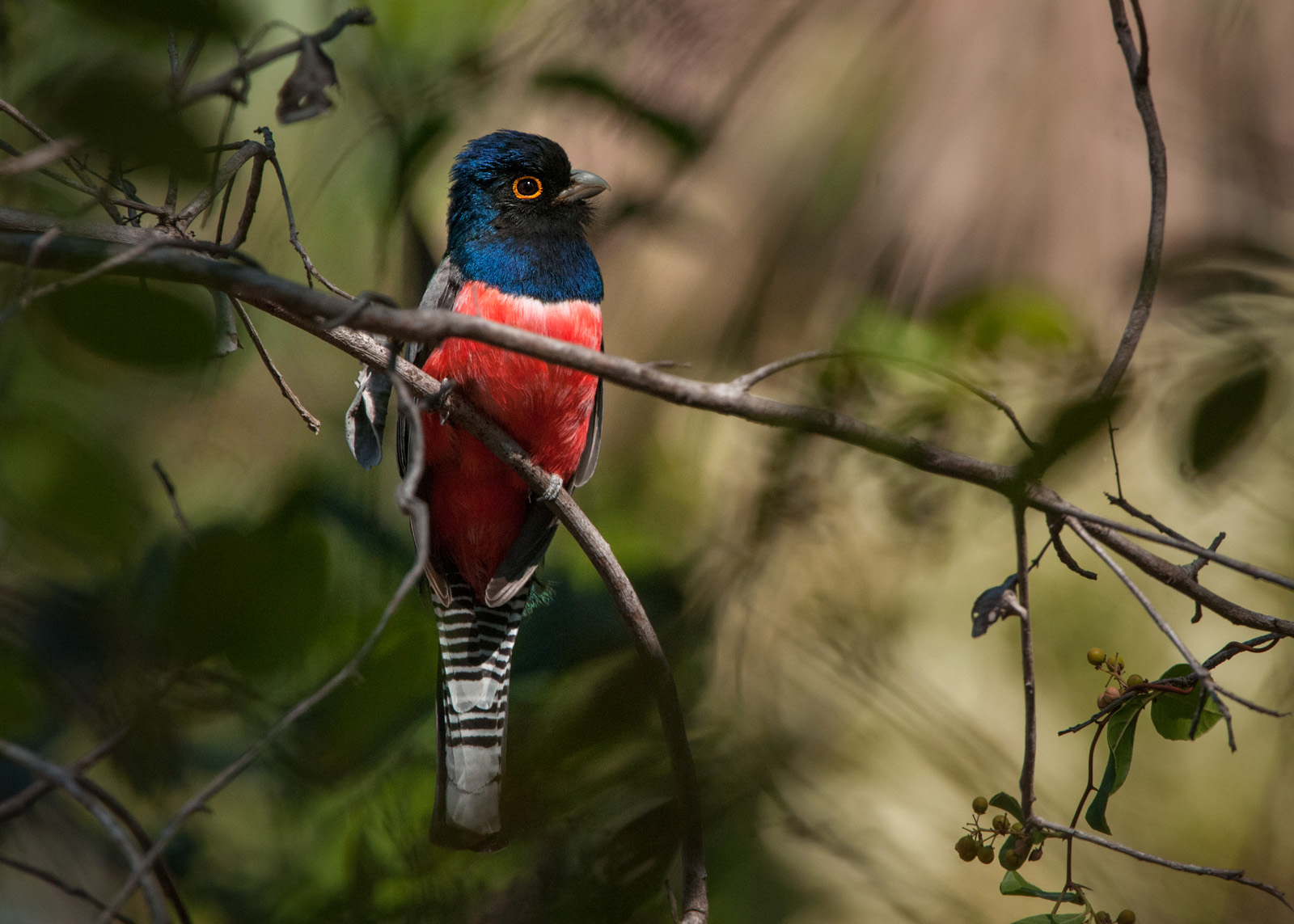
Lots going on in the background of this one but it all seems to work with that light coming across the trogon’s face. As I’ve mentioned before, I love photographing trogons and have captured images of quite a few species of them across the globe from South and Central America to Southeast Asia. This one, the collared trogon was spotted in the Hyacinth Valley of Brazil. Nikon D300 with Nikkor 200-400mm lens (with 1.4x teleconverter for 460mm) ISO 800, f/8 at 1/1000th of a second
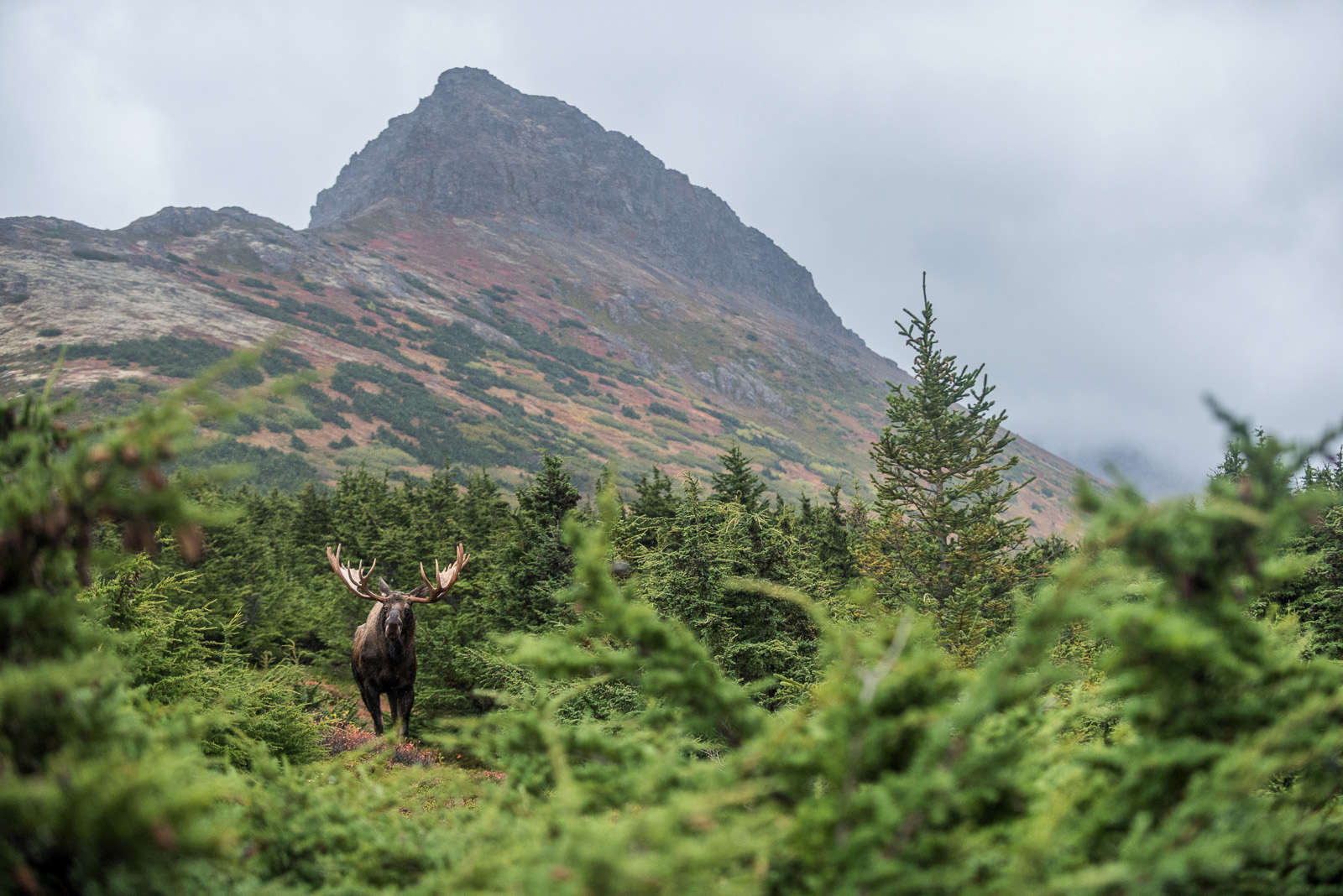
My trip to Chugach State Park in Alaska last fall provided some nice moose-in-landscape opportunities. This guy was a bit late to the party as two other bulls were already making their play for the lone cow in the area. Nikon D810 with Nikkor 70-200mm (at 70mm) ISO 800, f/4 at 1/1000th of a second
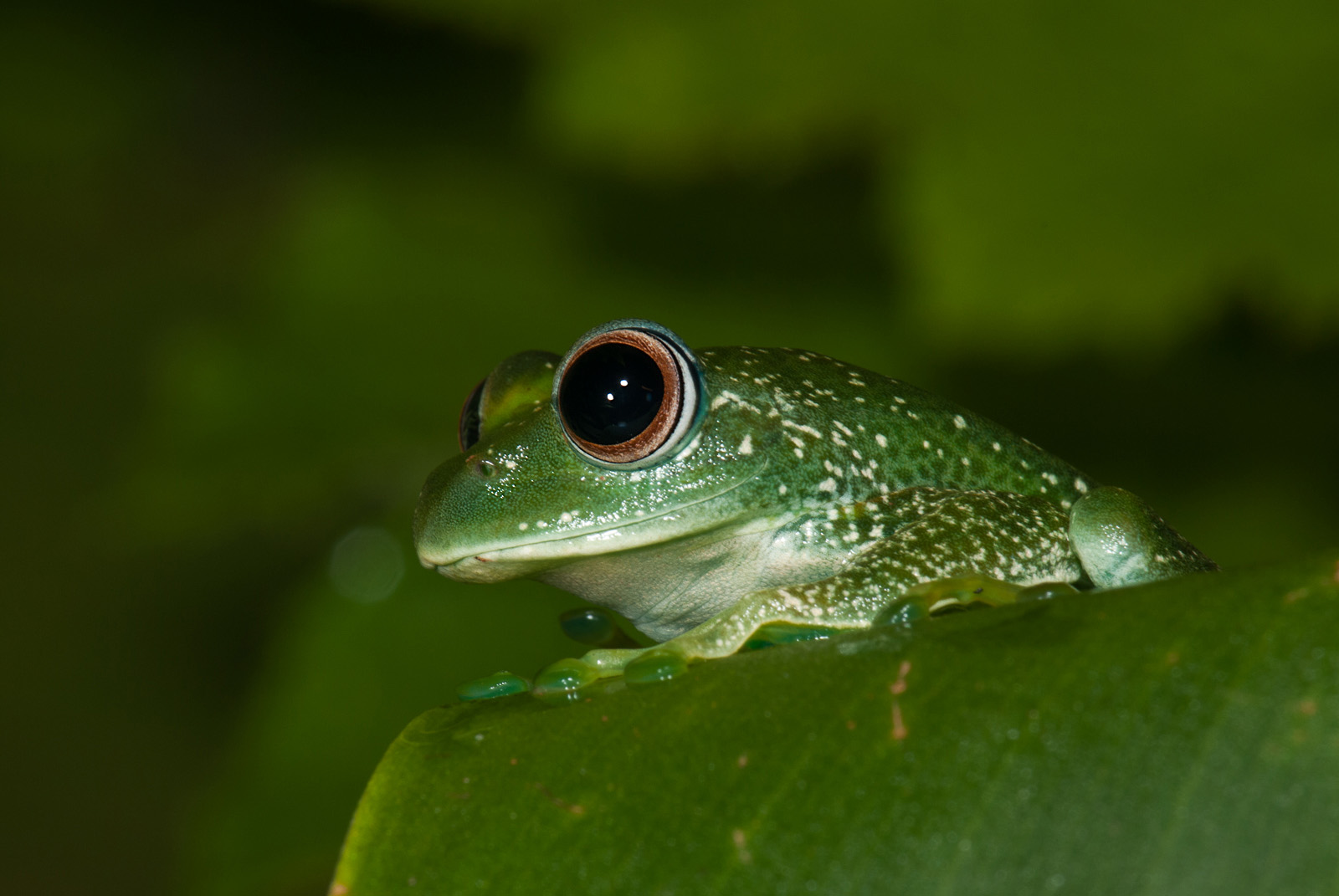
I photographed this tree frog in the town of Perinet in Madagascar. Scientific name is Boophis Elenae but common name is Elena’s tree frog. I was on my way into the big national park adjacent to the town for some nocturnal spotlighting but didn’t have to go far before meeting some of the late night locals. Nikon D200 with Nikkor 80-200mm lens (at 200mm with Canon 500D close up filter) ISO 100, f/22 at 1/60th of a second, two Nikon SB-600 flash units
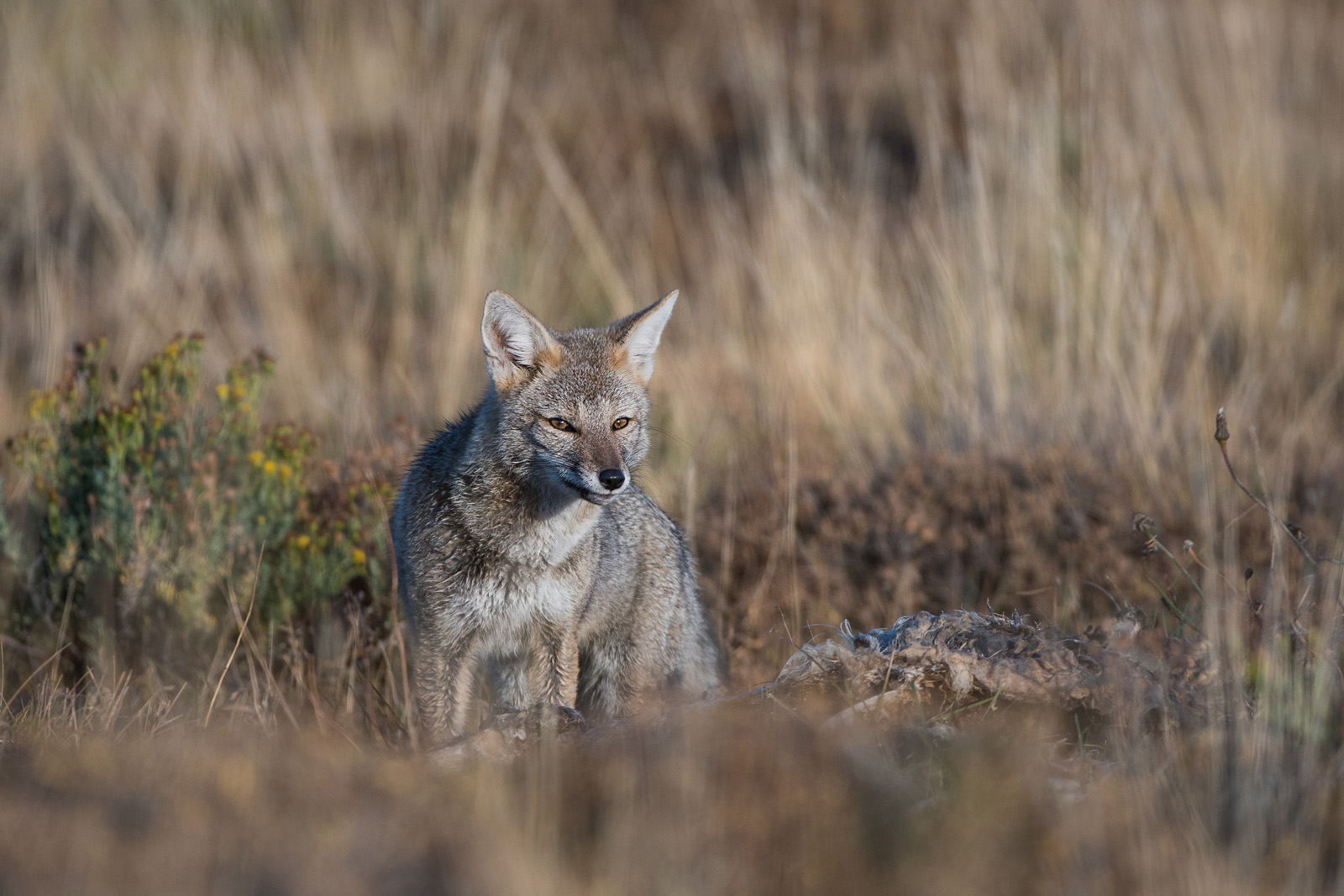
A Patagonian grey fox looks up to survey the situation, making sure that a puma isn’t about to come back and lay claim to a guanaco carcass, Torres Del Paine National Park in Chile. Nikon D500 with Nikkor 200-400mm lens (at 340mm) ISO 400, f/4 at 1/1600th of a second
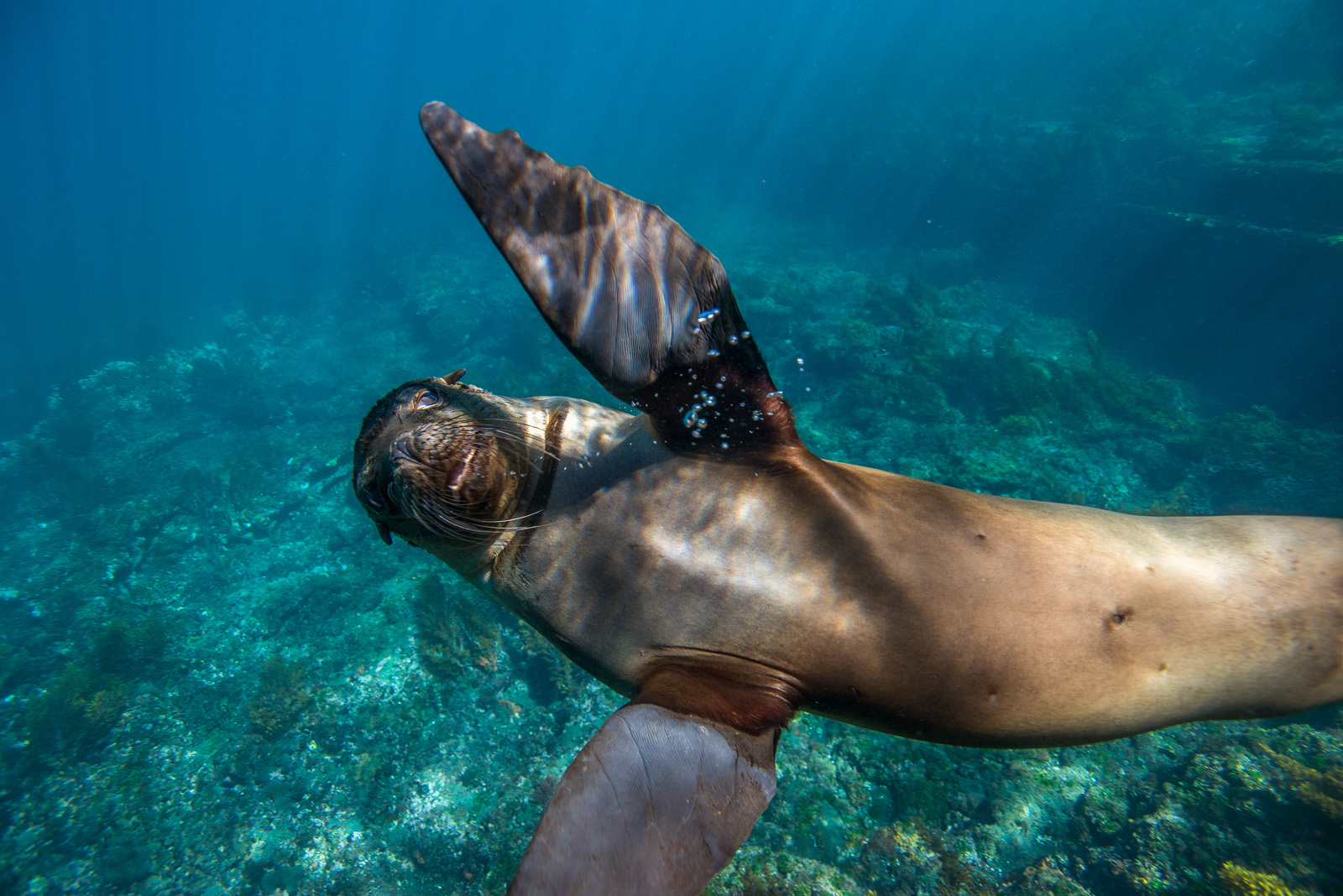
Swimming with the sea lions every afternoon was one of the great pleasures of visiting the Galapagos Islands. They really do seem to enjoy our intrusion upon their territory. I’m not sure how else to describe it other than play as they swam up to me, around me and under me. I highly recommend the experience. In this instance, the sea lion appeared to be posing for a selfie while swimming beneath me. Nikon D800 with Nikkor 17-35mm lens (at 17mm) ISO 800, f/7.1 at 1/640th of a second, Ikelite underwater housing with an eight inch dome port
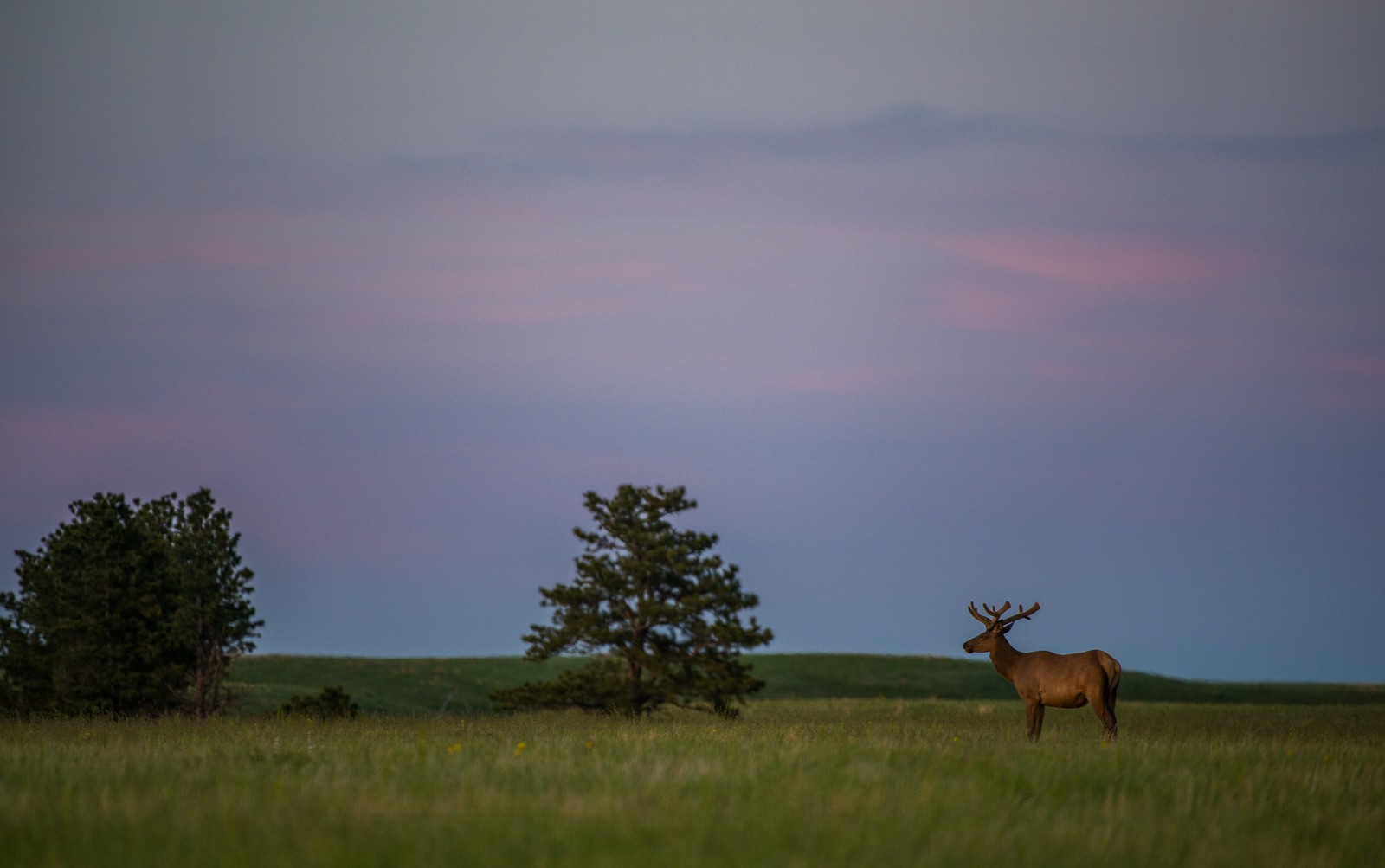
In early summer, male elk are still in the process of growing their antlers. And those antlers are still covered in velvet. They shed the velvet in the fall and then drop their racks shortly after that. I photographed this elk early evening on a stormy, yet still somewhat sunny day in Wind Cave National Park in South Dakota. Nikon D800 with Nikkor 200-400mm lens (at 400mm) ISO 800, f/4 at 1/400th of a second
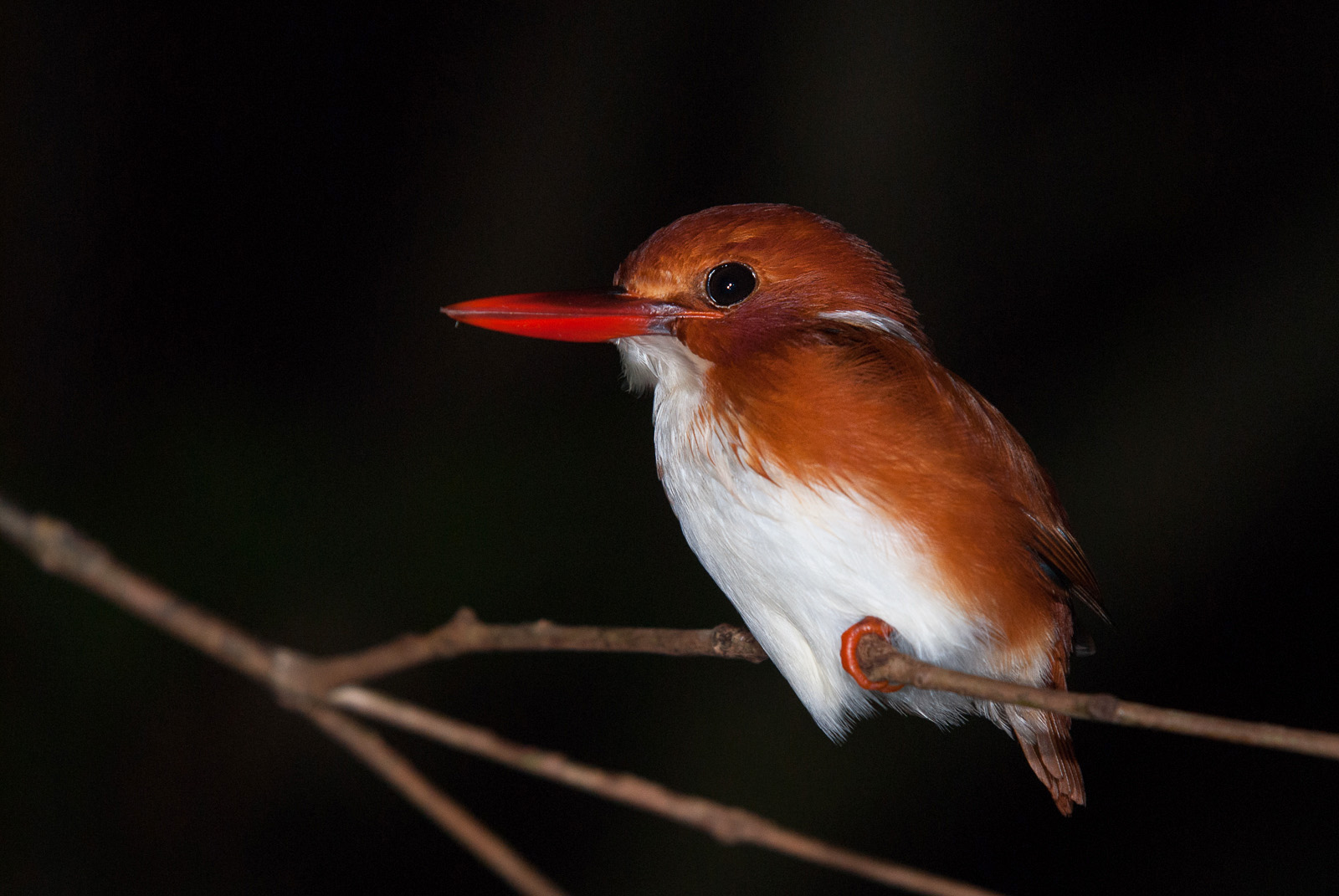
I usually don’t photograph birds at night (with the exception of owls and other nocturnal species) but while hiking on the island of Nosy Mangabe — which is just off the northeast coast of Madagascar — and searching for lemurs, geckos and chameleons, I came across this pygmy kingfisher that was up after bedtime. As the name would suggest, this is a very small bird. I only took two quick shots as not to disturb its sleep any more than I already had. Nikon D200 with Nikkor 80-200mm lens (at 165mm) ISO 320, f/5.6 at 1/60th of a second, two Nikon SB-600 flash units
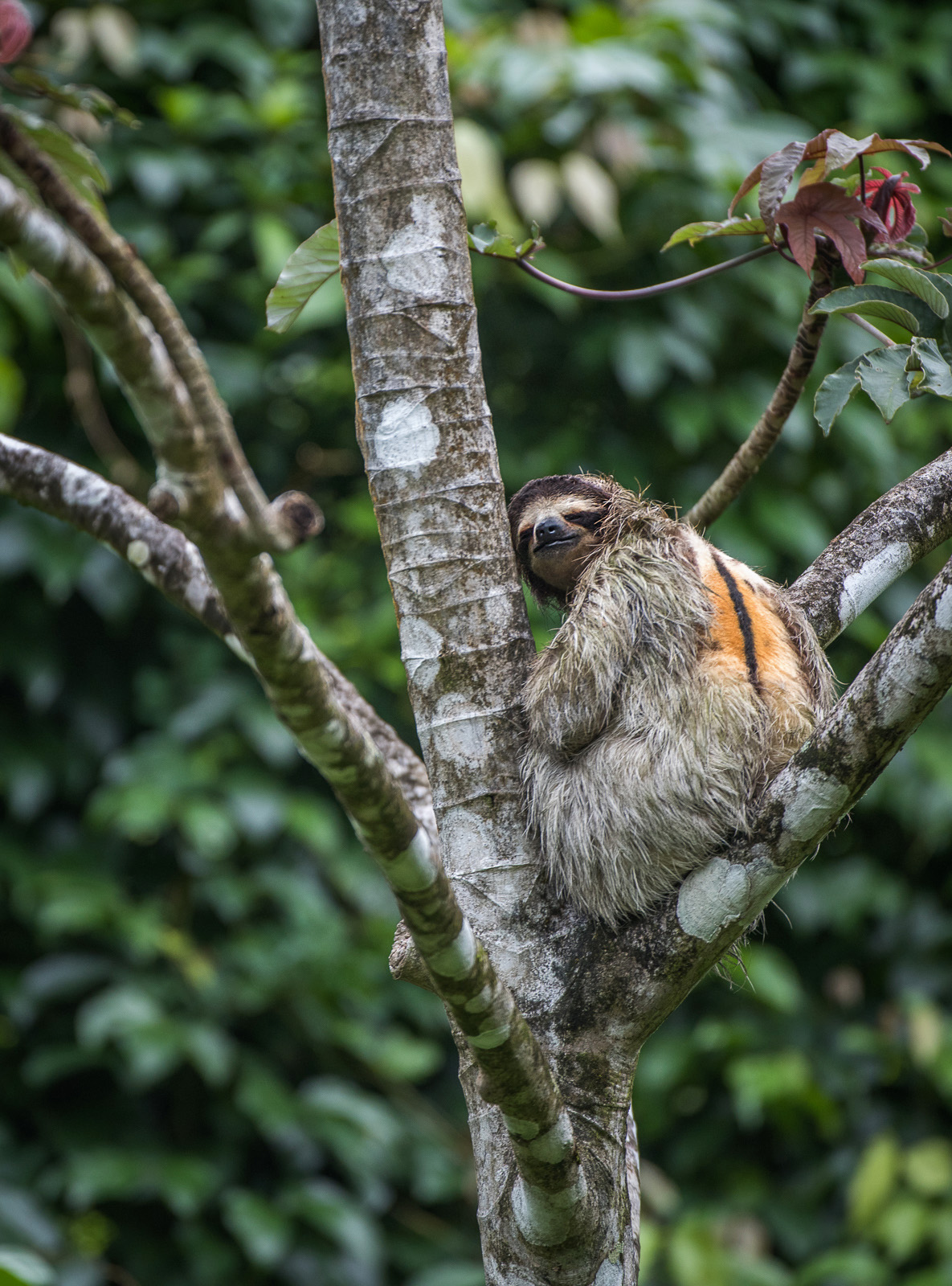
Male three-toed sloths are easily distinguishable from females because they have an orange patch with a black vertical stripe down the middle of their backs. I photographed this sleepy guy one morning in El Valle, Panama. Nikon D810 with Nikkor 200-400mm lens (at 400mm) ISO 400, f/4 at 1/320th of a second
We use cookies to enhance your experience while using our website. If you are using our Services via a browser you can restrict, block or remove cookies through your web browser settings. We also use content and scripts from third parties that may use tracking technologies. You can selectively provide your consent below to allow such third party embeds. For complete information about the cookies we use, data we collect and how we process them, please check our Privacy Policy