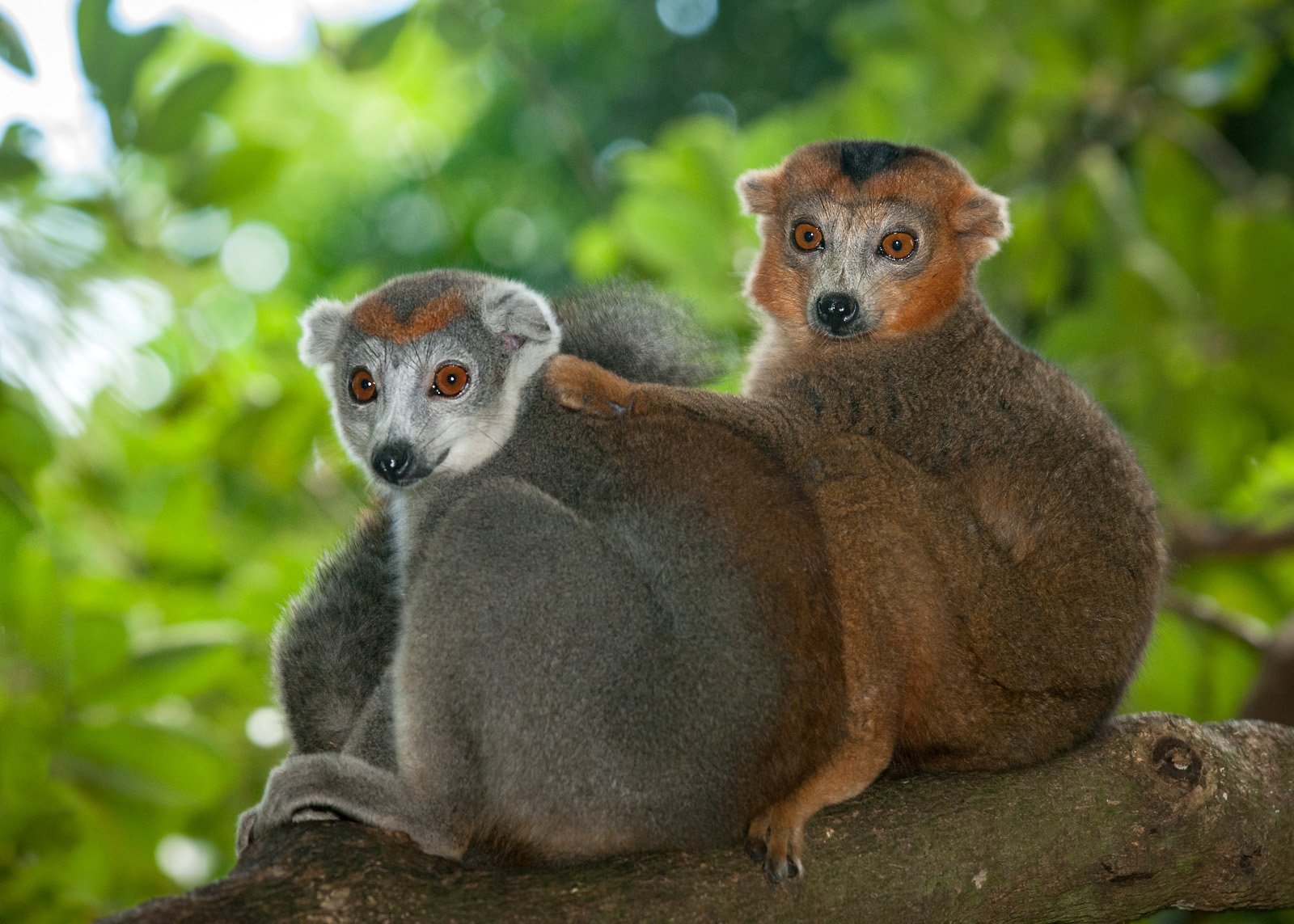
It’s never too soon to post another lemur image. This time it’s the sexually dimorphic crowned lemur. What is sexual dimorphism? The differences in appearance between the male and the female. The male crowned lemur on the right, has almost the exact inverse coloration patterns of the female on the left. Nikon D200 with Nikkor 80-200mm lens (at 165mm) ISO 400, f/4.5 at 1/60th of a second, two Nikon SB-600 flash units
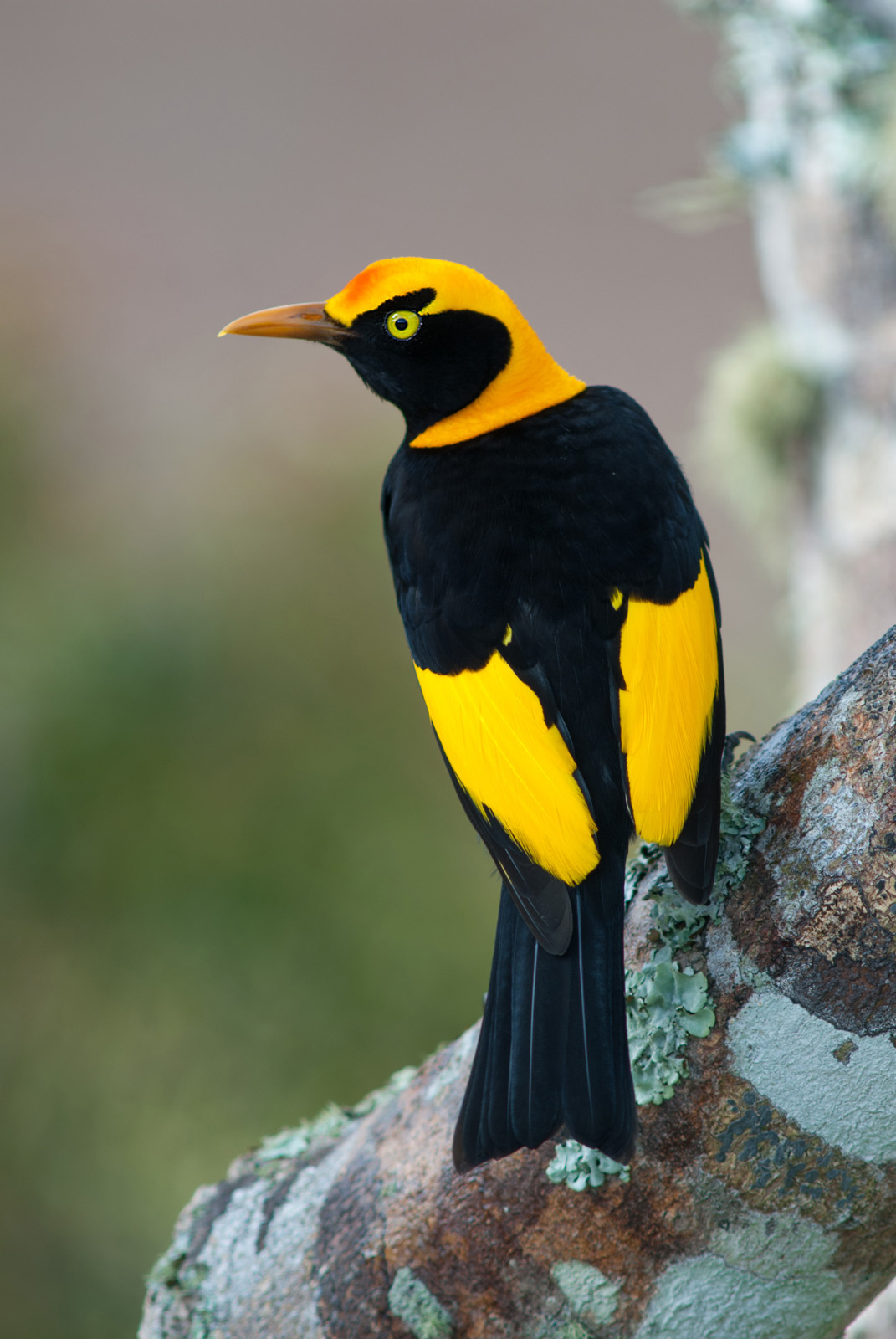
Here’s another of the great birds to be found in Lamington National Park in Queensland, Australia. Male bowerbirds, like this regent bowerbird, are known for making elaborate “bowers” to lure in females. They make these shady little structures out of whatever they can find — twigs, rocks, and any brightly colored objects they happen to stumble upon. Nikon D200 with Nikkor 600mm f/5.6 manual focus lens, ISO 100, f/5.6 at 1/80th of a second
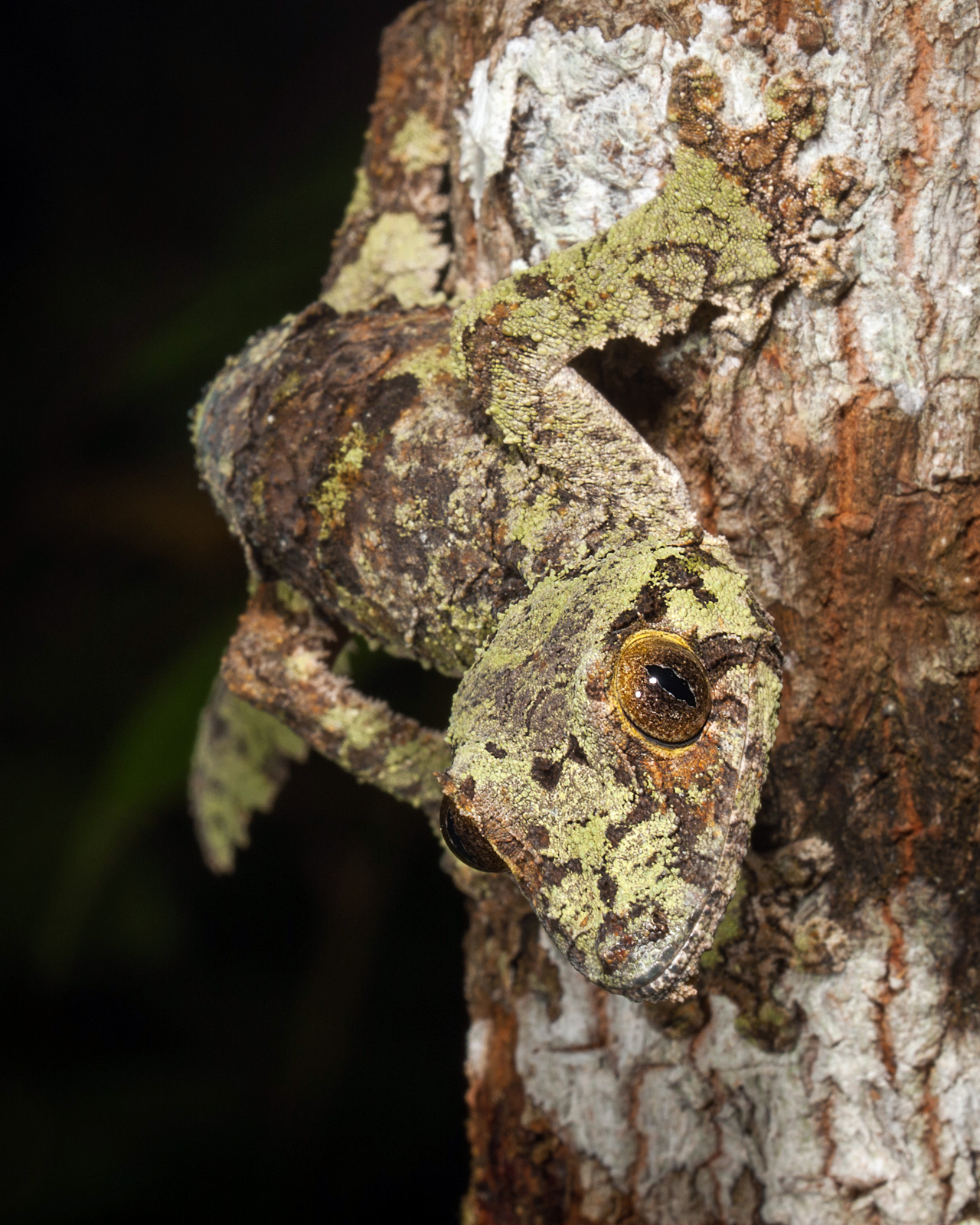
In Madagascar, it’s all about the camo. Especially for geckos. This leaf-tailed gecko was up and at it but while at rest, its mossy skin blends in perfectly with the tree bark in Andasibe-Mantadia National Park. Nikon D200 with Nikkor 80-200mm lens (at 80mm, with Canon 500D close up filter) ISO 100, f/22 at 1/60th of a second, two Nikon SB-600 flash units
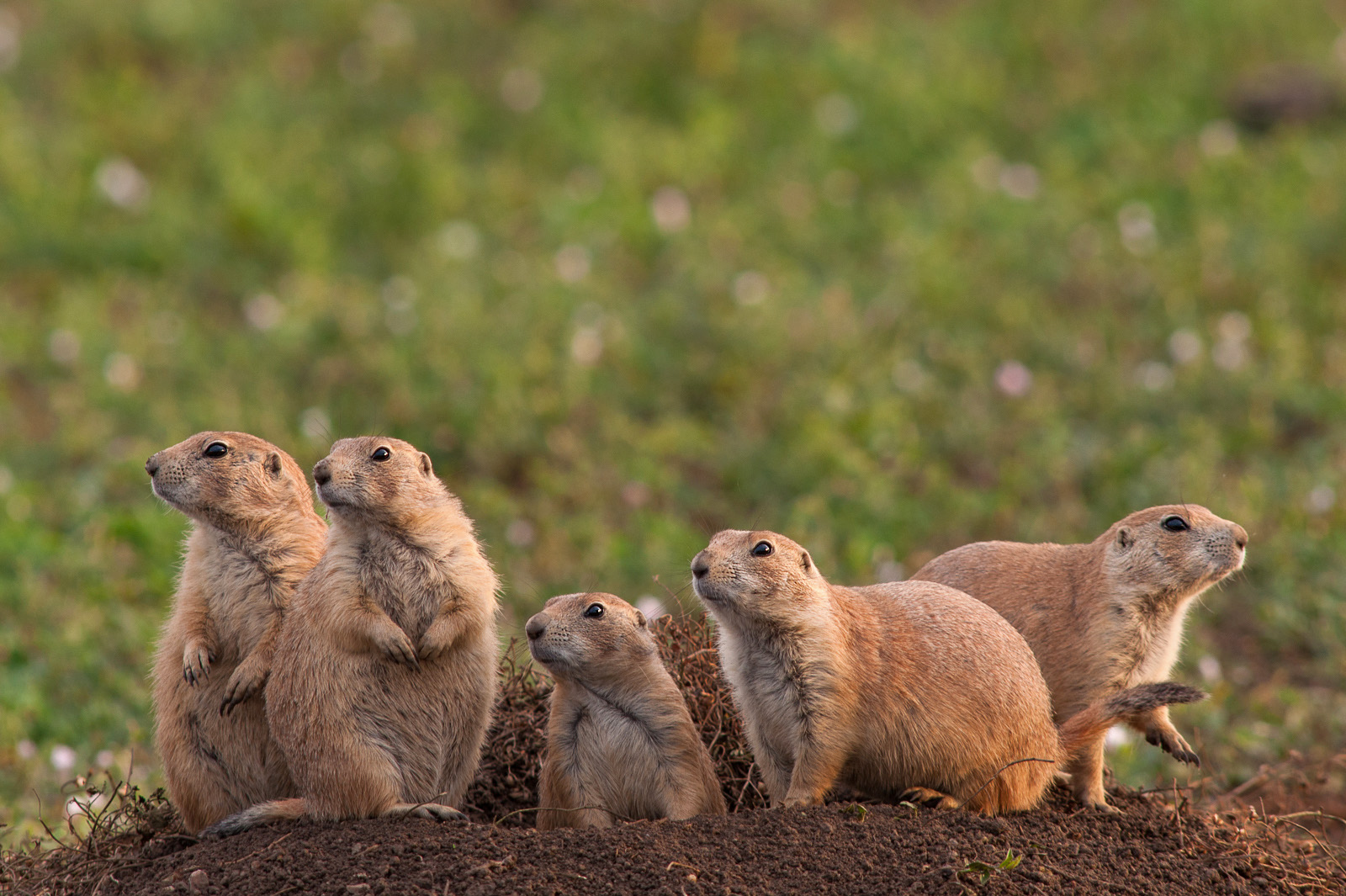
Prairie dogs are very social animals. They live in closely knit family groups called coteries. Several coteries make up a ward. And several wards make up a town. In this shot, members of a coterie were just emerging from their burrow in the morning and checking in all directions for any possible danger in town. Photographed in Badlands National Park in South Dakota. Nikon D700 with Nikkor 600mm f/5.6 manual focus lens (with 1.4 teleconverter for 800mm) ISO 400, f/11 at 1/125th of a second
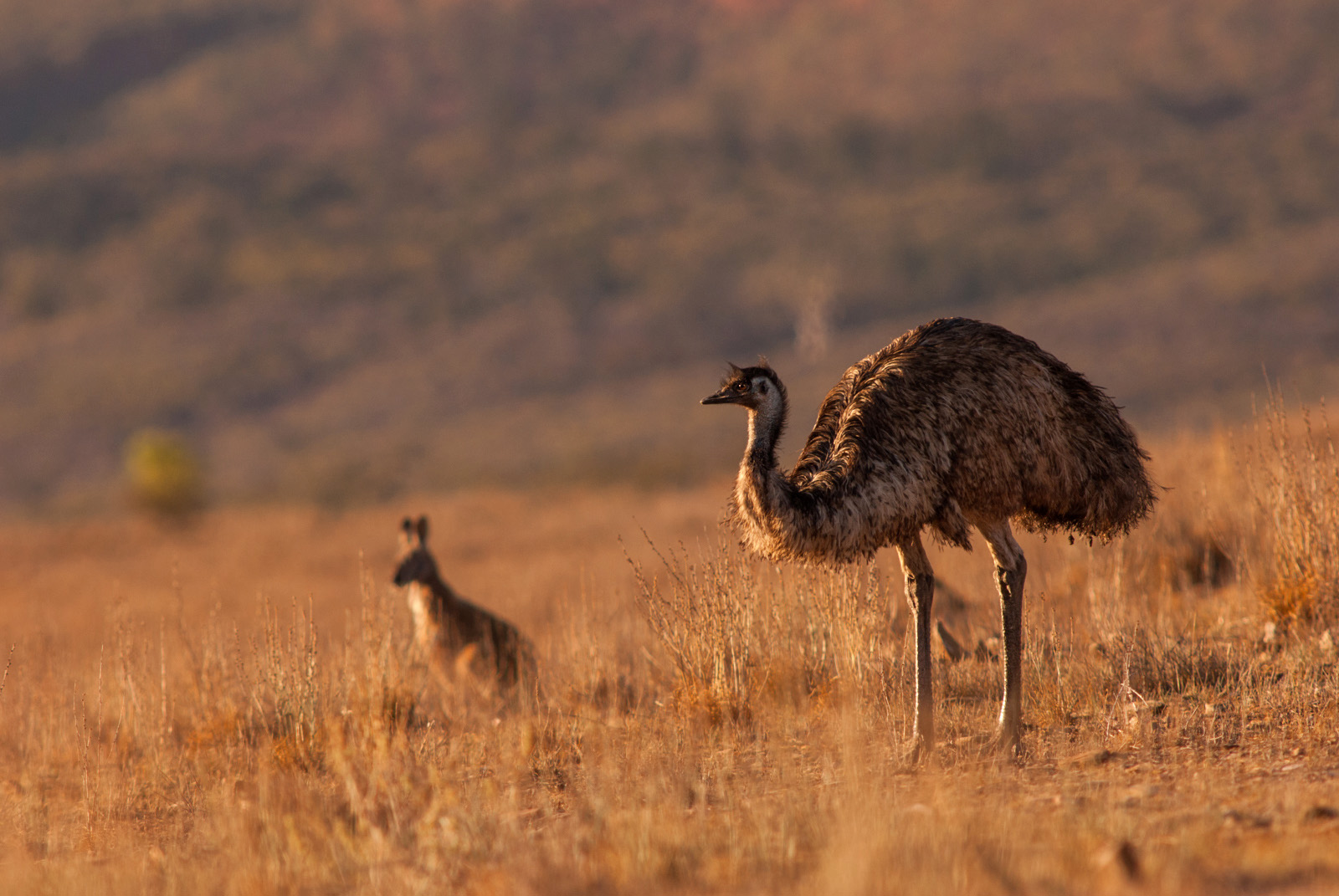
The emu is the second tallest bird in the world behind the ostrich. Like the ostrich it is flightless. But it can run pretty fast at 31 miles per hour. In this photo (taken in Flinders Ranges National Park in Southern Australia) it almost looks like the emu wants to test that speed in a race against the red kangaroo in the background — as if they’re both waiting for the starting gun before sprinting out of the blocks. Nikon D200 with Nikkor 600mm f/5.6 manual focus lens, ISO 200, f/8 at 1/250th of a second
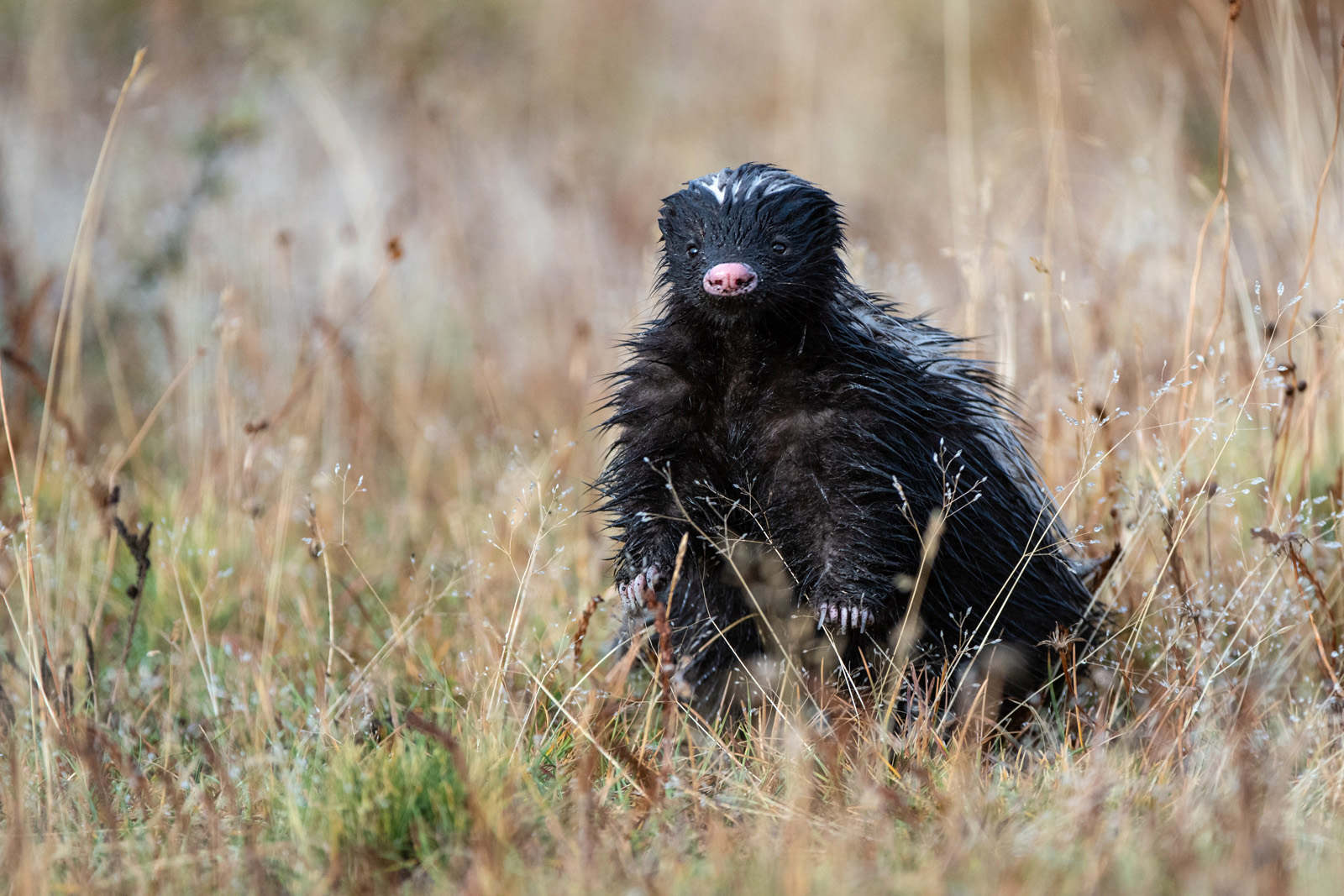
I’ll admit, I was a bit nervous when this Patagonian hog-nosed skunk got up on its hind legs to sniff the air. It was bothered no doubt, by a particular camera-carrying American. I remained as still as possible (snapping away of course) until the skunk regained its confidence and resumed the serious task of eating grass. Nikon D500 with Nikkor 200-400mm lens (at 340mm) ISO 800, f/4 at 1/3200th of a second
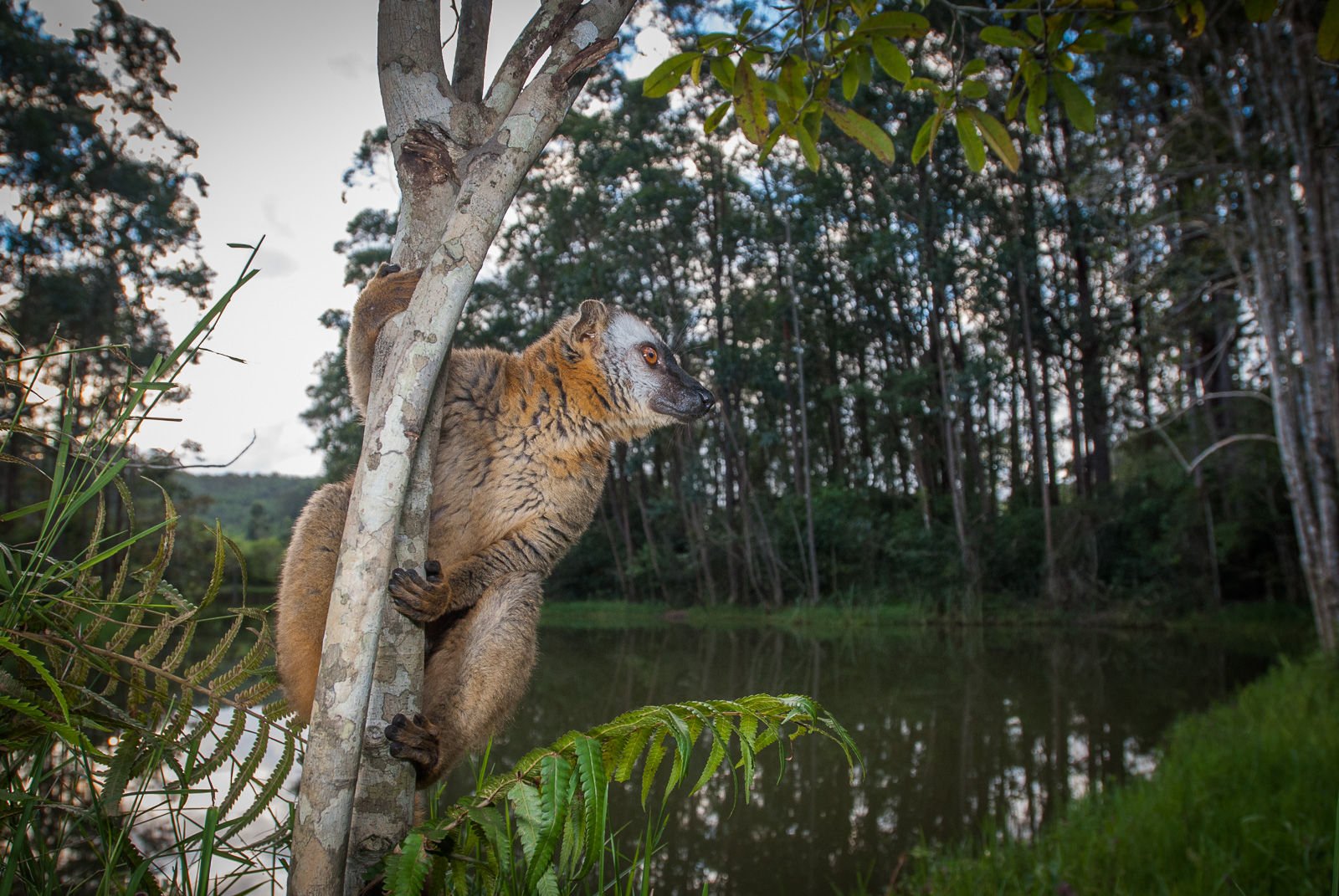
Lemur classification can get confusing and there’s no clear cut answer as to just how many species there actually are. Most experts, however, agree that there are roughly 100 recognized species. About half are nocturnal and half diurnal. This is the red-fronted brown lemur. It is both. Mostly diurnal, but increases its nocturnal activity in the dry season. Nikon D200 with Nikkor 17-35mm lens (at 17mm) ISO 200, f/5.6 at 1/60th of a second, two Nikon SB-600 flash units
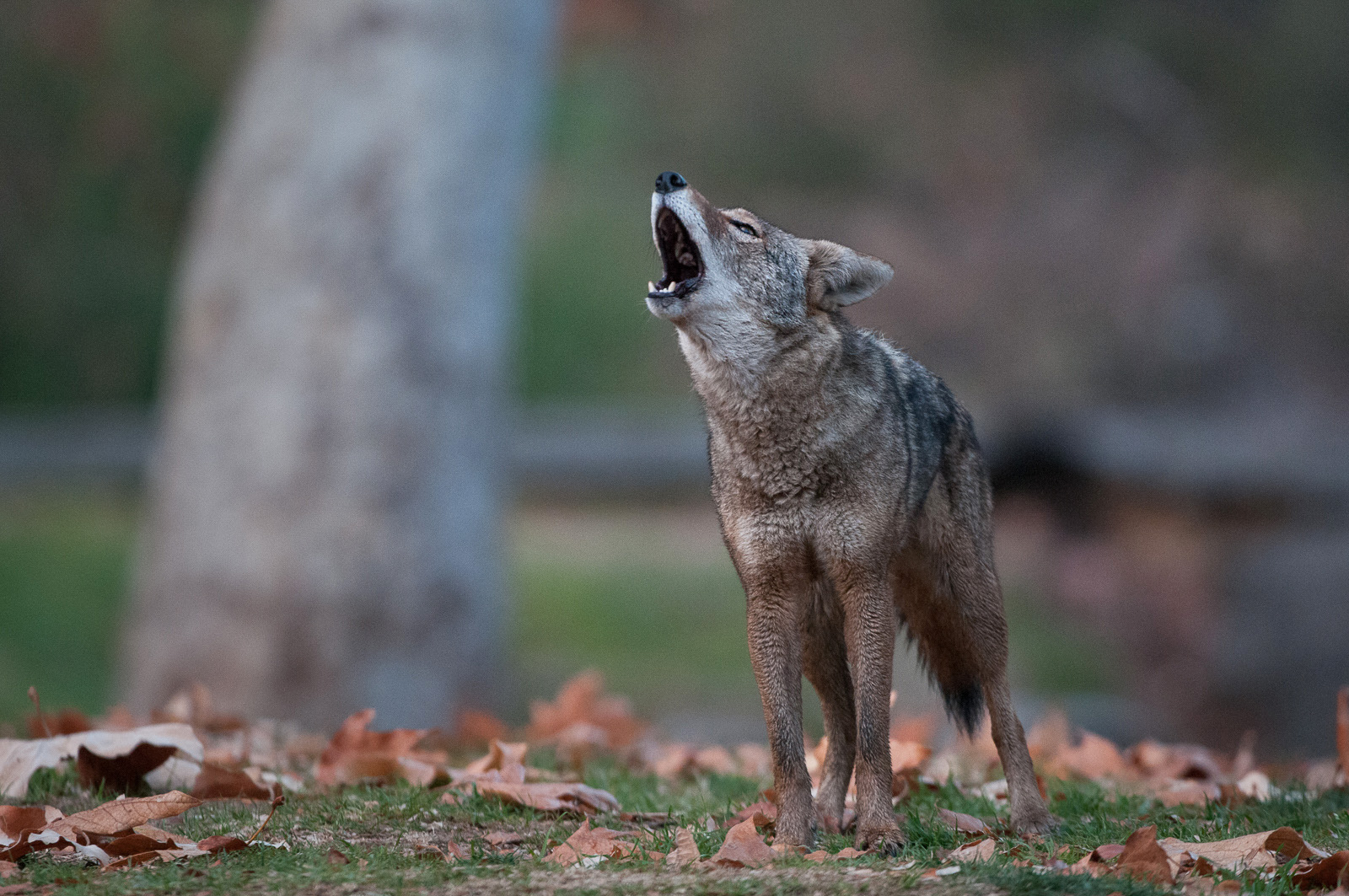
I watched this coyote howl for a few minutes before a second coyote came out of the woods and joined in. And I didn’t have to go far to find either one. This was photographed within the city limits of Los Angeles at Griffith Park. Nikon D300 with Nikkor 200-400mm lens (at 350mm) ISO 1600, f/4 at 1/200th of a second
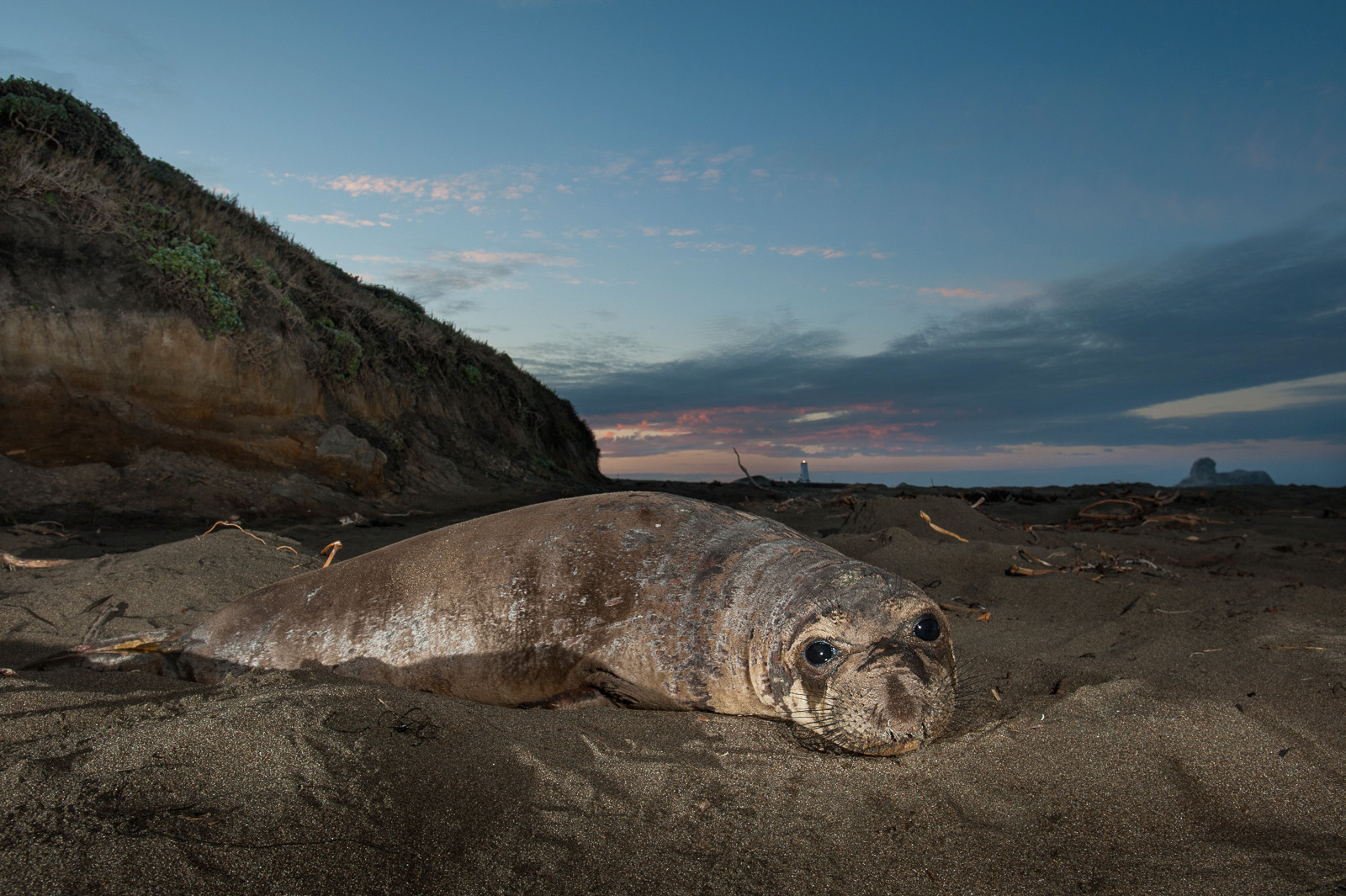
I got up before the seals to get this shot of a juvenile northern elephant seal just waking up, while a lighthouse shines in the background. This is a little spot just north of San Simeon where mothers return each year to have their babies. A few juveniles like this guy still hang around and spend most of their time back in the dunes away from all the overly protective new moms. Nikon D700 with Nikkor 17-35mm lens (at 24mm) ISO 400, f/10 at 1/60th of a second, Nikon SB-900 flash unit
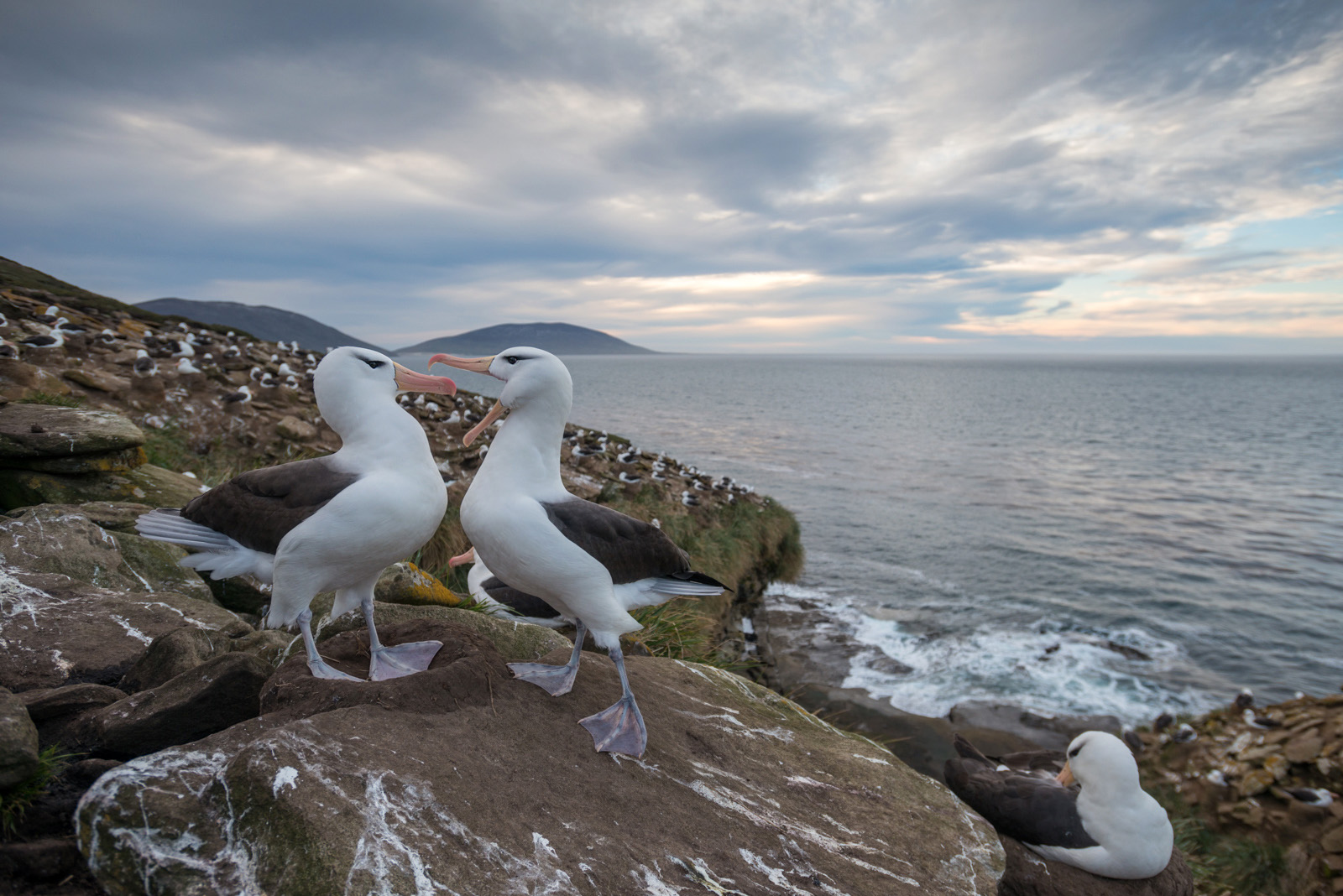
It’s difficult in a photograph to communicate the size of an albatross. So you’ll just have to take my word for it. These guys are big, but even so, the black-browed albatross is only considered a medium sized albatross. Their wing span only goes to eight feet unlike some of their cousins who can spread those wings up to eleven feet. These two, however, are giving a nice look at a typical mating display. Apparently threatening to eat one’s face is considered a turn on to the albatross. Nikon D800 with Nikkor 17-35mm lens (at 22mm) ISO 400, f/4 at 1/500th of a second
We use cookies to enhance your experience while using our website. If you are using our Services via a browser you can restrict, block or remove cookies through your web browser settings. We also use content and scripts from third parties that may use tracking technologies. You can selectively provide your consent below to allow such third party embeds. For complete information about the cookies we use, data we collect and how we process them, please check our Privacy Policy