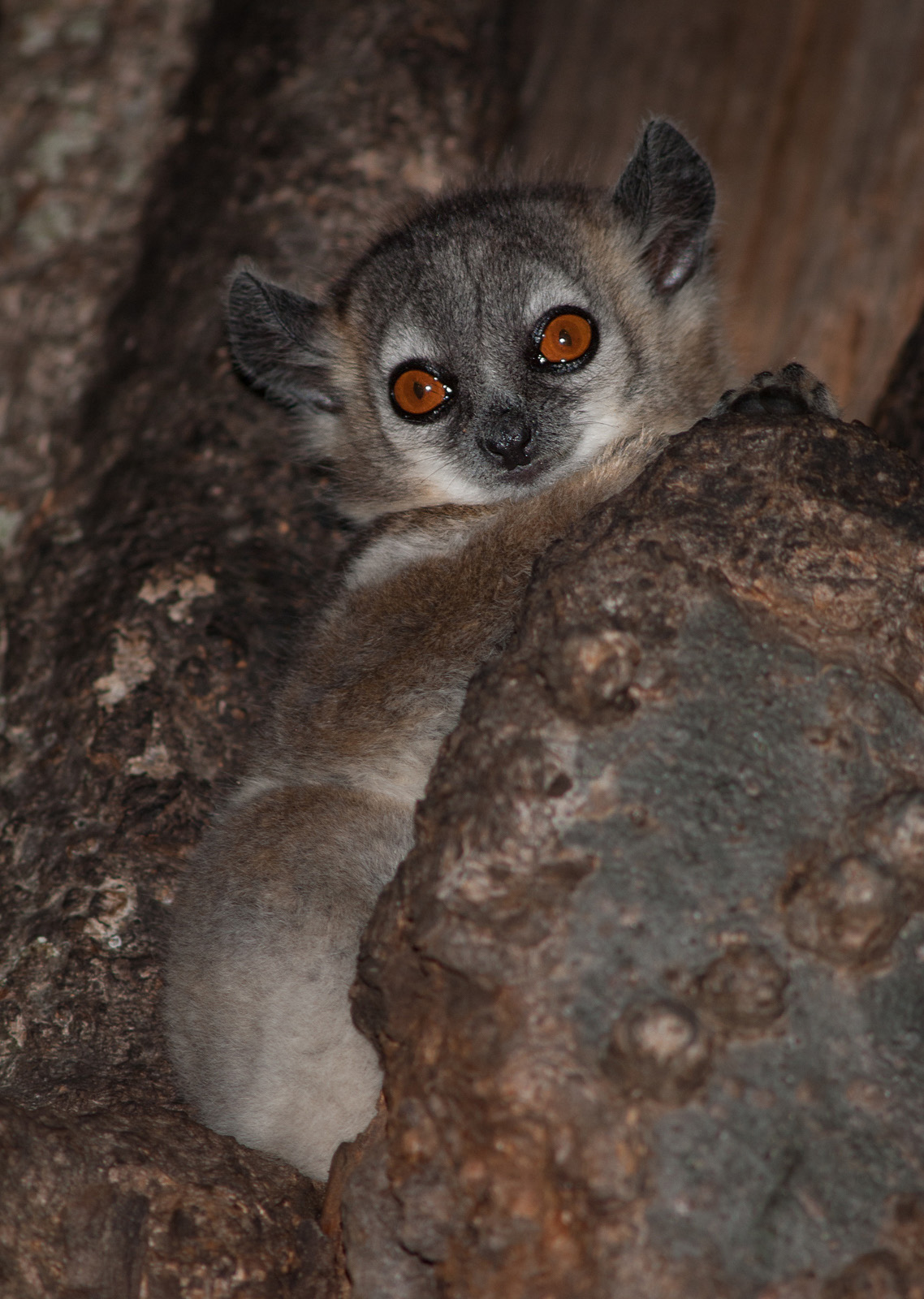
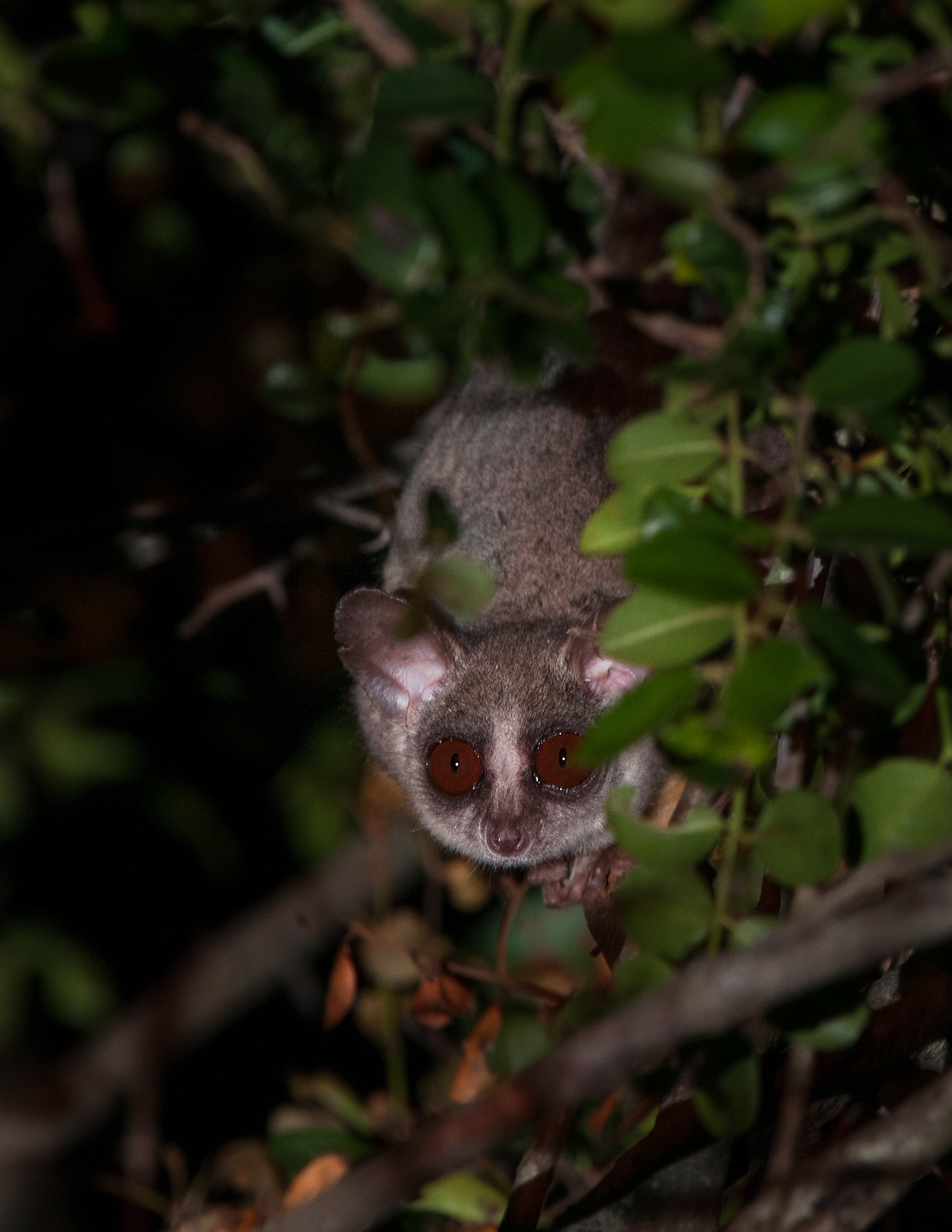
Going through my lemur photos last week, I came across this guy, a white-footed sportive lemur. I never noticed just how thick that black eye liner could be, nor how sweet their faces could be. Sportive lemurs are medium-sized and strictly nocturnal. They spend the majority of their time in trees, but when on the ground, they hop around like kangaroos. This one was spotted in the same place as last week’s ring-tailed lemur that I posted — Berenty Reserve in southern Madagascar. Nikon D200 with Nikkor 600mm f/5.6 manual focus lens, ISO 100, f/5.6 at 1/60th of a second, Nikon SB-600 flash
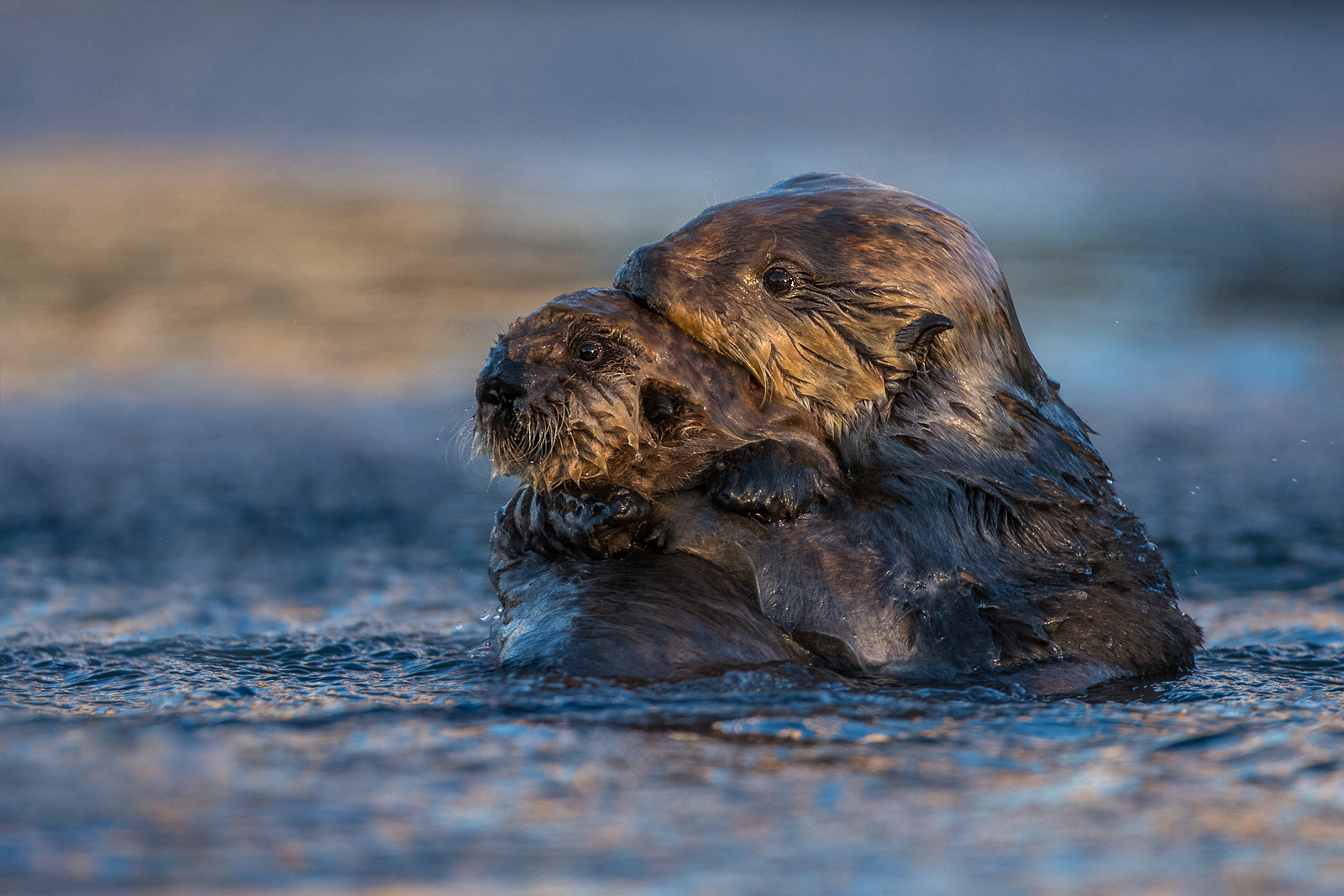
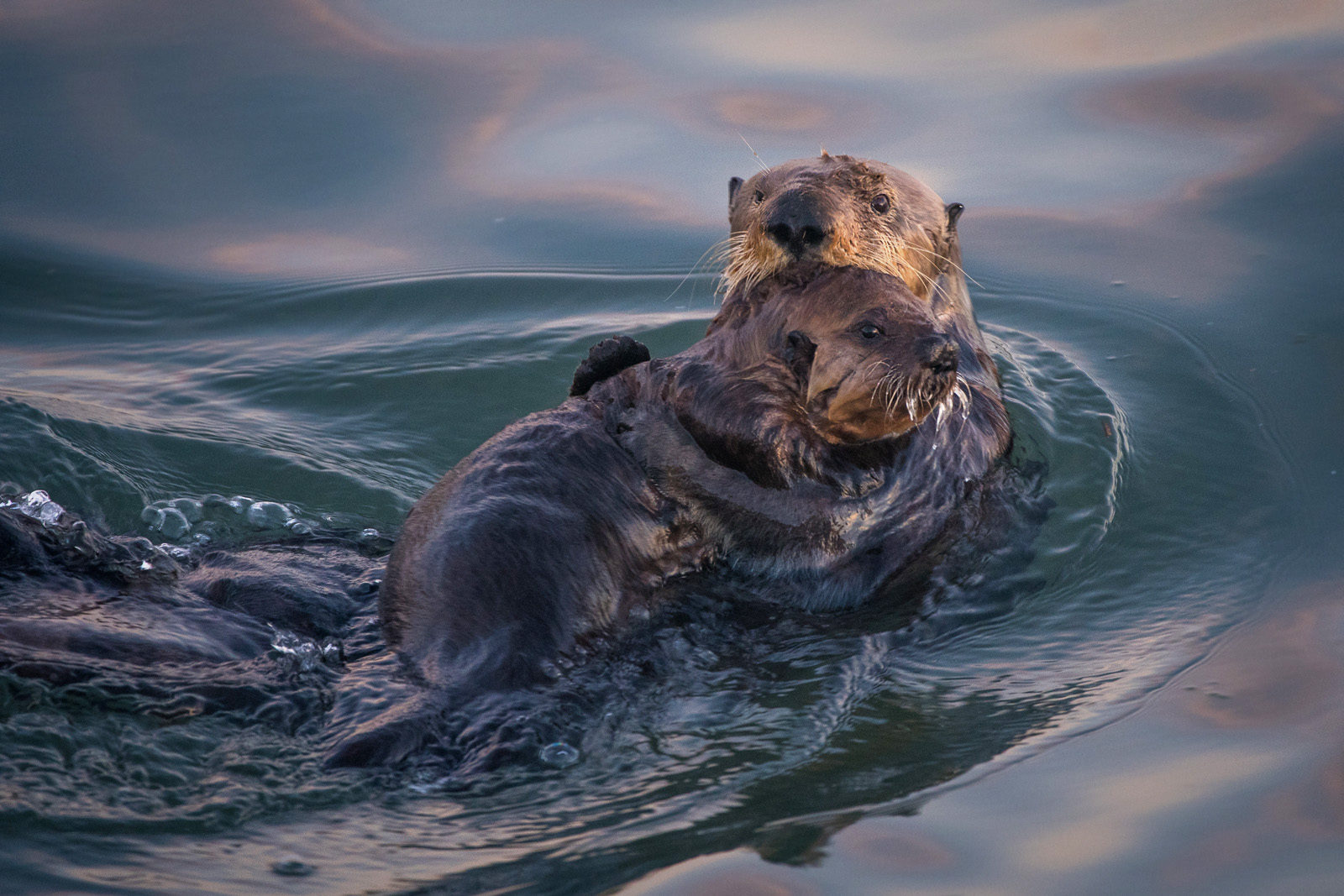
As promised, here’s another sea otter mom with pup. This time from a considerably lower angle. This little pup kept venturing out its own, but never got far before mom pulled it back in. When wet, it’s sometimes hard to distinguish where one otter ends and the other begins. Their thick coats just sort of blend together. Nikon D500 with Nikkor 200-400mm lens (at 400mm) ISO 800, f/4 at 1/1600th of a second
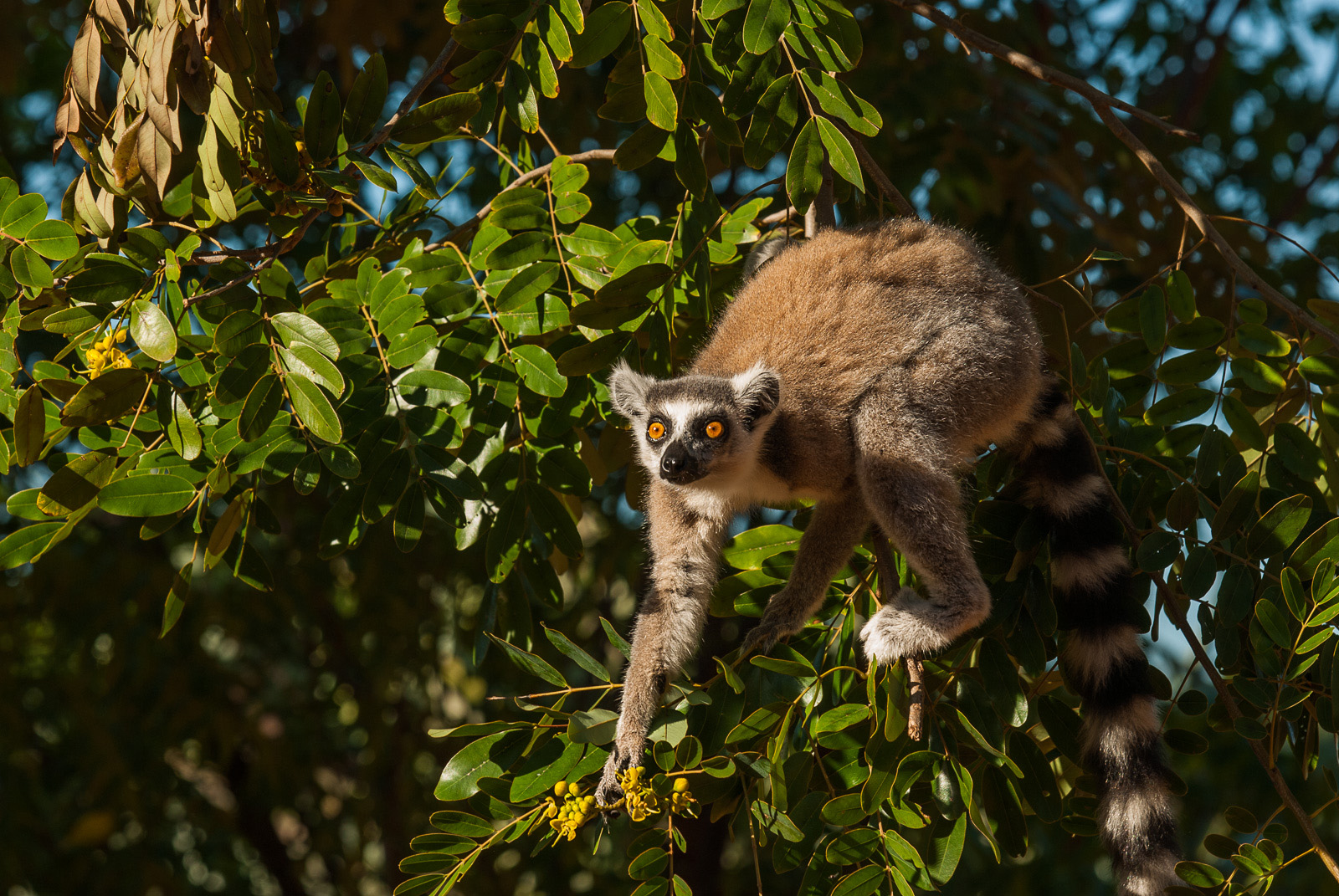
Ring-tailed lemurs spend most of their time on the ground, but they also like to climb trees — especially when there’s plenty of fruit to eat. Photographed on the extreme southern tip of Madagascar at Berenty Reserve. Nikon D200 with Nikkor 80-200mm lens (at 145mm) ISO 100, f/6.3 at 1/160th of a second
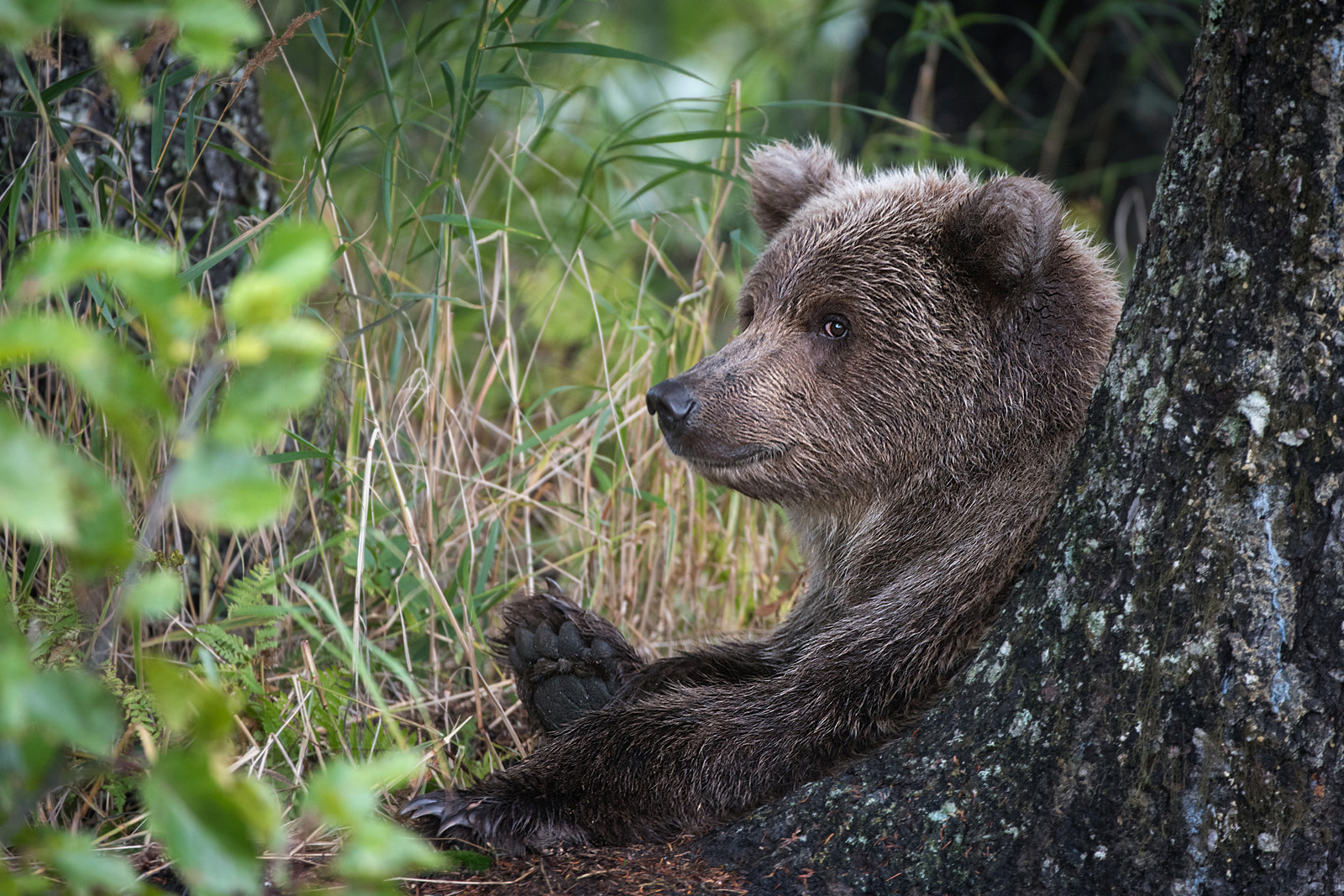
In total, I probably saw about 14 or so bears on my recent trip to Alaska. Most of them were mothers with cubs. But there were also several adolescent males around — too old to be with mom anymore, but too young to venture off deeper into the forest to compete with the older males, most of which had moved away from the coast in search of more salmon-rich rivers. The adolescent males that were around seemed to actually seek us out, preferring the safety associated with the presence of humans. This sweet young guy was hanging out very close to the lodge, content to stay put until it was time to go eat some more grass and attempt to catch some more fish. Nikon D500 with Nikkor 200-400mm lens (at 380mm) ISO 800, f/4 at 1/100th of a second
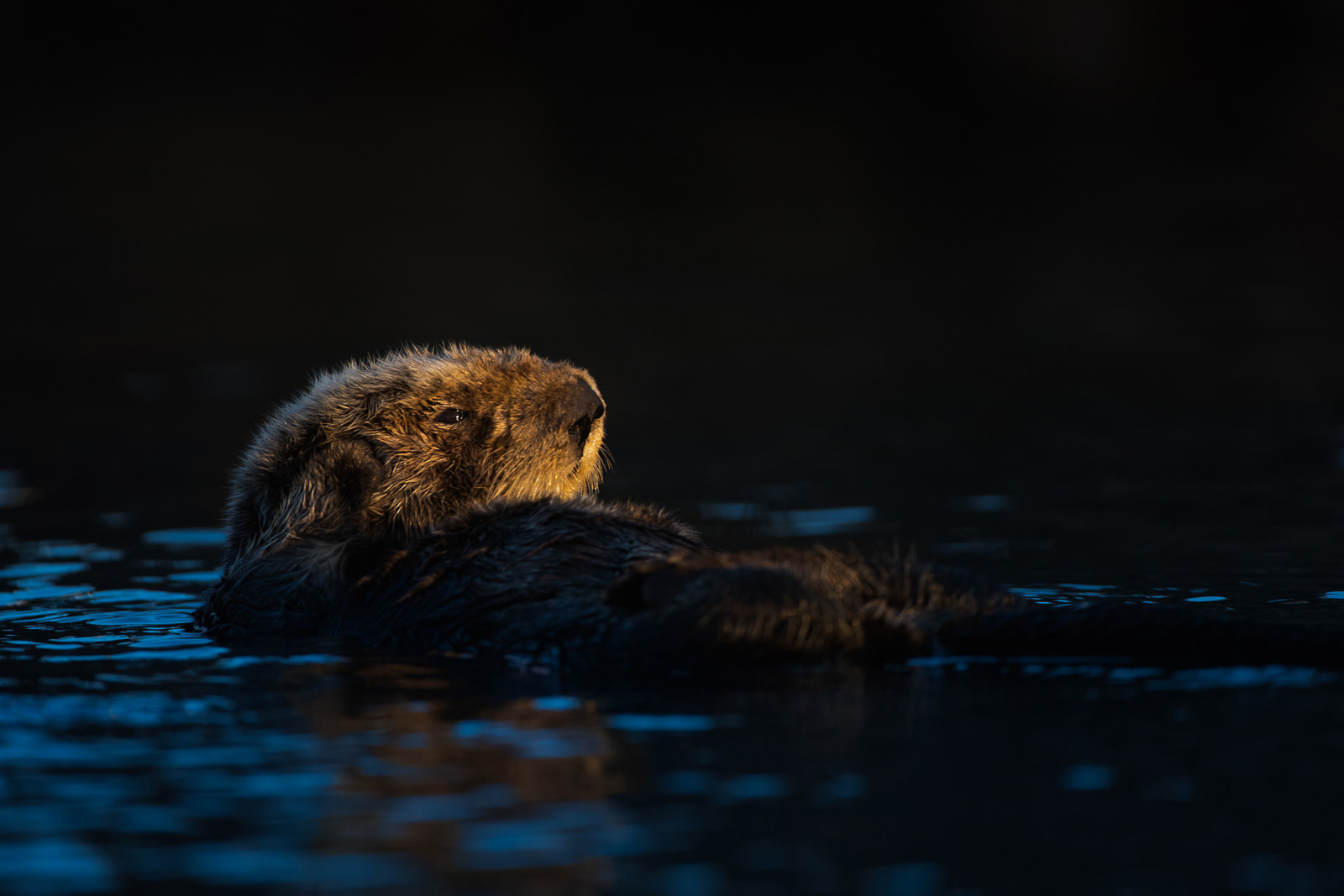
Here’s another sea otter from last weekend in Morro Bay. Always nice when the water is in shadows and the subject is getting the first, soft rays of the rising sun. Perfect conditions for both warm and cool tones. Nikon D500 with Nikkor 200-400mm lens (at 400mm) ISO 800, f/4 at 1/500th of a second
The galago, better known as the bush baby, is a small African primate with big eyes — adapted for its nocturnal behavior. I spotted this little guy one night while we were returning late from a game drive in Laikipia, Kenya. It was well past sunset and all the night creatures were just getting up and about. Nikon D300 with Nikkor 200-400mm lens (at 400mm) ISO 400, f/6.3 at 1/60th of second, Nikon SB-800 flash
I’m just back from shooting a commercial in LA. But over the weekend I had some down time so I took a trip three hours north up to Morro Bay in search of sea otters. Sea otters, of course, being one of the cutest creatures alive. But even better — sea otters with babies. I was able to get many photos, both from eye level and from above of about twenty or so different otters (at least two, if not three of the mothers seemed to have pups). Thought I’d start with this shot from a higher perspective. It was just past sunset and the water was picking up the colors from the sky above. Momma otter was making a move from the dock area at Morro Bay, out to the open water with her pup. Stay tuned for many more otter posts to come. Nikon D500 with Nikkor 200-400mm lens (at 400mm) ISO 1600, f/4 at 1/160th of a second
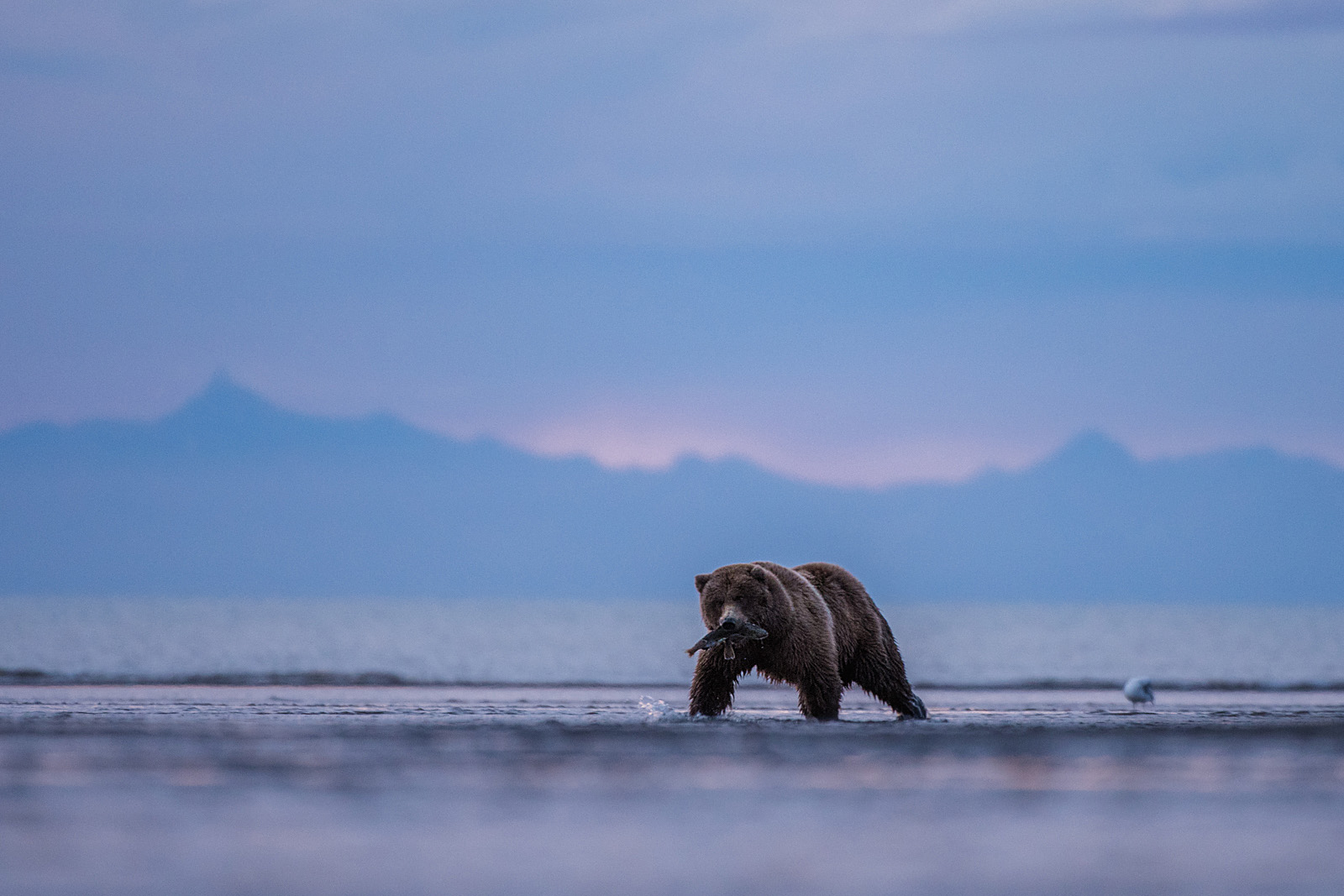
I had one morning in Lake Clark National Park that produced a bit of color in the sky. Luckily it coincided with low tide when the bears were out in the shallow water fishing for silver salmon. I liked the pastel hues of this particular image as a mother bear snagged another snack. Nikon D500 with Nikkor 200-400mm lens (at 400mm) ISO 1600, f/4 at 1/200th of a second
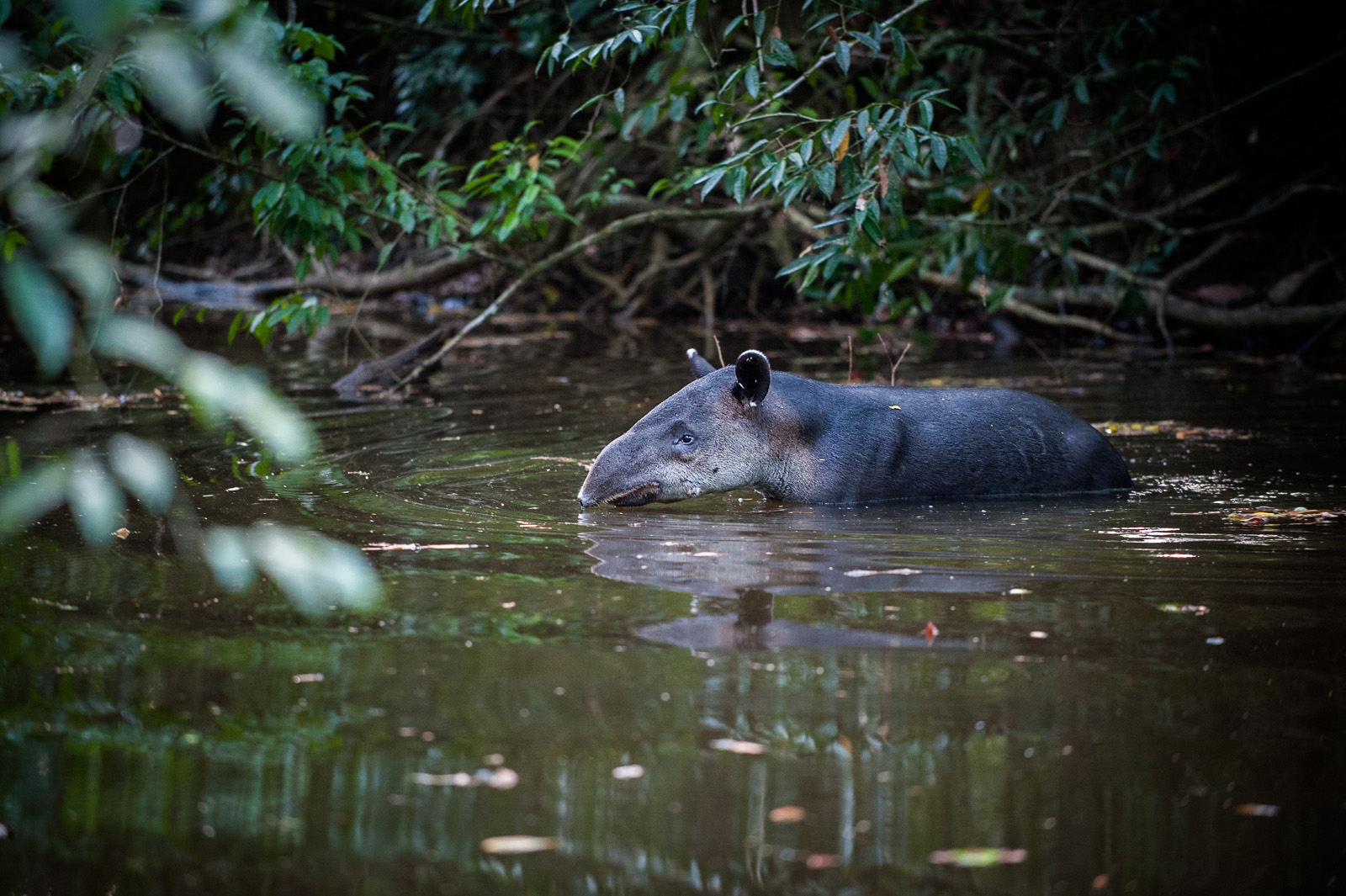
The Baird’s tapir is the largest land mammal in Central America. They can grow to over eight feet in length and weigh almost 900 pounds. This one was a big male that I photographed crossing a river in Corcovado National Park in south western Costa Rica. Nikon D700 with Nikkor 70-200mm lens (at 175mm) ISO 3200, f/2.8 at 1/60th of a second
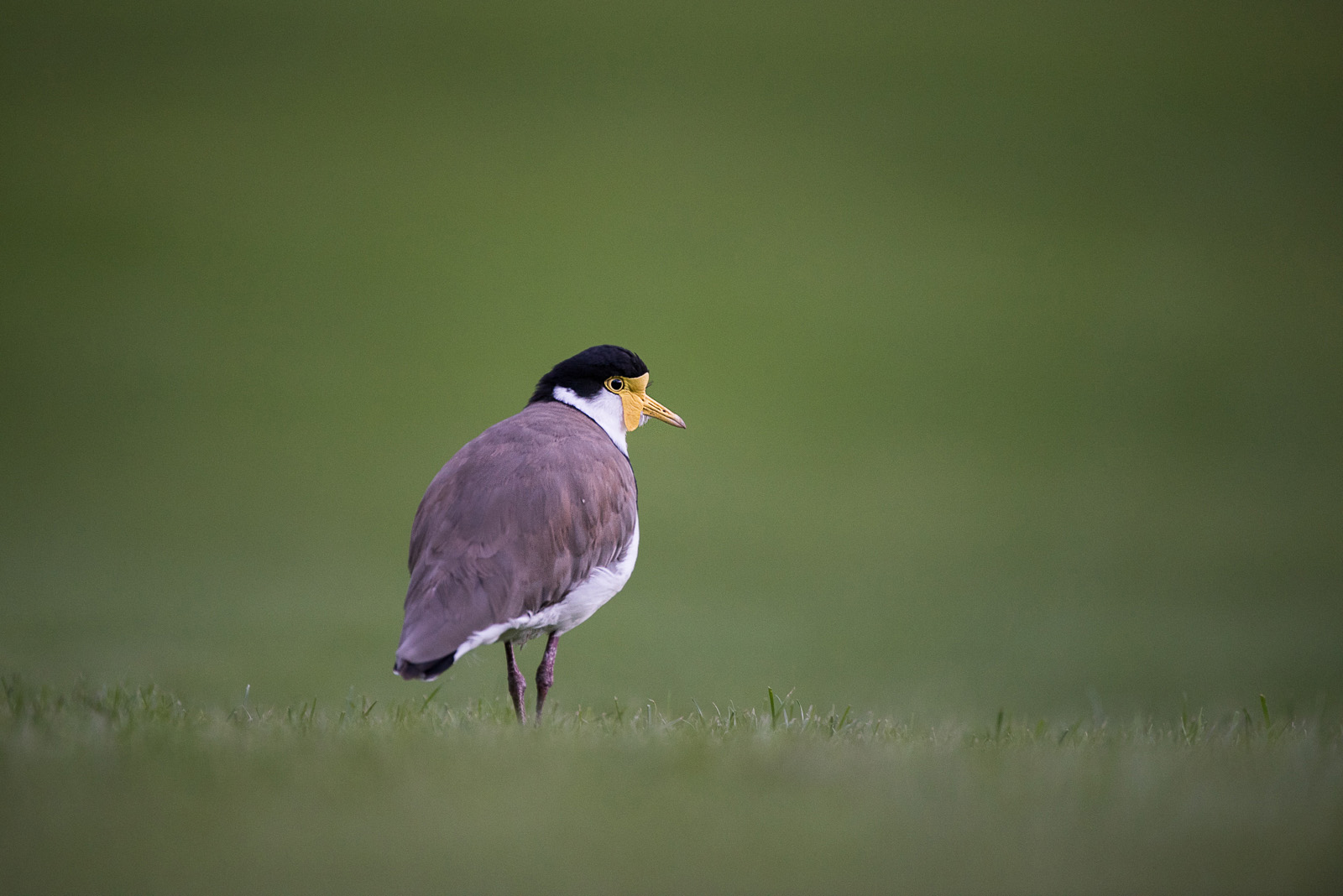
The masked lapwing, a native of Australia, is very similar to the wattled lapwing, which I’ve seen several times in Africa. This guy was spotted in Lauceston, Tasmania at a place called Cataract Gorge. Cataract Gorge is a popular recreation area for locals and these birds are quite common at picnic sites and other open grassy areas. Nikon D810 with Nikkor 200-400mm lens (at 400mm) ISO 1600, f/4 at 1/50th of a second
We use cookies to enhance your experience while using our website. If you are using our Services via a browser you can restrict, block or remove cookies through your web browser settings. We also use content and scripts from third parties that may use tracking technologies. You can selectively provide your consent below to allow such third party embeds. For complete information about the cookies we use, data we collect and how we process them, please check our Privacy Policy