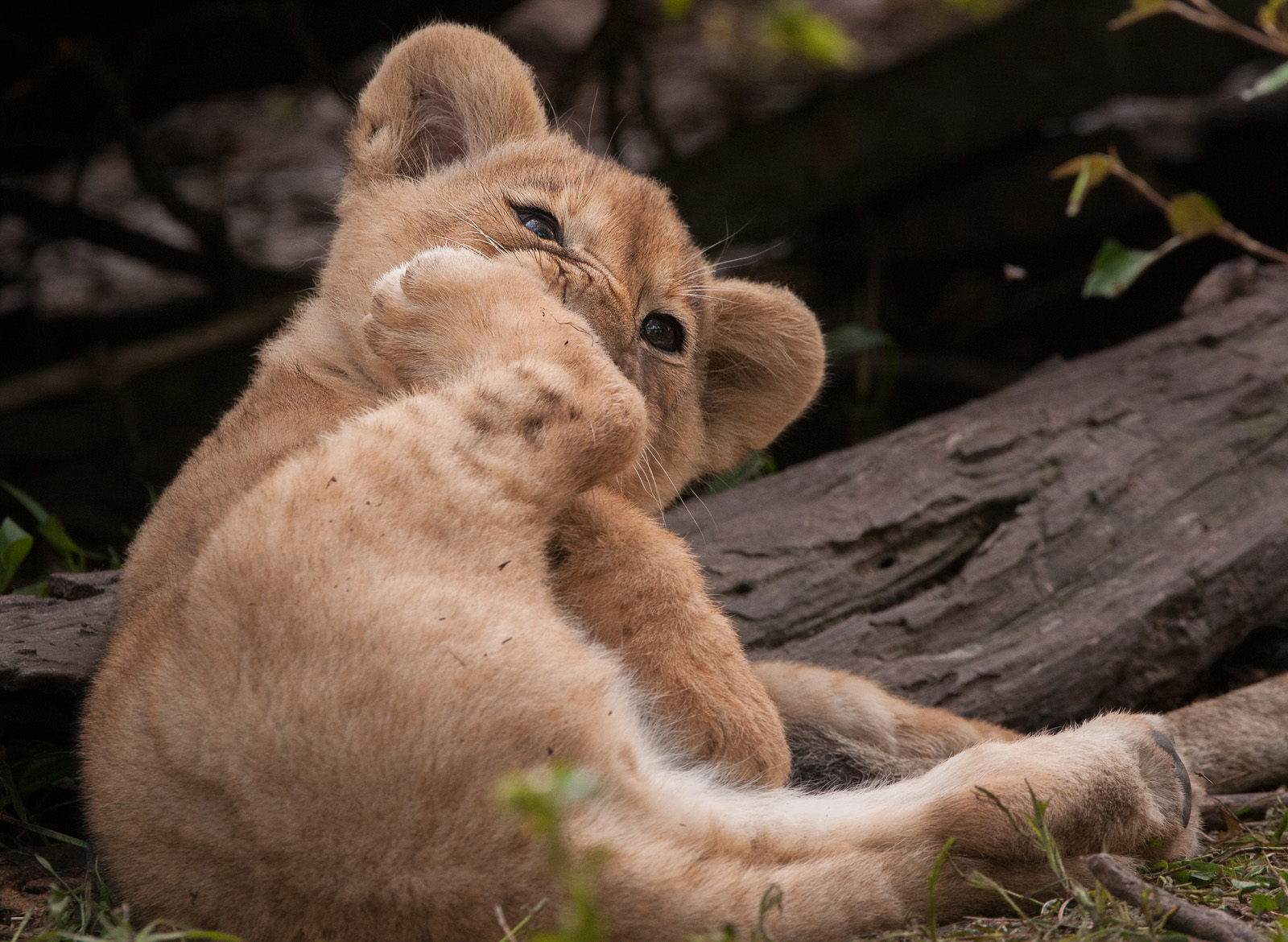
Much more to come from Thailand, but it’s about time to mix up the posts again with looks at the rest of the world. Places like the Masai Mara in Kenya, where this lion cub was really going to town on that foot. Perhaps he had an itch, or maybe it just tasted good, who knows. Nikon D300 with Nikkor 200-400mm lens (at 360mm) ISO 800, f/6.3 at 1/500th of a second
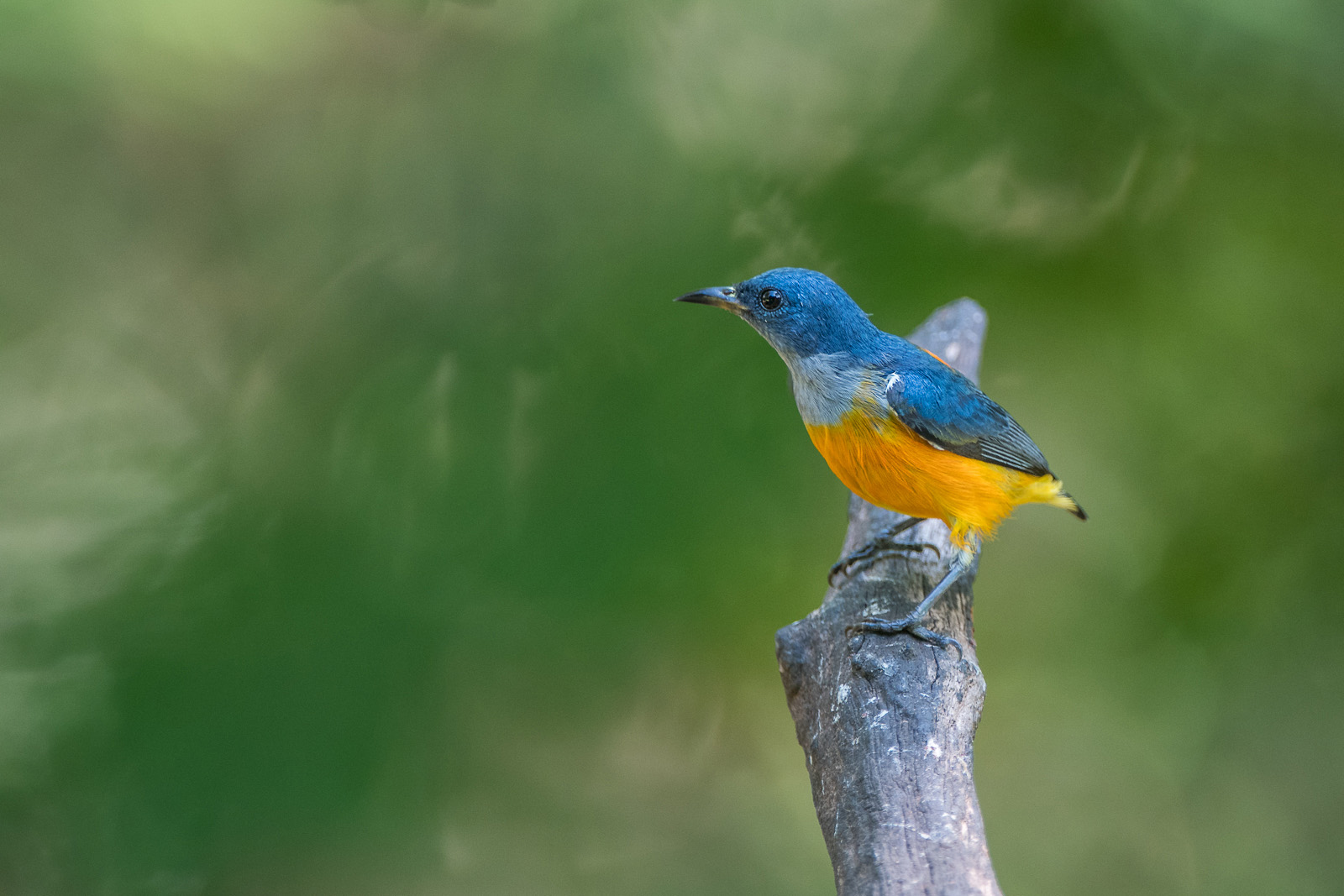
This may have been one of the smallest animals that I photographed in Thailand, but it had the best name — the orange bellied flowerpecker. A lovely little bird of equal parts orange and blue. This is the male of the species. The female is more uniformly yellow with a bit of black. Nikon D500 with Nikkor 200-400mm lens (at 400mm) ISO 800, f/4 at 1/160th of a second
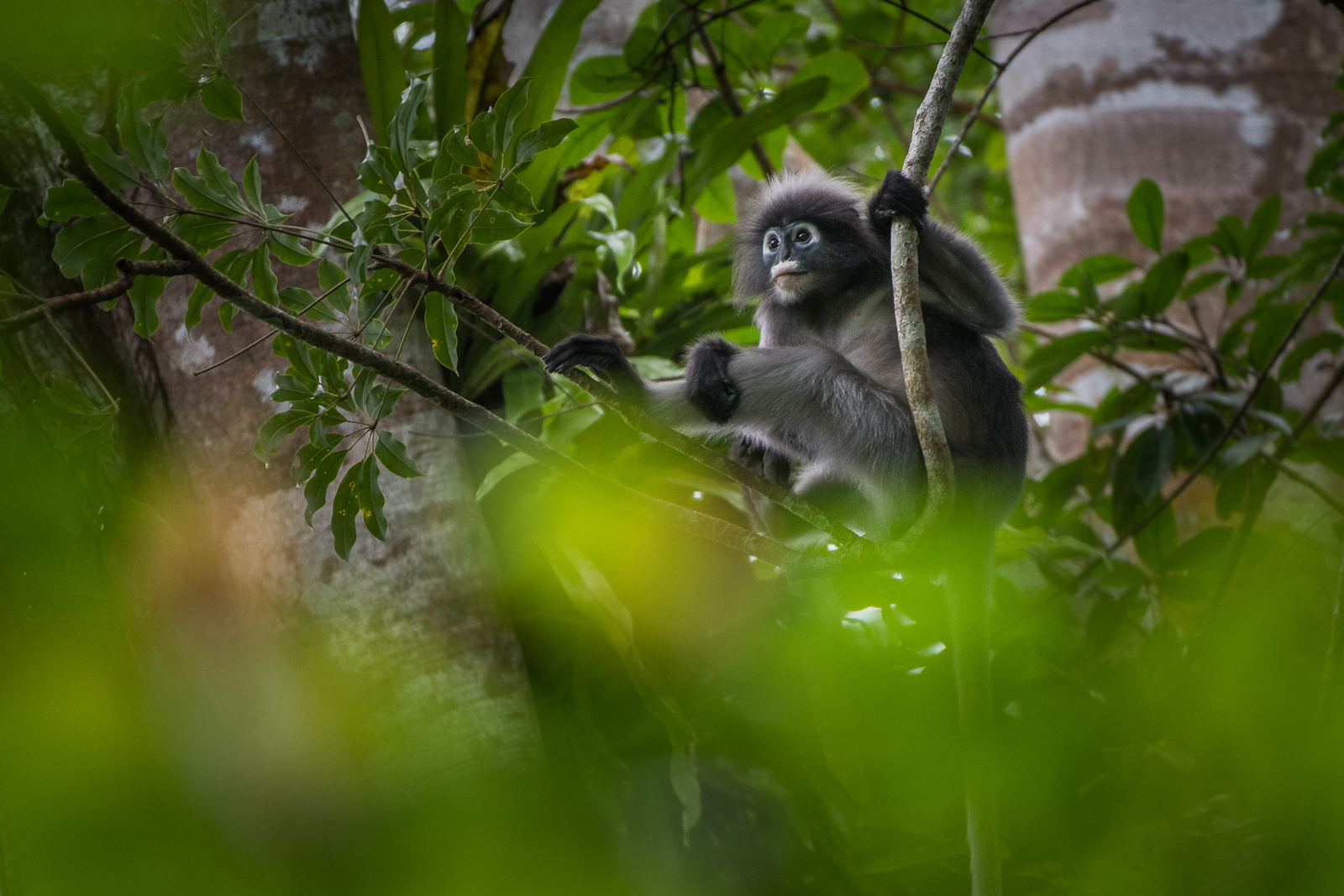
Here’s the other of the two langur species that I photographed in Thailand. This is the banded langur, or if you prefer, the banded leaf monkey. You can even call it the banded surili if you’re so inclined. They answer to all three. Unlike the dusky langurs, which I usually saw on their own, the banded langurs commonly travel in large troops. Nikon D500 with Nikkor 200-400mm lens (at 400mm) ISO 800, f/4 at 1/200th of a second
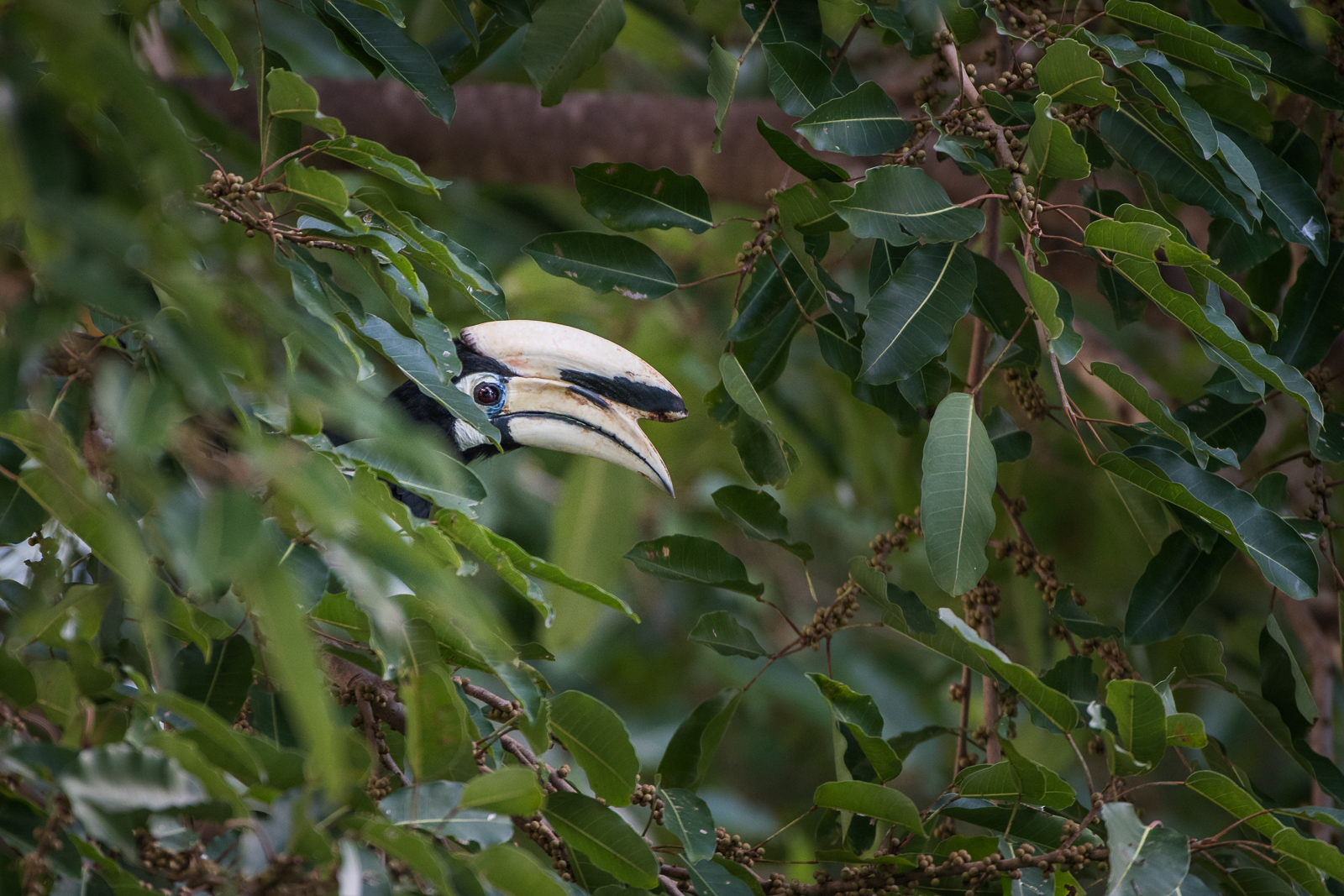
This is the Oriental pied hornbill. These guys were definitely more common than the great hornbill that I posted last week. Still, it was exciting to see them the number of times that I did. I captured several in-flight photos, but I kind of liked this simple portrait of the distinctive bill peaking through the foliage. Unlike the great hornbills that were almost always high in the canopy, the Oriental pied hornbills would occasionally make an appearance a bit lower to the ground, depending upon where the trees were fruiting. Nikon D500 with Nikkor 200-400mm lens (at 400mm) ISO 800, f/4 at 1/250th of a second
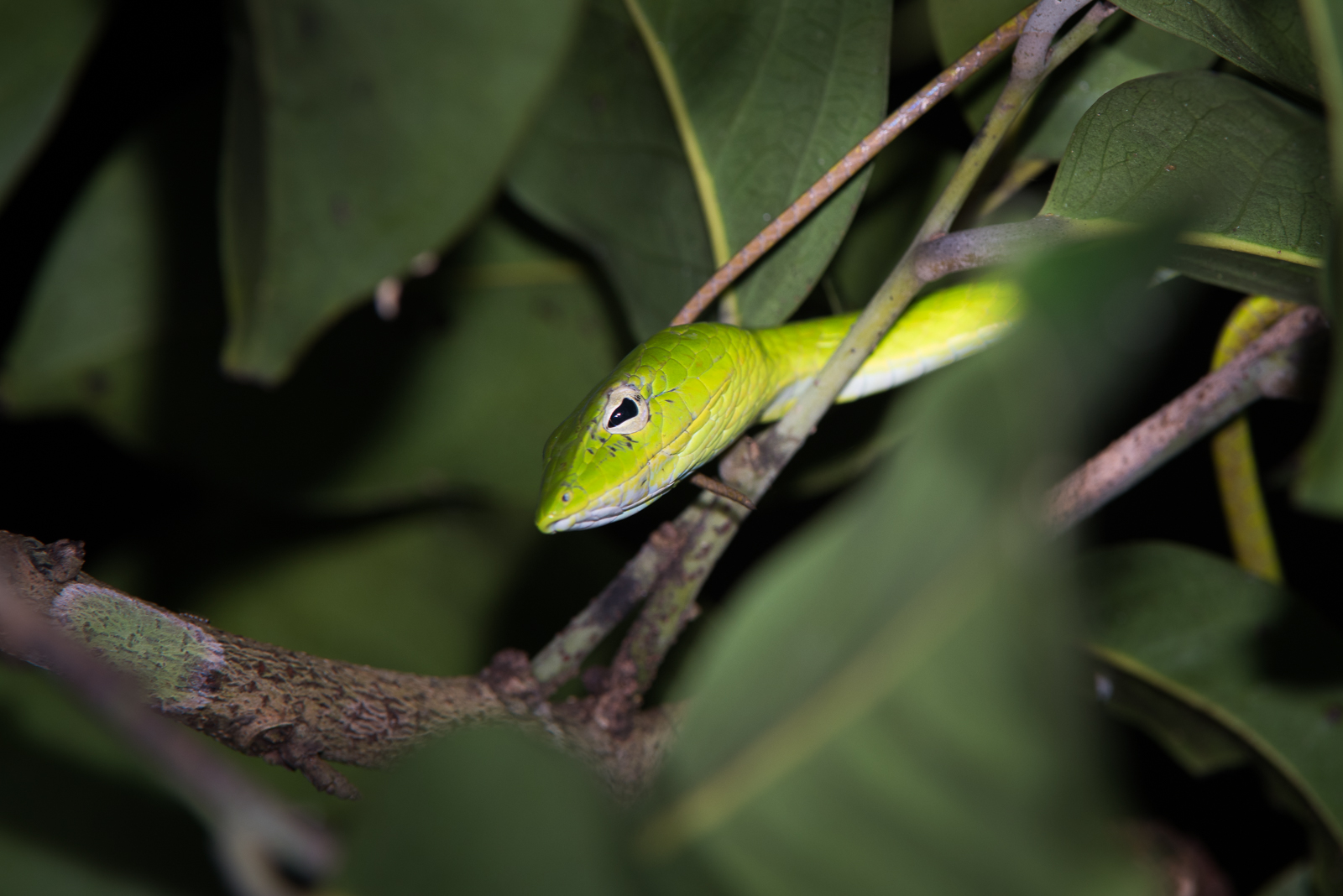
This sinister looking guy was creeping around in a tree near my tent in Kaeng Krachan National Park in Thailand. These green vine snakes are fairly common — and from what I’m told, only mildly venomous and not a significant threat to humans. I thought he was pretty cool looking with that arrowhead shaped pupil surrounded by white. Nikon D810 with Nikkor 200-400mm lens (at 400mm) ISO 200, f/8 at 1/100th of a second, two Nikon SB-900 flash units
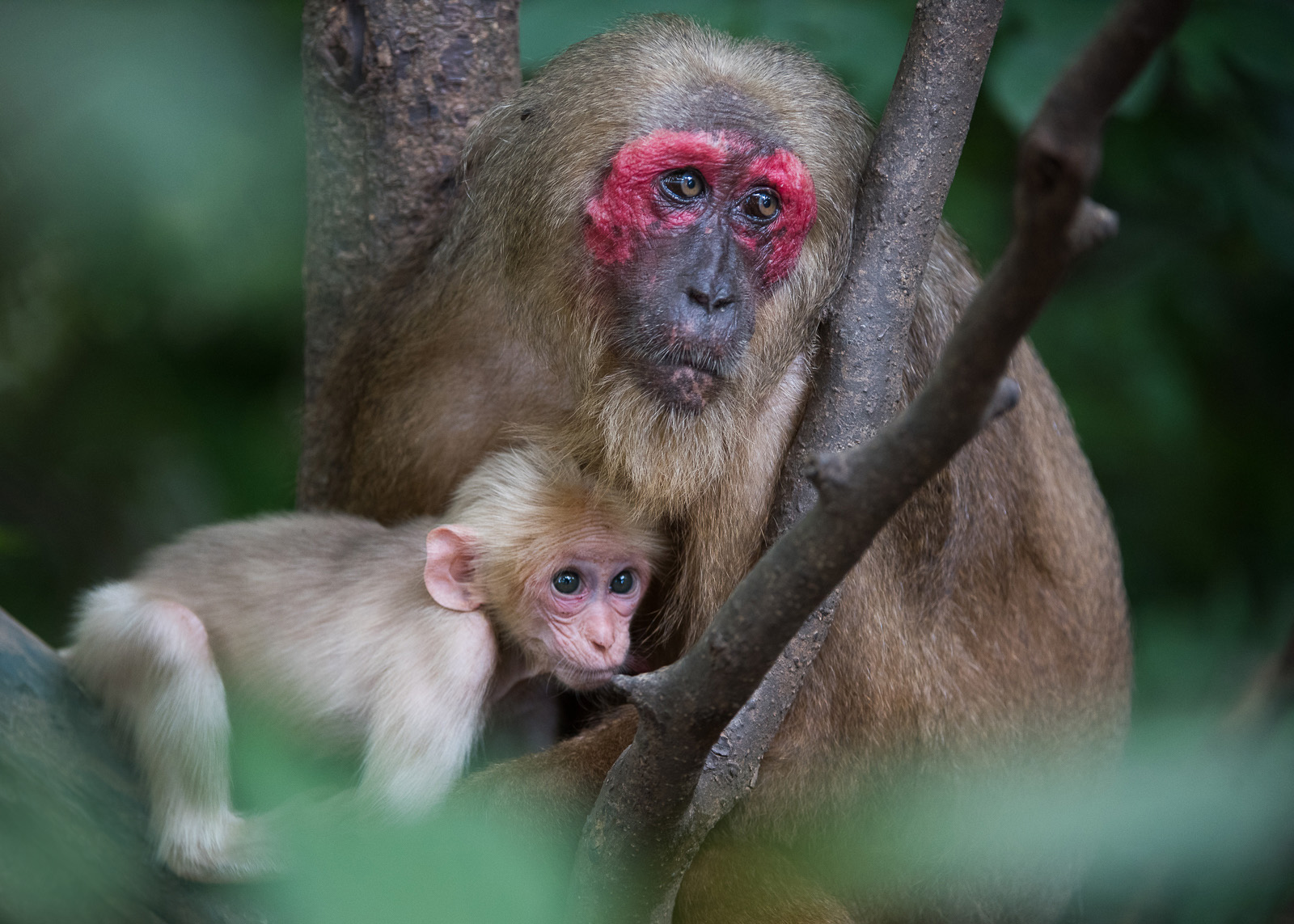
This photo gives a good look at the difference in appearance between the baby stump-tailed macaques and the parents. Mom (and Dad) have a bright red face while the babies are mostly pale pinkish. We encountered this troop of about forty macaques not far from Kaeng Krachan National Park on the Malay Peninsula of Thailand. I promise more photos from the rest of the world soon, but will probably do one more week of Thailand before mixing it up again. Nikon D810 with Nikkor 200-400mm lens (at 240mm) ISO 1600, f/4 at 1/200th of a second
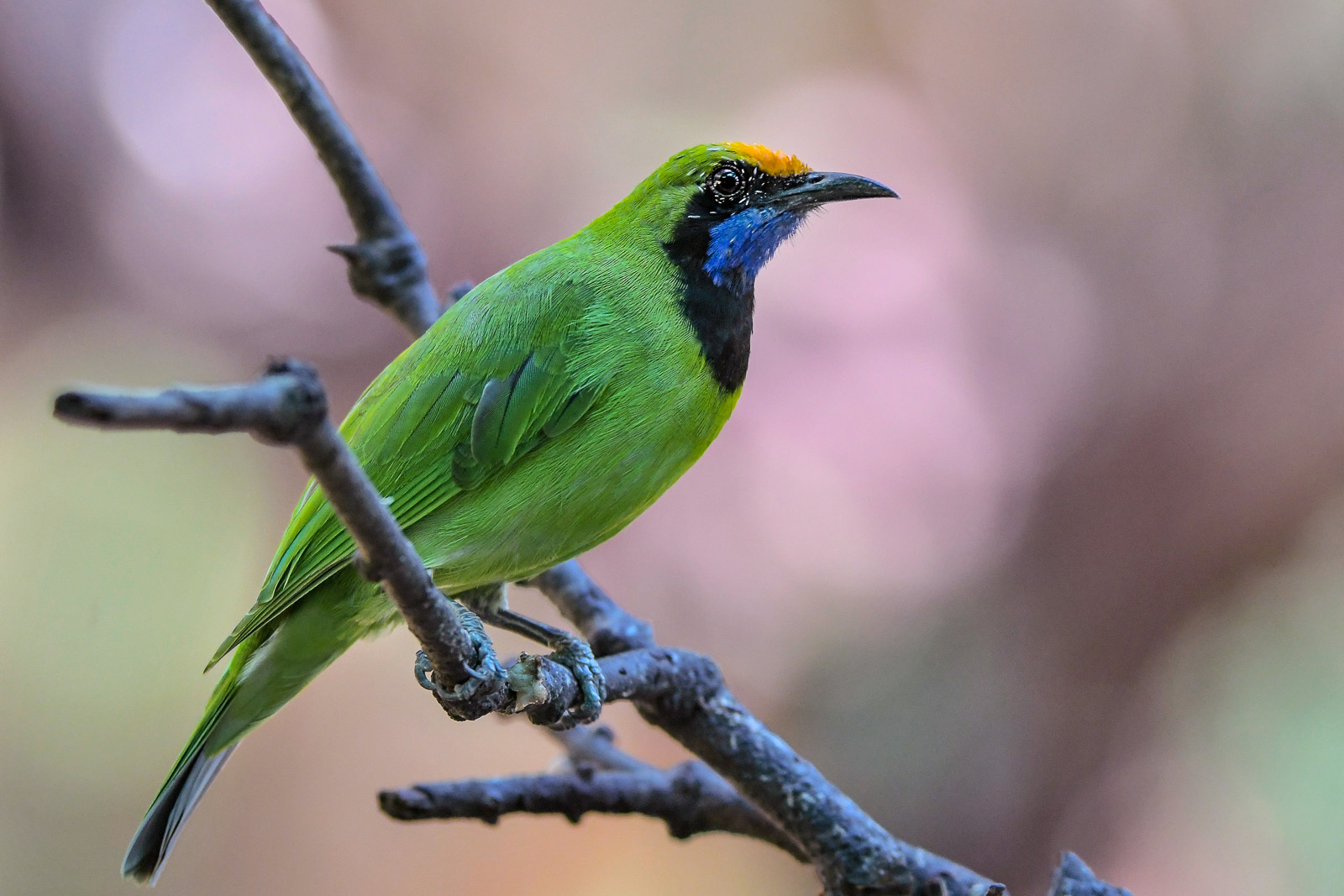
Here’s another of the colorful birds I saw in Thailand — the golden-fronted leafbird. This is the male of the species. The female lacks the orange cap, but otherwise looks pretty similar. Nikon D500 with Nikkor 200-400mm lens (at 200mm) ISO 1600, f/4 at 1/500th of a second
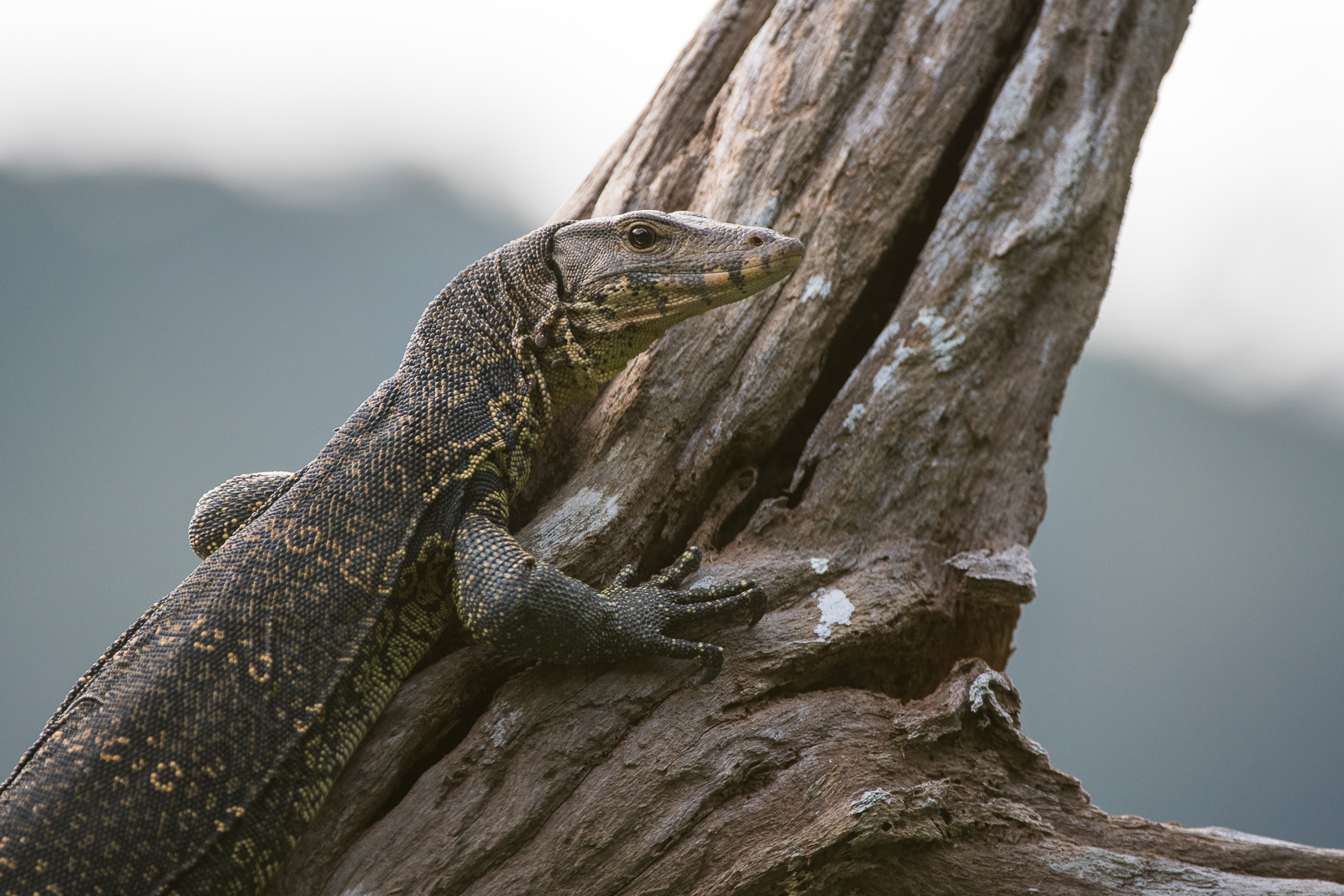
There are seventy-nine different species of monitor lizard on the planet, ranging in size from just about 8 inches, to over 10 feet in length. The largest and most famous monitor is the Komodo dragon. In the areas of Thailand that I visited, water monitors were fairly common. Tree monitors, however, were not and I was lucky to get a great look at this guy in the Khlong Seang Wildlife Sanctuary. He was big — not quite Komodo big — but maybe five feet from head to tail. Nikon D500 with Nikkor 200-400mm lens (at 400mm) ISO 800, f/4 at 1/800th of a second
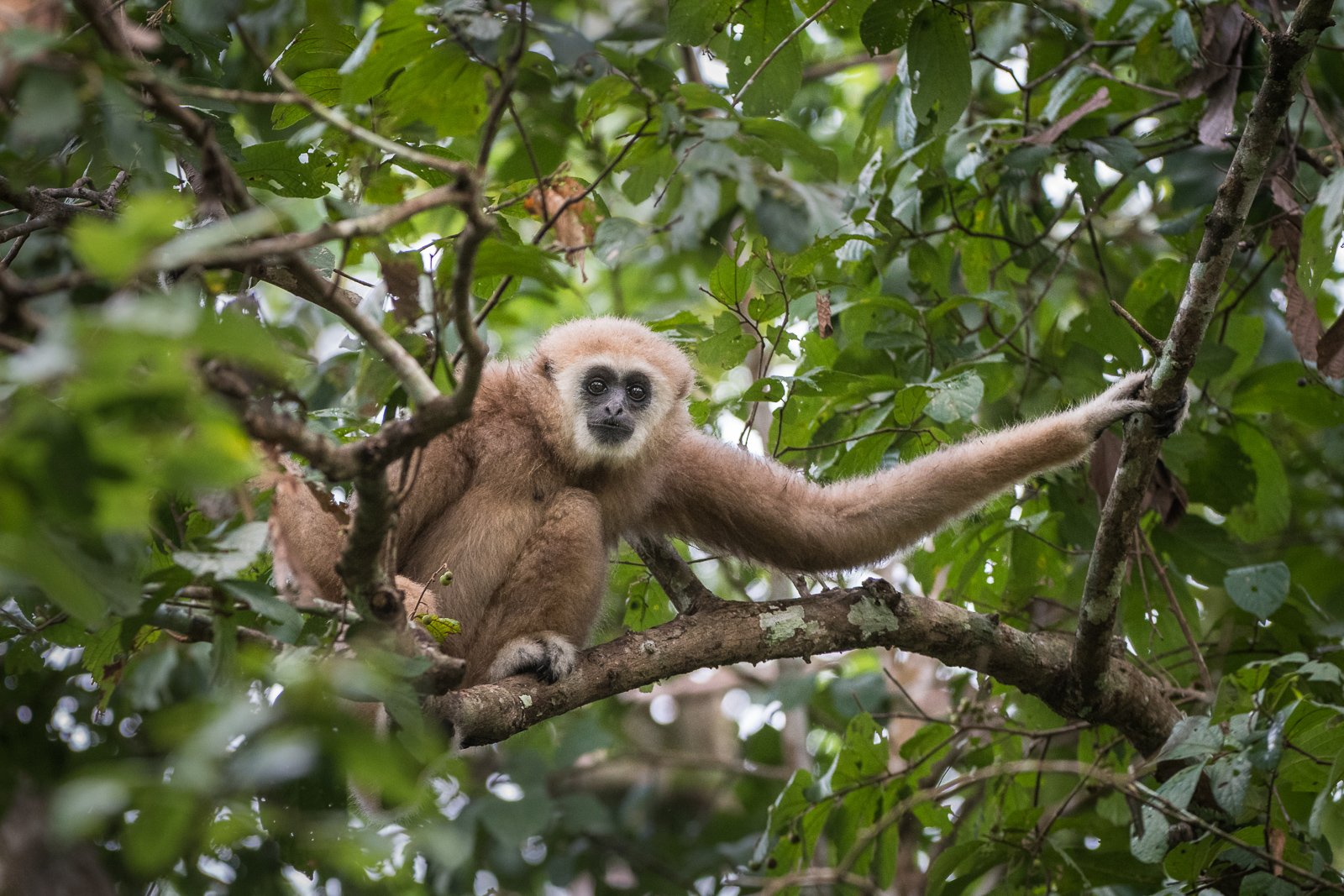
White-handed gibbons come in two color varieties, a dark brown (almost black) and a more light brown or beige. A few weeks ago I posted one of the darker guys. Here’s one of the lighter ones. It’s amazing how long their arms are — and as I said before — how agile they are high up in the canopy, especially for being such a large primate. Nikon D500 with 200-400mm lens (at 260mm) ISO 1600, f/4 at 1/100th of a second
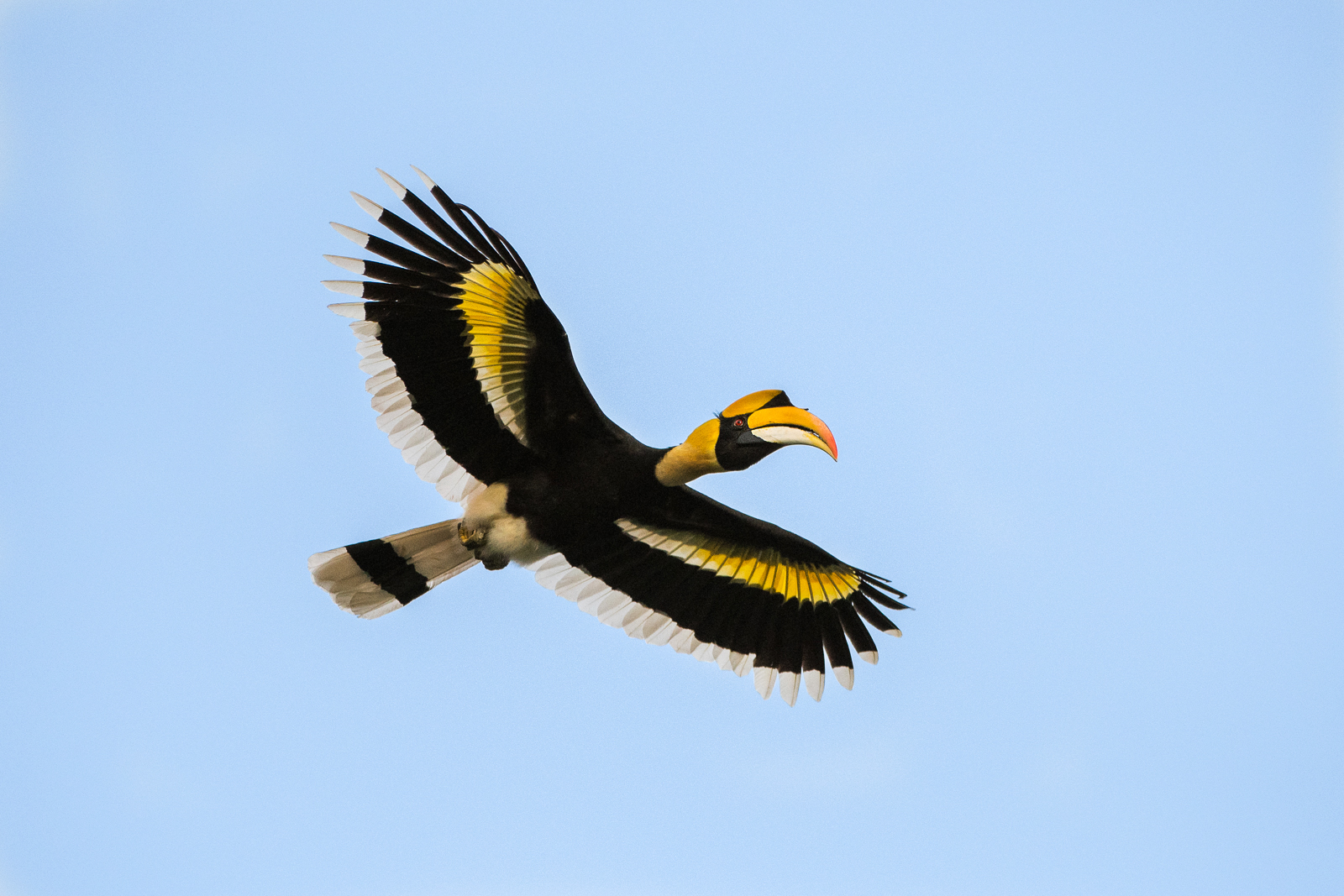
Hornbills are iconic of Southeast Asia and many birders travel to Thailand in search of the 13 species that can be found throughout the country. In Khlong Saeng and northern parts of Khao Sok National Park, can be found eight of these species. I saw three, including the great hornbill. As the name would suggest, this is a large hornbill, with a wingspan that can reach five feet. The great hornbill’s most prominent feature is the bright yellow casque that sits atop the elongated bill. Nikon D500 with Nikkor 200-400mm lens (at 400mm) ISO 800, f/4 at 1/8000th of a second
We use cookies to enhance your experience while using our website. If you are using our Services via a browser you can restrict, block or remove cookies through your web browser settings. We also use content and scripts from third parties that may use tracking technologies. You can selectively provide your consent below to allow such third party embeds. For complete information about the cookies we use, data we collect and how we process them, please check our Privacy Policy