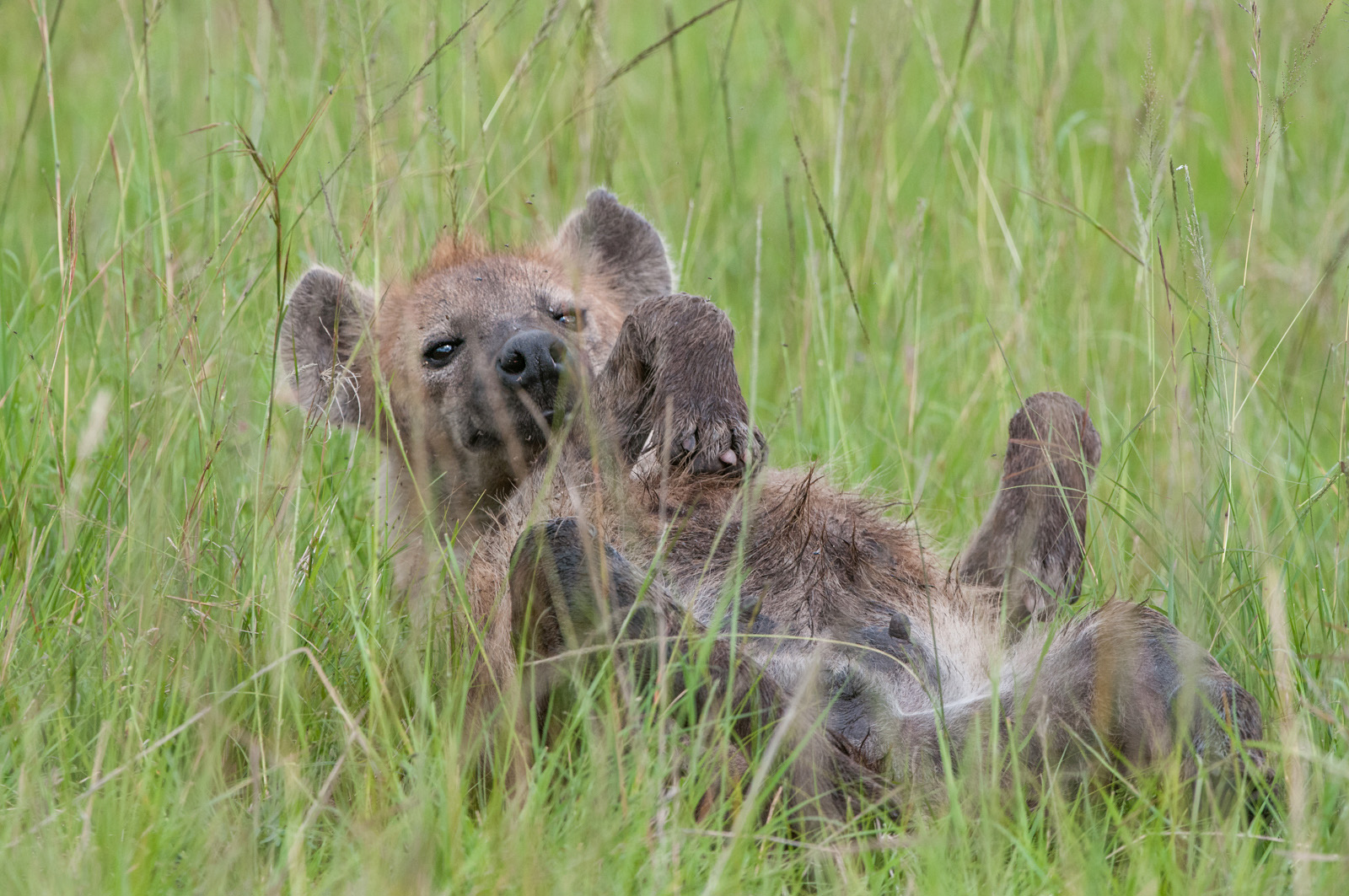
Hyenas are interesting in that they are genetically more closely related to felines, but behaviorally more like canines. Similar to canines, they are non-arboreal (don’t climb trees) and they hunt by running to catch prey with their teeth rather than their claws. There are other similarities in behavior as well, but ultimately hyenas are neither cats nor dogs but rather their own unique family in the order carnivora. But when they roll around on the ground like this girl was doing in the Masai Mara of Kenya, they certainly look like a few dogs — and cats — that I’ve known in my day. Nikon D300 with Nikkor 200-400mm lens (at 360mm) ISO 800, f/5.6 at 1/1000th of a second
One of the best things about our recent move from Brooklyn to Scarsdale has been the ability to find life forms other than people, pigeons and rats. Actually, there were plenty of birds in the city too, but nice to be able see such a variety in my own backyard. Below are just a few of the species that stopped by this weekend.
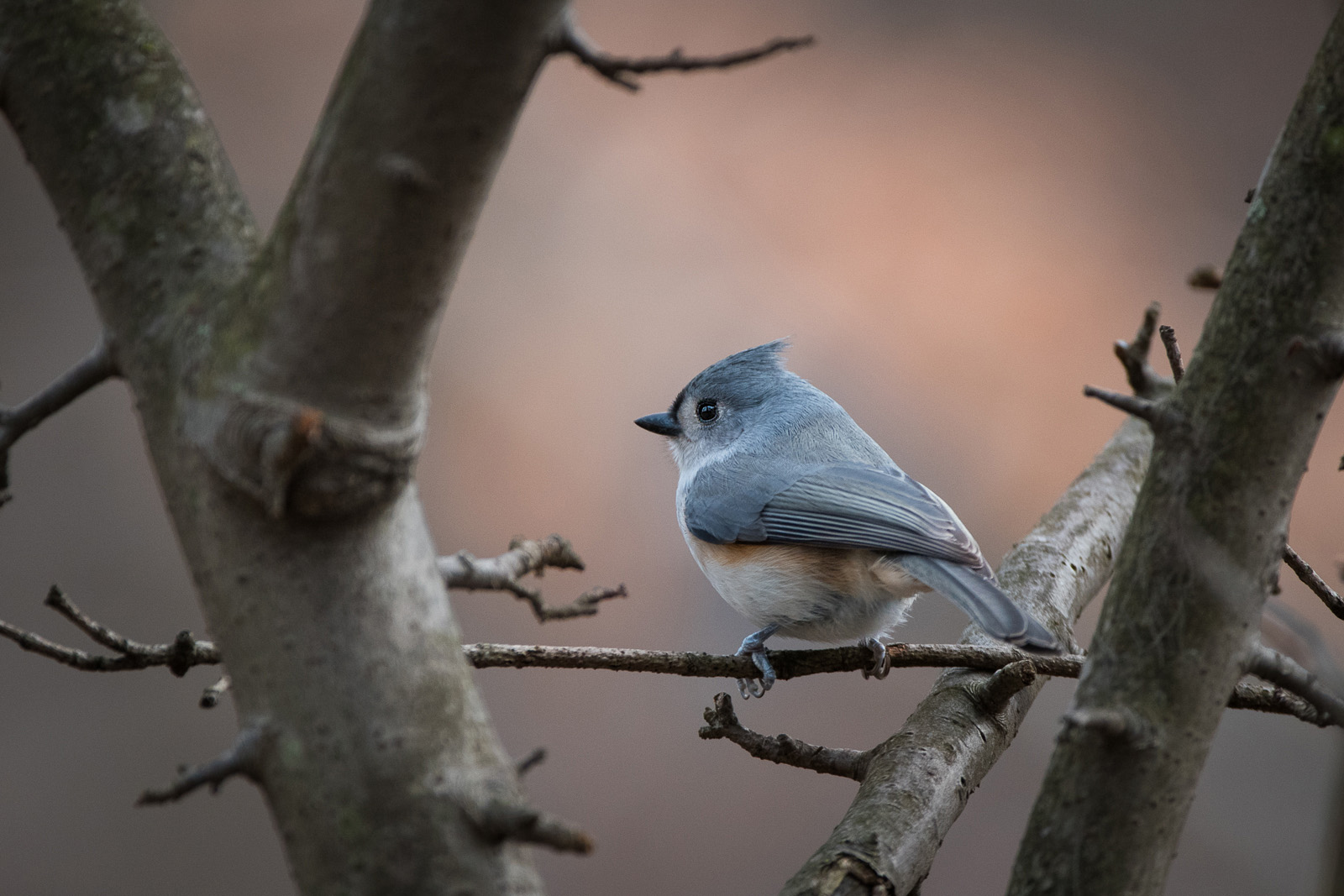
Tufted Titmouse Nikon D500 with Nikkor 200-400mm lens (at 400mm) ISO 800, f/4 at 1/200th of a second
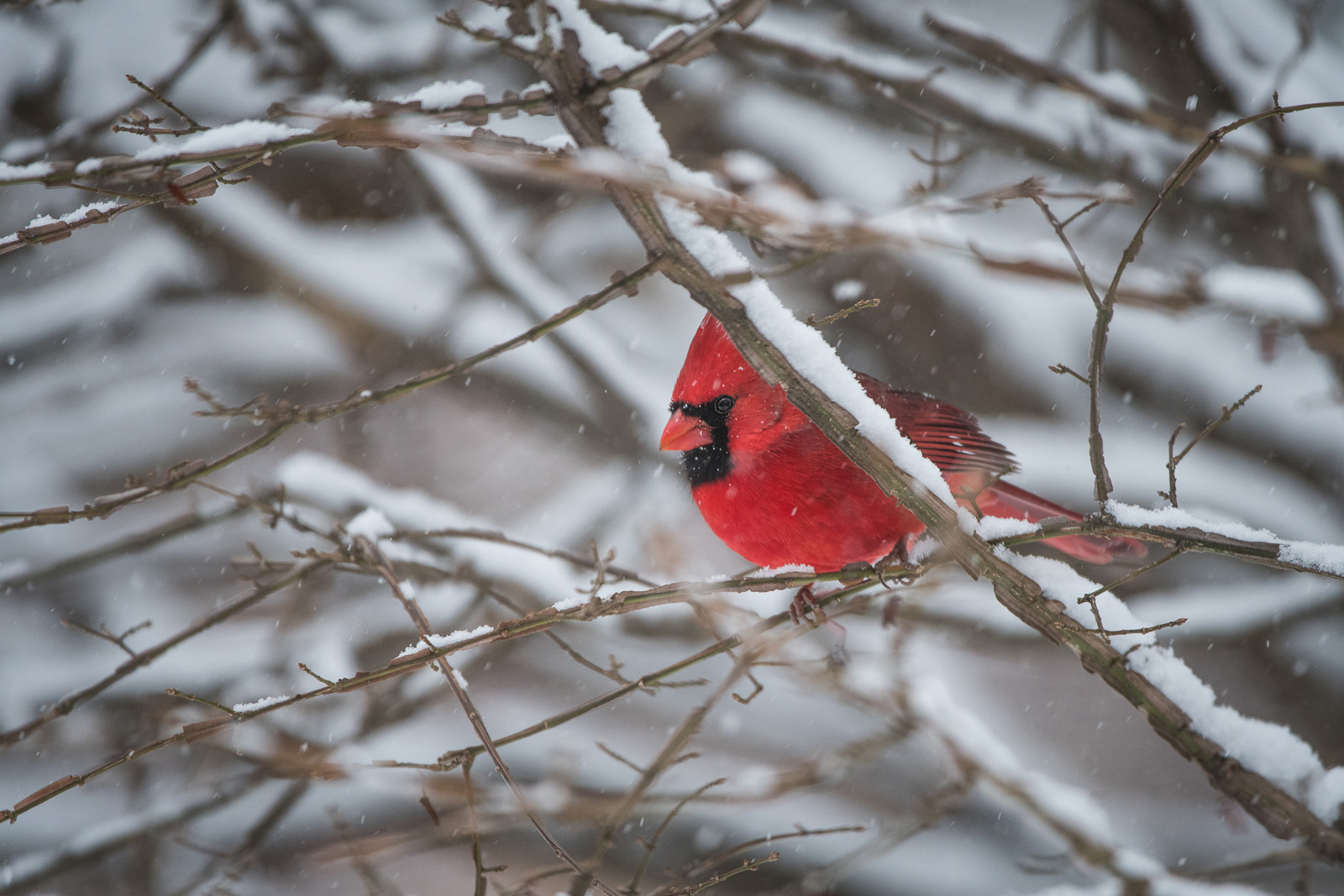
Northern Cardinal Nikon D500 with Nikkor 200-400mm lens (at 400mm) ISO 800, f/4 at 1/400th of a second
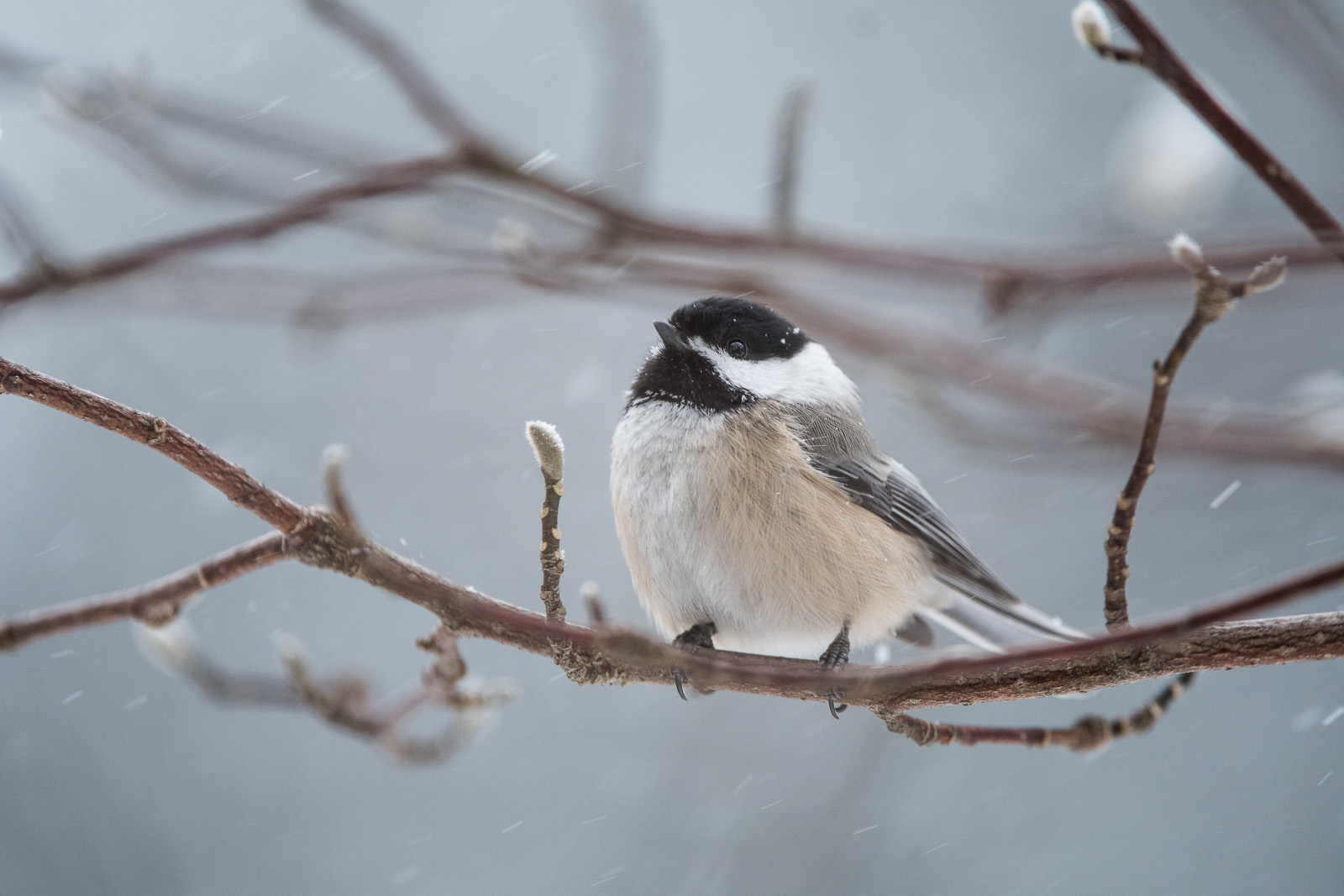
Black-Capped Chickadee Nikon D500 with Nikkor 200-400mm lens (at 400mm) ISO 800, f/4 at 1/200th of a second
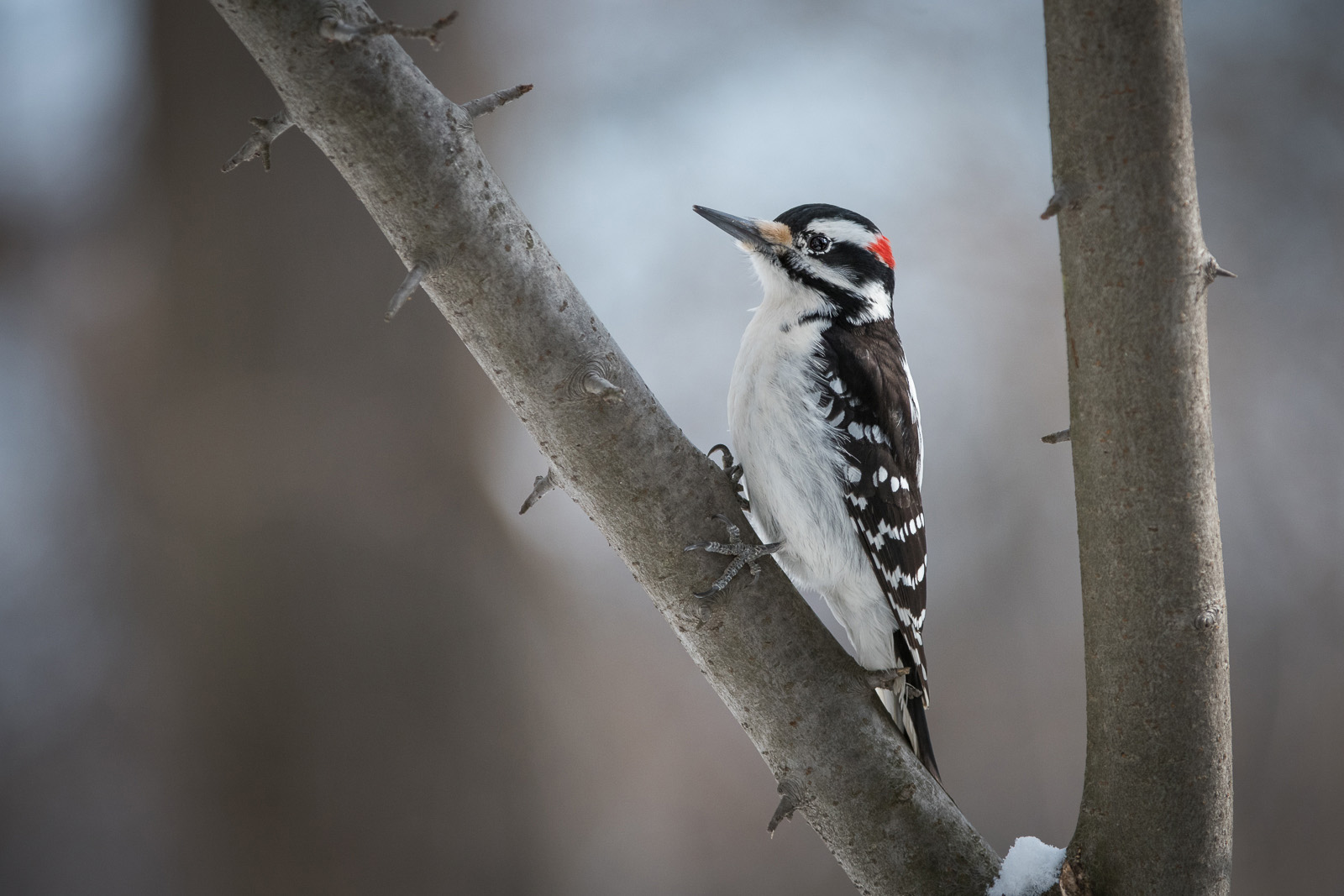
Hairy Woodpecker Nikon D500 with Nikkor 200-400mm lens (at 290mm) ISO 800, f/4 at 1/2500th of a second
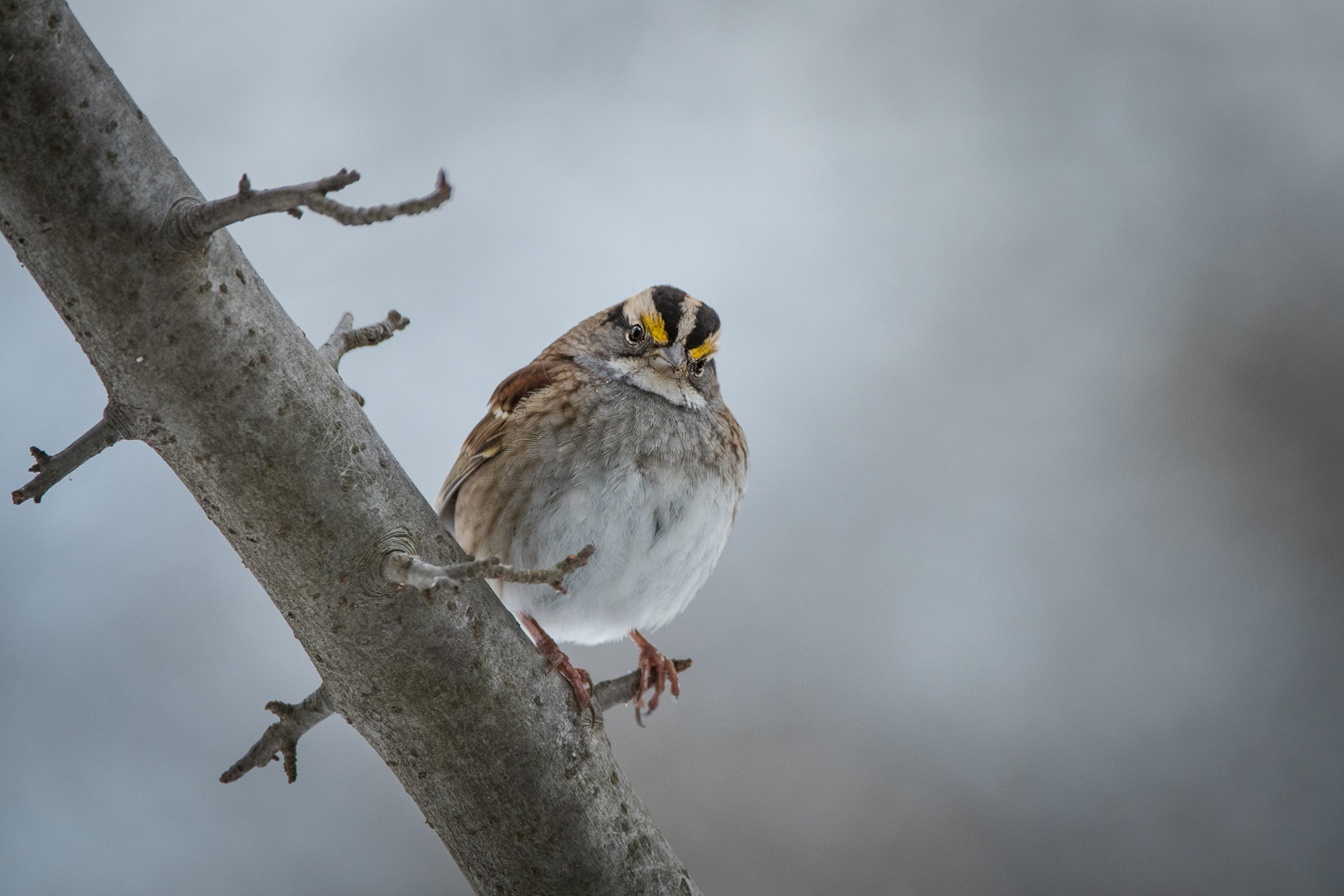
White-Throated Sparrow Nikon D500 with Nikkor 200-400mm lens (at 400mm) ISO 800, f/4 at 1/2500th of a second
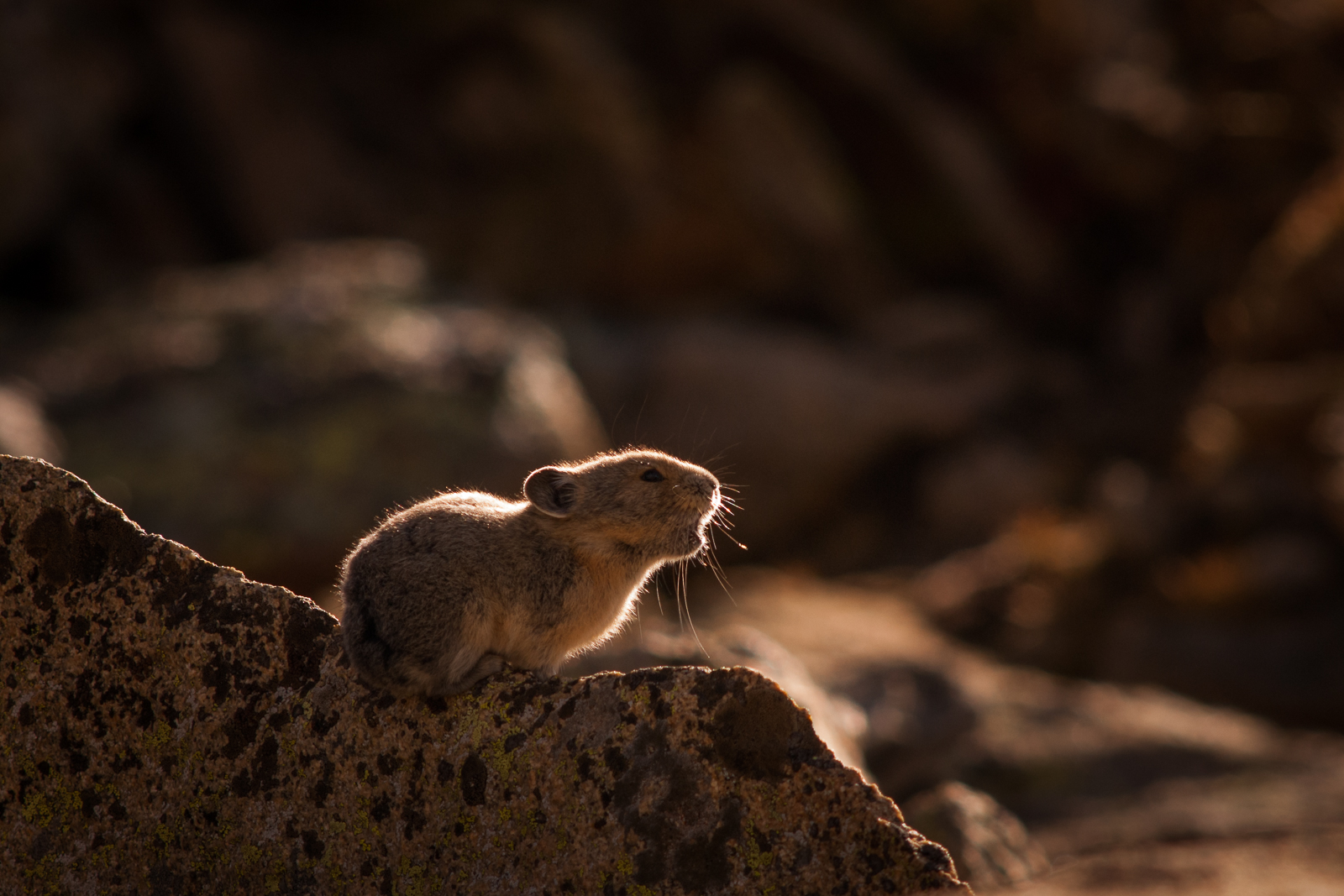
Although they may look like it, pikas are not rodents. They are members of the lagomorpha order which includes rabbits and hares. They live high in rocky alpine regions of North America and are helpful to scientific study of climate change because of their extreme sensitivity to temperature. In fact, they can not tolerate highs in the mid 70s for more than six hours or they will die. Due to this, they are known as an indicator species, and studying their movements tells us much about the changing conditions of where they live. In recent years they’ve been migrating to higher and higher altitudes seeking colder weather. For this reason, I think of them as an ominous metaphor for our own species — if they keep climbing higher in search of a healthy place to exist, they’ll eventually run out of room. This little guy — sounding an alarm call — was photographed in Rocky Mountain National Park in Colorado. Nikon D200 with Nikkor 600mm f/5.6 manual focus lens, ISO 400, f/8 at 1/250th of a second
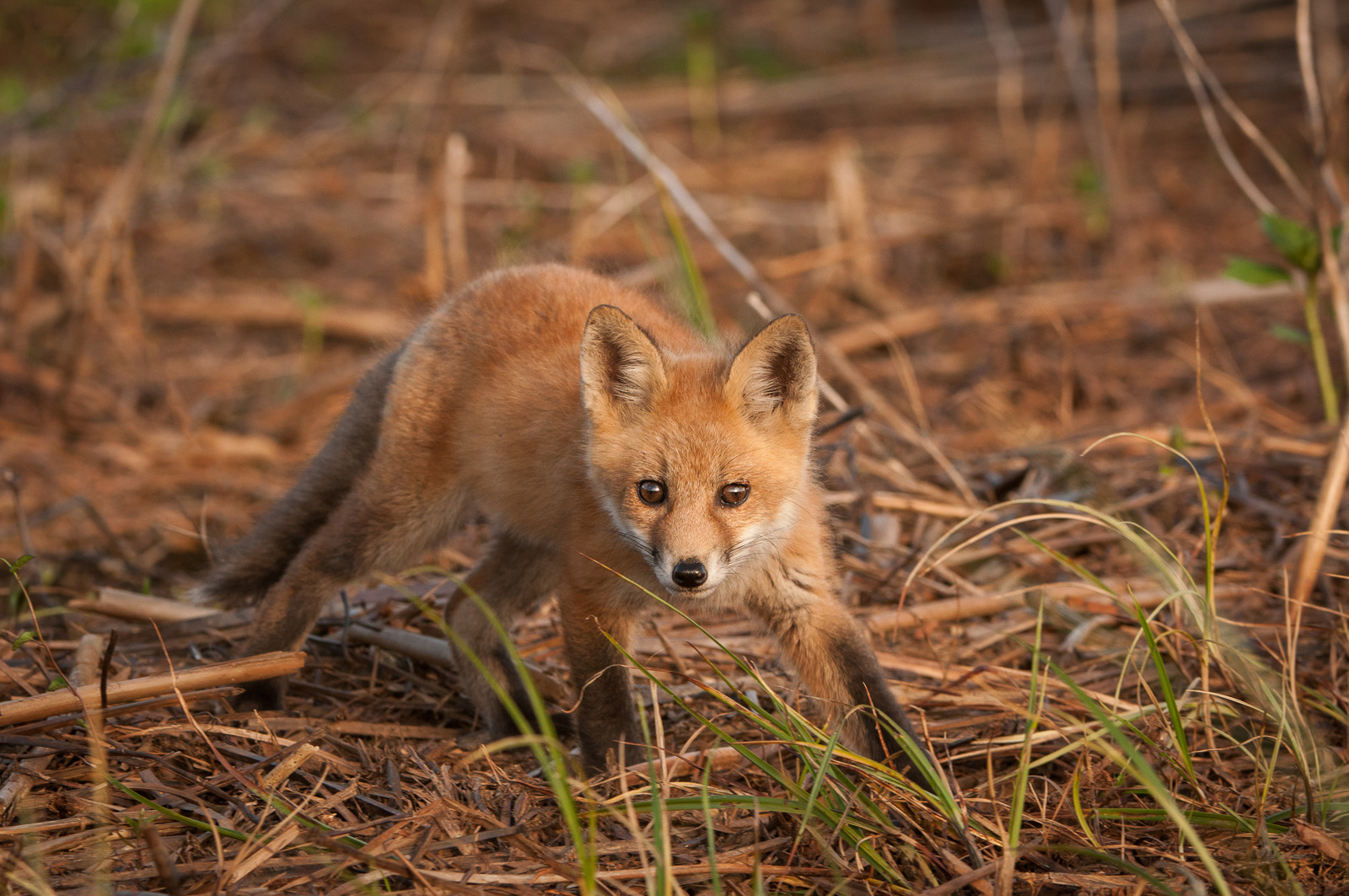
I met this young red fox several years back at Bombay Hook National Wildlife Refuge in Delaware. He/she had one sibling and they were playing around with each other having a good old time while their mother was out hunting for breakfast. Nikon D300 with Nikkor 200-400mm lens (at 200mm) ISO 400, f/6.3 at 1/250th of a second
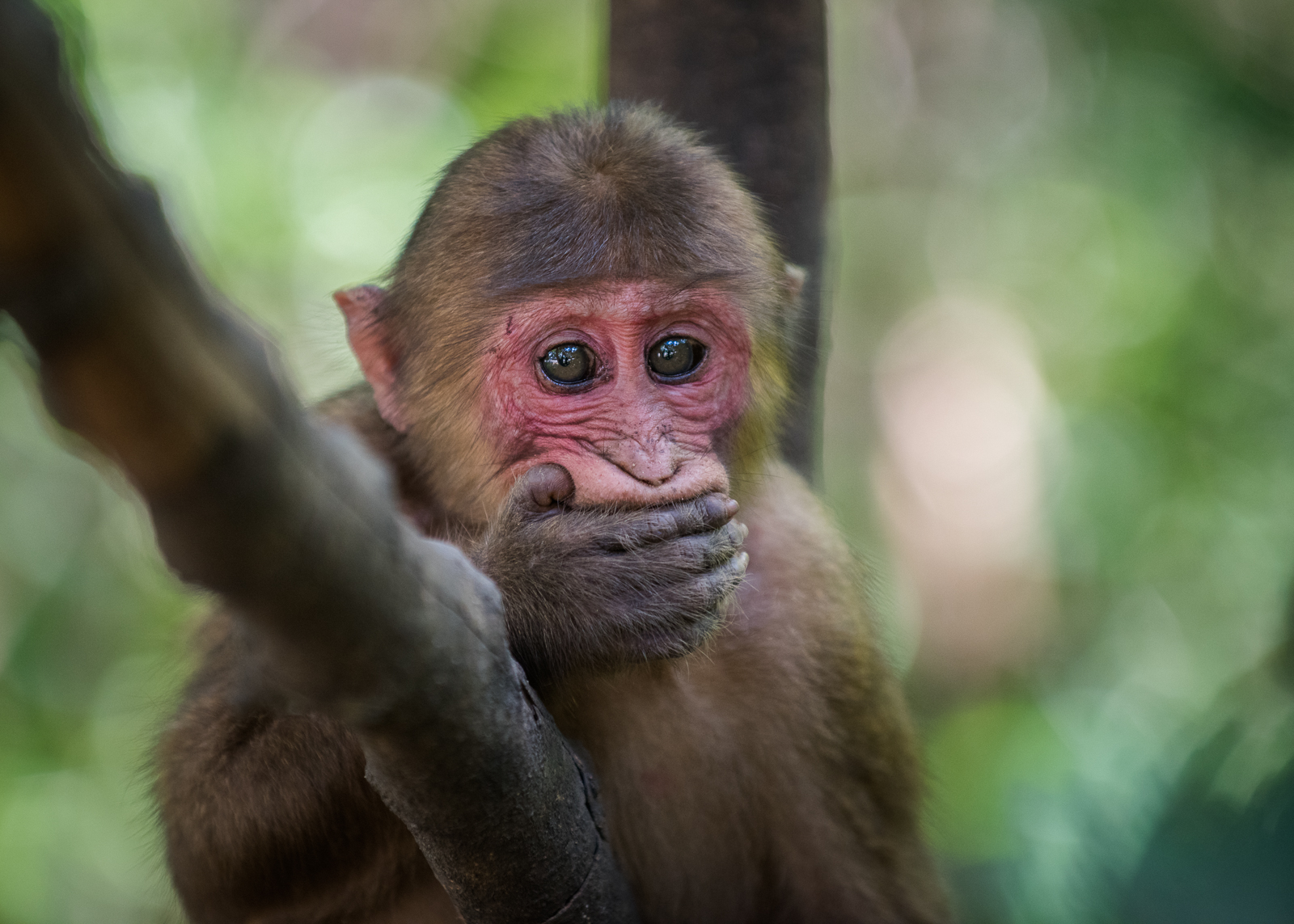
This stump-tailed macaque seemed to have come to a sudden realization that something was wrong. Who knows with those macaques. Just another of the many macaque photos I took on the Malay Peninsula in Thailand. Nikon D810 with Nikkor 70-200mm lens (at 200mm) ISO 1600, f/4 at 1/500th of a second
As you guys know, I don’t always post pictures that I shot the current calendar year. I often post from previous years, but I do try to continually add new photos to the collection. The following are what I consider my top twelve images that were posted — as well as taken — in 2016. I didn’t get out quite as much this year, but did manage to start the year strong with several work trips to California, another to Toronto, followed by a week in Panama, a short visit to my mother in Florida, and finally, a week in Thailand last month. Each trip is represented, and in the order that they were taken. Happy New Year everyone. Thanks for continuing to check out my daily posts. I really appreciate it and the positive feedback keeps me excited to mine my collection each night to find just the right shot.
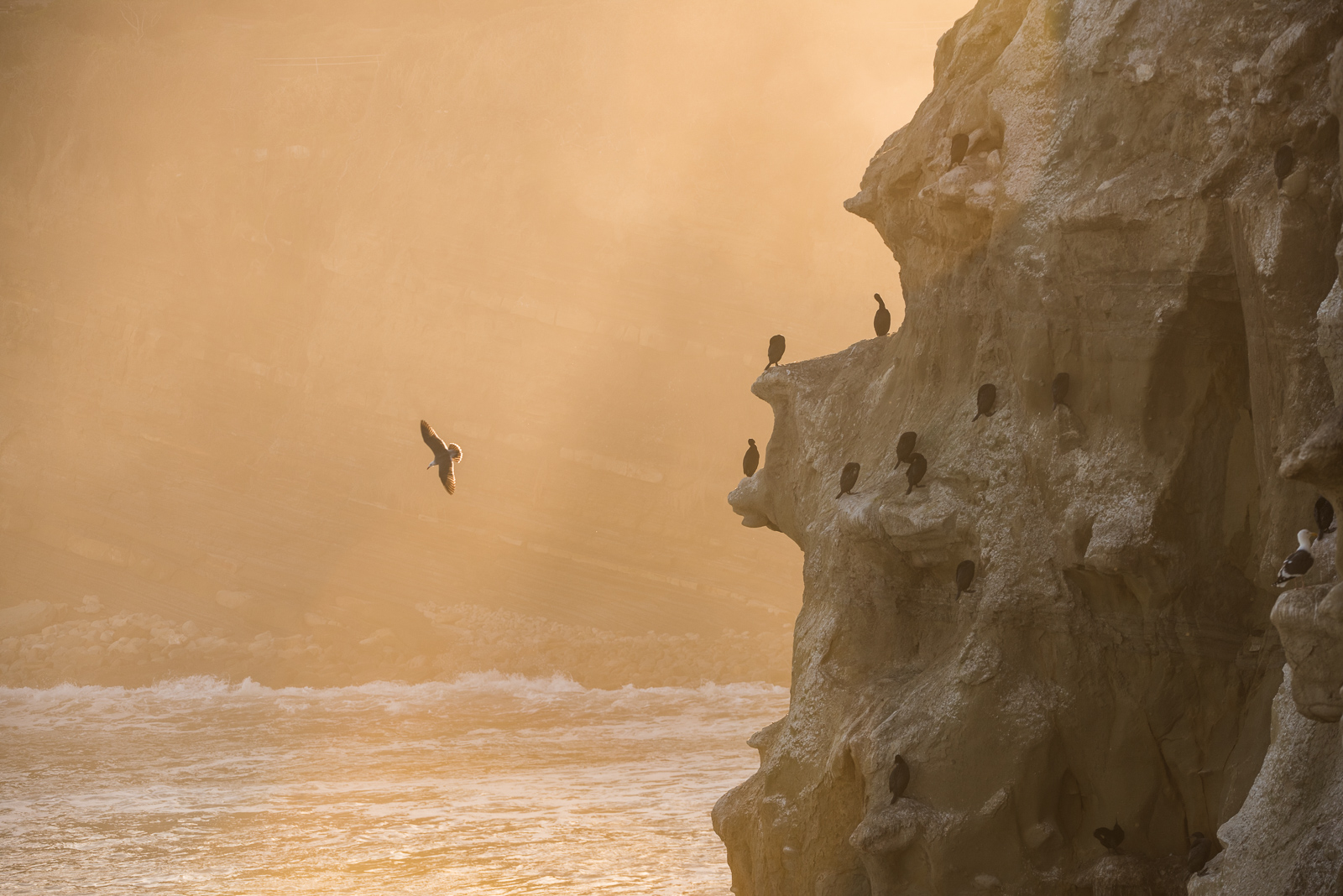
Following a work trip to San Diego back in January, I tacked on a few days and headed north to La Jolla in search of the “Potholes” at Hospitals Reef. On the way, I caught this morning glimpse of Brandt’s cormorants nesting on a cliff while a Western gull flew past. (Nikon D810 with Nikkor 17-35mm lens (at 17mm) ISO 400, f/11 at 1/100th of a second.)
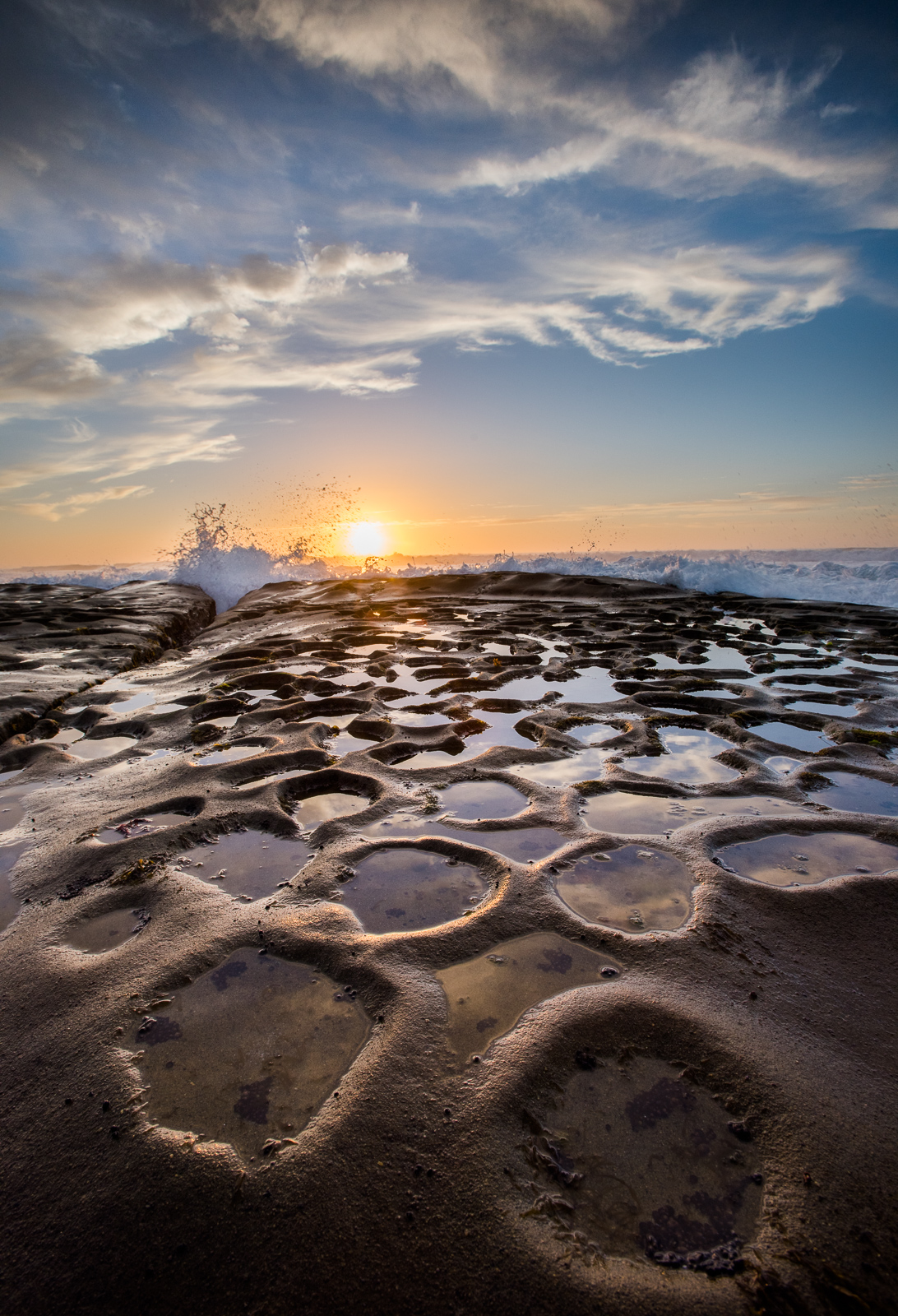
And below is the aforementioned “Potholes.” (Nikon D810 with Nikkor 17-35mm lens (at 17mm) ISO 400, f/11 at 1/100th of a second.)
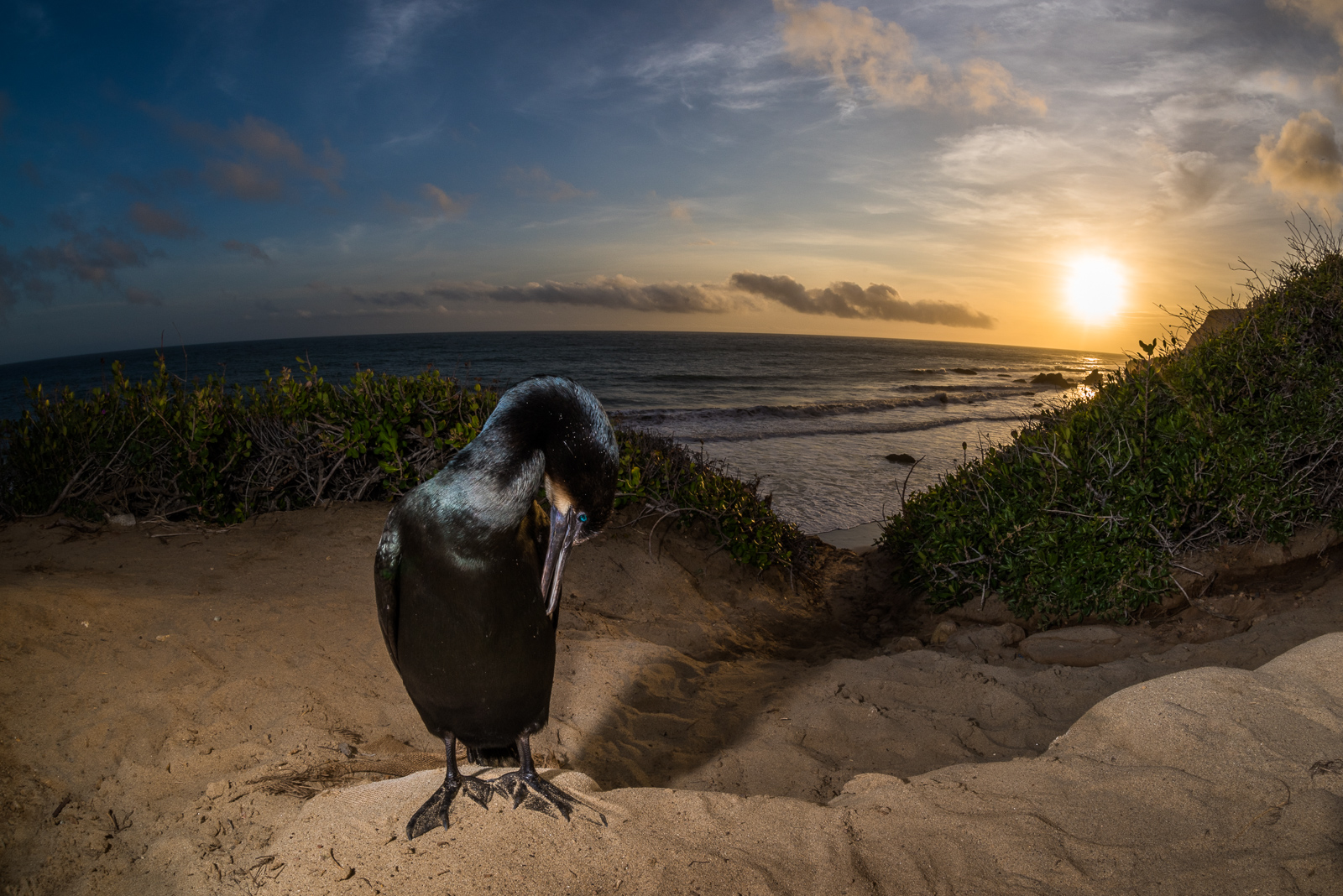
Speaking of Brandt’s cormorants, I met this bold individual two months later at El Matador Beach in Malibu. Always nice when your subject allows you to get so close that you can use a fisheye lens. (Nikon D810 with Sigma 15mm fisheye lens, ISO 200, f/22 at 1/200th of a second, Nikon SB-900 flash unit.)
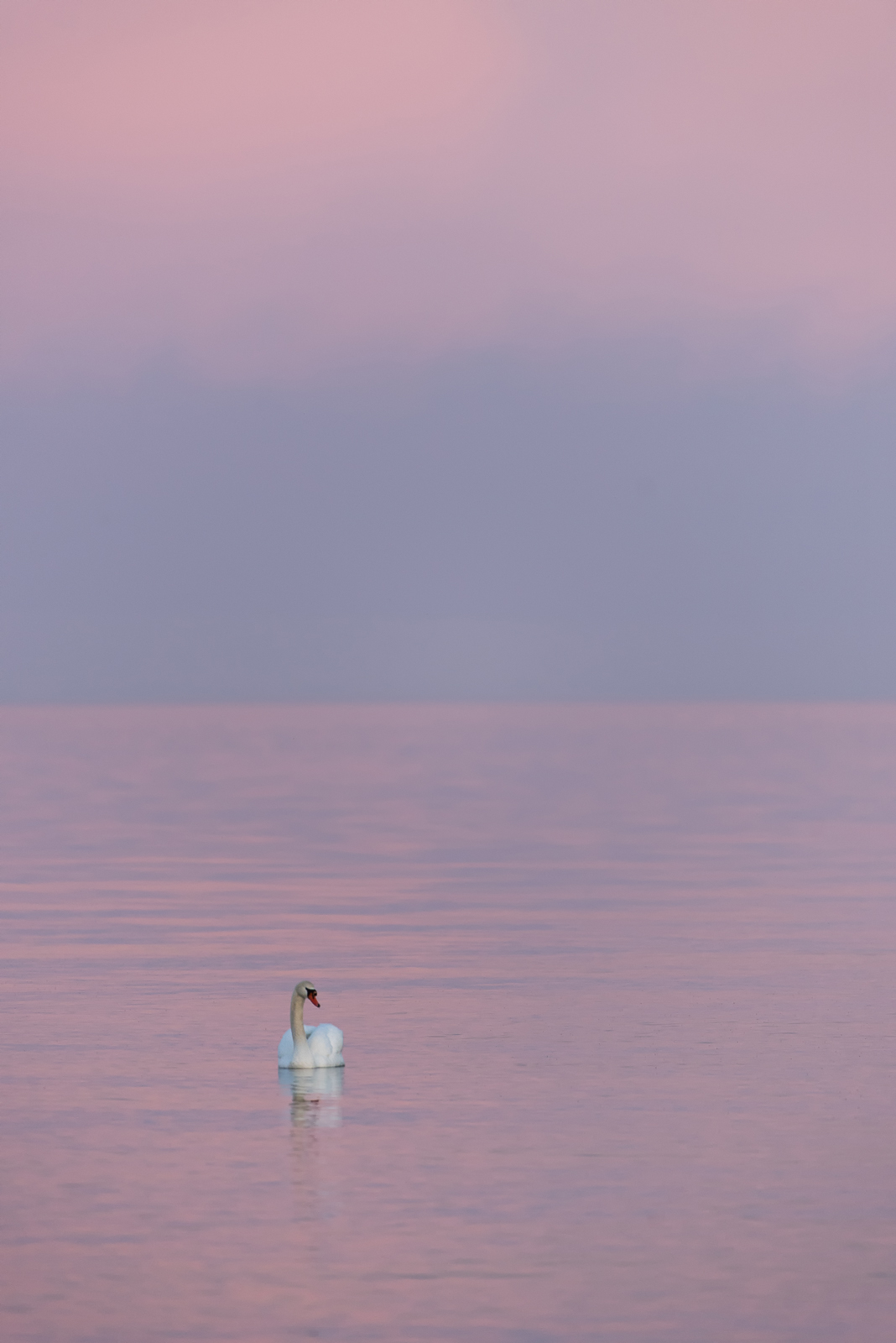
In May, I headed to Toronto for a few weeks to shoot a commercial. In between our busy work schedule, I was able to explore the area’s wildlife hotspots, including several sites around Lake Ontario where I captured this mute swan at sunset. (Nikon D810 with Nikkor 200-400mm lens (at 400mm) ISO 800, f/4 at 1/640th of a second.)
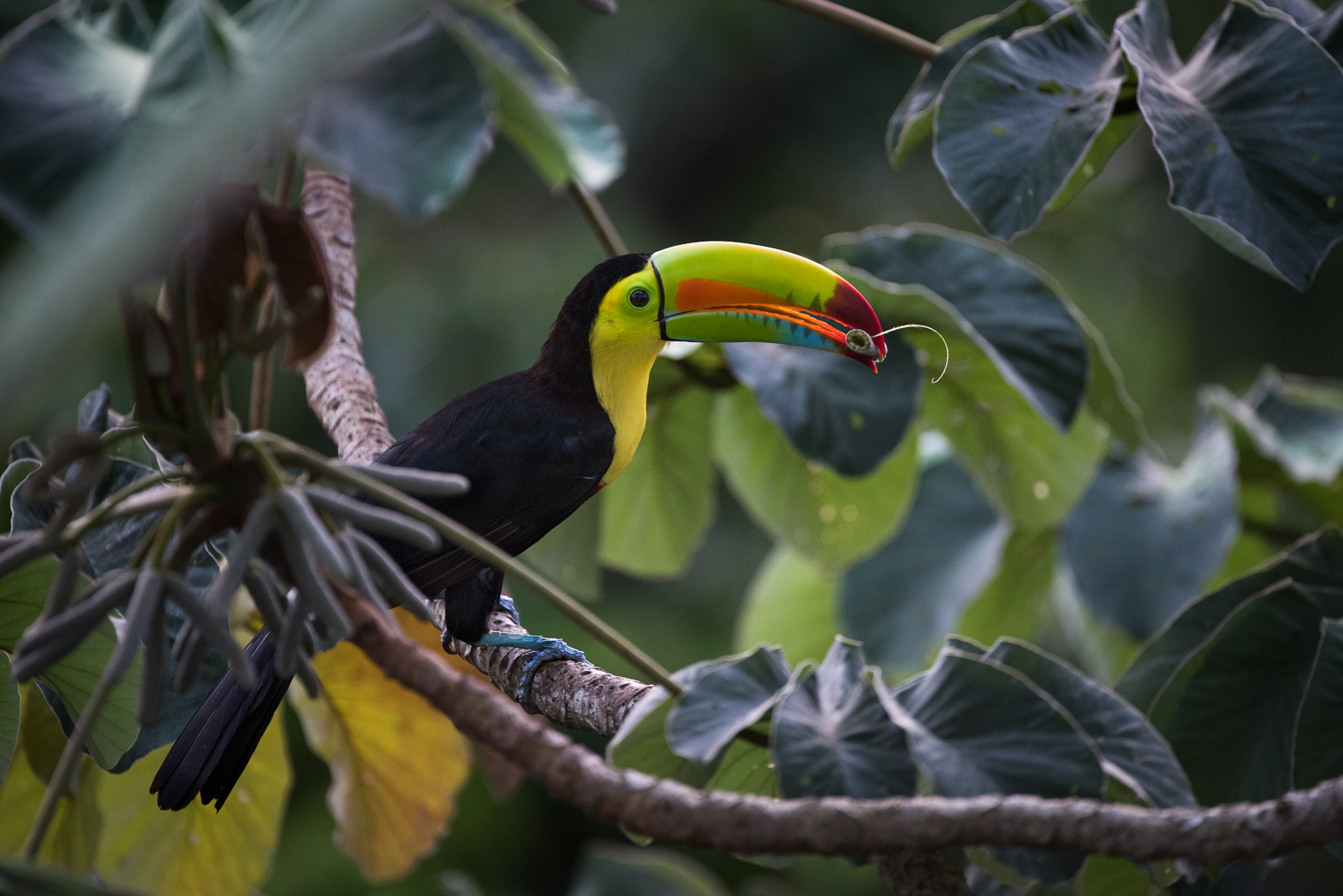
Later in the month, I headed down to Panama for a five night trip. At the top of my wish list was the keel-billed toucan. I saw quite a few at the Canopy Tower Lodge in Soberania National Park not too far from Panama City. This one was feeding on a seed from a cecropia tree. (Nikon D810 with Nikkor 200-400mm lens (at 400mm) ISO 1600, f/4 at 1/320th of a second.)
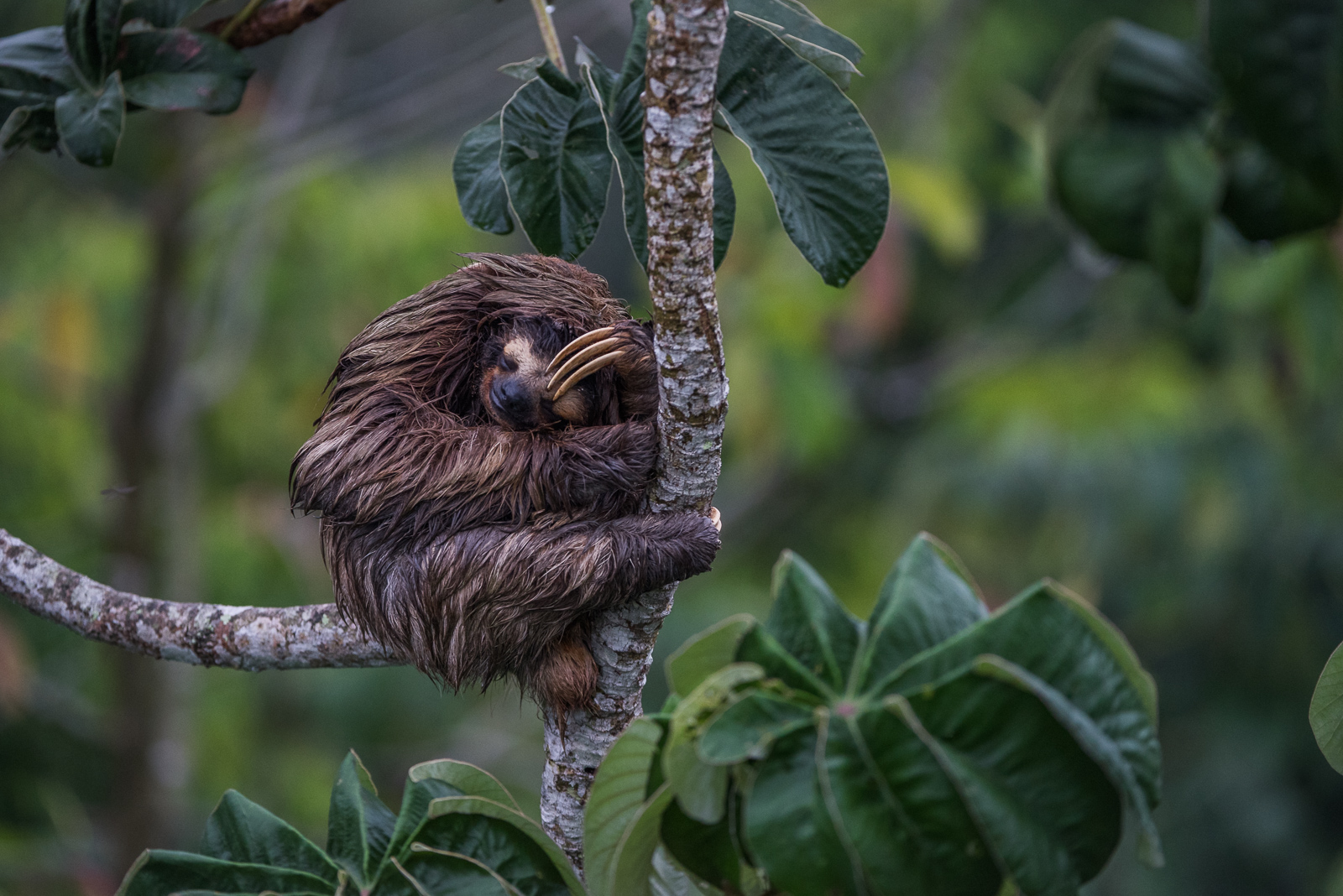
Also from the Canopy Tower was this three-toed sloth. (Nikon D810 with Nikkor 200-400mm lens (at 250mm) ISO 1600, f/4 at 1/100th of a second.)
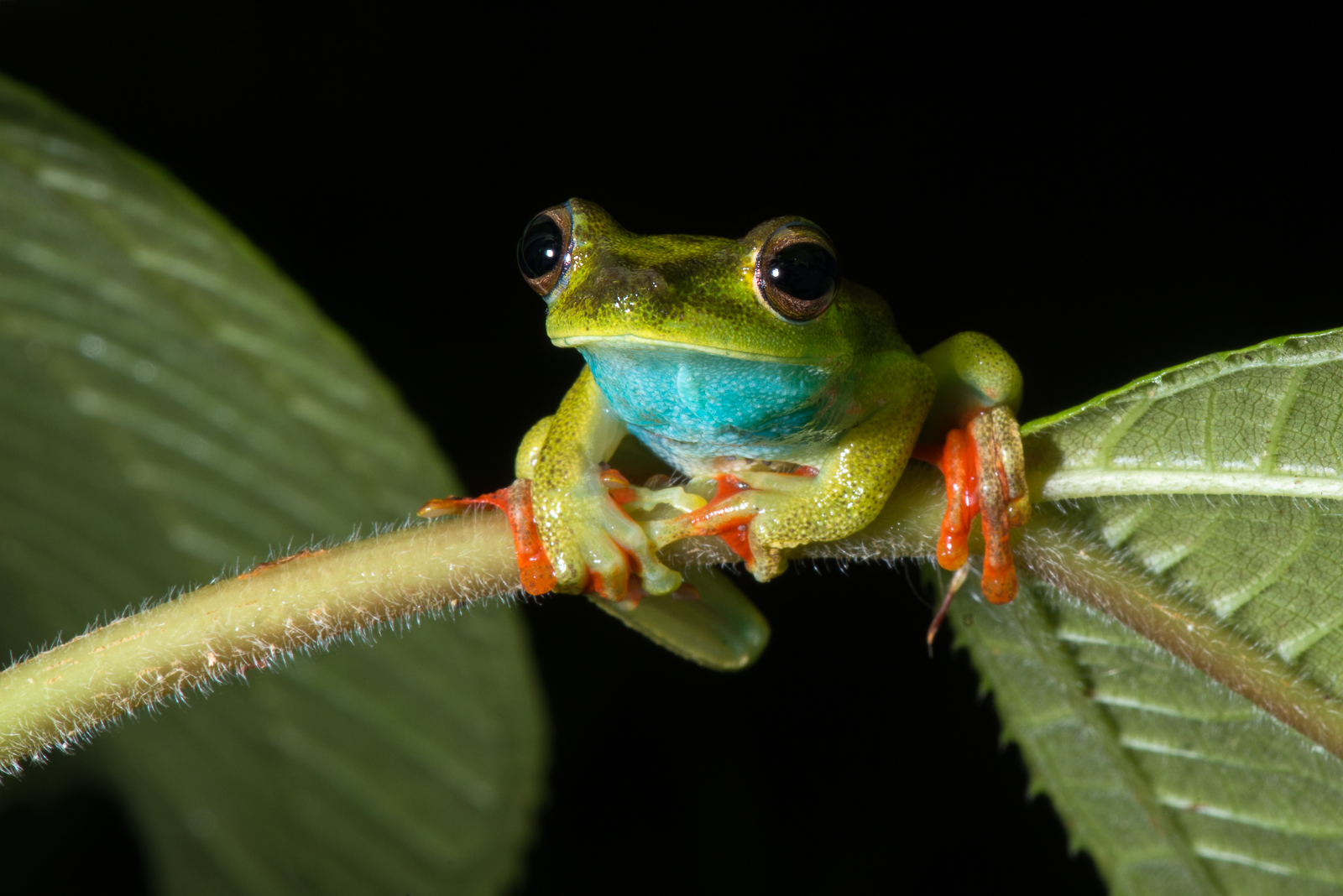
A few hours north brought me to the town of El Valle where I spotted several canal zone tree frogs at night. (Nikon D800 with Nikkor 105mm macro lens, ISO 200, f/25 at 1/60th of a second, two Nikon SB-900 flash units.)
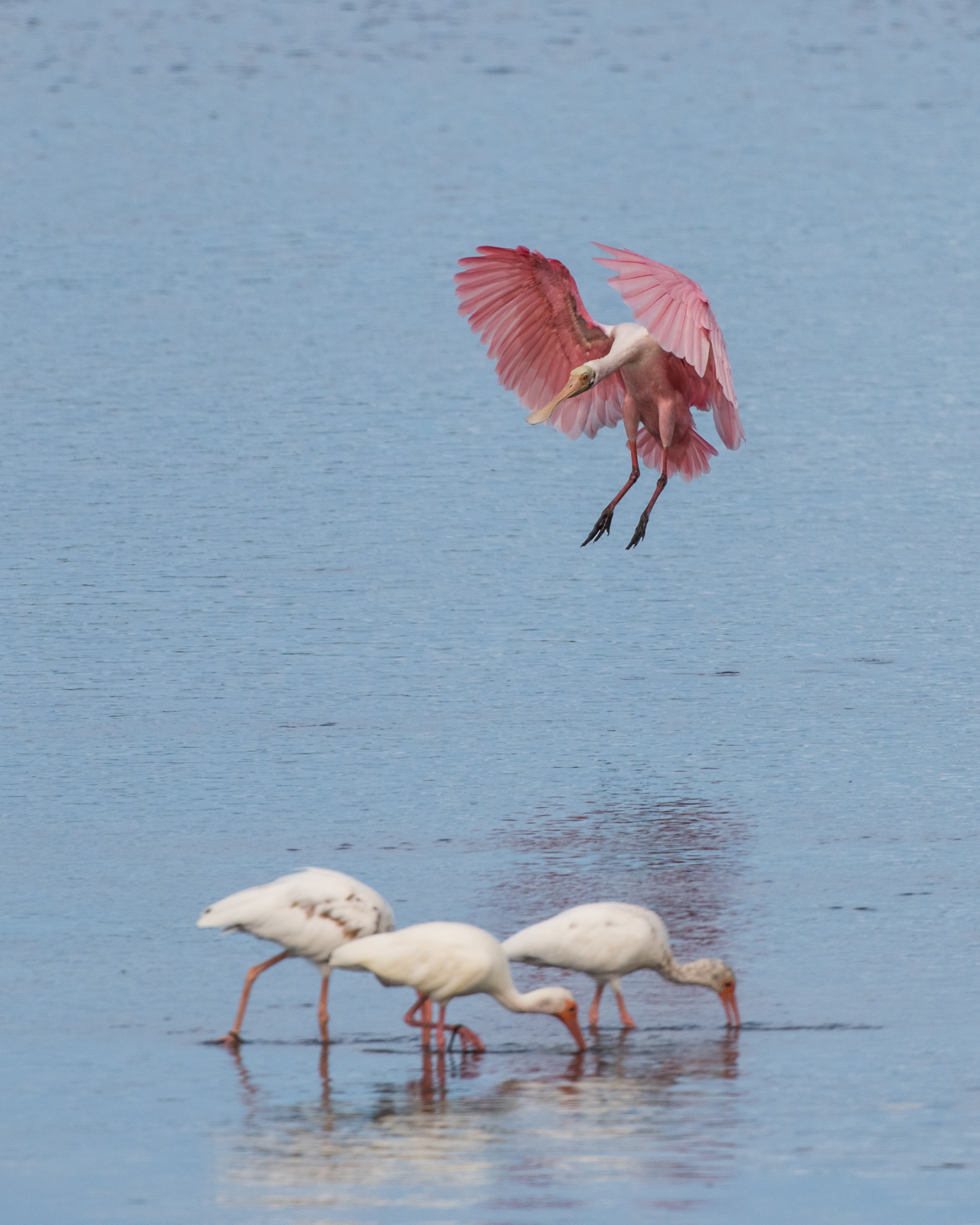
In early July, it was off to Florida for a visit to my mother. We took her to one of my favorite spots, the Ding Darling National Wildlife Refuge. The star attraction at the refuge is the roseate spoonbill. This one was coming in for a landing near three white ibis. (Nikon D810 with Nikkor 200-400mm lens (at 400mm) ISO 400, f/8 at 1/2000th of a second.)
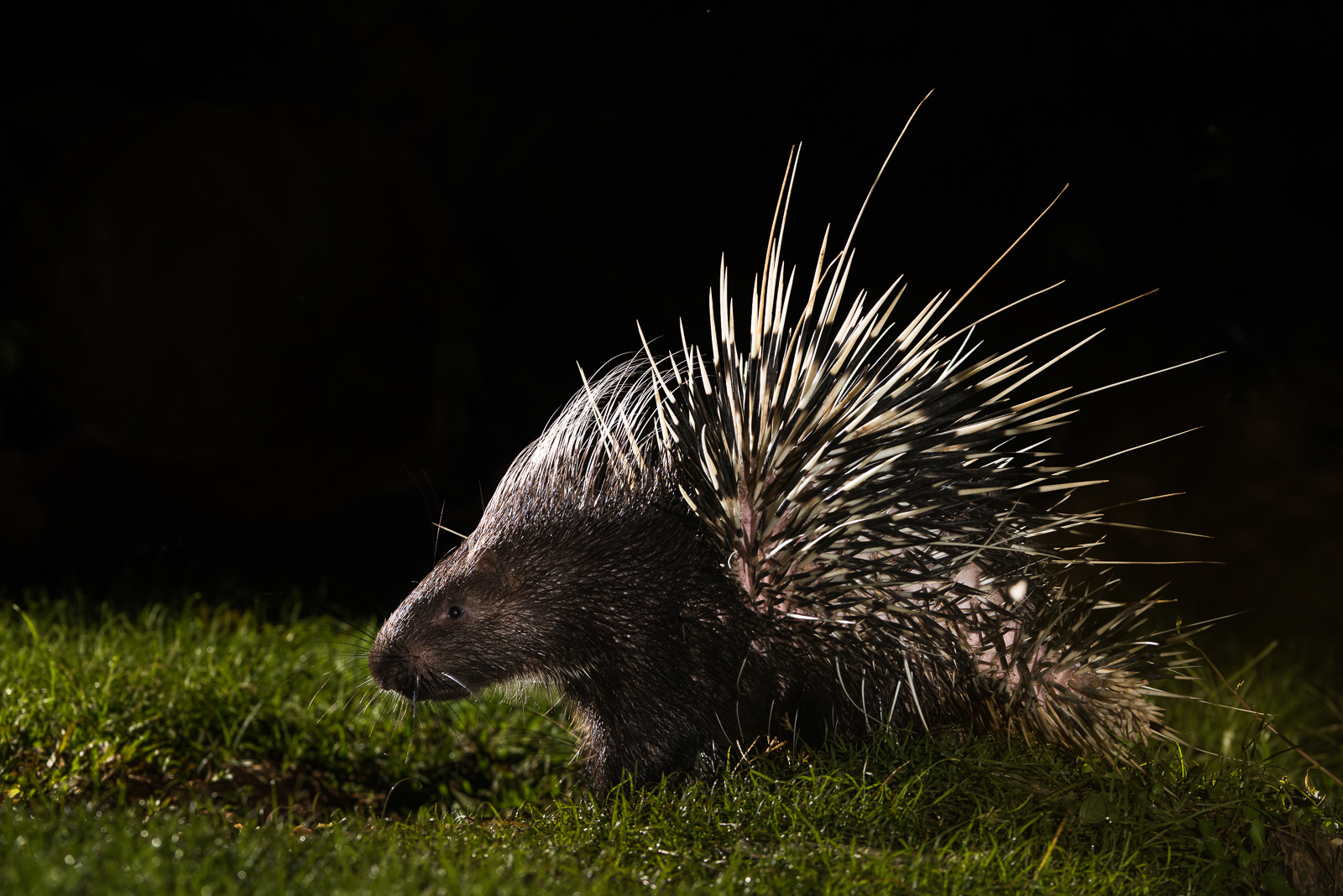
My biggest trip of the year was only a week long, but I saw quite a variety of wildlife in Thailand. Especially in Kaeng Krachan National Park where I camped for three nights. Every night, Malayan porcupines came around the campsite looking for scraps. The predictability of their visits allowed me to be ready with two flash units placed in advantages locations for front and back light. (Nikon D810 with Nikkor 200-400mm lens (at 210mm) ISO 400, f/8 at 1/60th of a second, two Nikon SB-900 flash units.)
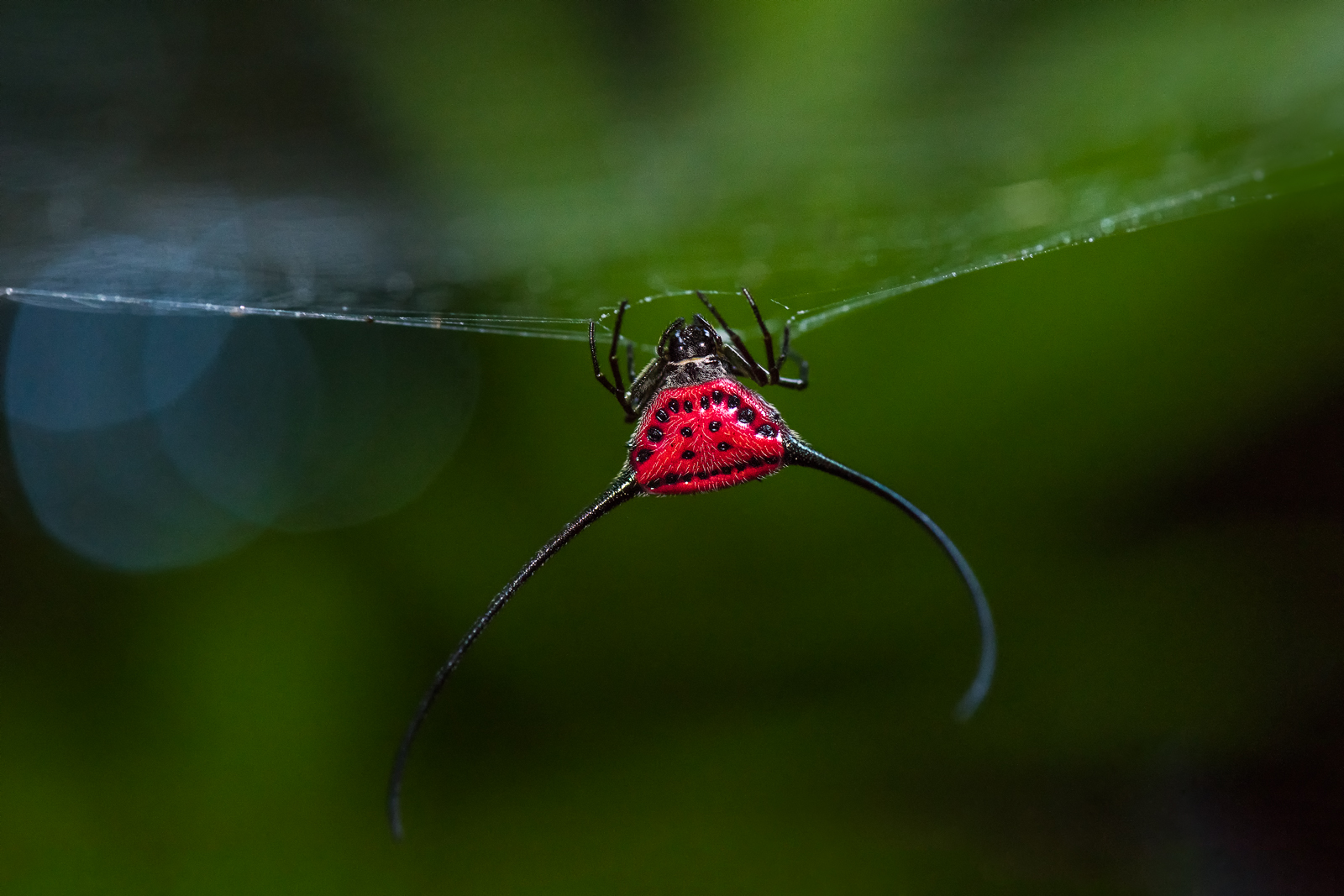
I also saw plenty of little creatures like this red long-horned spider. (Nikon D810 with Nikkor 105mm macro lens, ISO 1600, f/6.3 at 1/60th of a second.)
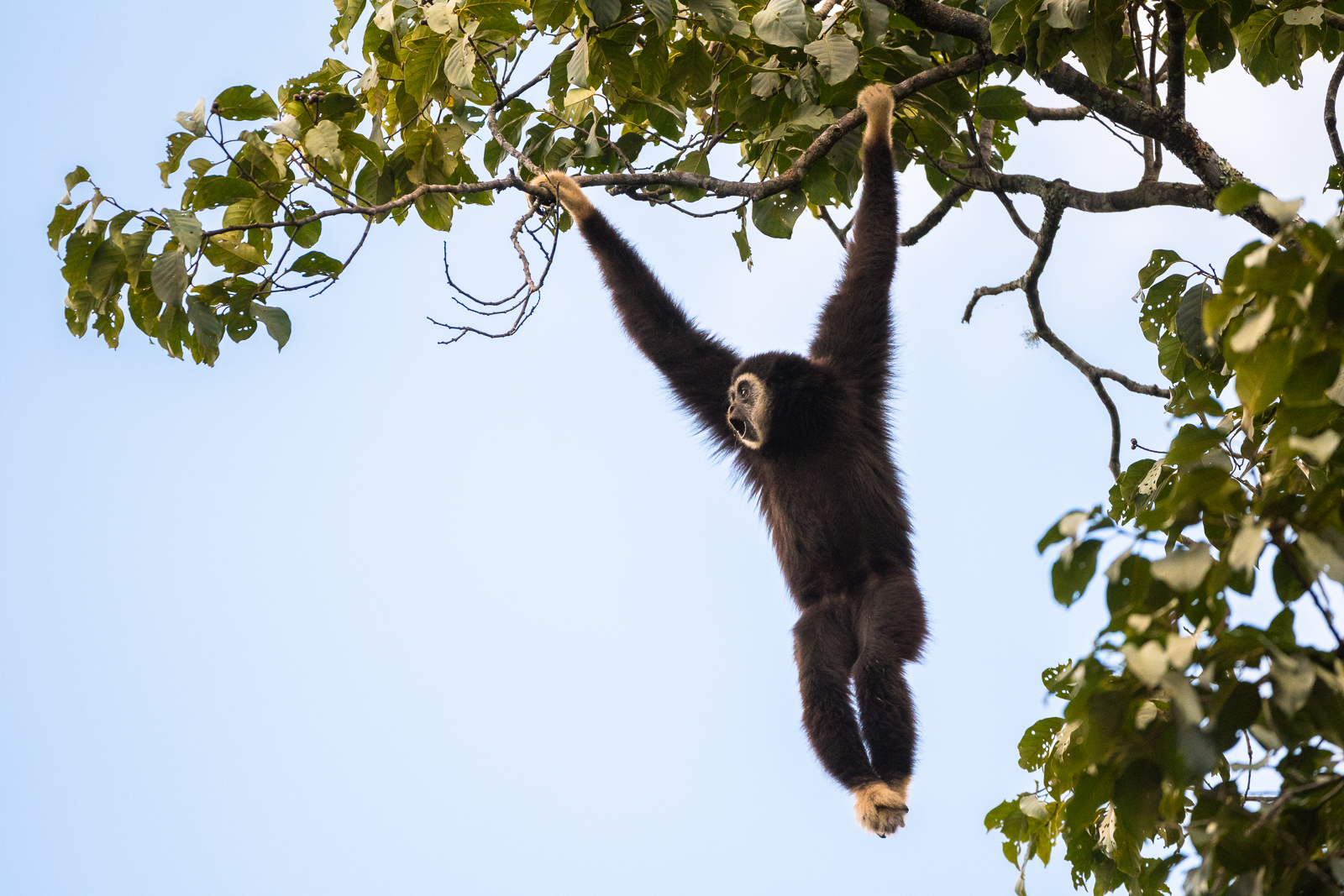
I photographed five primate species, including the white-handed gibbon. (Nikon D500 with Nikkor 200-400mm lens (at 360mm) ISO 800, f/4 at 1/5000th of a second.)
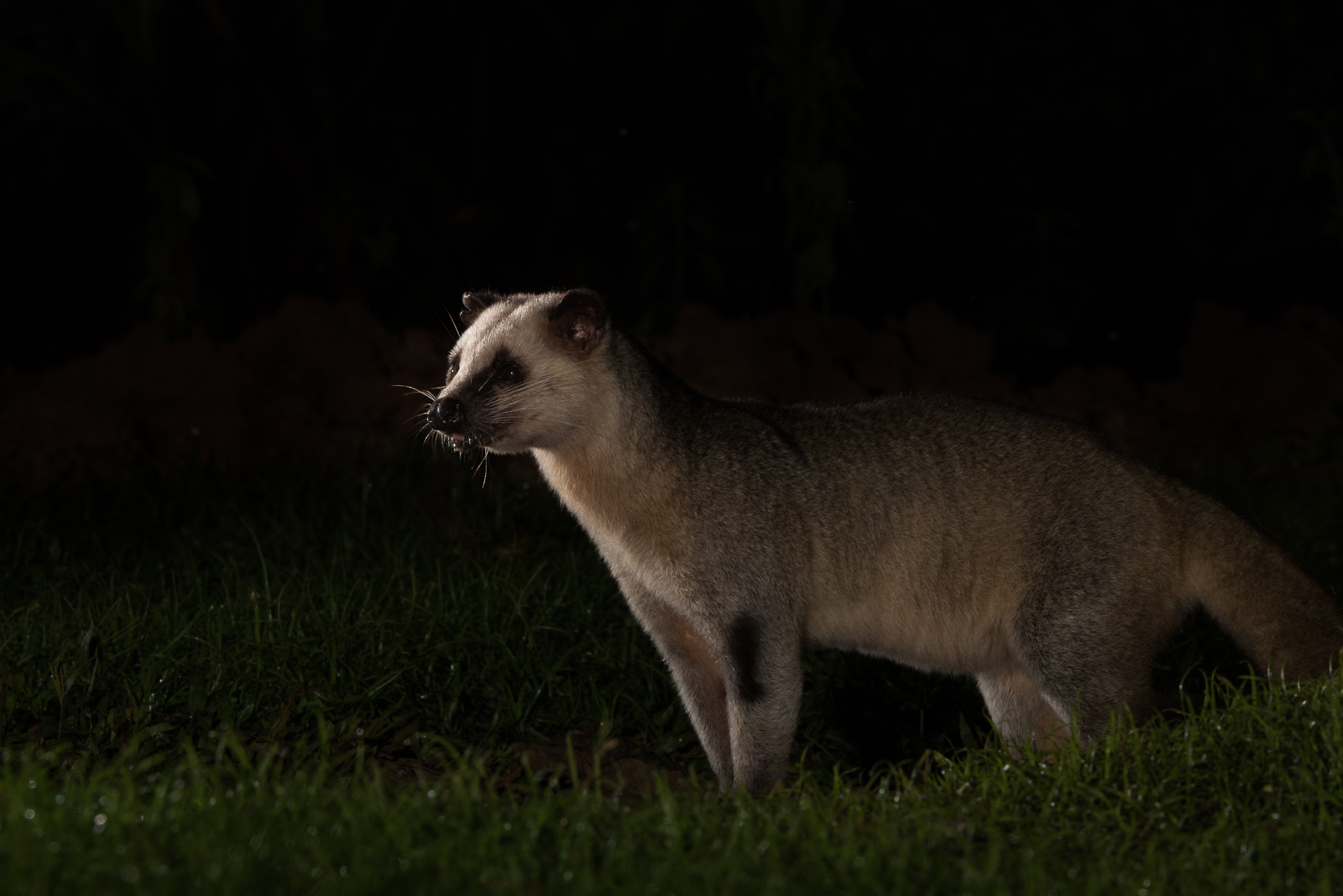
And finally, this masked palm civet who was kind enough to stop by while I had my light set up for the porcupines. (Nikon D810 with Nikkor 200-400mm lens (at 290mm) ISO 400, f/18 1/60th of a second, two Nikon SB-900 flash units.)
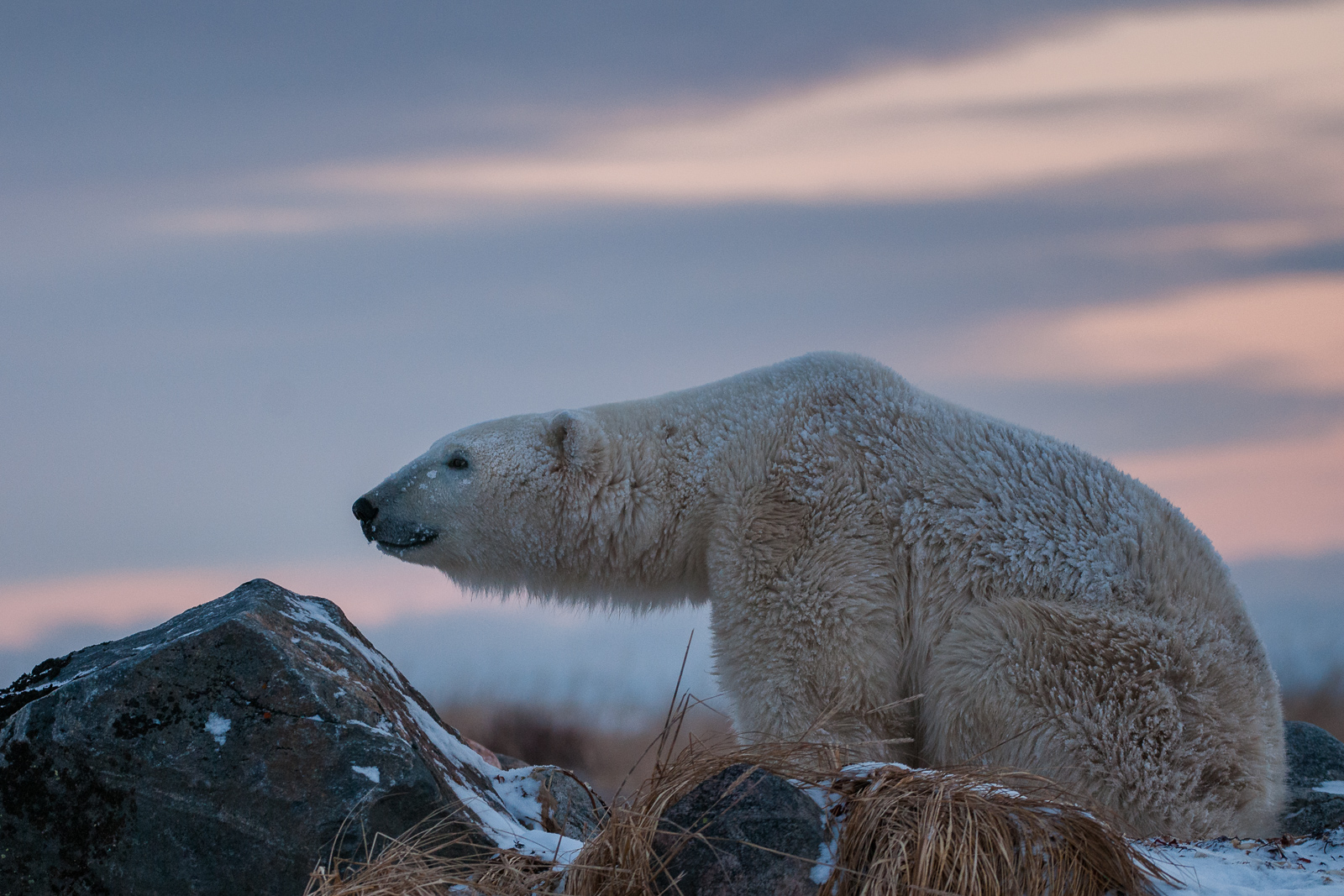
Always seems appropriate to post a polar bear just before the Christmas break. Nanuk, as the Inuit people call the great white bear, overseeing another setting sun in northern Manitoba. Happy Holidays everyone. See you after the break. Nikon D300 with Nikkor 200-400mm lens (at 200mm) ISO 800, f/4 at 1/250th of a second
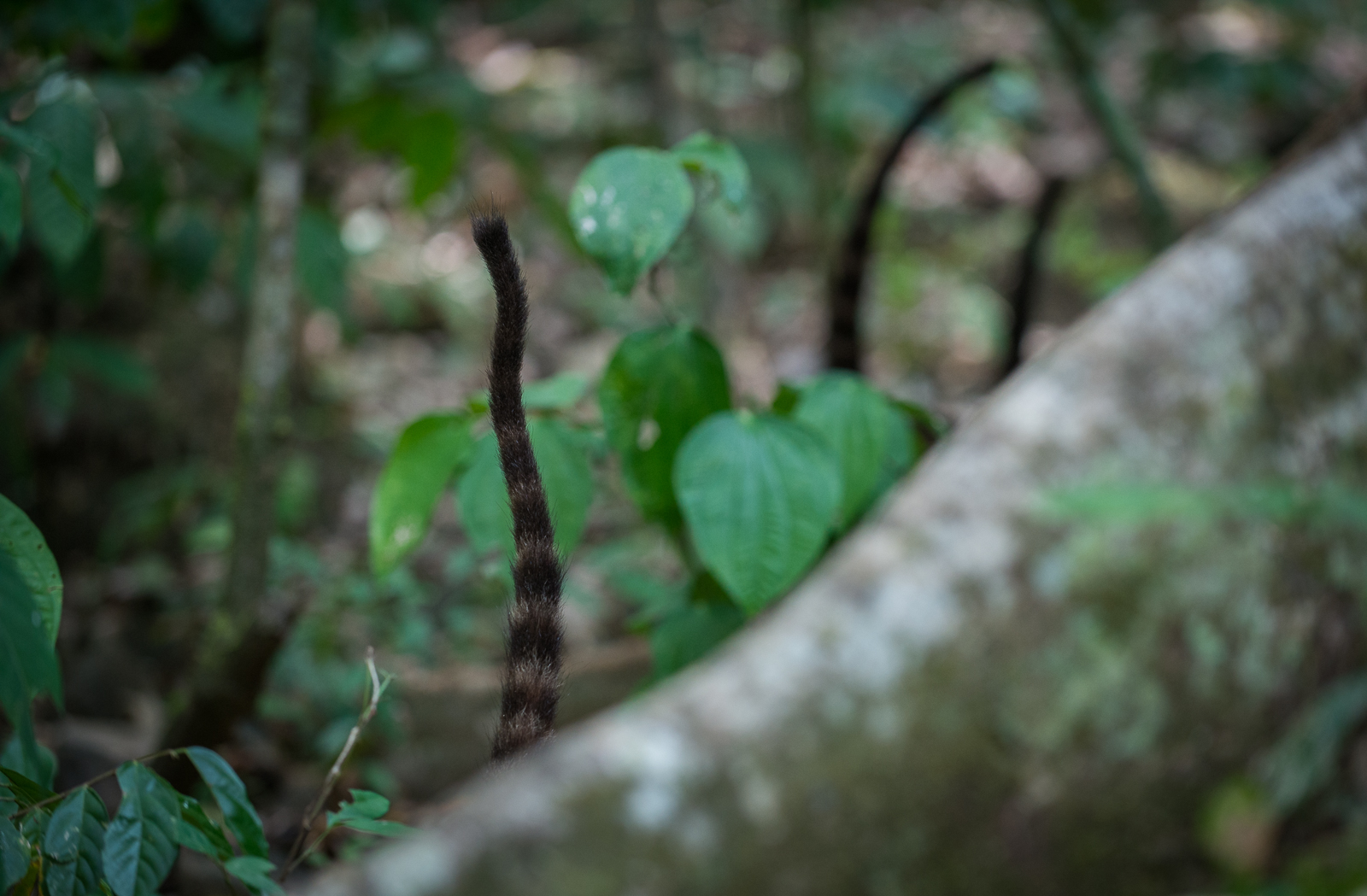
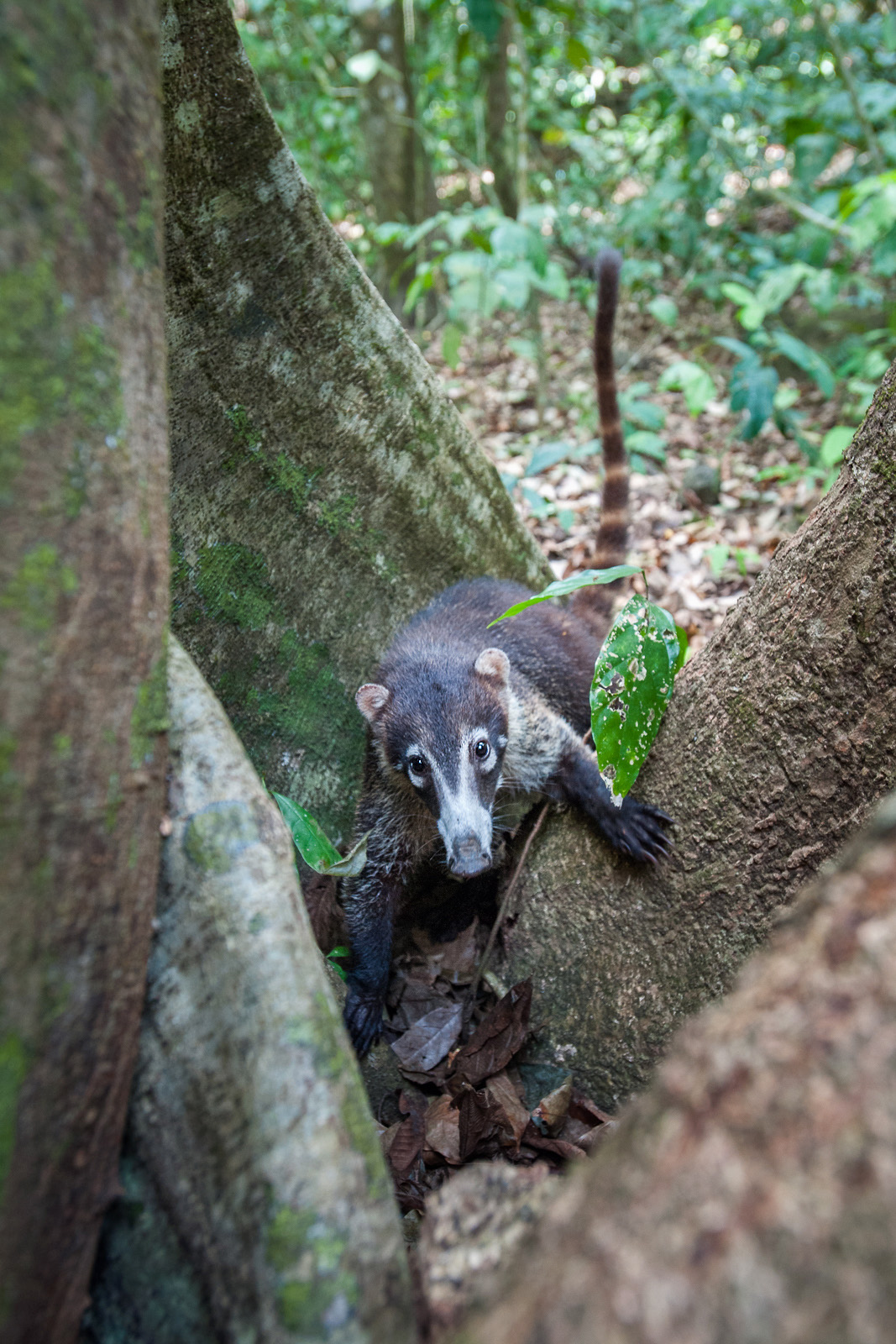
I was on a solo hike in Costa Rica’s Corcovado National Park when something told me there were coatis behind the roots of a fig tree… I quietly got into position. And I think the coatis ended up being more surprised to see me. Top photo: Nikon D800 with Nikkor 70-200mm lens (at 150mm) ISO 1600, f/3.2 at 1/1000th of a second
Bottom photo: Nikon D700 with Nikkor 17-35mm lens (at 26mm) ISO 1600, f/4.5 at 1/200th of a second
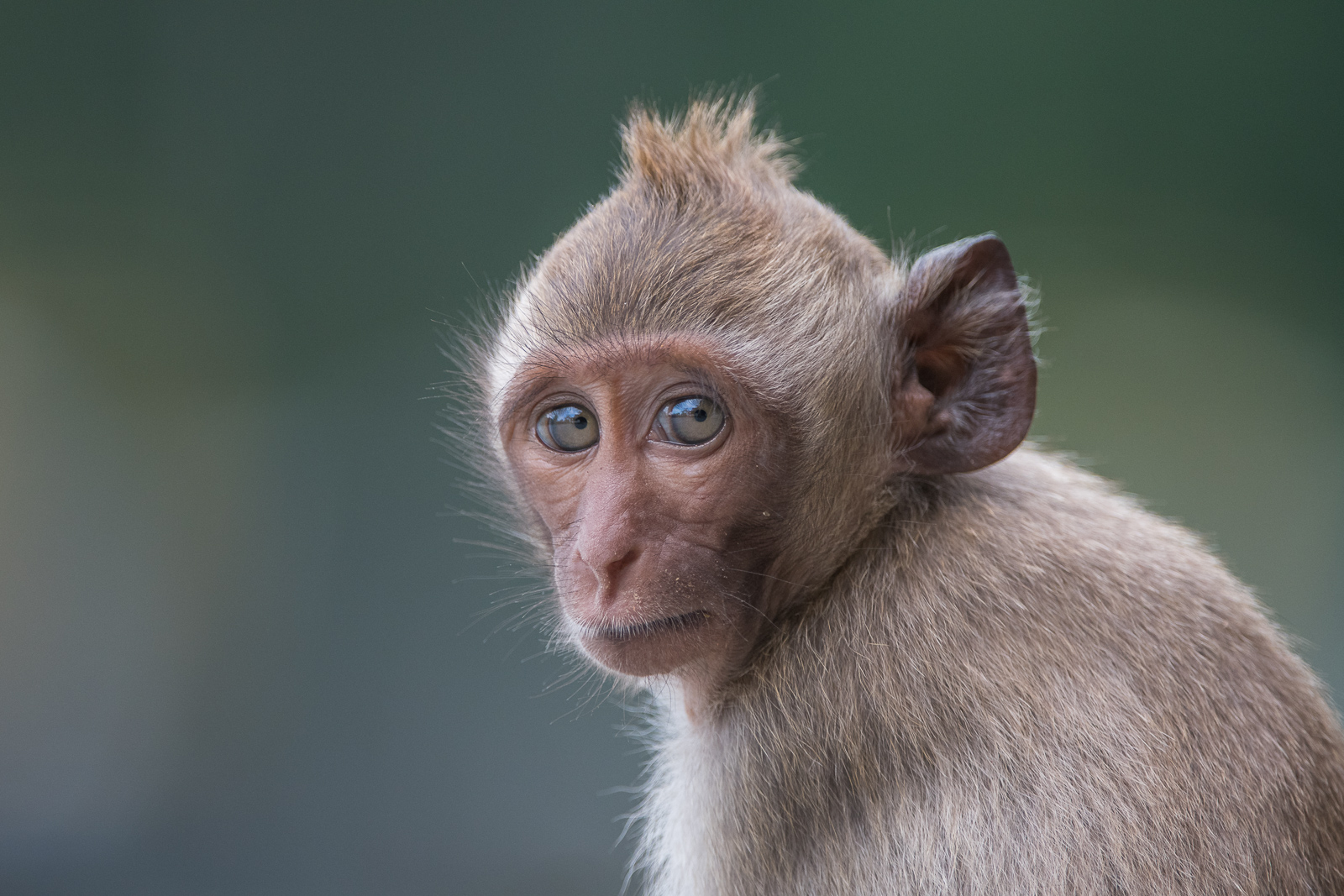
Here’s the fifth and final primate species that I photographed in Thailand. These guys were really habituated to people and living in and around an old temple somewhere between Bangkok and Kaeng Krachan National Park. From what I hear, they are considered sacred by some, pests by others, and useful by medical researchers for laboratory experiments because of their similarity to humans. Most of them kind of ignored that I was even there, but the young ones are always a bit curious. Nikon D500 with Nikkor 200-400mm lens (at 400mm) ISO 800, f/4 at 1/800th of a second
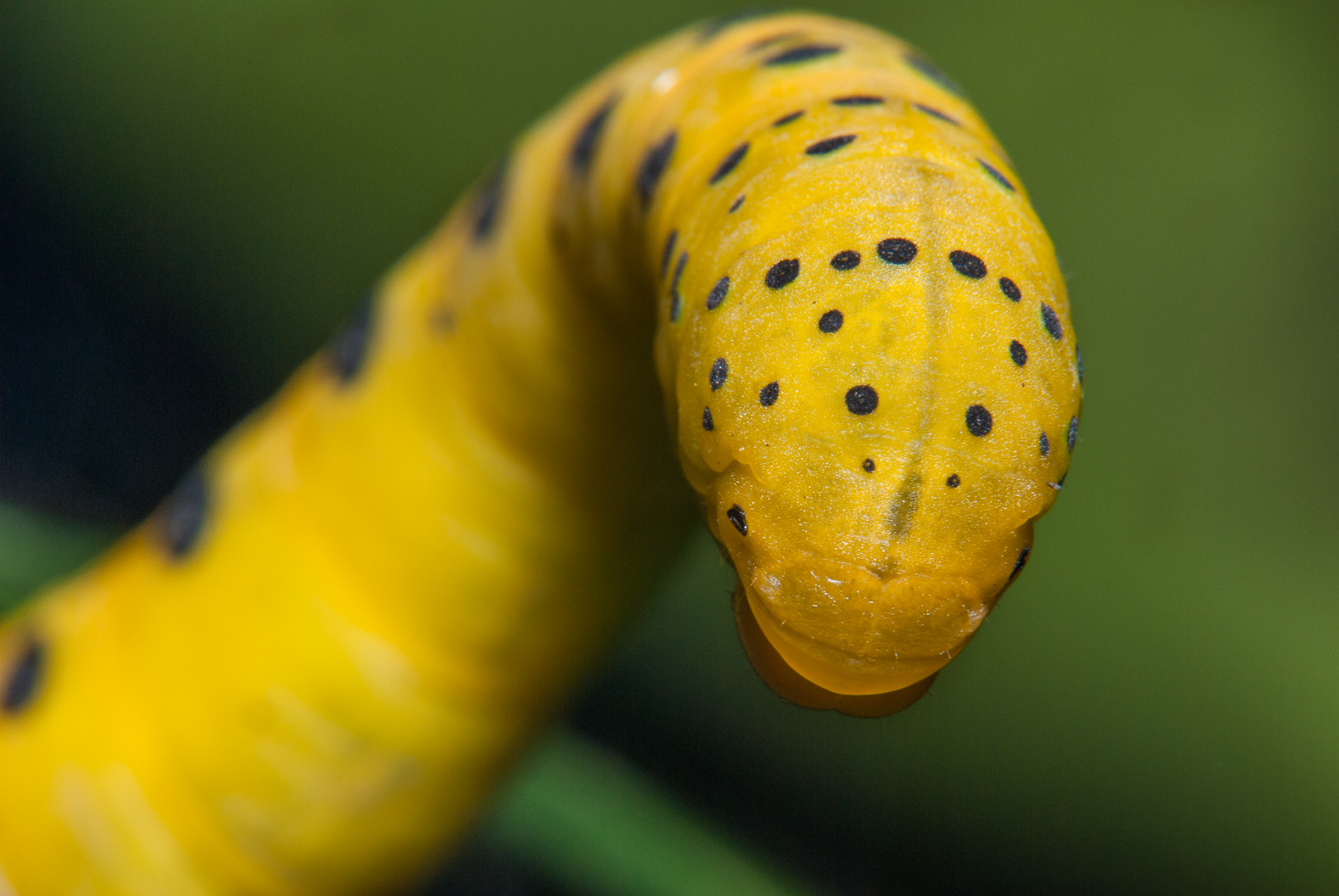
This spotted little yellow monster was photographed in Daintree National Park in the tropics of northeast Australia. It will eventually develop into a four o’clock moth. I took the shot well before I had a macro lens but rather, travelled with a close up filter that I screwed onto the front of my 80-200 lens. An inexpensive and easy-to-carry solution for grabbing the occasional close up. Nikon D200 with Nikkor 80-200mm lens (at 200mm with Canon 500D close up filter) ISO 100, f/16 at 1/60th of a second, Nikon D-600 flash
We use cookies to enhance your experience while using our website. If you are using our Services via a browser you can restrict, block or remove cookies through your web browser settings. We also use content and scripts from third parties that may use tracking technologies. You can selectively provide your consent below to allow such third party embeds. For complete information about the cookies we use, data we collect and how we process them, please check our Privacy Policy