Blue-footed boobies are probably the most iconic animal of the Galapagos Islands. The bright blue feet are actually used by the males to attract the ladies. They engage in an elaborate dance, lifting their feet up and down in an attempt to look more suitable for mating. Best feet, best dance, best chance of passing that brilliant blue on to the next generation. Nikon D800 with Nikkor 200-400mm lens (at 260mm) ISO 400, f/5.6 at 1/5000th of a second
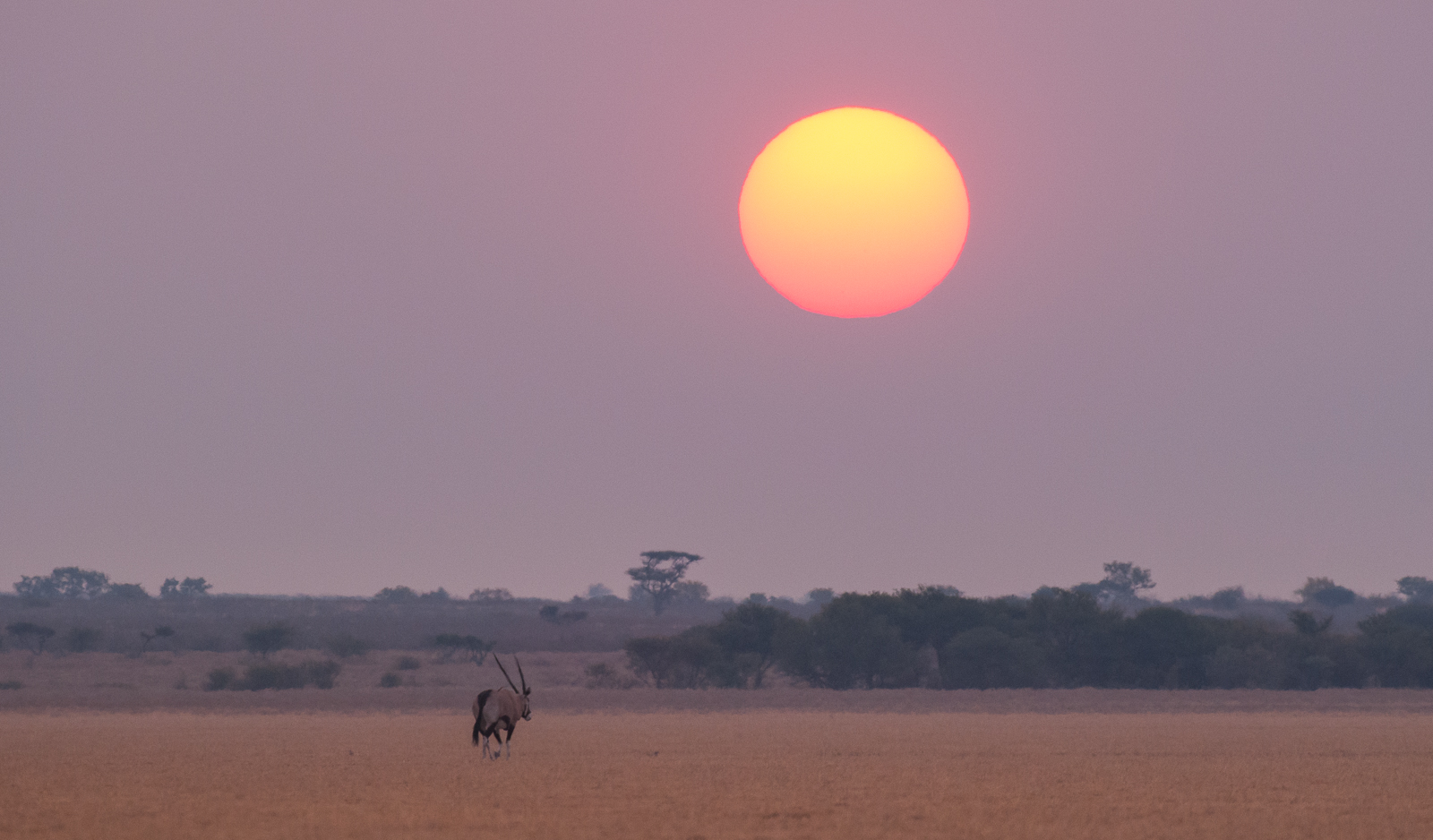
The late day sun can be huge as it sets in the Kalahari Desert of Botswana. Add to that the compression effect of using a long focal length lens and this is what you get. Each afternoon in the Kalahari, I was scrambling around in search of an animal or two to position in front of the sun and the pastel colors that it created. In this case, an oryx appeared to heading home after a long day of grazing. Nikon D300 with Nikkor 200-400mm lens (at 400mm) ISO 800, f/5.6 at 1/160th of a second
The tapir is the largest land mammal in Central and South America. They can weight up to 670 pounds. This one — a Baird’s tapir — was photographed in Corcovado National Park in Costa Rica. They are usually shy of humans, but I remained very quiet on the forest floor and eventually he forgot I was even there. Nikon D700 with Nikkor 70-200mm lens (at 78mm) ISO 3200, f/2.8 at 1/80th of a second
The common opossum isn’t necessarily going to win any beauty contests, but she does have a certain charm. I spotted this one on a solo, nocturnal hike in Pavones, Costa Rica. It’s always tough to get the shot when you need to position a light on your head just to aid in focusing, while also triggering two flashes. Luckily, the opossum stayed in one place long enough for me to do my thing. These guys are also known as the southern opossum, black-eared opossum or locally as the gamba or manicou. Nikon D200 with Nikkor 70-200mm lens (at 200mm) ISO 320, f/5.6 at 1/60th of a second, two Nikon SB-600 flash units
I had always heard about the diminutive key deer that live in the southern part of the Florida Keys, but on previous trips to the area I had never gotten around to searching them out. This weekend I finally decided to see what they were all about. They are a subspecies of the white-tailed deer and true to the billing, they are small — the smallest deer in North America — but they didn’t really seem all that much smaller than the regular-sized white-tailed deer that we get in the rest of the country. Still, it was fun to hang out with these two for about twenty minutes or so as they curiously observed me before going back to eating grass. Nikon D810 with Nikkor 17-35mm lens (at 35mm) ISO 800, f/4.5 at 1/800th of a second
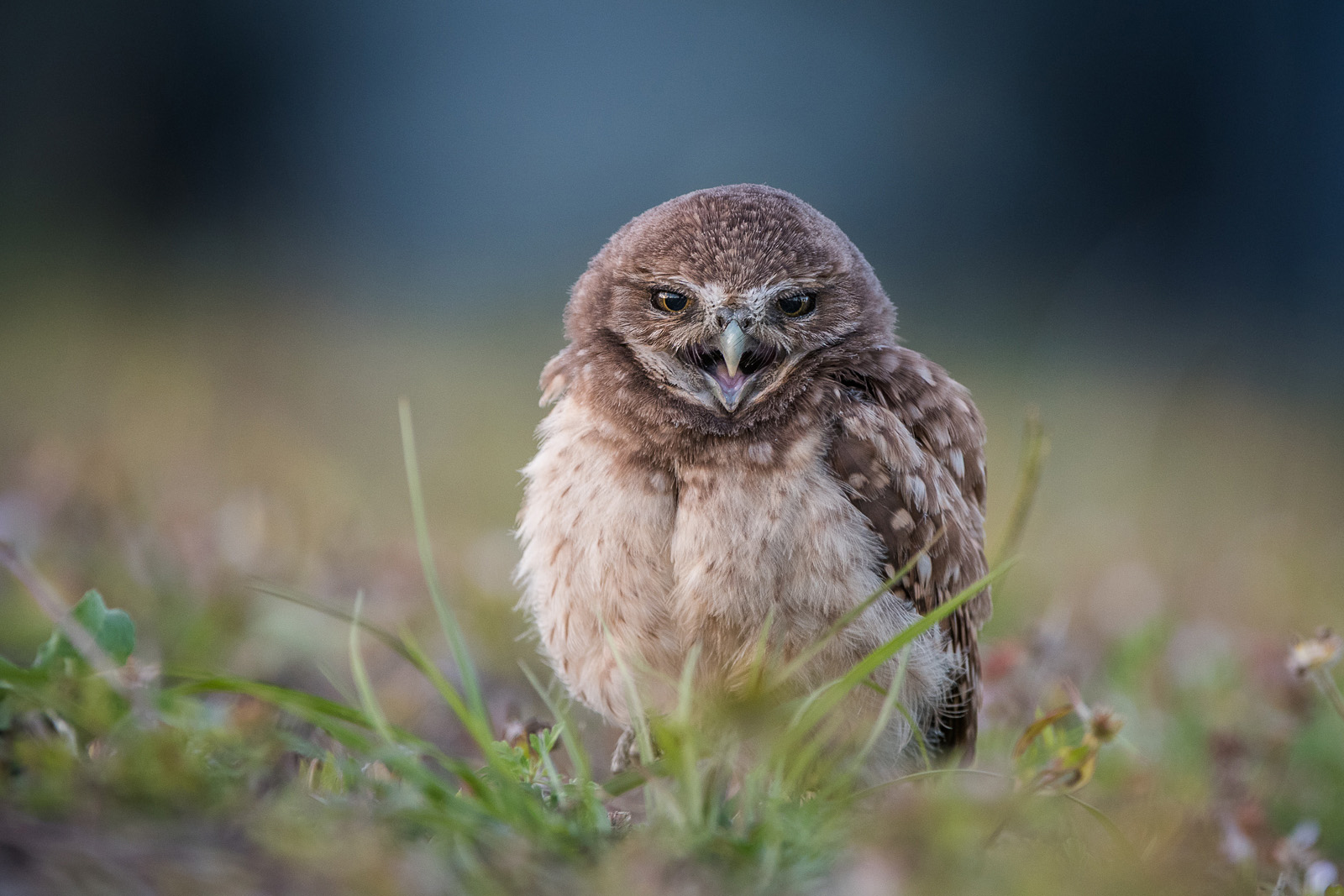
Just back from a work trip to Miami. I was able to fit in a very quick visit to a friend in the Keys and then my mother on the Gulf coast. Just north of where she lives is the town of Cape Coral. Cape Coral is known for it’s proximity to great beaches. And for its owls. The town is home to Florida’s largest population of burrowing owls. These pint-sized locals can be found throughout the town, burrowing in the side yards of suburban homes. This chick was one of three siblings. He/she was calling to the others while keeping an eye on my camera. Nikon D500 with Nikkor 200-400mm lens (at 340mm) ISO 800, f/4 at 1/160th of a second
Here’s another look at the masked palm civet that I met near my campsite in Kaeng Krachan National Park in Thailand. He was creeping around behind a hill, no doubt wondering what all those smells were coming from the camp kitchen. Nikon D810 with Nikkor 200-400mm lens (at 400mm) ISO 400, f/18 at 1/60th of a second, two Nikon SB-900 flash units
Quolls were my favorite animals from my Tasmania trip last year. I saw two species, the spotted quoll, and this guy, the eastern quoll (although, as you can see, he is also nicely spotted). Quolls are carnivorous marsupials, like Tasmanian devils, and are almost strictly nocturnal. The eastern quoll comes in two colors — a dark brown, almost black like this guy and more of a lighter beige color. Nikon D810 with Nikkor 200-400mm lens (at 310mm) ISO 500, f/6.3 at 1/200th of a second, Nikon SB-900 flash off camera and on a tripod to my right
There are quite a few species of bulbuls — 130 or so — spread across Africa, the Middle East and tropical Asia. I photographed this guy, the flavescent bulbul, in Kaeng Krachan National Park in Thailand. Flavescent means yellowish, an accurate description for this yellow and grey bird. Nikon D500 with Nikkor 200-400mm lens (at 400mm) ISO 800, f/4 at 1/500th of a second
Just a simple shot of a black bear resting in a tree. This was taken at the Vince Shute Wildlife Sanctuary in Orr, Minnesota. These bears are wild, but food is put out in the forest to attract them to the research center. Nikon D700 with Nikkor 70-200mm (at 130mm) ISO 800, f/2.8 at 1/160th of a second
We use cookies to enhance your experience while using our website. If you are using our Services via a browser you can restrict, block or remove cookies through your web browser settings. We also use content and scripts from third parties that may use tracking technologies. You can selectively provide your consent below to allow such third party embeds. For complete information about the cookies we use, data we collect and how we process them, please check our Privacy Policy