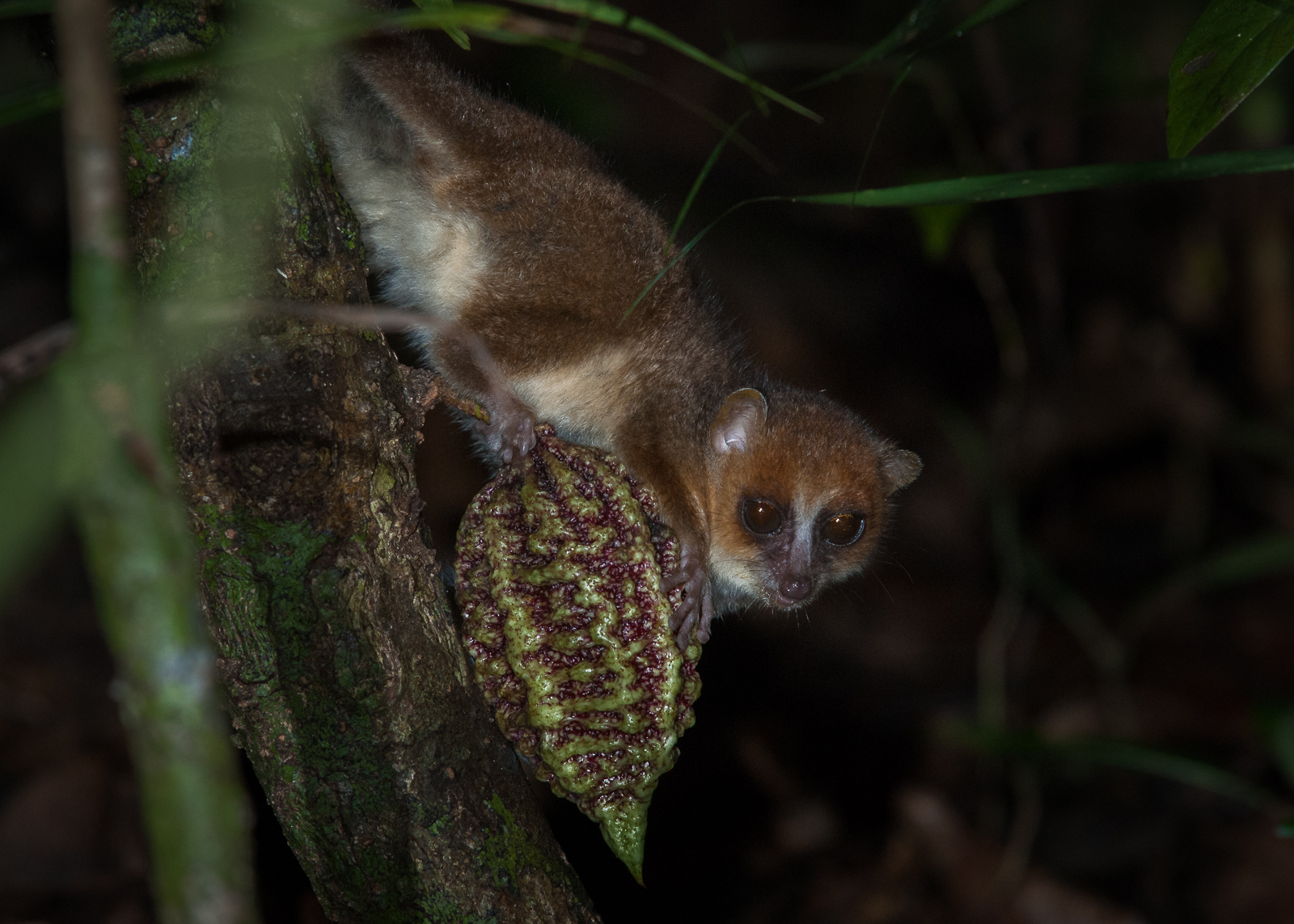
This is a brown mouse lemur that I photographed on a night hike on the island of Nosy Mangabe, off the northeast coast of Madagascar. I’m not sure what that particular fruit is, but the lemur seemed determined to make a meal out of it.
Nikon D200 with Nikkor 80-200mm lens (at 200mm) ISO 400, f/5.6 at 1/60th of a second, two Nikon SB-600 flash units
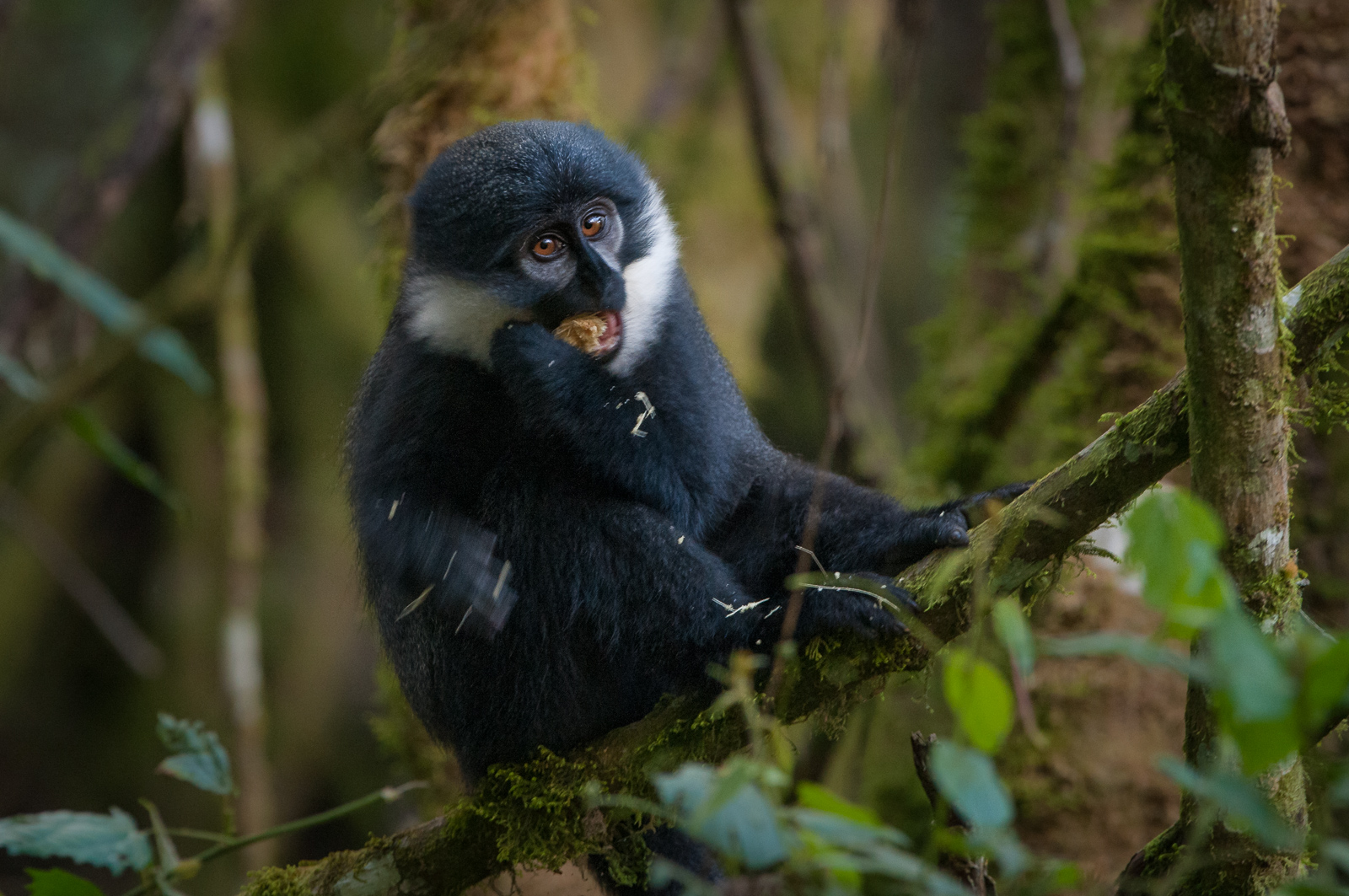
The L’Hoest’s monkey lives in the upper eastern Congo Basin of Africa in the same forested mountain regions that mountain gorillas are found. I photographed this one in Bwindi Impenetrable National Park in Uganda. Their conservation status is currently listed as vulnerable. They live in small groups dominated by females, with only a single male. They are a notoriously skittish species and will usually flee when spotted. This one appeared in front of me for only about three seconds before bounding off into the forest. Nikon D300 with Nikkor 200-400mm lens (at 340mm) ISO 800, f/5 at 1/60th of a second
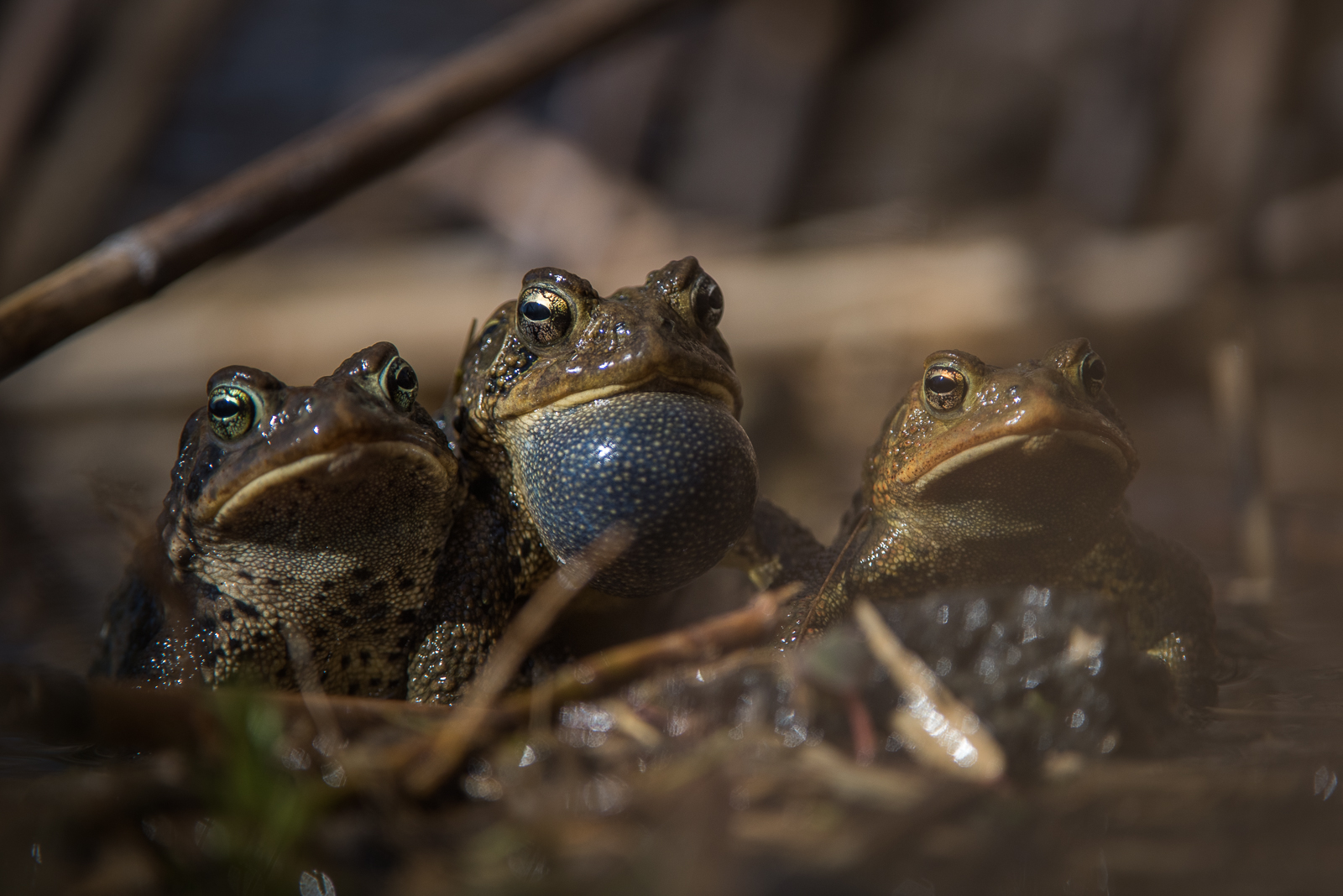
Here’s another one from out on Tommy Thompson Park in Toronto. These three formidable looking amphibians are American toads. A whole lot of mating activity was going on when I was there. The males were singing a chorus to the females, other lovers were already in the process of making more toads, and several mating pairs were surrounded by strands of tadpole eggs. Nikon D810 with Nikkor 200-400mm lens (at 400mm) ISO 400, f/5 at 1/2500th of a second
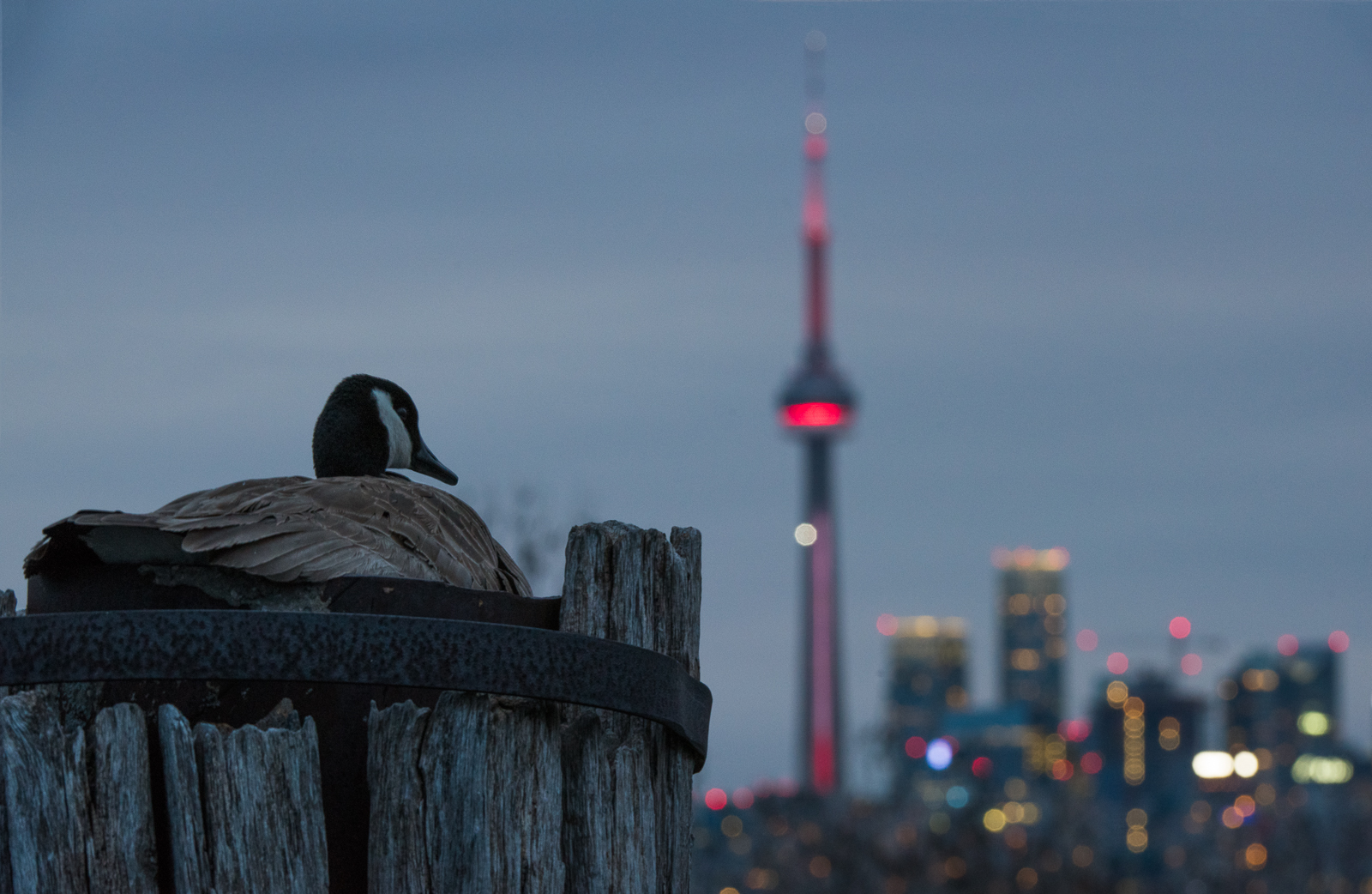
Can’t get much more Canadian than this one of a Canada goose with Toronto’s CN Tower in the background (I suppose a few maple leaves could have been falling around the goose). The CN Tower is an iconic symbol of Canada, and for 34 years it was the tallest free-standing structure and tallest tower in the world. It is now the 3rd tallest tower in the world and remains the tallest free-standing structure in the Western Hemisphere. It has been declared one of modern Seven Wonders of the World by the American Society of Civil Engineers. As for the goose, it was nesting on top of an old piling in Tommy Thompson Park. Tommy Thompson Park, also known as the Leslie Spit, is actually landfill in Lake Ontario that has been reclaimed in a big way by nature. It’s quite an amazing place when migratory birds are nesting. I saw hundreds of black-crowned night herons roosting in the trees, while many more swans were covering the ground. There were also hundreds of cormorants and many other birds, mammals and amphibians in the park that were kind enough to show their faces. Being primarily a business trip with limited time for photography, I only took my 200-400mm lens with me so it was a challenge to get certain shots. To capture the city skyline in this image, I had to sit back as far as I could on a small bridge and get as low as possible. Nikon D810 with Nikkor 200-400mm lens (at 200mm) ISO 1600, f/14 at half a second
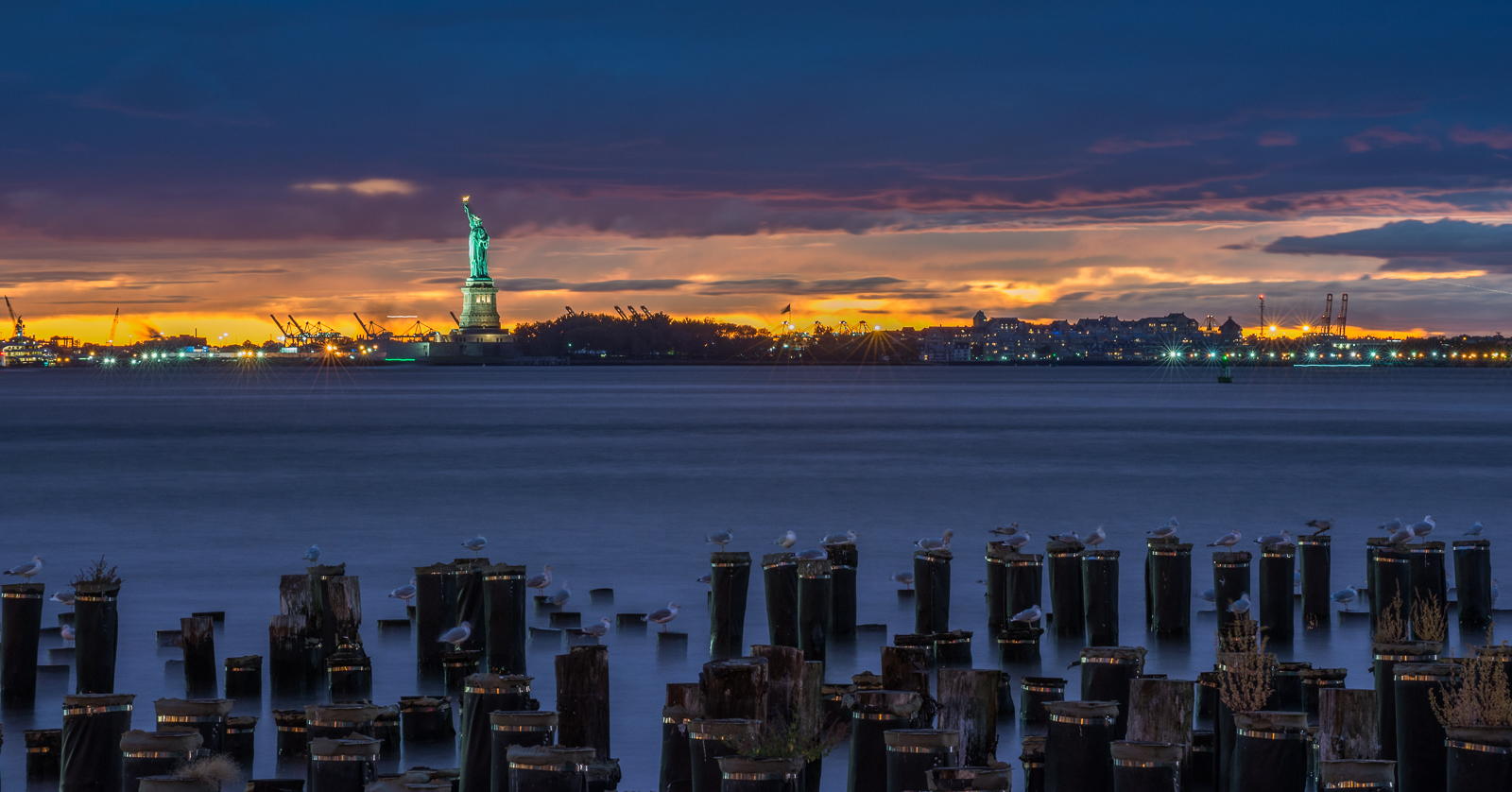
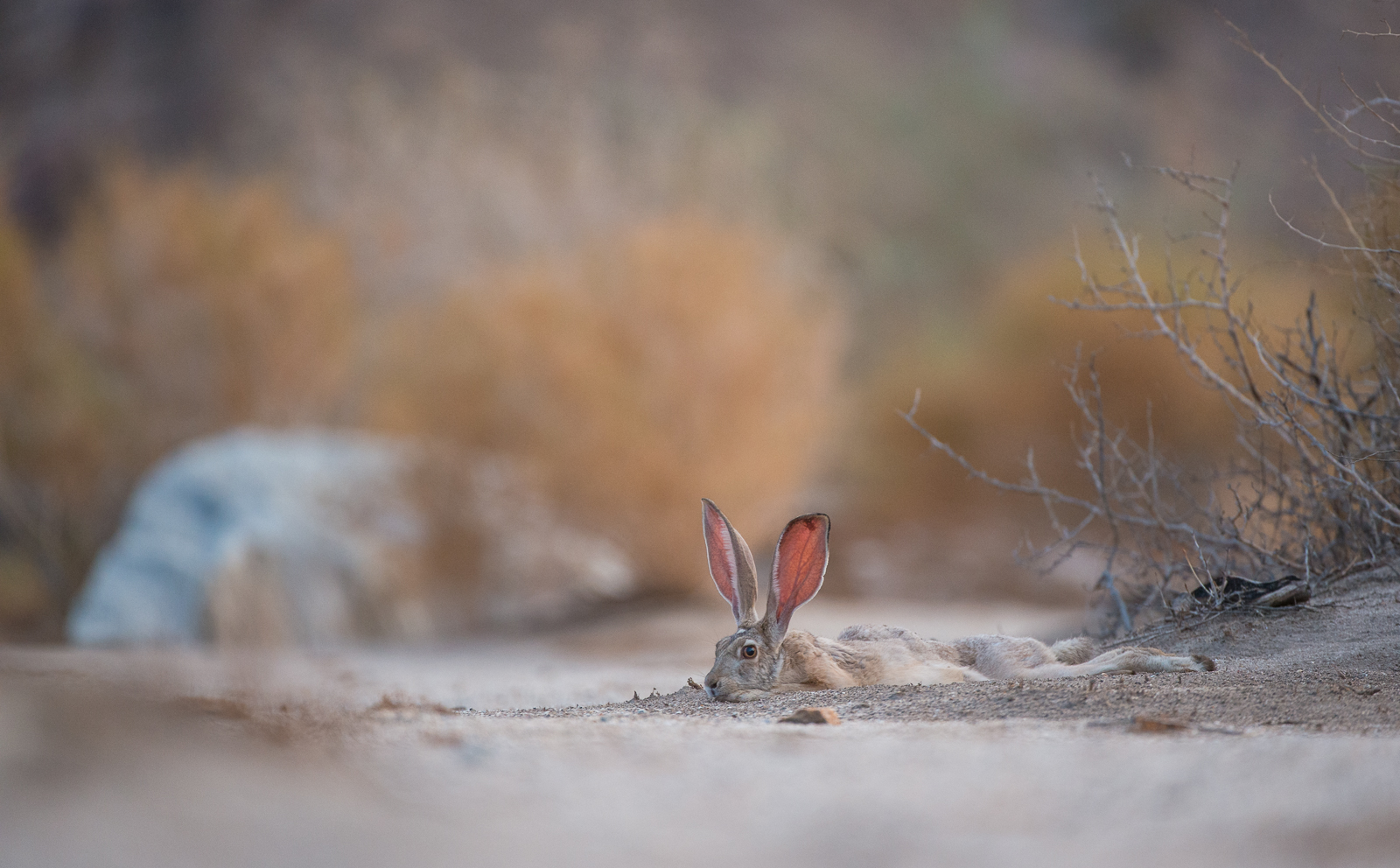
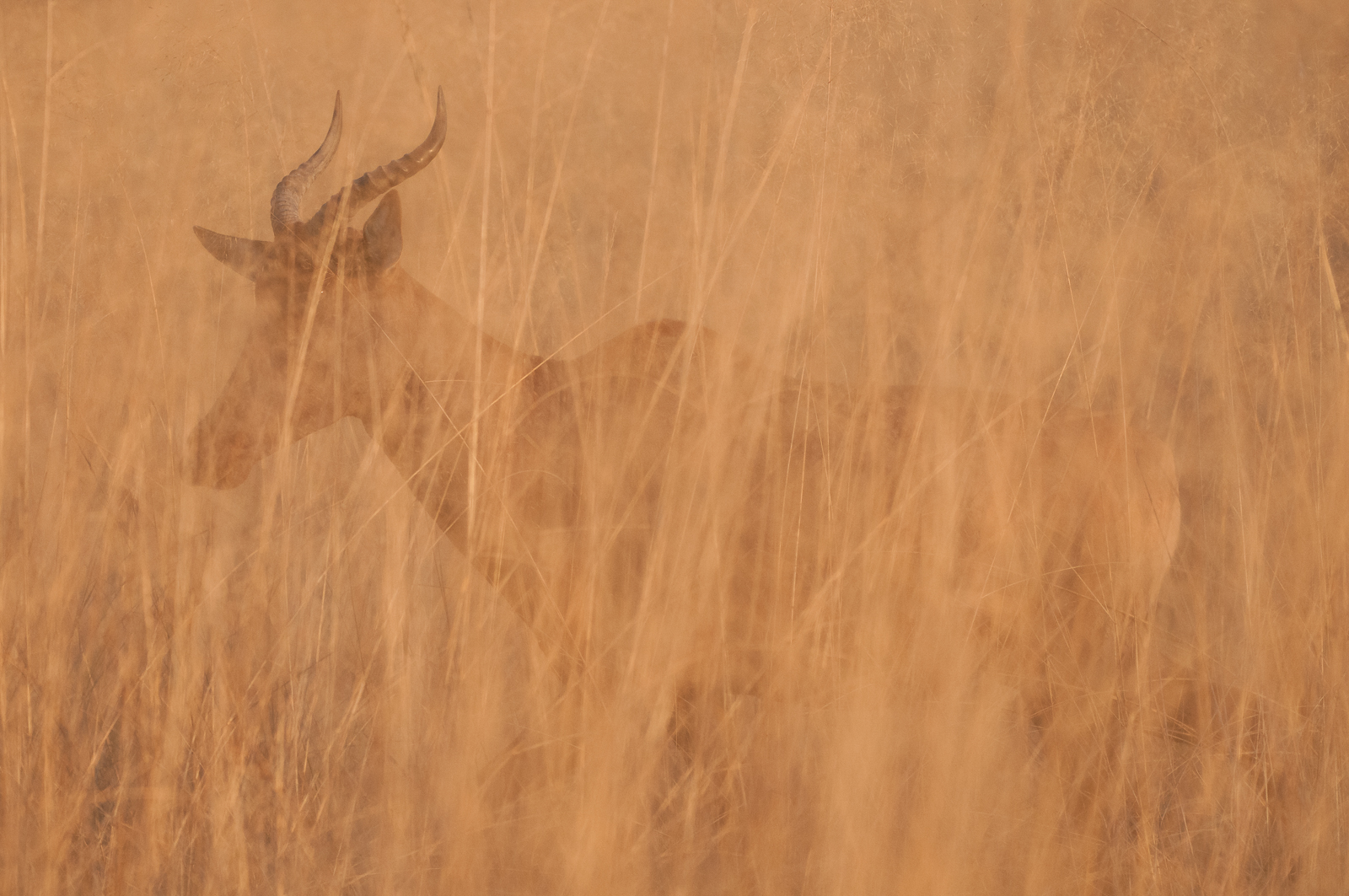
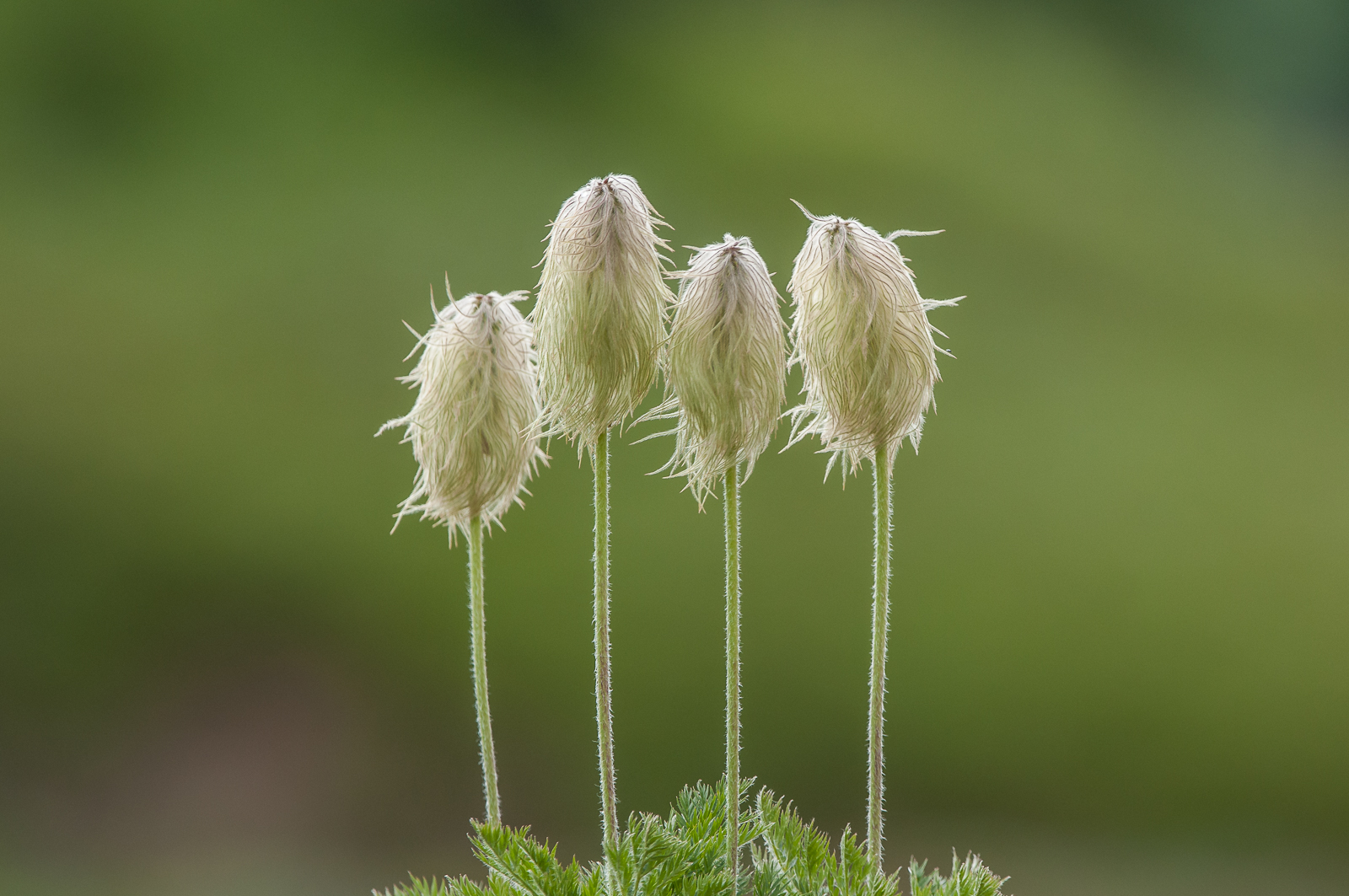
This year I had four of my photos make the final round in the BBC Wildlife Photographer of the Year competition, in four different categories. Unfortunately, none of them made the final cut. All have been posted on the blog before, but here they are again.
Urban Wildlife Category — Ring Billed Gulls, Brooklyn Bridge Park, New York Nikon D800 with Nikkor 70-200mm lens (at 180mm) ISO 400, f/18 at 13 seconds
Mammals Category — Black Tailed Jackrabbit, Anza-Borrego Desert State Park, California Nikon D800 with Nikkor 200-400mm lens (at 400mm) ISO 1600, f/4 at 1/200th of a second
Impressions Category — Tsessebe, Okavango Delta, Botswana Nikon D300 with Nikkor 200-400mm (at 220mm) ISO 800, f/4 at 1/1600th of a second
Plants Category — Pasque Flowers, Mount Rainier National Park, Washington Nikon D300 with Nikkor 200-400mm lens (at 360mm) ISO 200, f/5.6 at 1/400th of a second
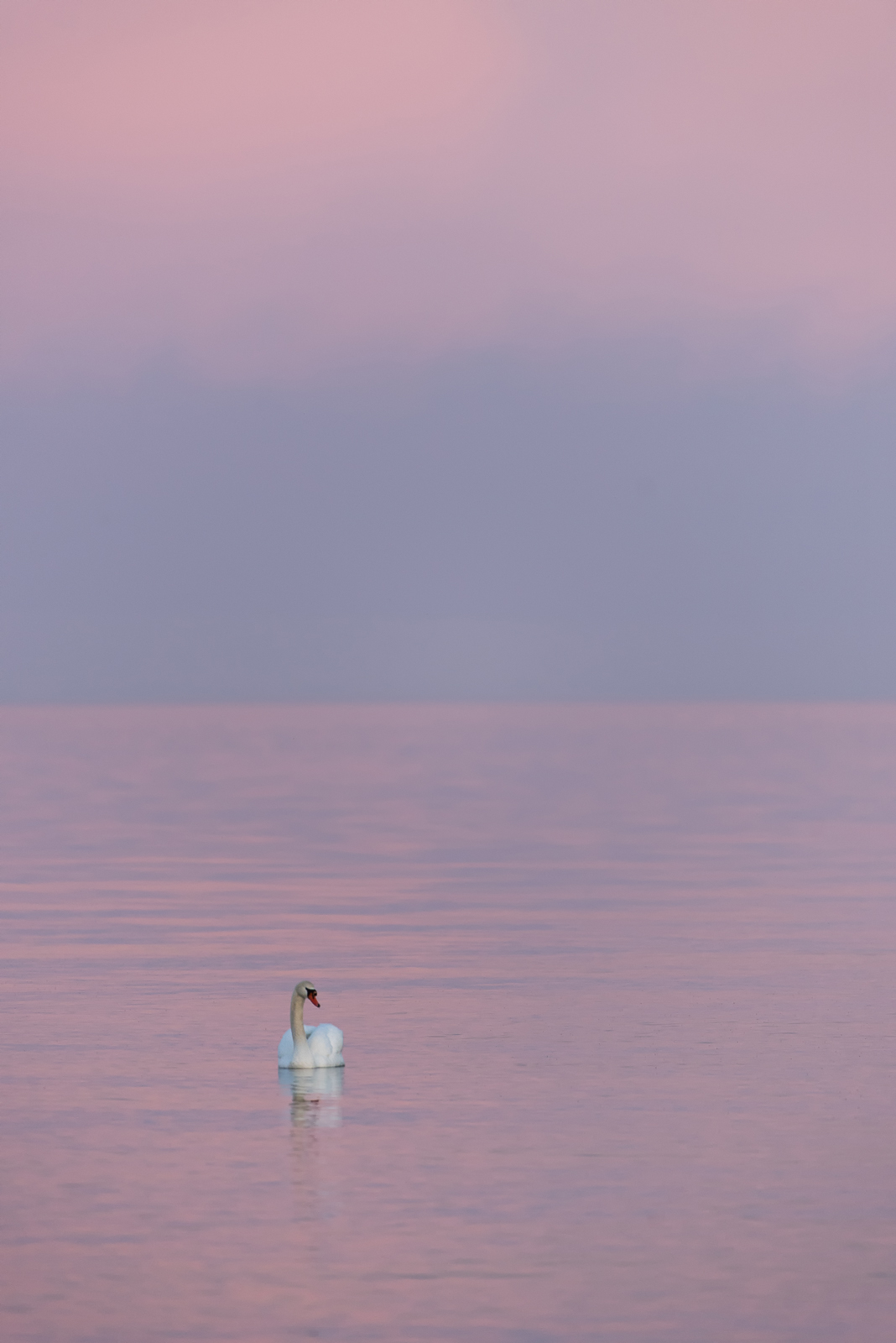
Just got back from an 11-day business trip to Toronto. Per usual, I found a few hours here and there to get out with the camera. I had heard that the Toronto area is a good place to see mink and I put forth my best effort to try and find one. Unfortunately, no luck, but I did come across several other creatures along the way, including this mute swan that appeared to be floating in a sea of pastel as the sun set on Lake Ontario. Nikon D810 with Nikkor 200-400mm lens (at 400mm) ISO 800, f/4 at 1/640th of a second
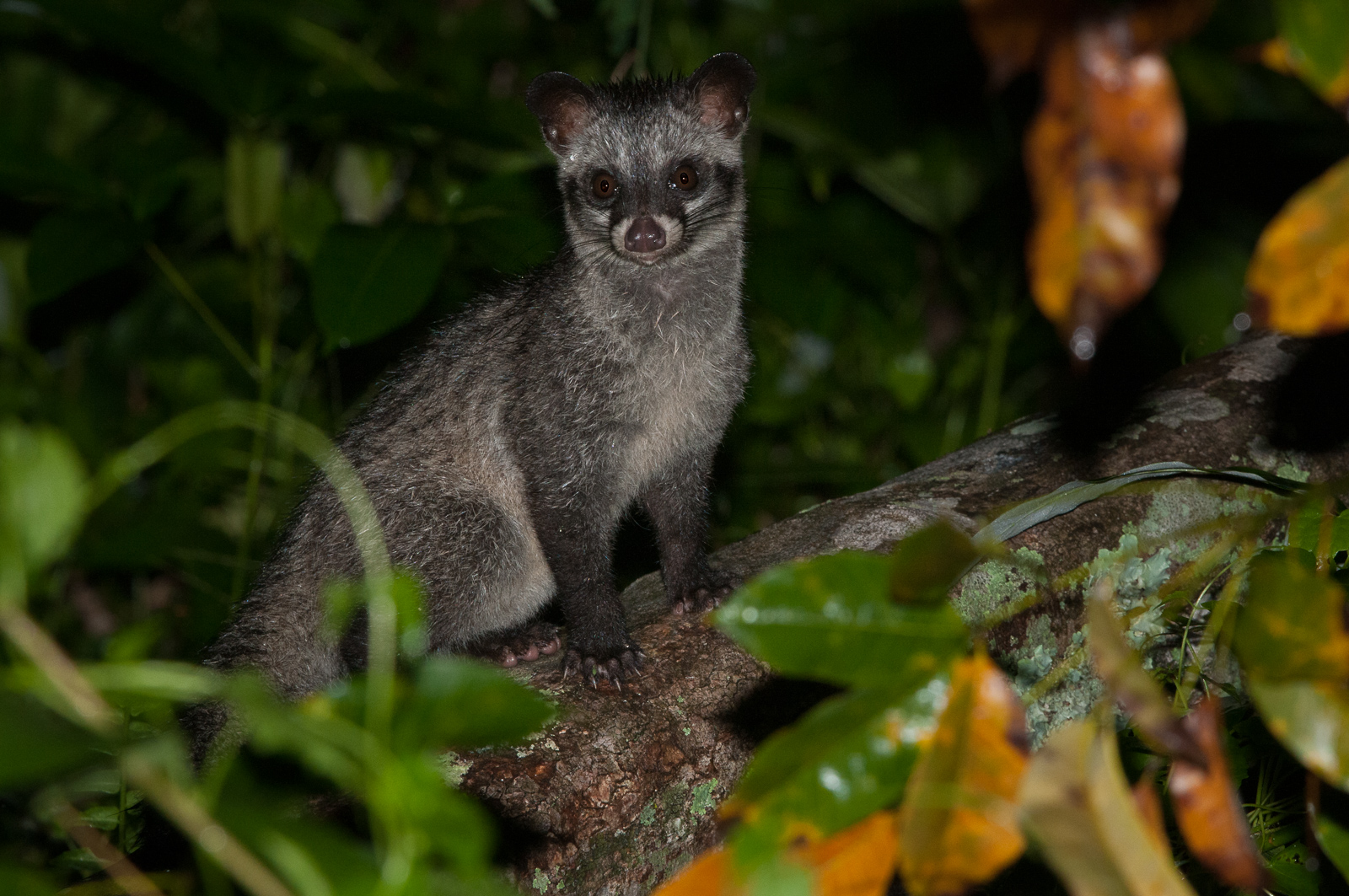
I met this Asian palm civet late one night while wandering around outside of a small village in Sumatra. I have no good reason as to why I was wandering around in the dark outside of a small village in Sumatra, other than the fact that I was hoping to meet creatures like this Asian palm civet. Civets are sort of the raccoons of Sumatra (and many other regions of southeast Asia) although they aren’t related at all. Spotlighting alone is always a challenge, as I have to shine the light from my headlamp on the subject in order to gain focus, while working with flashes to light the subject. Luckily, this guy stayed around just long enough for me to get a few shots. Nikon D300 with Nikkor 200-400mm lens (at 340mm) ISO 500, f/10 at 1/60th of a second, two SB-900 flash units
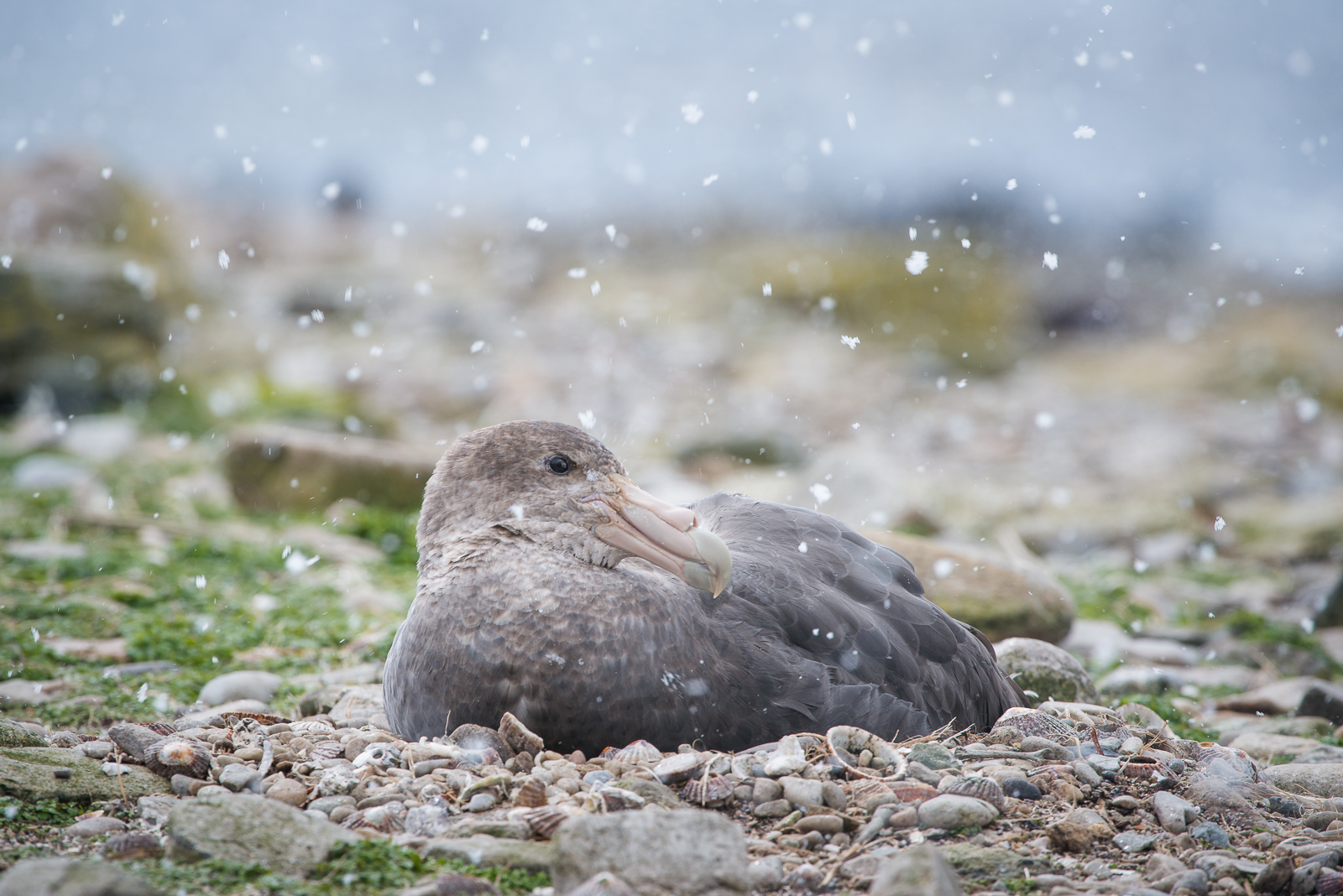
The albatross isn’t the only large seabird with an enormous wingspan to be found in the Falkland Islands. Petrels also call the islands home. Not quite as large as the browed albatross with its eight foot wingspan, the southern petrel measures in at just under seven feet, wingtip to wingtip. This particular southern petrel was nesting on Carcass Island in the Falklands and was sitting on a few eggs. You can see the shells that she used to make her nest. This was taken on a typical day in the Falklands when it was sunny and warm one moment and snowing the next. Nikon D800 with Nikkor 200-400mm lens (at 400mm) ISO 400, f/6.3 at 1/500th of a second
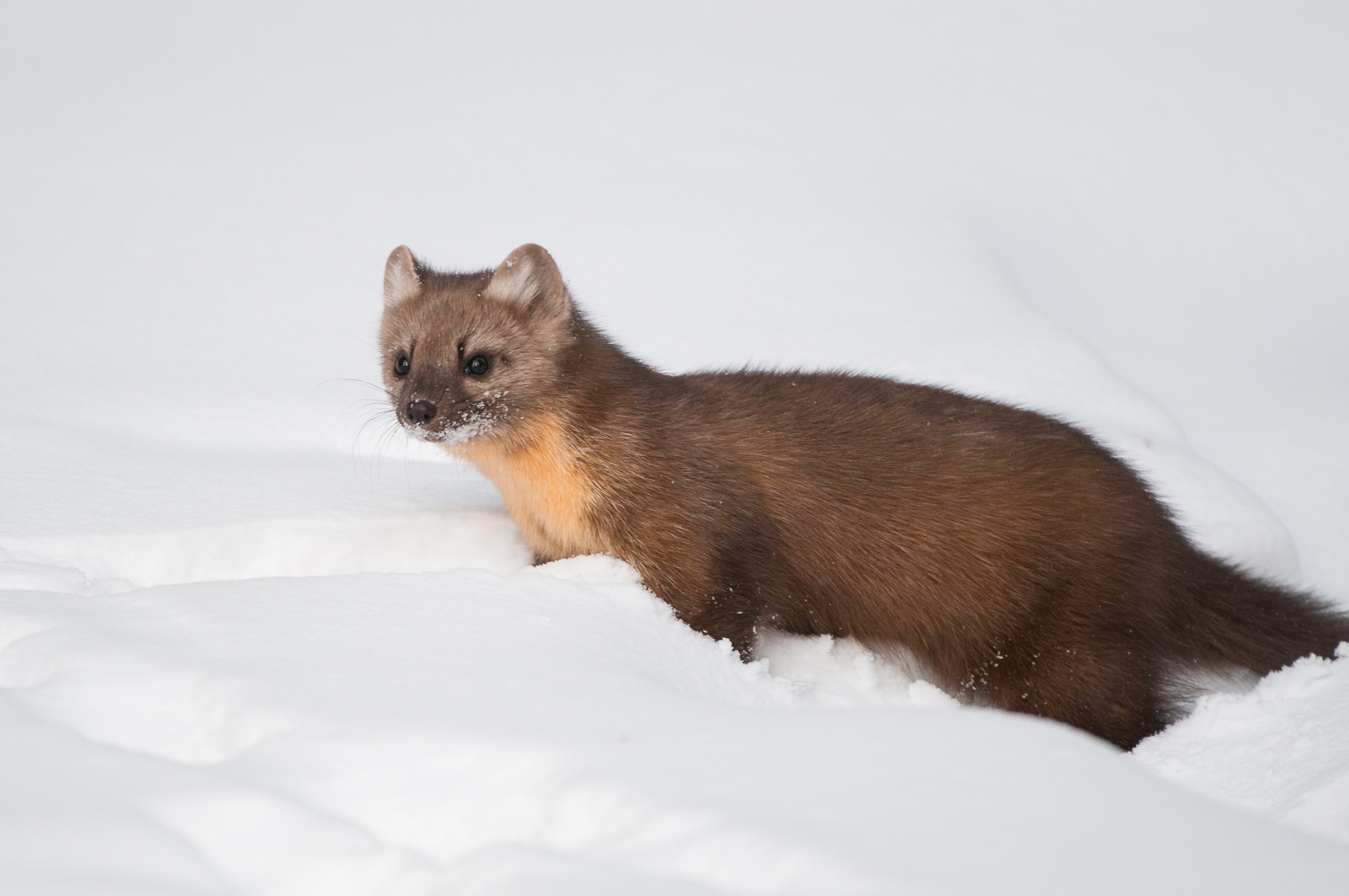
The American marten is a weasel of the mustelid family and often times referred to as the pine marten. It is similar to the fisher, although smaller and lighter in color. This one was running around in the snow just outside of the northeast entrance to Yellowstone National Park. Nikon D300 with Nikkor 200-400mm lens (at 400mm) ISO 400, f/4 at 1/800th of a second
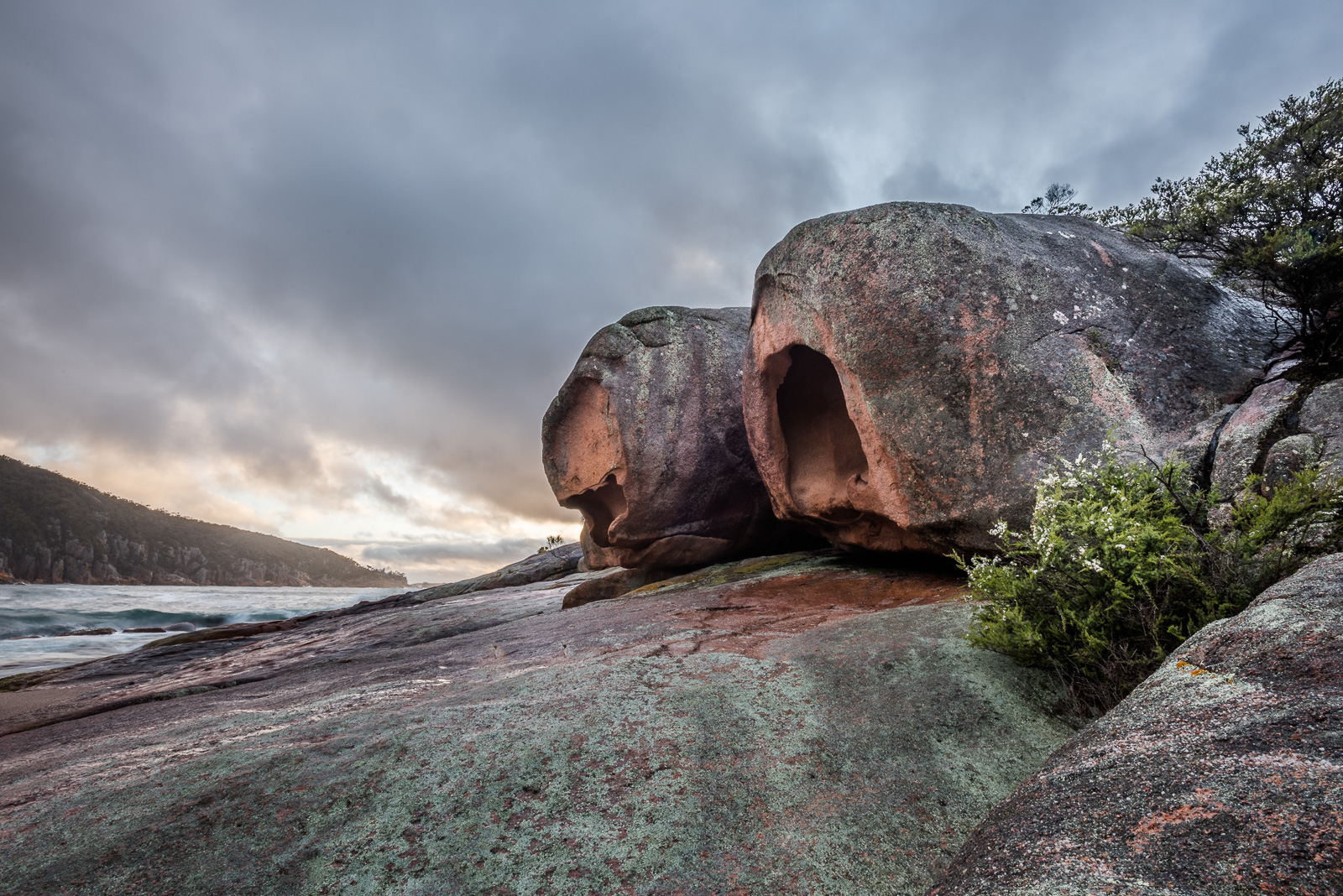
Freycinet is one of the most popular national parks in Tasmania. Sleepy Bay is accessed via a short hike within the park. There are a few big boulders at the shoreline that have eroded into perfect little domed caves — ideal for sitting in and watching the sunrise. The greenish lichen on the pinkish granite is a departure from the characteristic orange that is so prevelant in this part of Tasmania.
Nikon D810 with Nikkor 17-35mm lens (at 17mm) ISO 100, f/20 at 1/8th of a second
We use cookies to enhance your experience while using our website. If you are using our Services via a browser you can restrict, block or remove cookies through your web browser settings. We also use content and scripts from third parties that may use tracking technologies. You can selectively provide your consent below to allow such third party embeds. For complete information about the cookies we use, data we collect and how we process them, please check our Privacy Policy