These long tailed macaques (also known as crab eating macaques) were fairly common around the hut I was staying at in Borneo. The light was low, so I decided to experiment with a few slow shutter flash exposures. This one was shot at just 1/8th of a second. The flash froze the eyes but little else. Nikon D300 with Nikkor 200-400mm lens (at 240mm) ISO 800, f/6.3 at 1/8th of a second, two Nikon SB-900 flash units
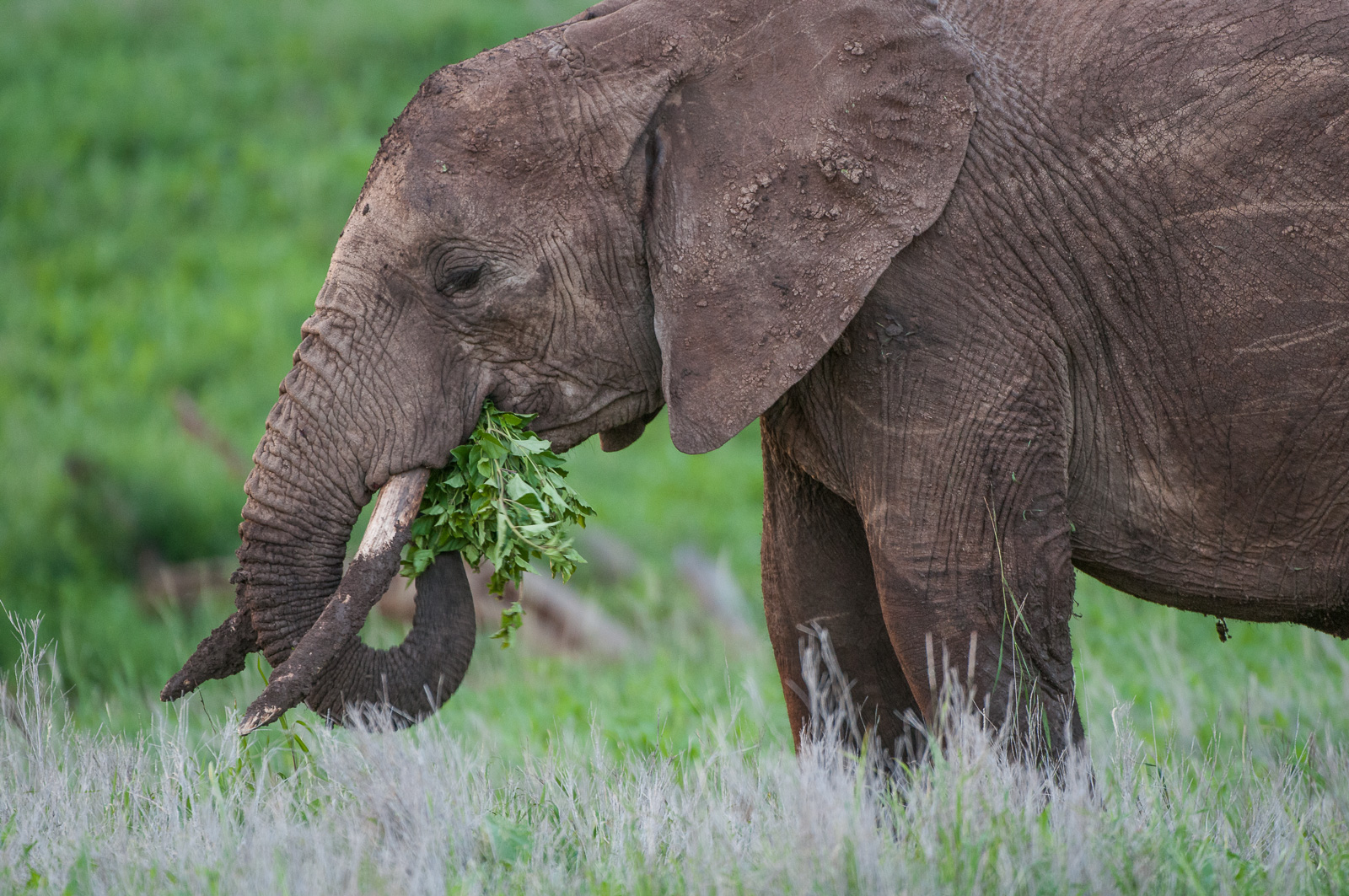
An elephant grazes on shrubs in the Lewa Wildlife Conservancy in Kenya. Elephants can spend up to 18 hours a day feeding and put down up to 600 pounds of food. They can also drink up to 50 gallons of water a day. Nikon D300 with Nikkor 200-400mm lens (at 400mm) ISO 800, f/4 at 1/160th of a second
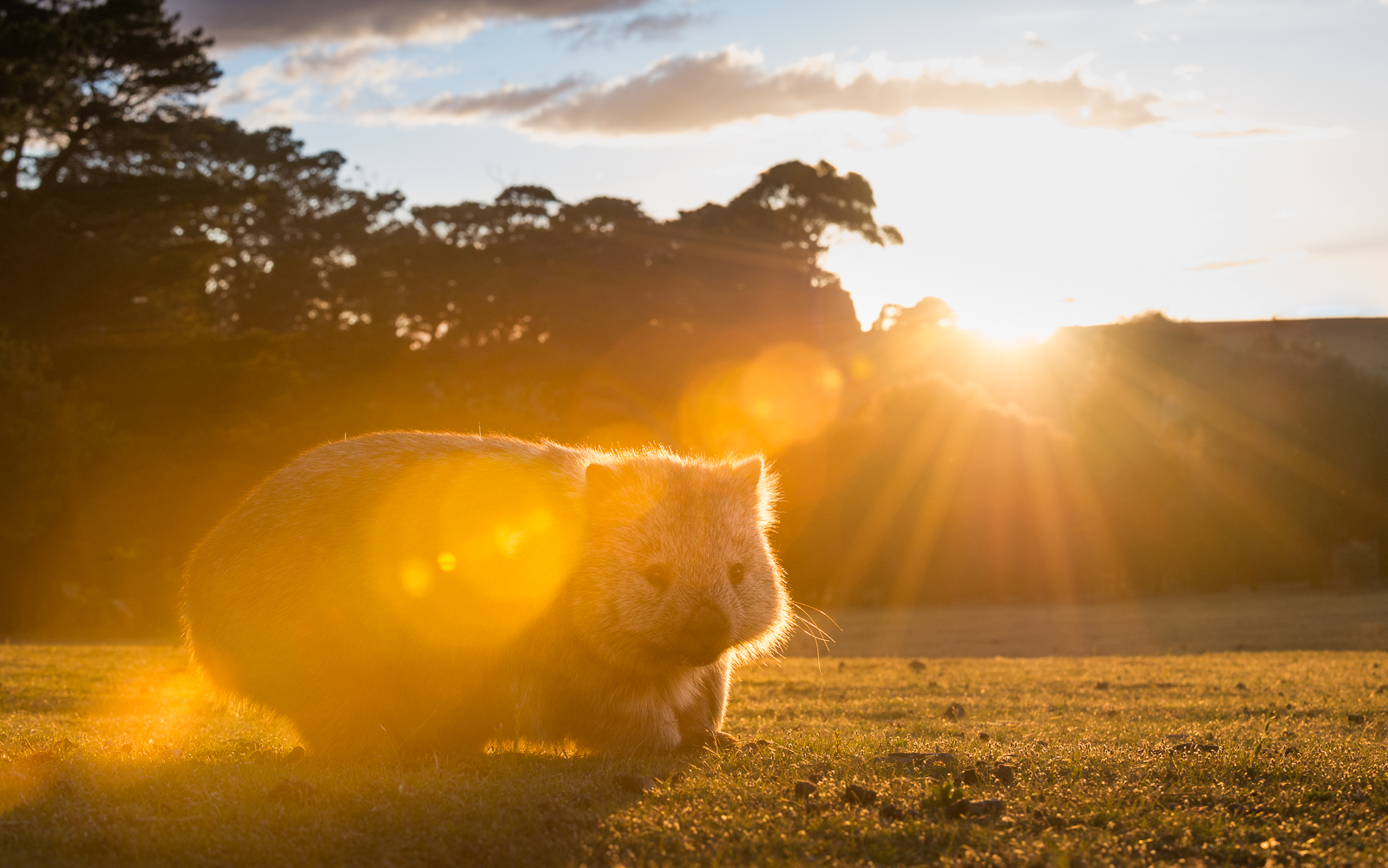
Maria Island in Tasmania is overflowing with animals. They’re everywhere. And when the day comes to an end, you don’t have to look long to find subjects to photograph in front of the setting sun. This wombat was enjoying a late day snack of, well, the same thing it was eating all day and every day — grass. They really are the lawnmowers of the island and keep the open lawns cropped tight. Nikon D800 with Nikkor 70-200mm lens (at 70mm) ISO 800, f/14 at 1/250th of a second
I have no idea what species of frog these two are. What I do know, is that that’s not a baby catching a ride on its mother’s back. I came across the amorous duo on a night hike in Tangkahan, on the island of Sumatra in Indonesia. Nikon D300 with Nikkor 200-400mm lens (at 400mm) ISO 200, f/8 at 1/60th of a second, two Nikon SB-800 flash units
I like to shoot at landscape locations well after the sun has set. Especially when there is water and clouds to record with a slow exposure — this one being 13 seconds. Another great thing about sticking it out is that all the other photographers leave. El Matador is such a popular location that it can be difficult to get photos in the best spots.
Nikon D810 with Nikkor 17-35mm lens (at 17mm) ISO 200, f/18 at 13 seconds
Sandy Stream Pond sits at the base of Mount Katahdin in Maine’s Baxster State Park. It’s a great place to spot moose grazing in the shallow water. They love the nutrient-rich grasses that grown on the bottom of the pond. This cow had just surfaced with a mouth full of the good stuff. Nikon D200 with Nikkor 600mm f/5.6 manual focus lens, ISO 400, f/5.6 at 1/160th of a second
At the fringes of the day, the surface of the water takes on the saturated colors of the Pantanal in Brazil. In this shot of a yacare caiman, the water was reflecting the orange hues of the landscape that lined the riverbank. About 10 million caiman exist in the Pantanal — the single largest crocodilian population on earth. Nikon D300 with Nikkor 200-400mm lens (at 360mm) ISO 800, f/8 at 1/125th of a second
Short-beaked echidnas can be hard to photograph because they spend most of the day with their faces buried in the ground searching for ants and other delicacies. When this echidna lifted up, it was clear that it had found what it was looking for. It was spotted with the help of Craig Bushie Williams in the bush just outside of his northern Tasmanian property. Nikon D810 with Nikkor 200-400mm lens (at 260mm) ISO 800, f/4 at 1/400th of a second
Black foxes, also know as a silver fox, are actually just a color variant of the red fox. They are said to make up about 8% of the red fox population. I found this one at Mount Rainier National Park in Washington, scurrying around amongst the alpine wildflowers just before the sun went down. Nikon D300 with Nikkor 200-400mm lens (at 400mm) ISO 800, f/5.6 at 1/320th of a second
On my recent business trip to Los Angeles, I was able to get out to the desert for a day over the weekend. The ocotillo cactus were blooming and showing their bright red tips. Native to our Southwestern deserts, ocotillo can bloom during spring, summer and sometimes fall, usually after a good rainfall. The flowers are pollinated by hummingbirds and carpenter bees. Nikon D810 with Sigma 15mm fisheye lens, ISO 400, f/22 at 1/160th of a second
We use cookies to enhance your experience while using our website. If you are using our Services via a browser you can restrict, block or remove cookies through your web browser settings. We also use content and scripts from third parties that may use tracking technologies. You can selectively provide your consent below to allow such third party embeds. For complete information about the cookies we use, data we collect and how we process them, please check our Privacy Policy