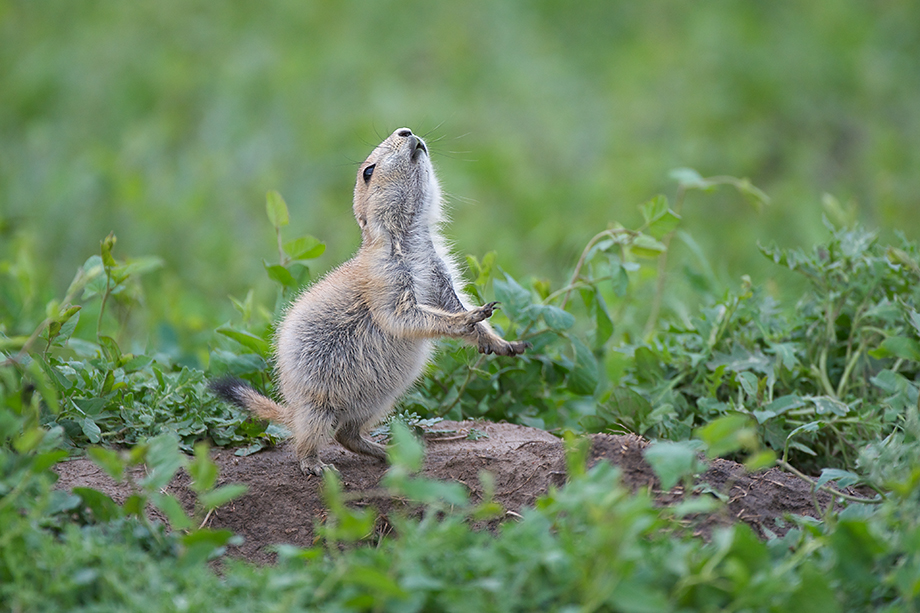
Other than bison, the one thing I knew I was guaranteed to find in the Badlands were prairie dogs. They are virtually all over the place. And this time of year it is baby season. This little guy was mimicking a whistle call often performed by the adult prairie dogs. To alert others in the town of possible danger, they will throw their heads back and whistle the alarm. Nikon D800 with Nikkor 200-400mm lens (at 400mm) ISO 400, f/4 at 1/320th of a second
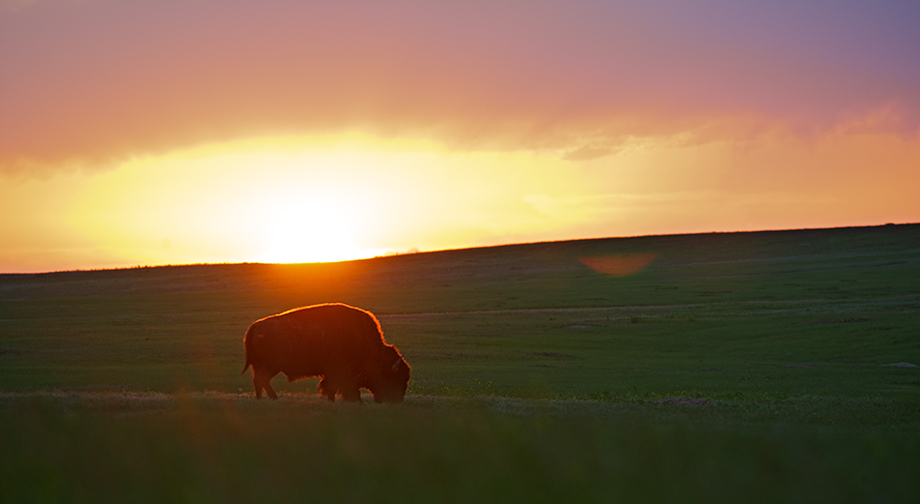
Here’s another one from this past weekend at Badlands National Park. People know the Badlands for the sweeping landscape of eroded buttes, but the area is also great for wildlife, thanks to one of the largest expanses of mixed grass prairie in the country. Bison are very common, especially in the northern section of the park which is largely rolling hills. This guy was grazing a bit away from the rest of the herd allowing a nice portrait beneath the setting sun. Nikon D800 with Nikkor 200-400mm lens (at 400mm) ISO 800, f/5 at 1/160th of a second
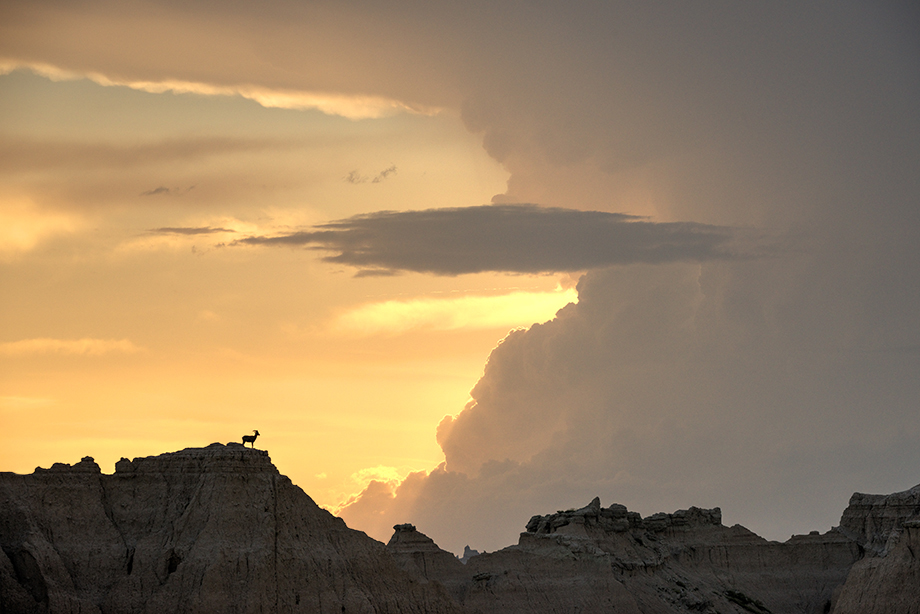
Just back from a few days in the Black Hills of South Dakota. Too many photos to go through at the moment and I need sleep, but here’s a quick one that I took yesterday in Badlands National Park. Look closely and you can see a bighorn sheep silhouetted against the great sky. Nikon D800 with Nikkor 200-400mm lens (at 250mm) ISO 400, f/8 at 1/640th of a second
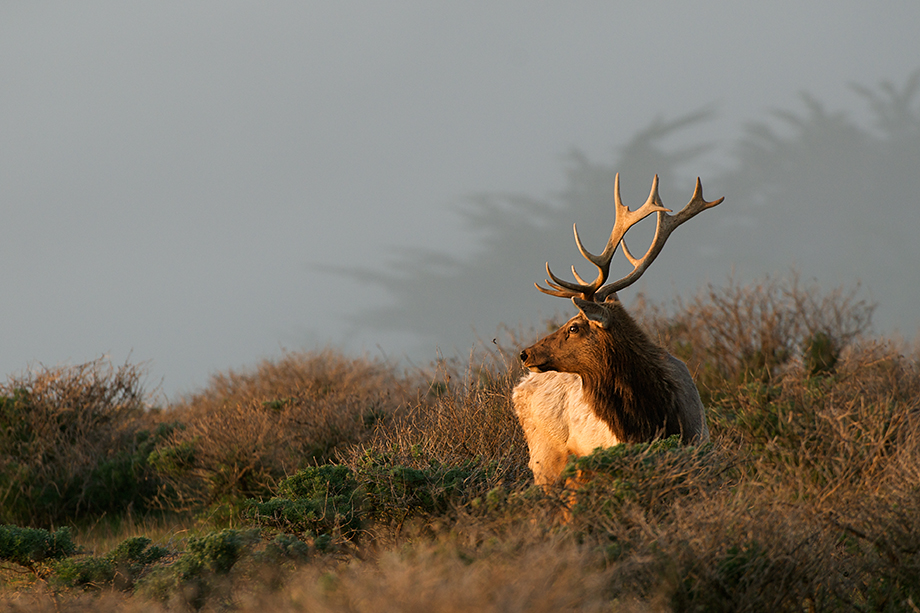
A couple of months ago, I posted a wide angle shot of tule elk on the horizon at twilight. Here’s one a bit closer and a bit earlier in the day. This bull was keeping watch over his harem as the fog was just starting to roll in in the background. I’m off to the Black Hills of South Dakota tomorrow for a few days. I’ll be back mid next week with new posts. Nikon D300 with Nikkor 200-400mm lens (at 400mm) ISO 400, f/5.6 at 1/100th of a second
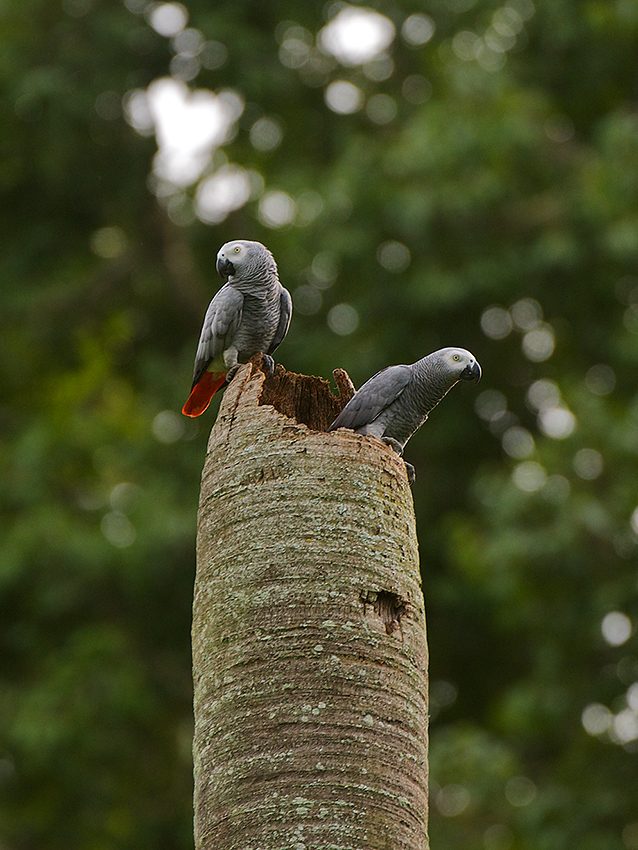
I photographed these two African grey parrots in a city park in Entebbe (which is one of the largest cities in Uganda). These parrots are prized as pets because of their incredible ability to mimic human speech. Unfortunately, they are listed as vulnerable in the wild due to harvesting for the pet trade. Nikon D300 with Nikkor 200-400mm lens (at 400mm) ISO 800, f/4.5 at 1/640th of a second
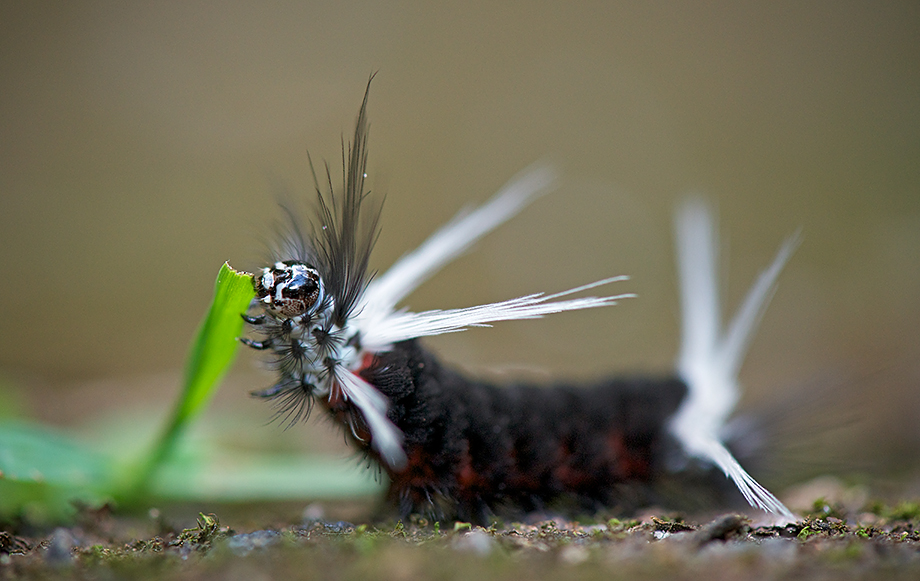
I’m not sure of the species of this caterpillar, but I do know that it is some sort of moth. It was crawling across a path in the rainforest of La Selva in Costa Rica. Nikon D800 with Nikkor 105mm macro lens, ISO 1600, f/5 at 1/200th of a second
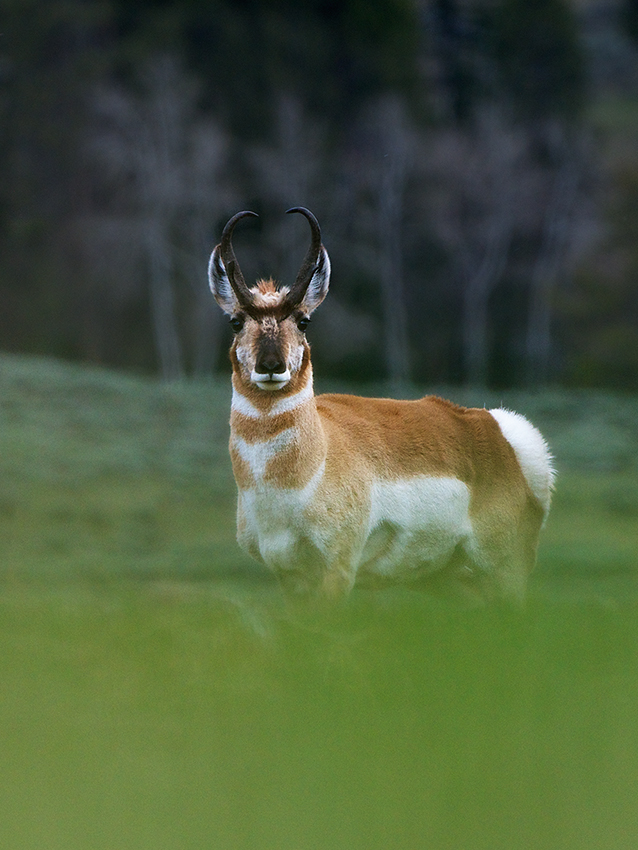
Not much to say here. Just a simple portrait of a pronghorn taken last year in Yellowstone. Nikon D300 with Nikkor 200-400mm lens (at 400mm) ISO 400, f/6.3 at 1/640th of a second
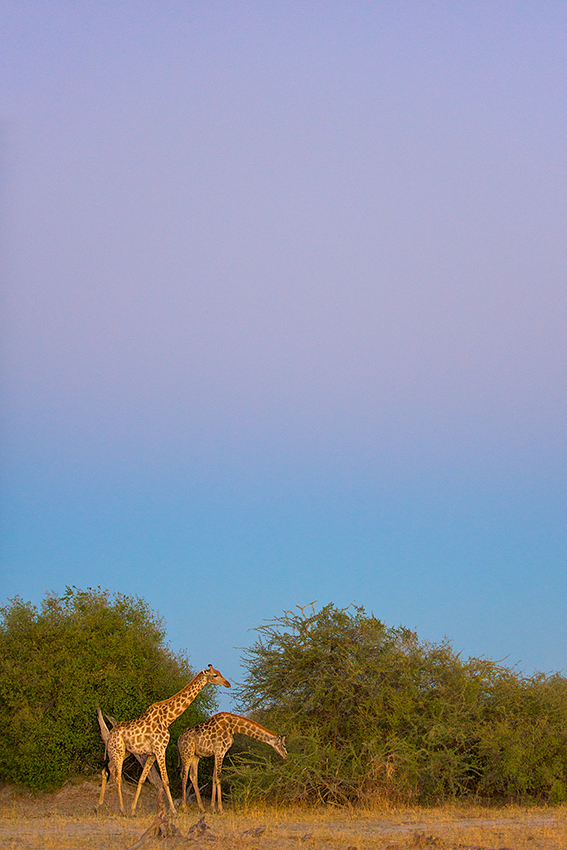
It was past sunset and actually much darker than it appears when I took this photo of two giraffes in Botswana. I upped the ISO to 3200 and opened up the aperture to its widest setting in order to avoid any motion blur on the slowly moving giraffes — while still adding quite a bit of light to the scene. Nikon D700 with Nikkor 70-200mm lens (at 75mm) ISO 3200, f/2.8 at 1/250th of a second
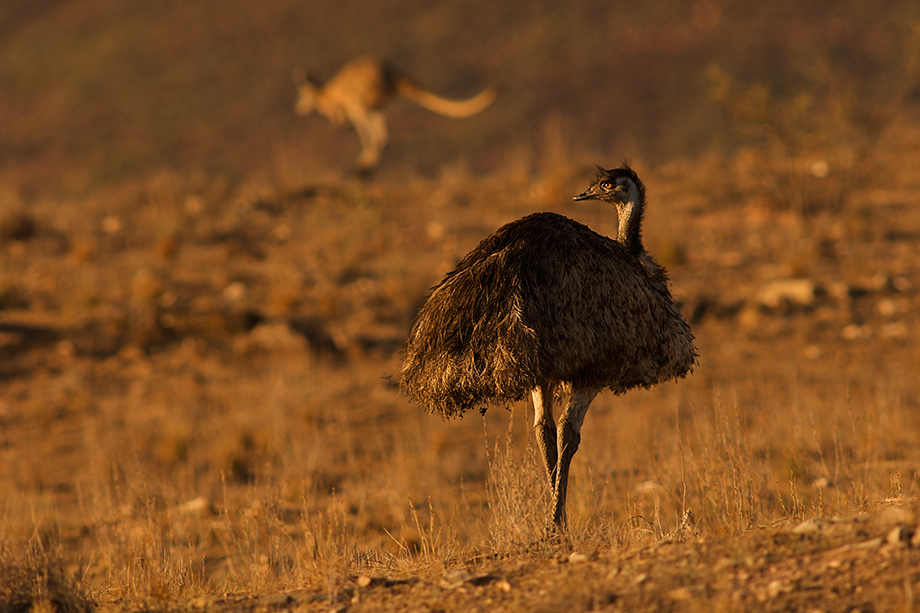
Not just an emu, but an emu with a kangaroo running around in the background. Just part of the landscape in Flinders Ranges National Park in South Australia. Nikon D200 with Nikkor 600mm manual focus lens, ISO 200, f/8 at 1/250th of a second
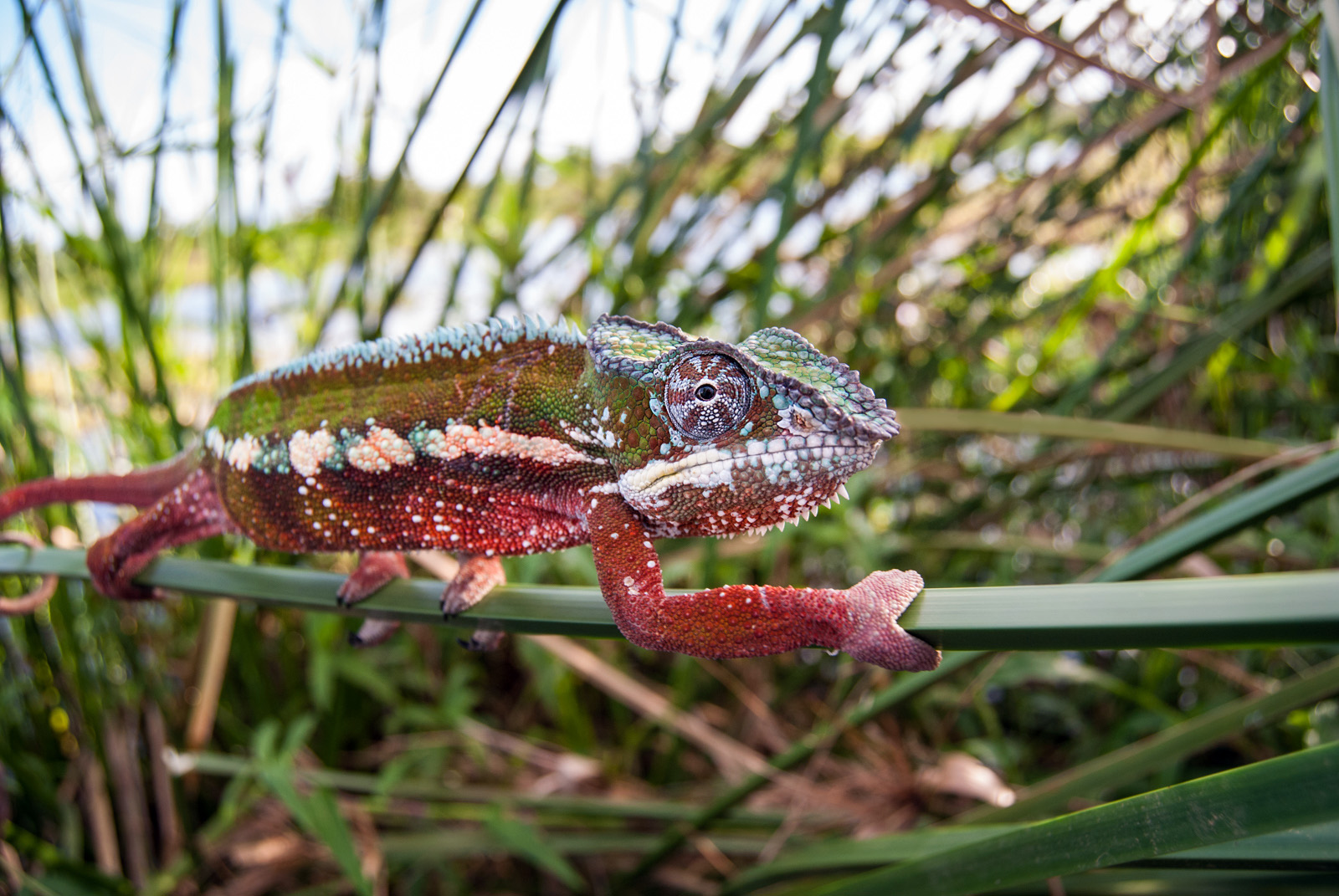
I once saw a show on Discover, or one of those networks, and they were counting down the most stealth animals on the planet. Coming in at number one was the chameleon. They have it all — eyes that have a 360 degree field of vision and can look in two directions at once, a tongue that can lash out at record speed and distance, colors that can change to camouflage or attract, and tong-like feet that are specialized for gripping just about any kind of branch. Half of all the world’s chameleons live in Madagascar, where I photographed this guy late one afternoon while traveling upriver in a small boat. Nikon D40X with Nikkor 18-55mm lens (at 19mm), ISO 200, f/4.5 at 1/160th of a second
We use cookies to enhance your experience while using our website. If you are using our Services via a browser you can restrict, block or remove cookies through your web browser settings. We also use content and scripts from third parties that may use tracking technologies. You can selectively provide your consent below to allow such third party embeds. For complete information about the cookies we use, data we collect and how we process them, please check our Privacy Policy