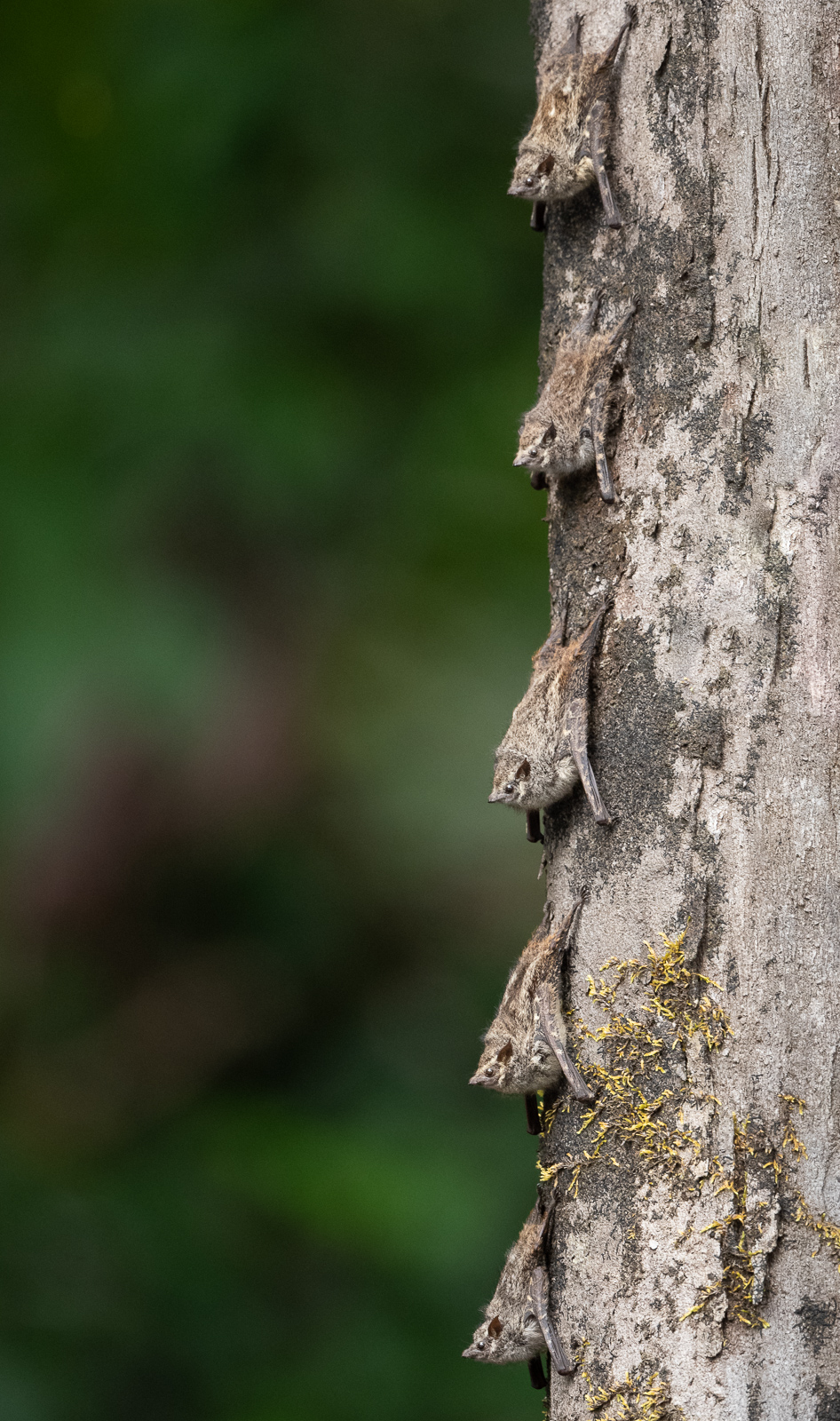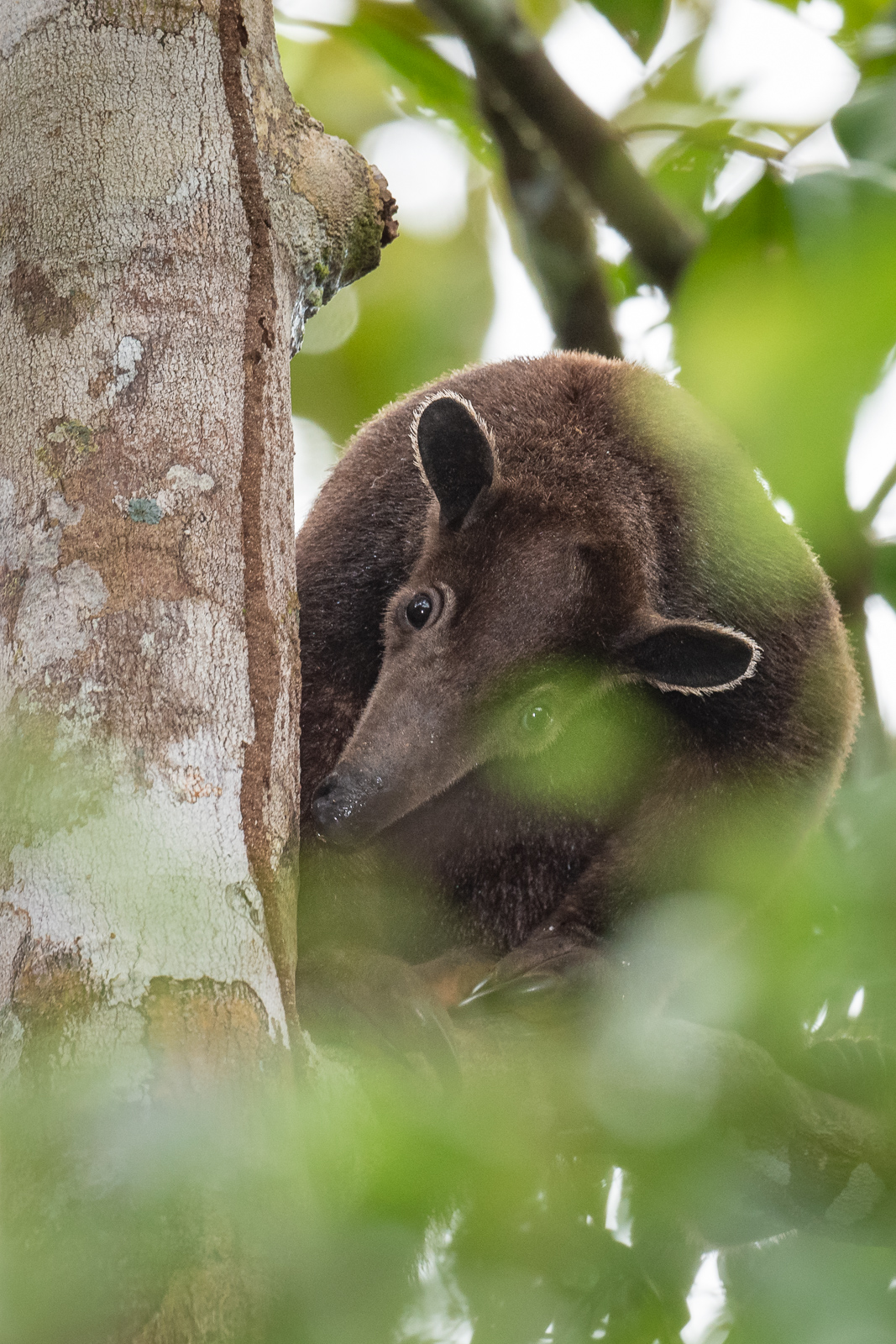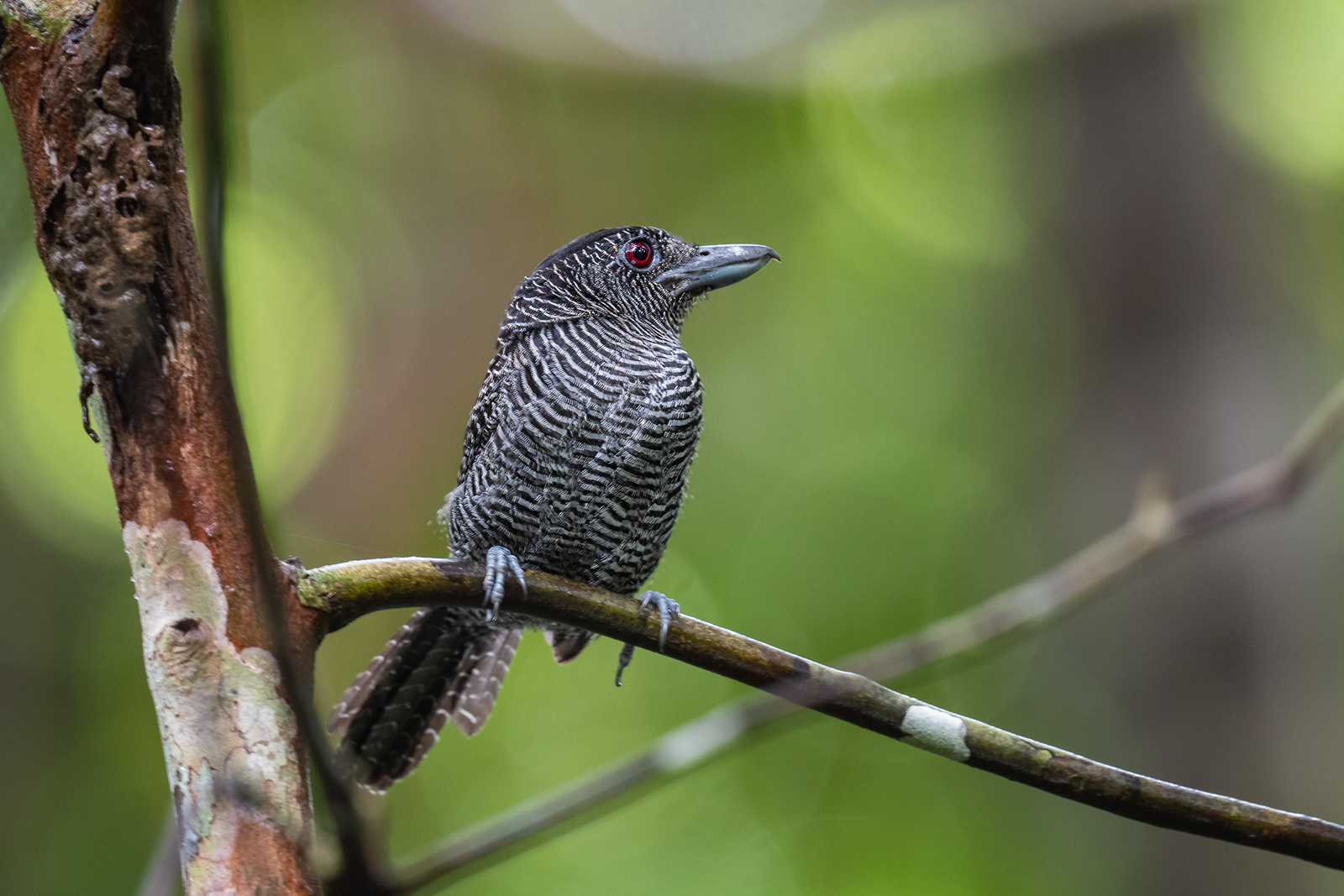

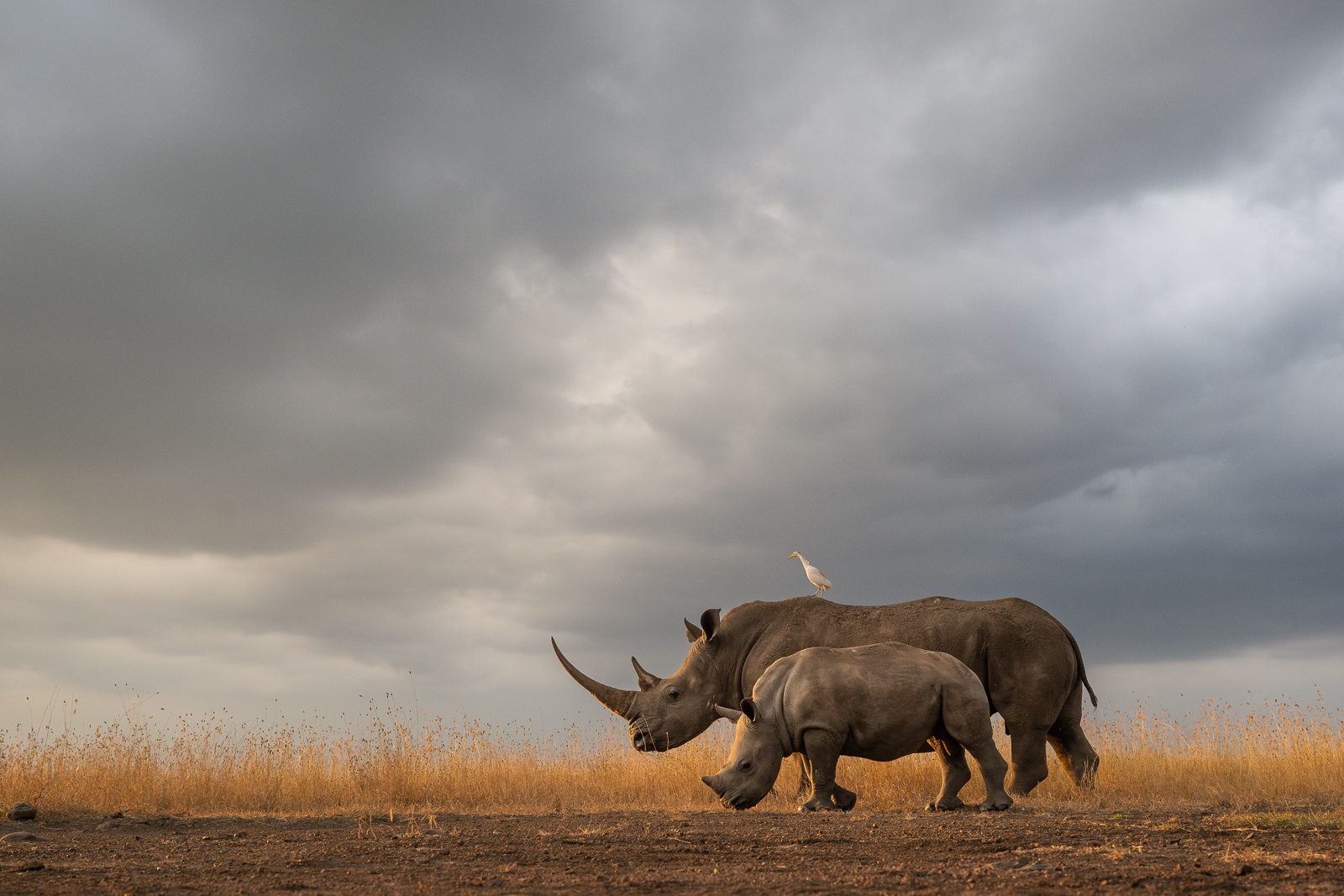
This was one of the smallest elephants I’ve ever seen. And the poor little guy appeared to have a foreshortened trunk — perhaps an injury where he lost the bottom half of it. Nevertheless he/she was doing just fine and playing with the other elephants in the herd. Nikon D800 with Nikkor 200-400mm lens (at 400mm) ISO 400, f/8 at 1/400th of a second.
The toco toucan is the largest species of toucan. It ranges throughout much of central South America. I photographed this one in the Pantanal region of Brazil. Nikon D300 with Nikkor 200-400mm lens (at 280mm) ISO 400, f/8 at 1/800th of a second.
Photographing penguins can sometimes be a bit like playing whack-a-mole. You never know when they’re going to come shooting out of the water. This gentoo penguin was heading back to shore after an afternoon of fishing. Nikon D800 with Nikkor 200-400mm lens (at 400mm) ISO 800, f/6.3 at 1/1600th of a second.
Feeling the heat, a black-tailed jackrabbit goes face to the sand and uses those big ears as heat regulators. The capillaries in the ears help to cool jackrabbits down on days like this one when it was 100 degrees plus in the Southern California desert. Nikon D800 with Nikkor 200-400mm lens (at 280mm) ISO 400, f/4 at 1/2000th of a second.
A three toed sloth sits in a cecropia tree in Soberania National Park in Panama. I photographed this guy from the rooftop of the lodge I was staying at only about an hour from Panama City. Nikon D810 with Nikkor 200-400mm lens (at 350mm) ISO 1600, f/4 at 1/80th of a second
Another of the southwestern Florida regulars is the great egret. When in breeding season, they develop the bright green facial skin around the eyes, known as lores. This egret turned around to give me the full, straight on portrait. Nikon D500 with Nikkor 500mm PF lens, ISO 800, f/5.6 at 1/8000th of a second, Godox fill flash.
I photographed two species of langur on my short trip to Thailand back in 2016. This is the Robinson’s banded langur, otherwise known as the Robinson’s banded surili. At the time I took this photograph, it was still considered a sub-species of another type of langur but in 2019 genetic analysis determined it to be its own species. Always interesting to find out that what scientists thought was true of an animal when I took a photograph is no longer the case. Nikon D500 with Nikkor 200-400mm lens (at 400mm) ISO 800, f/4 at 1/125th of a second.
While hiking through the swamp in southwest Florida last month I spotted this pileated woodpecker deep in the woods. I was able to find an opening in the thick foliage to capture what looked like some fairly impressive pecking. Nikon D500 with Nikkor 500mm PF lens, ISO 1600, f/5.6 at 1/500th of a second, Godox V860iii fill flash.
With the UConn Huskies winning the national championship last night, I’d be remiss not to post an appropriate canine today. This grey wolf is the closest thing I have to a Siberian husky, so it’ll have to do. Note that this is a captive, not a wild animal. Back to all things wild tomorrow. Nikon D700 with Nikkor 70-200mm lens (at 340mm with 2x teleconverter) ISO 800, f/4.8 at 1/1000th of a second.
This young bear stayed close to our lodge at Silver Salmon Creek in Lake Clark National Park, Alaska. He was recently out on his own and likely felt a bit more secure sticking close to us humans. Nikon D500 with Nikkor 200-400mm lens (at 400mm) ISO 800, f/4 at 1/100th of a second.
We use cookies to enhance your experience while using our website. If you are using our Services via a browser you can restrict, block or remove cookies through your web browser settings. We also use content and scripts from third parties that may use tracking technologies. You can selectively provide your consent below to allow such third party embeds. For complete information about the cookies we use, data we collect and how we process them, please check our Privacy Policy