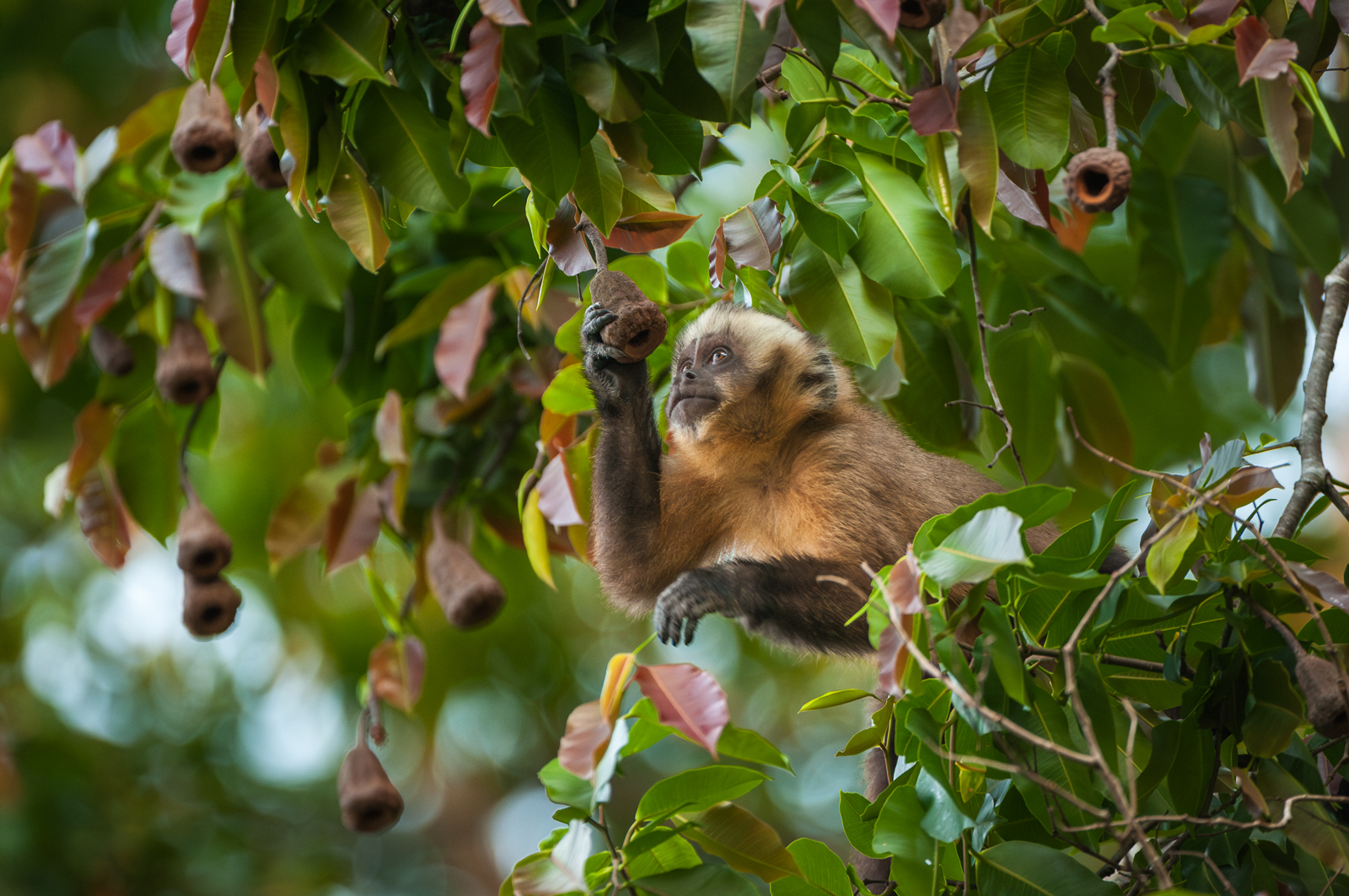
The brown capuchin, also known as the tufted capuchin, is found throughout the upper half of South America. I’ve photographed them in Brazil, Guyana, Peru, Ecuador, and Bolivia where I took this shot. I always thought it looked like this guy was checking the produce before making a commitment. Nikon D300 with Nikkor 200-400mm lens (at 380mm) ISO 800, f/4 at 1/320th of a second.
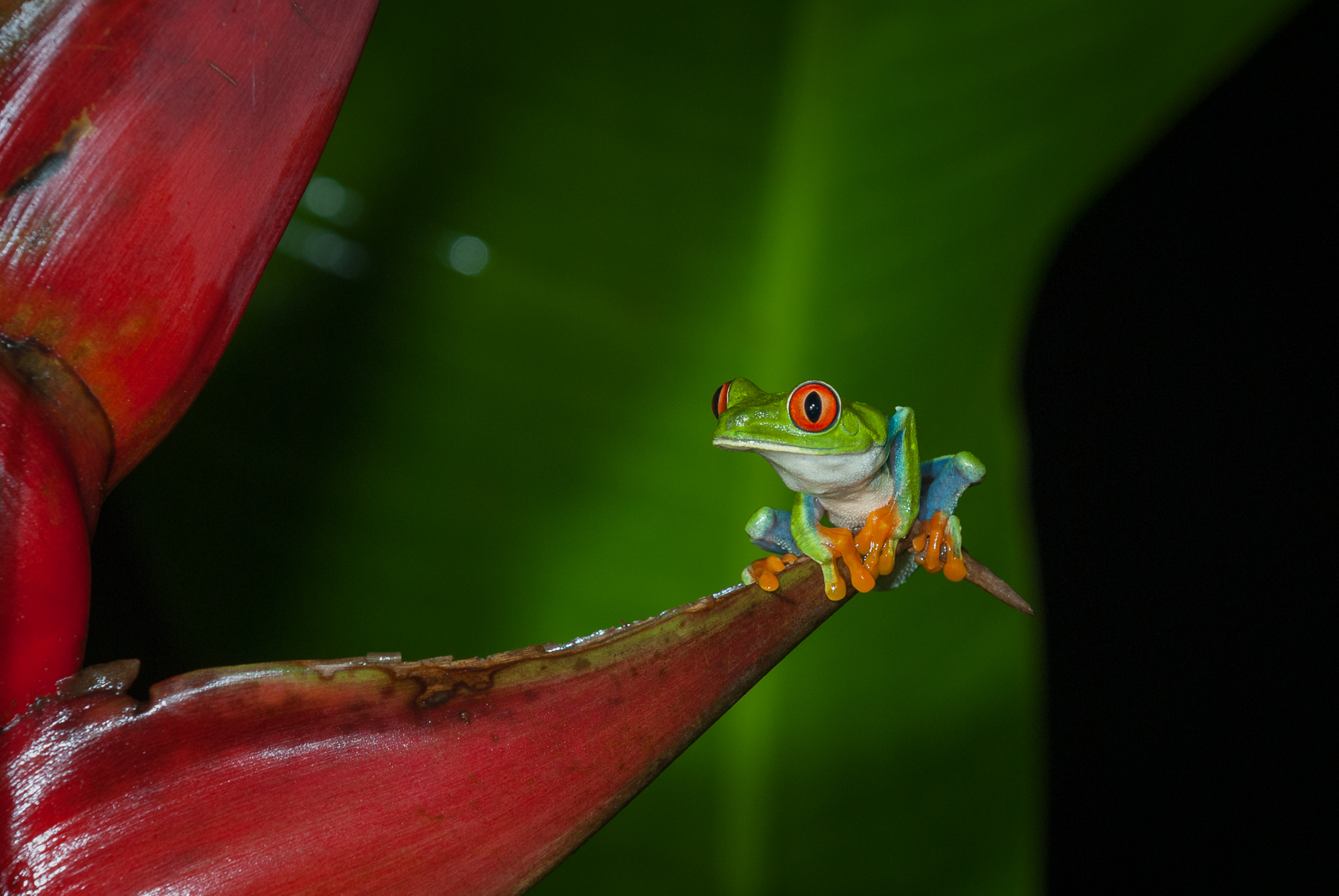
Karen and I will be heading back to Costa Rica at the end of next week for a quick 4-day visit. This will be my fourth time to the country. On my second trip, I was very lucky with the red-eyed tree frogs that were living behind the lodge I was staying at. Here’s hoping for some more luck. And more frogs. Nikon D200 with Nikkor 70-200mm lens (at 150mm with Canon 500D close-up filter) ISO 200, f/8 at 160th of a second, two Nikon SB-600 flash units.
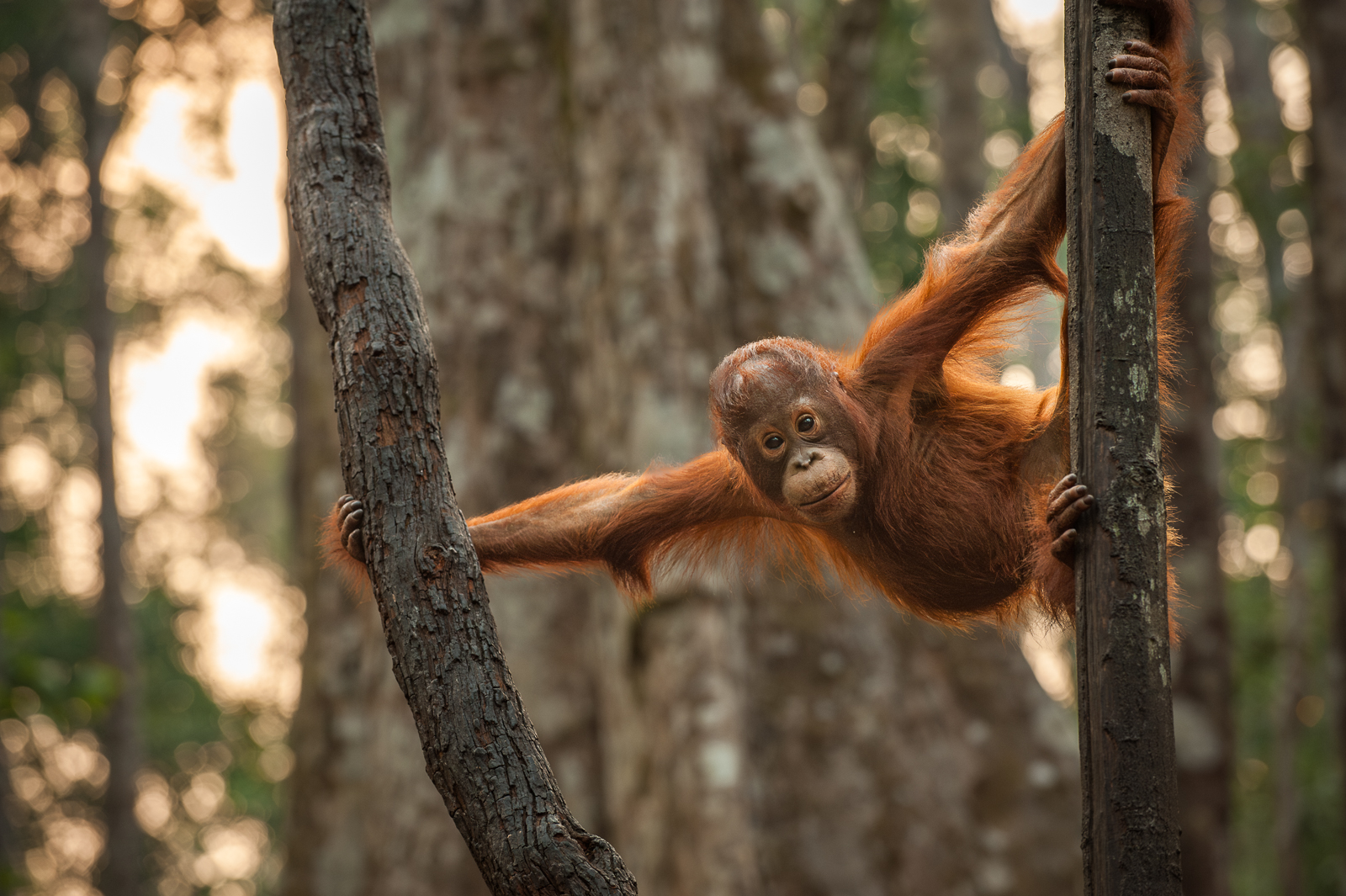
I met this young orangutan in Indonesian Borneo back in September of 2009. They are the most arboreal of the great apes, spending most of their time in trees. It was fascinating to watch them move effortlessly through the forest, occasionally stopping to pose for a few photos. Nikon D700 with Nikkor 70-200mm lens (at 170mm) ISO 800, f/5 at 1/640th of a second.
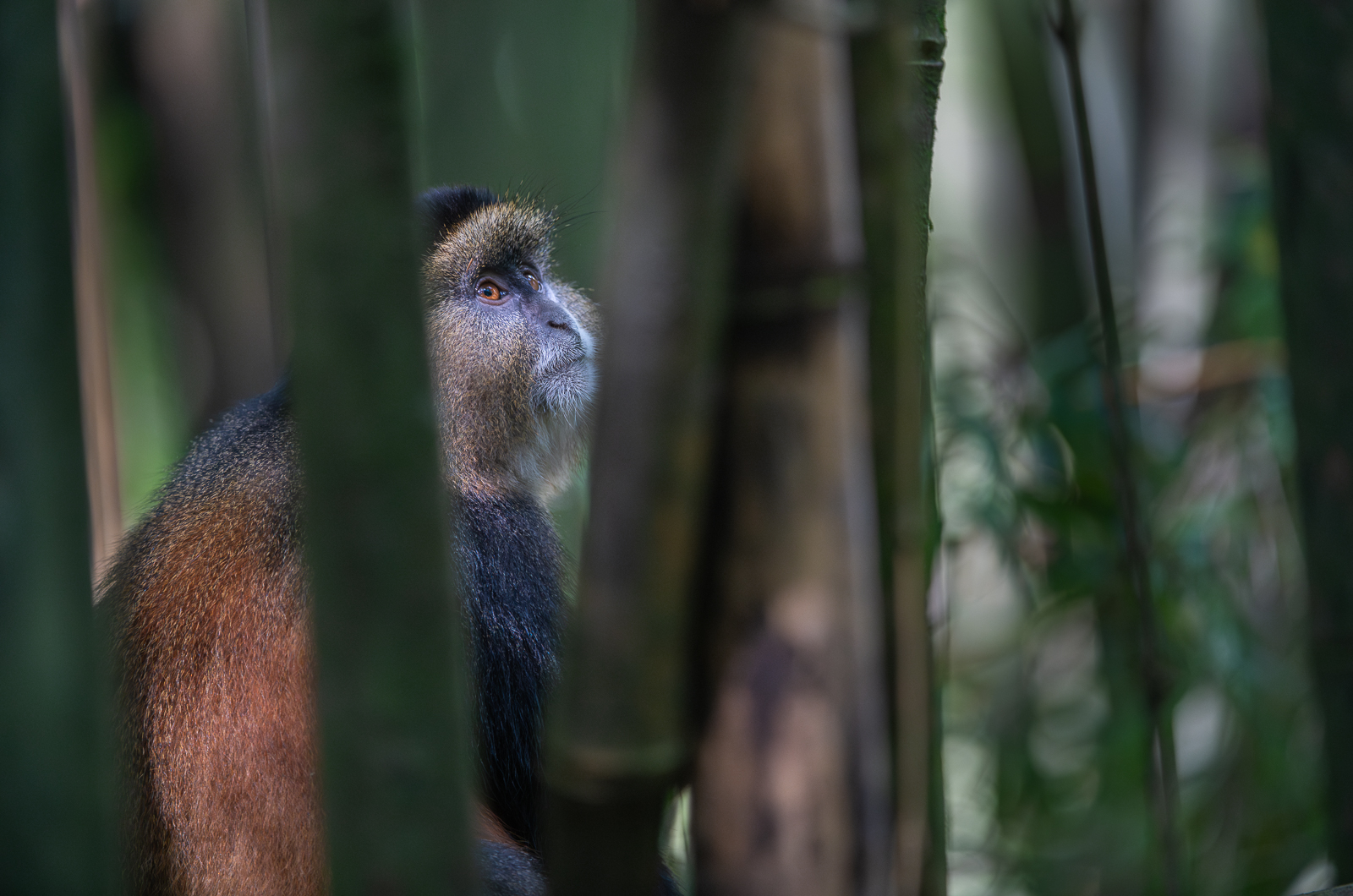
As Karen and I ramp up planning for the trips we’ll be leading to Africa later this year and into 2026, I’ve been thinking about the golden monkeys we visit while in Uganda and Rwanda. We go to those countries primarily for the mountain gorillas, but on our off day, we have the option to trek to the bamboo forest where the endangered golden monkeys live. There’s something about all that green bamboo that can be very photogenic. Nikon D850 with Nikkor 200-400mm lens (at 300mm) ISO 3200, f/4 at 1/250th of a second.
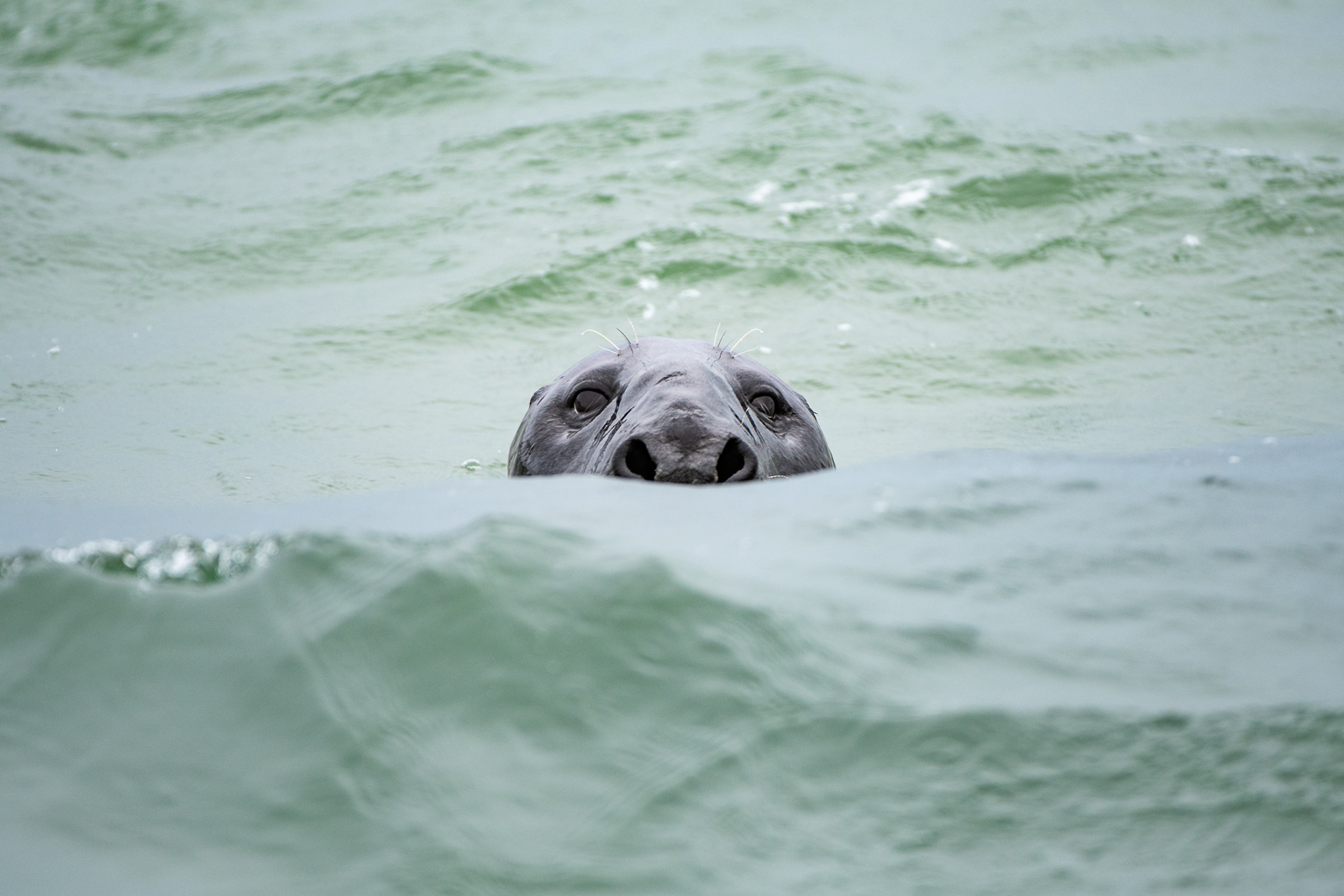
This one goes out to Chappy, the gray seal pup found mysteriously wandering around the city streets of New Haven a few weeks ago. He was exhausted and dehydrated when Mystic Aquarium took him in and did their best to nurse him back to health. He was showing signs of improvement but sadly took a turn for the worse and it was announced today that he didn’t make it. Gray seals are natives of the New England coastline. I photographed this one off the shores of Cape Cod. Nikon D500 with Nikkor 200-400mm lens (at 380mm) ISO 400, f/4 at 1/2500th of a second.
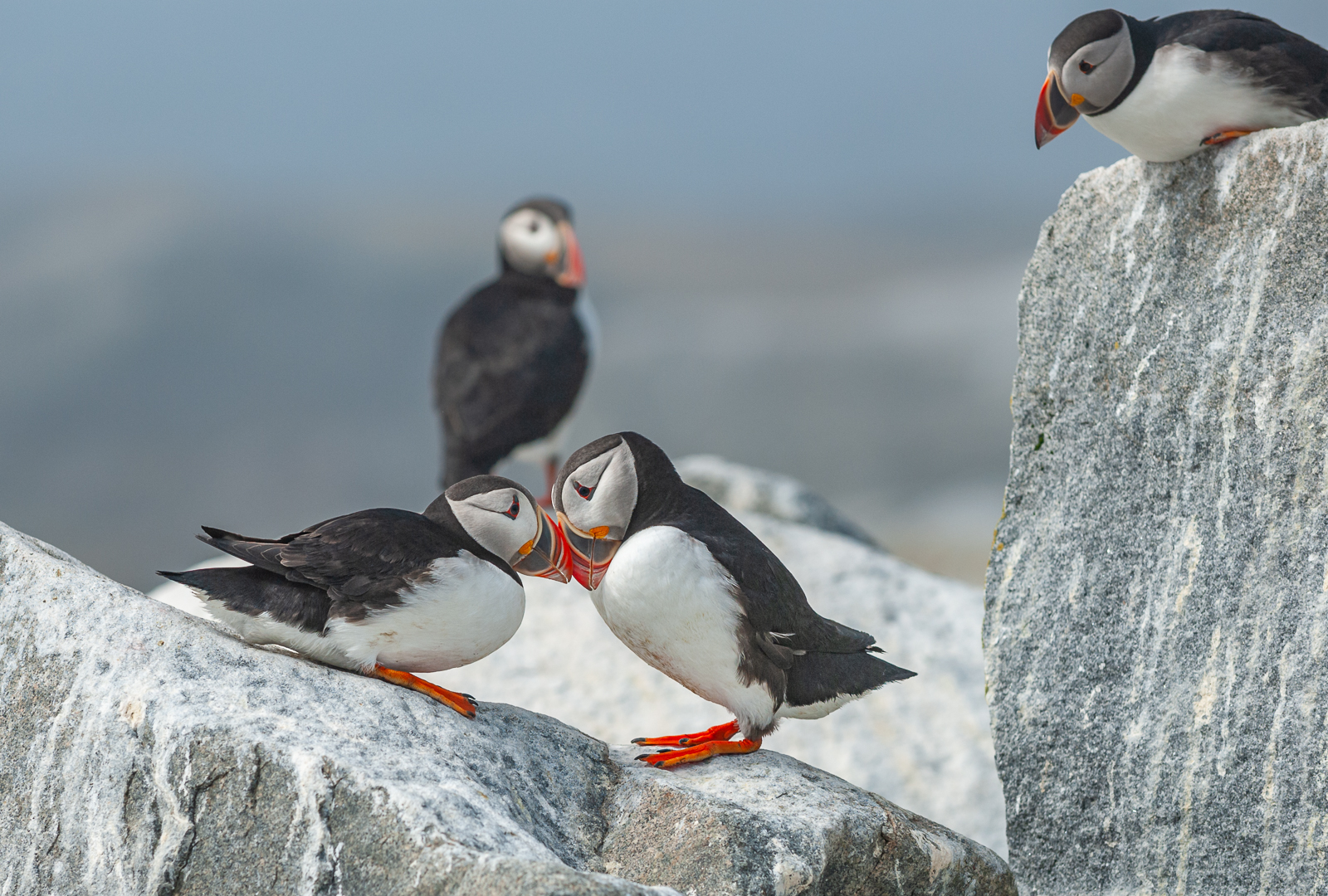
Another one from back in the day. I captured this image of Atlantic puffins on my first visit to Machias Seal Island off the coast of Maine. It’s an interesting place, and a disputed territory between the United States and Canada. We say it’s part of Maine. They say it’s part of New Brunswick. Canada owns the lighthouse on the island. Maine runs birdwatching tours and maintains a series of hides that allow for close encounters with nesting puffins, razorbills and other sea birds. Nikon D200 with Nikkor 70-200mm lens (at 160mm) ISO 100, f/4 at 1/2000th of a second.
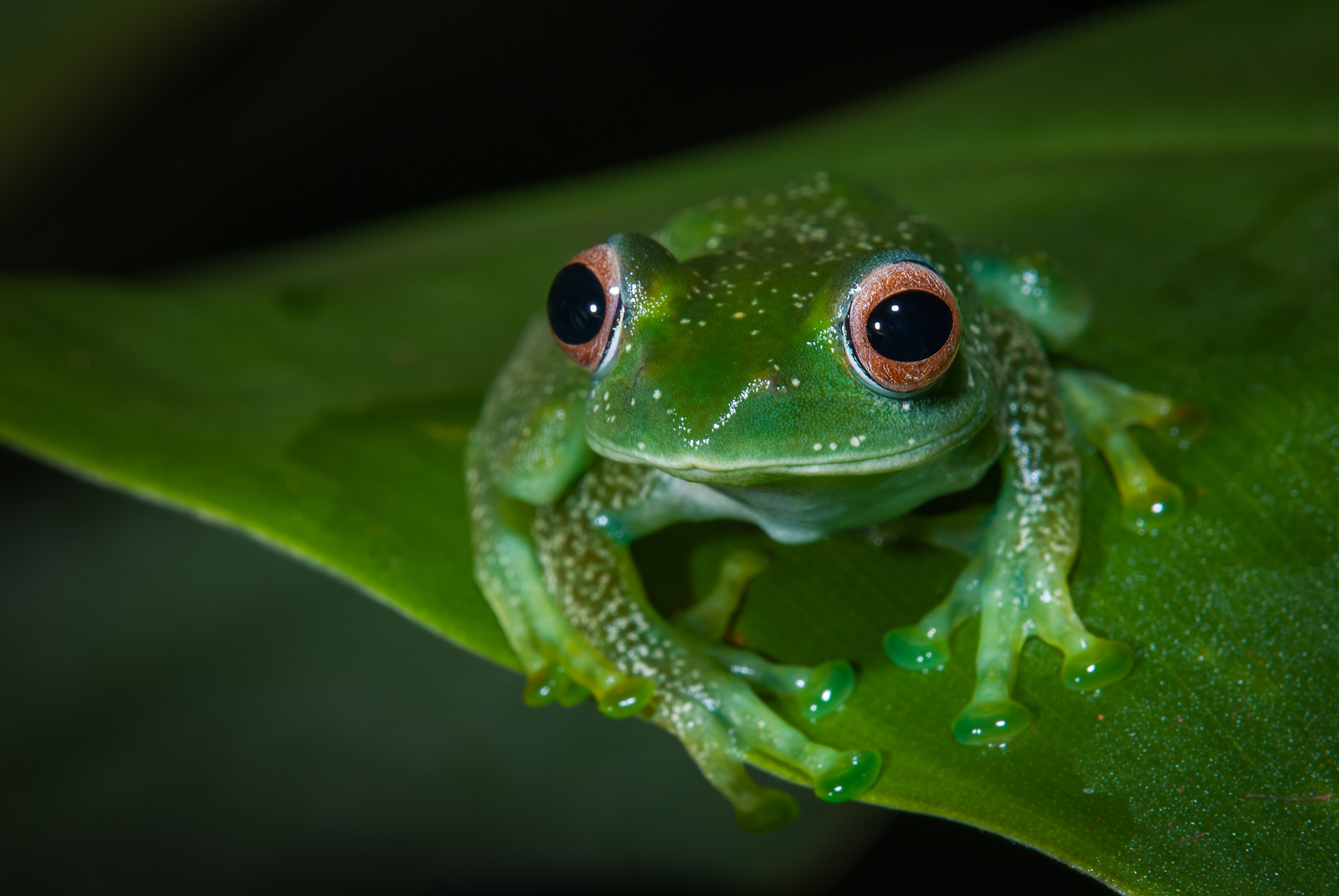
I came across this rather handsome treefrog—known as Elena’s treefrog or Boophis elenae—on a night hike in the town of Perinet, Madagascar. Back then I was using a close-up filter on the end of my 80-200mm lens for macro work, as well as a two flash bracket. Nikon D200 with Nikkor 80-200mm lens (at 145mm with Canon 500D close-up filter) ISO 100, f/22 at 1/60th of a second, two Nikon SB-600 flash units.
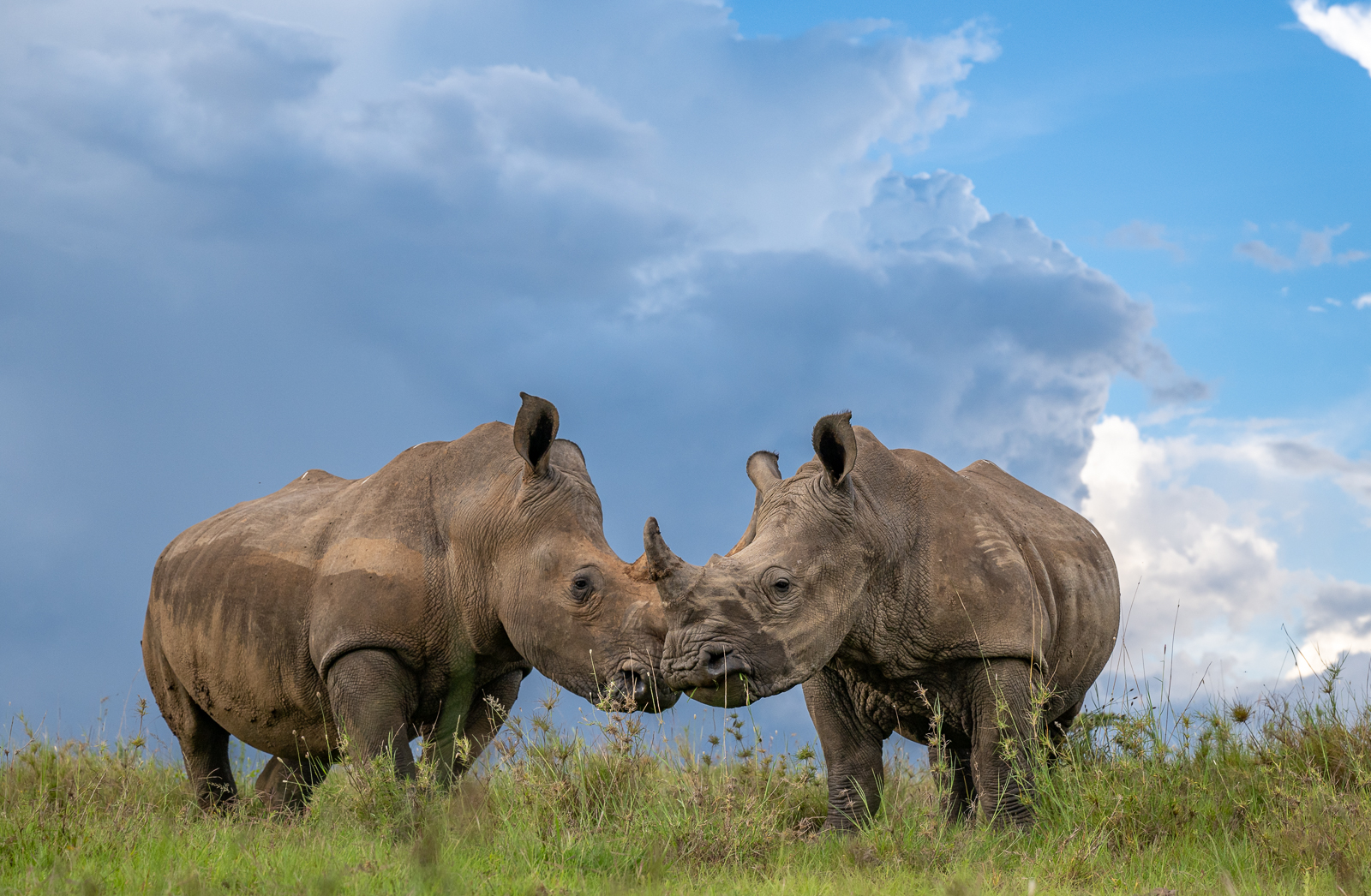
I used my inverted monopod technique to get this low-angle shot of two white rhinos turning toward each other in Nairobi National Park. We’ll be back this June and I’m looking forward to visiting the park, and the rhinos, on our first day in Kenya. Nikon Z8 with Nikkor 24-70mm lens (at 65mm) ISO 450, f/5.6 at 1/1000th of a second.
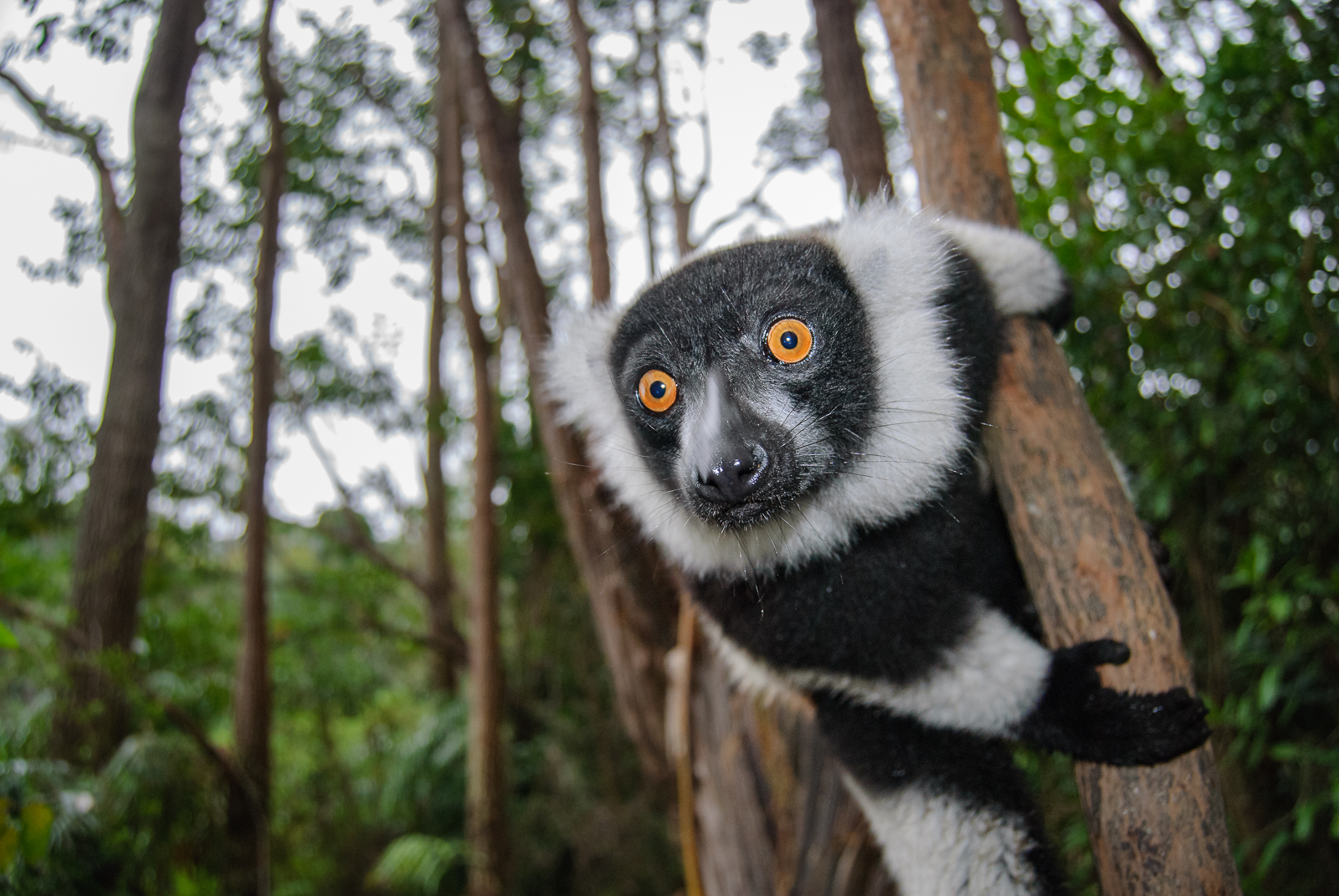
Another one from the archives. This is a black and white ruffed lemur that I got up close and personal with in Madagascar back in 2007. The photo was taken at an island for rescued lemurs, thus they were quite habituated to humans. Still, I was caught off guard by the close approach but luckily had my little back-up camera with kit lens and pop up flash handy and was able to get a few shots.Nikon D40x with 18-55mm lens (at 18mm) ISO 400, f/4 at 1/60th of a second, on camera flash.
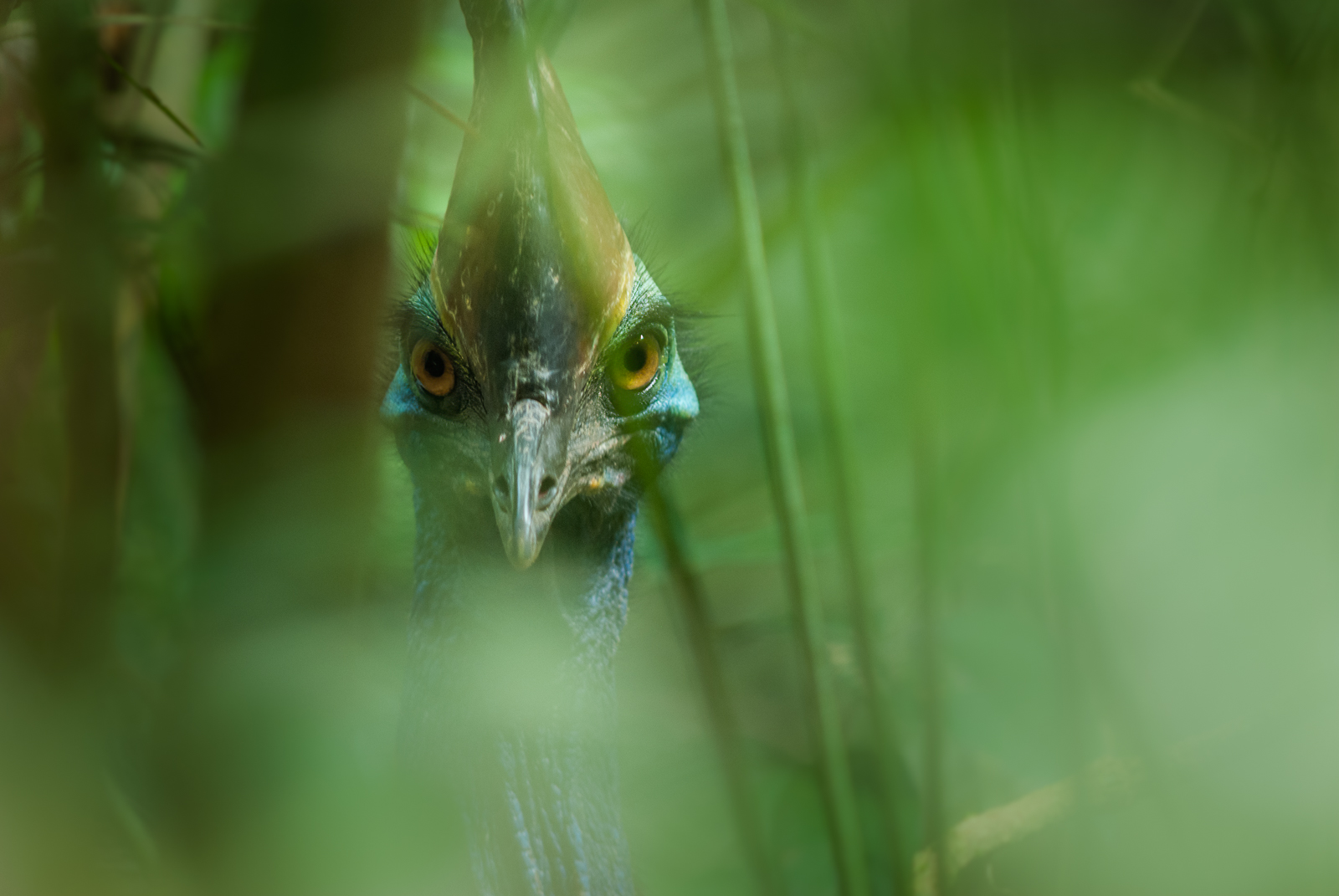
Behold the cassowary, declared by the Guinness Book of World Records to be “the most dangerous bird in the world.” The distinction is mainly due to its huge claws that it uses to defend itself, usually aiming for the torso of would be intruders, human or otherwise. Native to northeastern Australia and Papua New Guinea, it is the third largest bird in the world behind the ostrich and the emu. Like those birds, it is flightless, and it can grow to over 6 feet tall and weigh more than 150 pounds. Lucky for me I had a 600mm lens on my camera and could photograph from a safe distance. Nikon D200 with Nikkor 600mm manual focus lens, ISO 200, f/5.6 at 1/5th of a second.
We use cookies to enhance your experience while using our website. If you are using our Services via a browser you can restrict, block or remove cookies through your web browser settings. We also use content and scripts from third parties that may use tracking technologies. You can selectively provide your consent below to allow such third party embeds. For complete information about the cookies we use, data we collect and how we process them, please check our Privacy Policy