I had to get low for this one. In fact, I wanted to get even lower to place the secretary bird’s head further into the sun, but well… the ground got in the way. Secretary birds are large, long-legged birds of prey native to sub-Saharan Africa, known for hunting snakes and insects on foot. We see them every now and again in the early morning perched high in acacia trees, warming themselves in the sun before descending to the ground to begin their day of stalking. Nikon Z8 with Nikkor 500mm PF lens, ISO 72, f/5.6 at 1/2000th of a second.
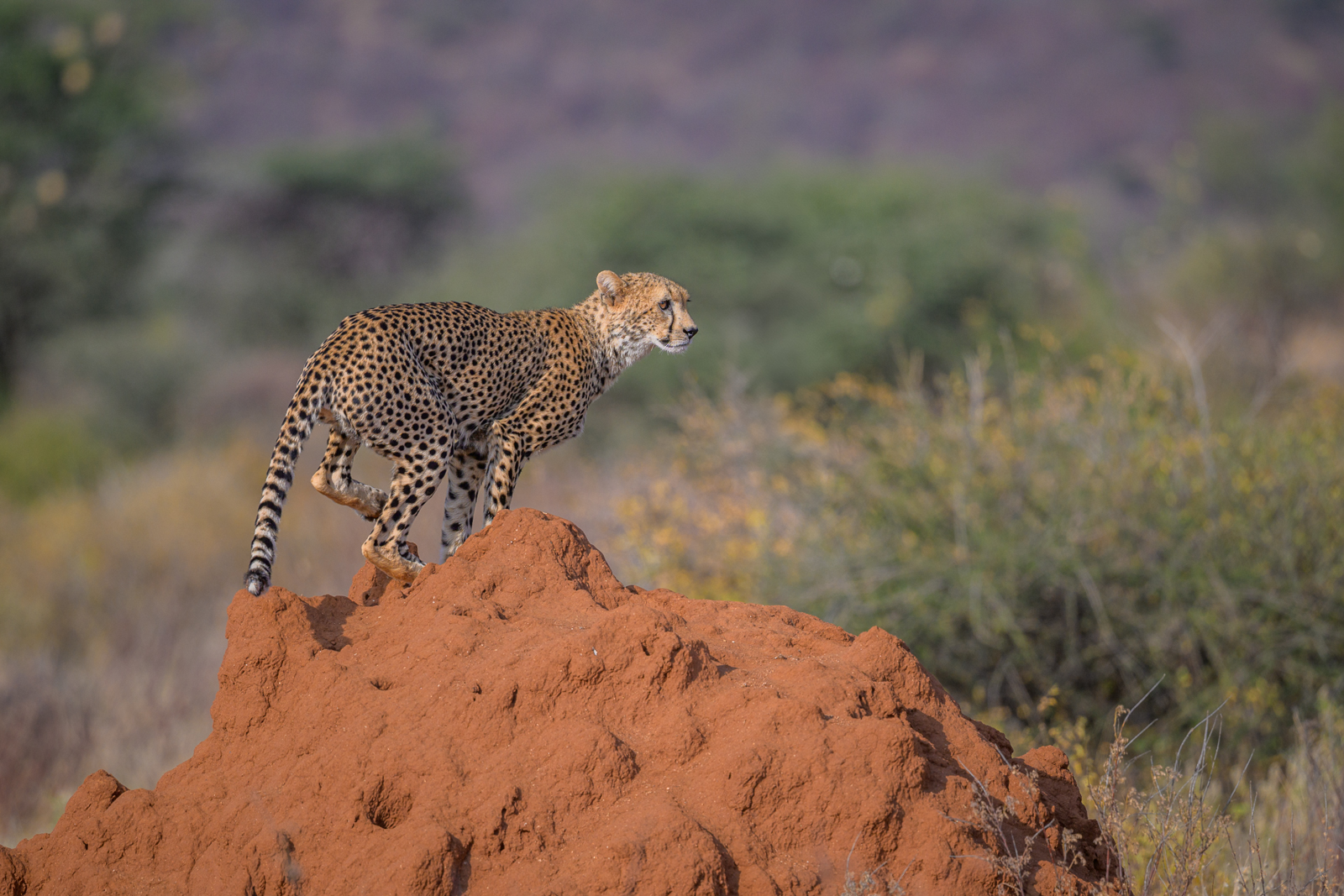
In Kenya’s Samburu National Reserve, cheetahs often climb termite mounds to gain a better vantage point over the landscape. This serves two purposes — it helps them scan for prey like gazelles and dik-diks, while also allowing them to keep an eye out for potential threats like lions or hyenas. They’ll also use termite mounds to rest or mark territory with scent, and we’ve even seen cubs playing king of the hill a few times. We had high hopes that this guy was getting into hunt mode, but not to be. Nikon Z8 with Nikkor 500mm PF lens, ISO 450, f/5.6 at 1/2000th of a second.
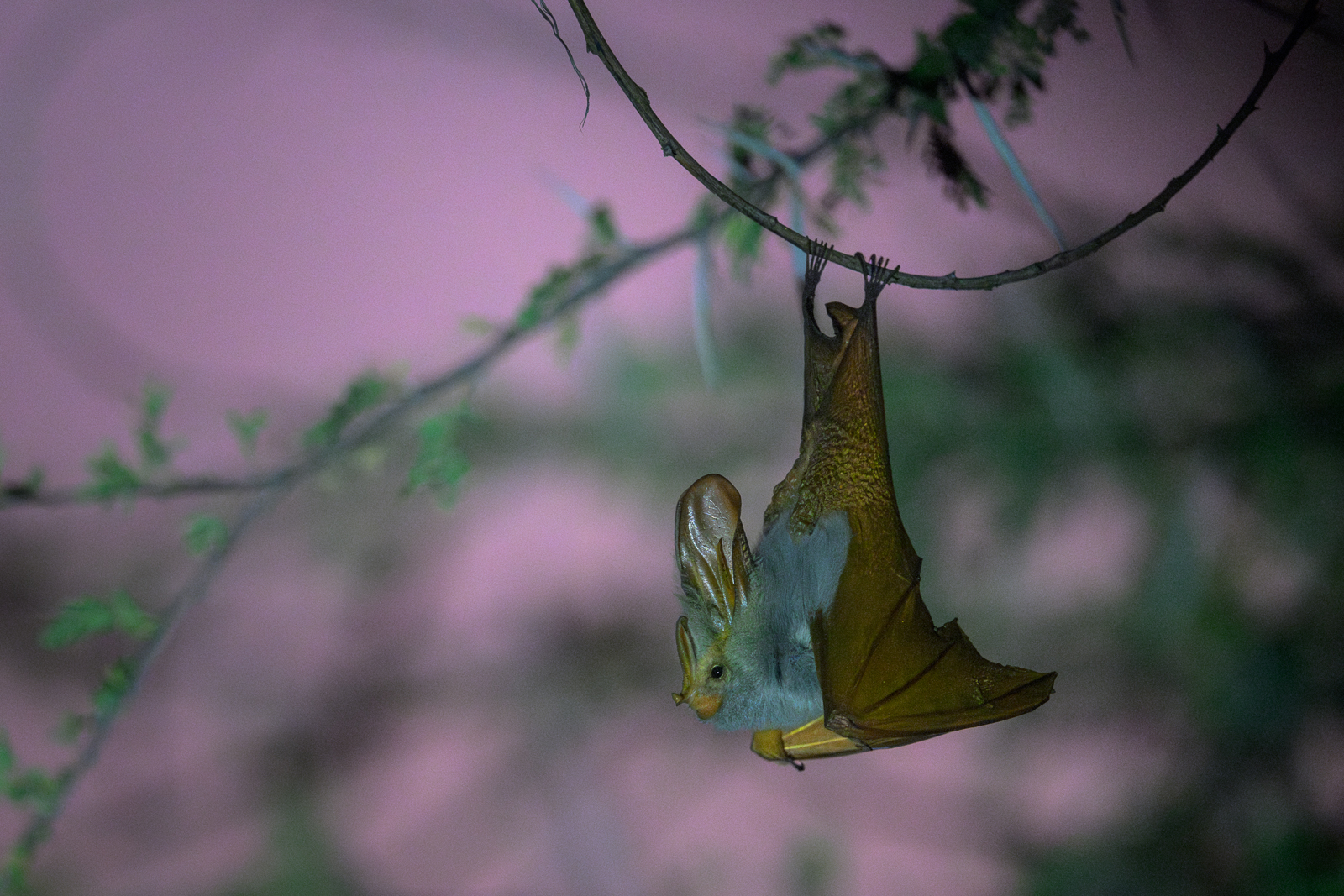
Our guide got really excited when we spotted this yellow-winged bat first thing in the morning, even before we set out on our drive. That tells me they don’t see them often. It’s one of Africa’s most visually interesting and unusual bats, easily recognized by its large, leaf-shaped ears and yellow or orange coloring on its wings and limbs. Unlike most bats, it’s often seen perched upright on branches during the day, resembling a leaf or flower to avoid detection. It’s a member of the false vampire bat family, but it feeds mainly on insects, using its excellent hearing to hunt in open woodland and savanna habitats. I was shooting at a very high ISO given the lack of light, but the pre-dawn sky, just starting to show color, created an interesting juxtaposition with those yellow wings.Nikon Z8 with Nikkor 500mm PF lens, ISO 12800, f/5.6 at 1/500th of a second.
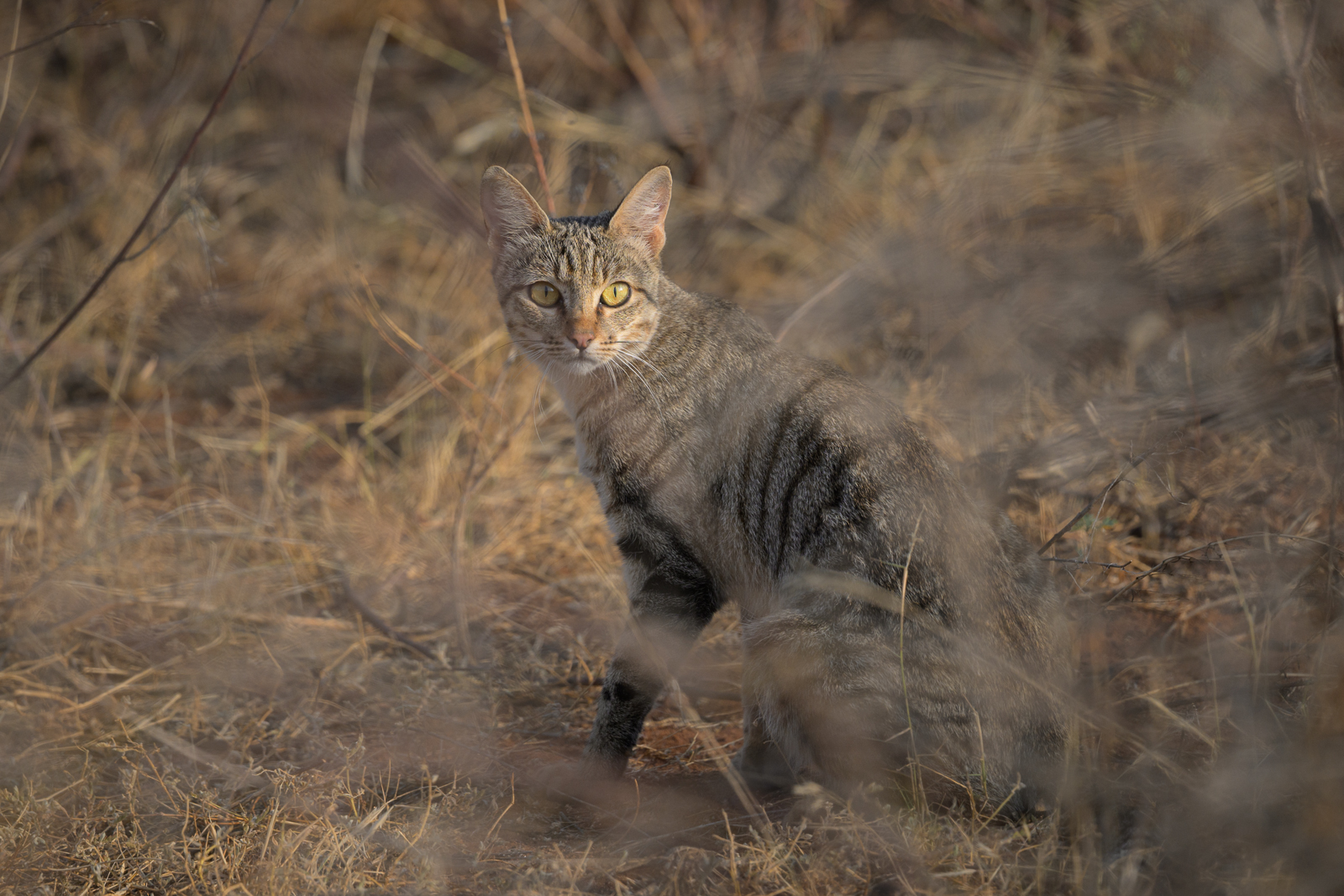
I usually post a frog on my little sister Mo’s birthday. She’s a big fan. But seeing as there were no frogs to be had on our recent trip to Kenya and Uganda, here’s the next best thing. She’s also a big fan of cats. We were lucky to see this Africa wildcat for a brief moment before it disappeared into the scrubland of Samburu National Reserve. These guys are quite obviously ancestors of domestic cats, and they look so much like house cats that they’re often overlooked in the wild. With excellent night vision and stealth, they hunt small rodents and birds. They were likely first domesticated around 9,000 years ago in the Fertile Crescent of the Middle East, when they began living near early human settlements, and they’ve hardly changed since. Nikon Z8 with Nikkor 500mm PF lens, ISO 800, f/5.6 at 1/2000th of a second.
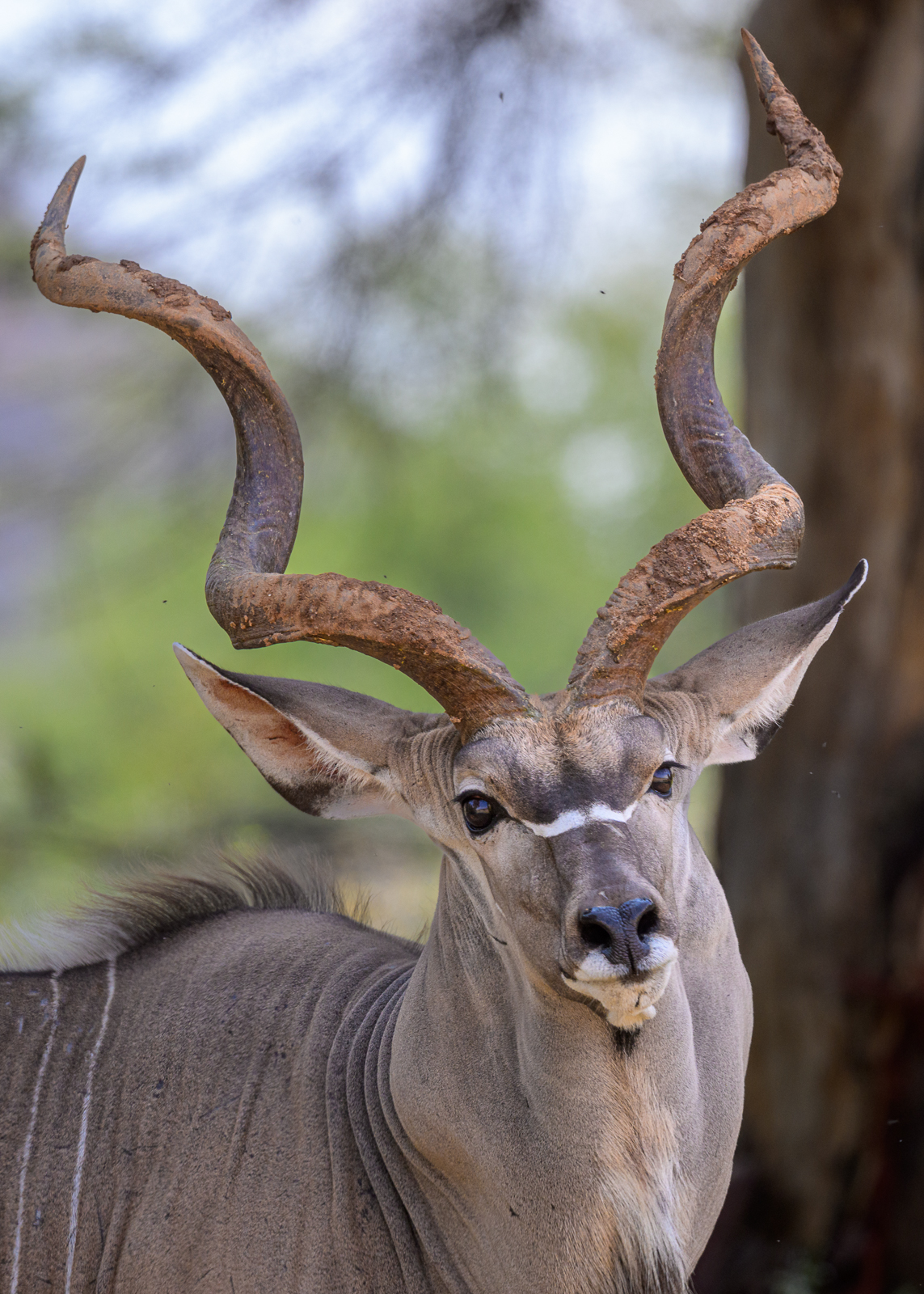
Kudu are widespread in eastern and southern Africa, but sparsely populated in their range and difficult to see. I’ve only seen them in Botswana so it was very exciting to observe a small herd in Kenya last month. It was mid-day and the light and setting were tough, but I did my best. Their horns (males only) are among the most striking in the animal kingdom, spiraling up to three full twists and reaching lengths of over 70 inches. But when I think of kudu, I think of Ernest Hemingway, who wrote of them often. During his first African safari, he was obsessed with tracking and shooting a greater kudu, so much so that he famously passed up other trophy opportunities while in pursuit of the elusive, “spiral-horned antelope.” This obsession appears in his nonfiction book Green Hills of Africa, where he writes at length about the kudu’s beauty, grace, and difficulty to hunt. He refers to the greater kudu as a near-mythical creature, calling it “the most beautiful animal” and describing the pursuit as a kind of noble, poetic quest. He often tied the hunt for kudu to deeper themes of masculinity, failure, and artistic struggle. There’s another story that after several failed attempts and days of tracking, Hemingway finally shot a kudu, only to feel a strange mix of pride and sadness, a recurring emotional undercurrent in his reflections on hunting. The kudu became part of his personal mythology, standing as a representation of the ultimate challenge in the African wild. And yes, I was an English literature major in college and read a lot of Hemingway, perhaps sparking the desire to one day make it to Africa. Nikon Z8 with Nikkor 500mm PF lens, ISO 560, f/6.3 at 1/800th of a second.
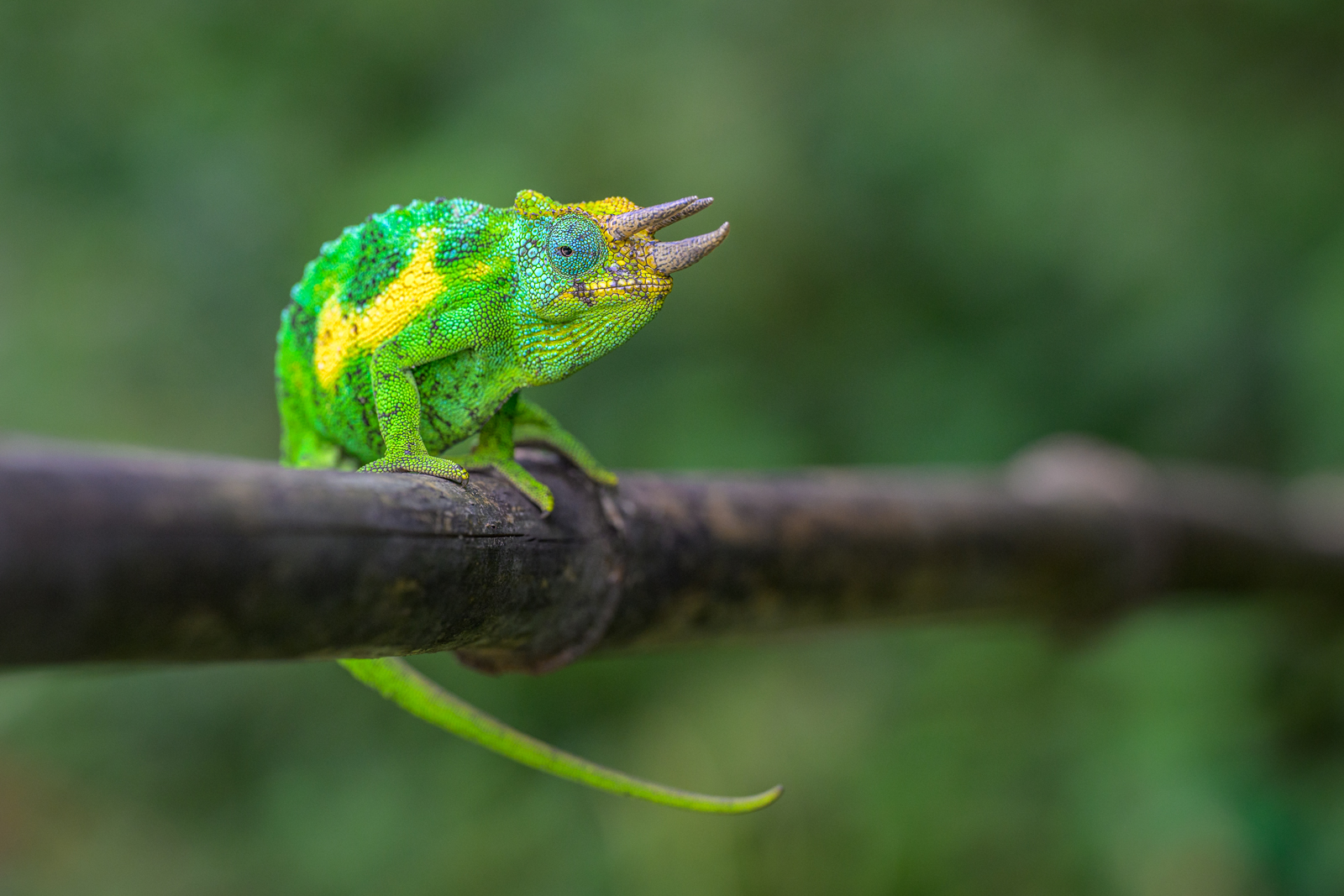
One surprise sighting on our recent trip was a three-horned chameleon. We had just finished our hike to see the golden monkeys in Uganda’s Mgahinga National Park when a local villager called us over to show us what he had found in the low-lying forest. Also known as Jackson’s chameleon, they are native to the forests of East Africa and are easily recognized by the three horns on the males’ heads — resembling a bit of a mini triceratops. The horns are used in sparring matches during competition for mates. Nikon Z8 with Nikkor 70-200mm lens (at 180mm) ISO 900, f/5 at 1/640th of a second.
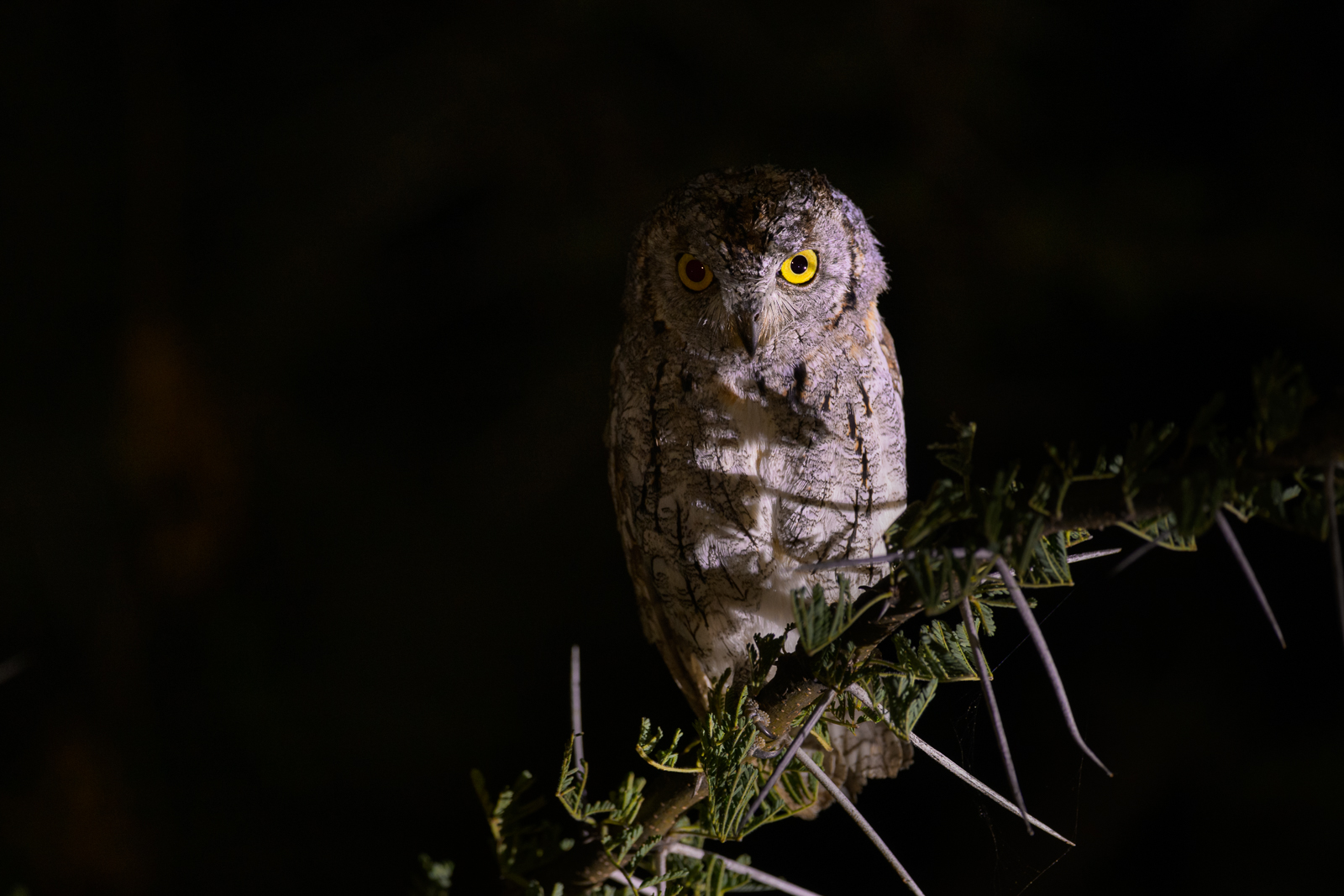
Right outside our tent in Kenya, two African scops owls would just be getting home each morning while we headed out, and just starting their hunt each evening while we were heading in. During daylight, you really had to look closely to find them as they perched in a different spot each day and had great camouflage. In fact, if threatened, they’re known to elongate their bodies and narrow their eyes to mimic a broken branch, making them nearly invisible. We were careful not to disturb them, however, when they were at rest. This image was taken at night, on our way to dinner, using the light from our guard’s flashlight. They told us they were pearl-spotted owlets, which I was skeptical of. Once home, I realized my hunch was right and they were scops owls. Nikon Z8 with Nikkor 500mm PF lens, ISO 1600, f/5.6 at 1/125th of a second, flashlight.
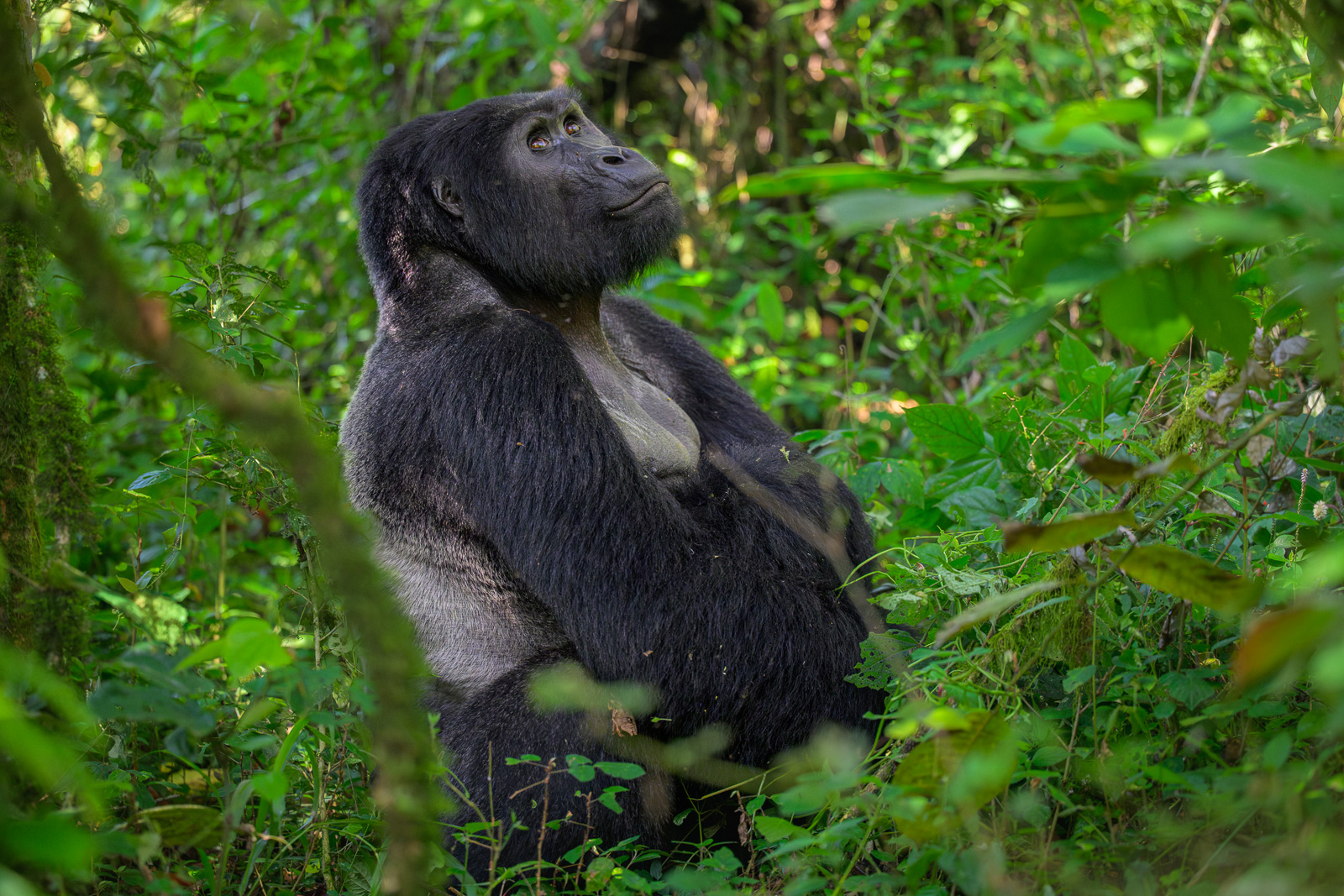
Silverback mountain gorillas are the powerful, mature male leaders of gorilla families, easily recognized by the distinctive patch of silver hair across their backs. They’re responsible for protection, making decisions about movement, and maintaining peace. Despite their massive size and strength, silverbacks are often gentle, especially with infants, and show deep emotional bonds with the entire family. Their expressions can be so very human, like this guy who was relaxing in the forest, but keeping a watchful eye on all the goings on. Nikon Z8 with Nikkor 70-200mm lens (at 99mm) ISO 5000, f/2.8 at 1/640th of a second.
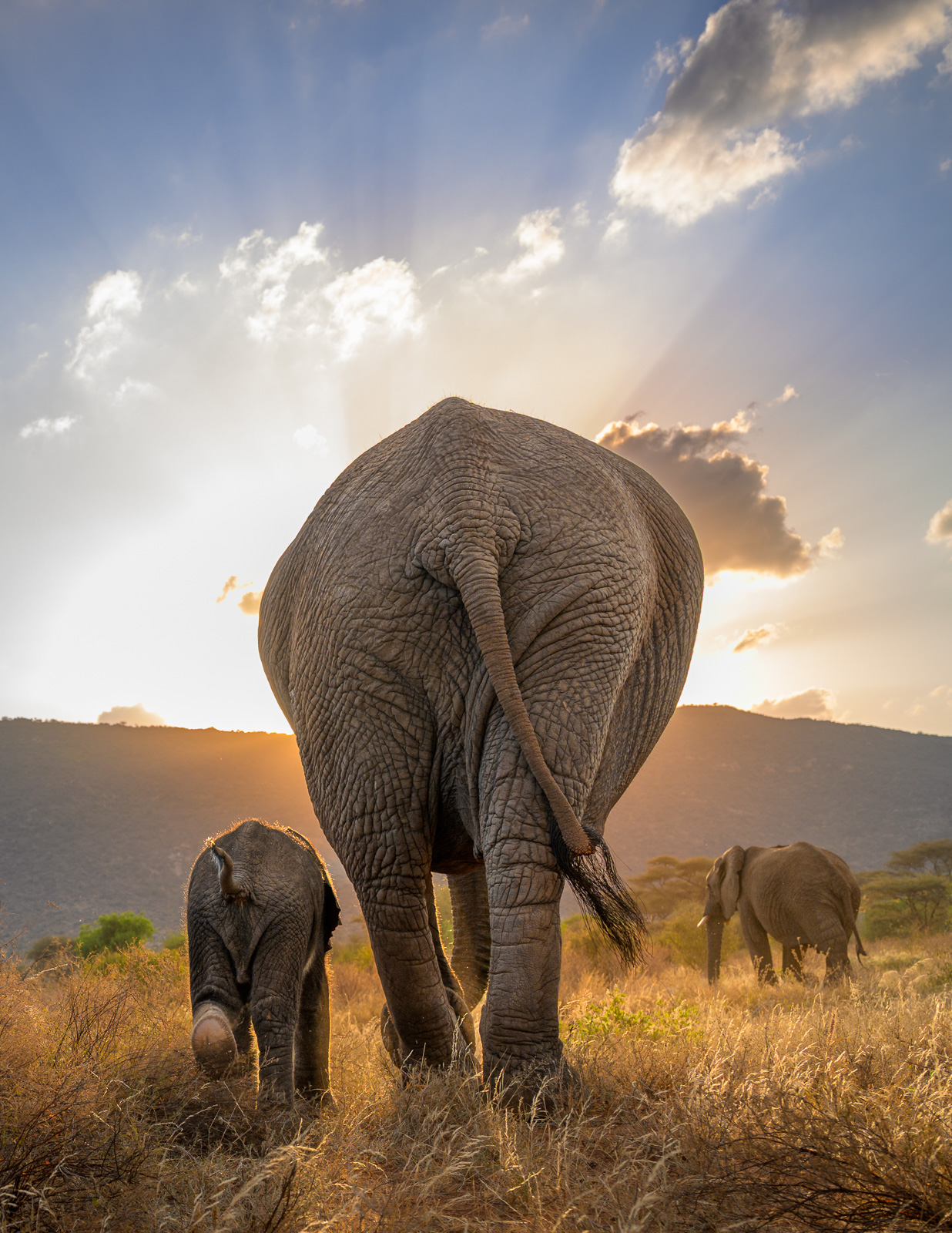
Butt shots of wildlife rarely work. In fact, I’m constantly deleting all the butts that find their way to my camera traps. This one, however, is a rare exception. It’s actually one of my favorite shots from our recent trip to Kenya. I was using my monopod-mounted-camera-on-the-ground technique but was a bit late and the elephants had mostly passed. I kept shooting with the remote trigger, however, hoping for the best. The big elephant blocking the sun and creating rays in the sky, the raised foot of the little guy, and the distant elephant in profile all came together to make the composition. It does look a little like AI. I don’t know whether that’s a good thing or bad. Either way, I hope you like it as much as I do. If anything, it gives me hope for more workable butt shots in the future. Nikon Z8 with Nikkor 24-70mm lens (at 24mm) ISO 100, f/4 at 1/500th of a second, Sirui monopod and Vello remote trigger.
Elephants toss mud on themselves to protect their skin from the sun and biting insects. The mud also helps cool them down and soothes irritated or sensitive skin. After bathing or wallowing, they often follow up with a dusting of dry soil to seal in moisture and enhance the protective layer. I filmed this big bull elephant on day one of our recent trip to the Masai Mara in Kenya. Please contact us if you’d like to join our tour in late November of this year. Nikon Z8 with Nikkor Z 70-200mm lens (at 200mm), ISO 476, f/18 at 1/250th of a second and 120 FPS.
We use cookies to enhance your experience while using our website. If you are using our Services via a browser you can restrict, block or remove cookies through your web browser settings. We also use content and scripts from third parties that may use tracking technologies. You can selectively provide your consent below to allow such third party embeds. For complete information about the cookies we use, data we collect and how we process them, please check our Privacy Policy

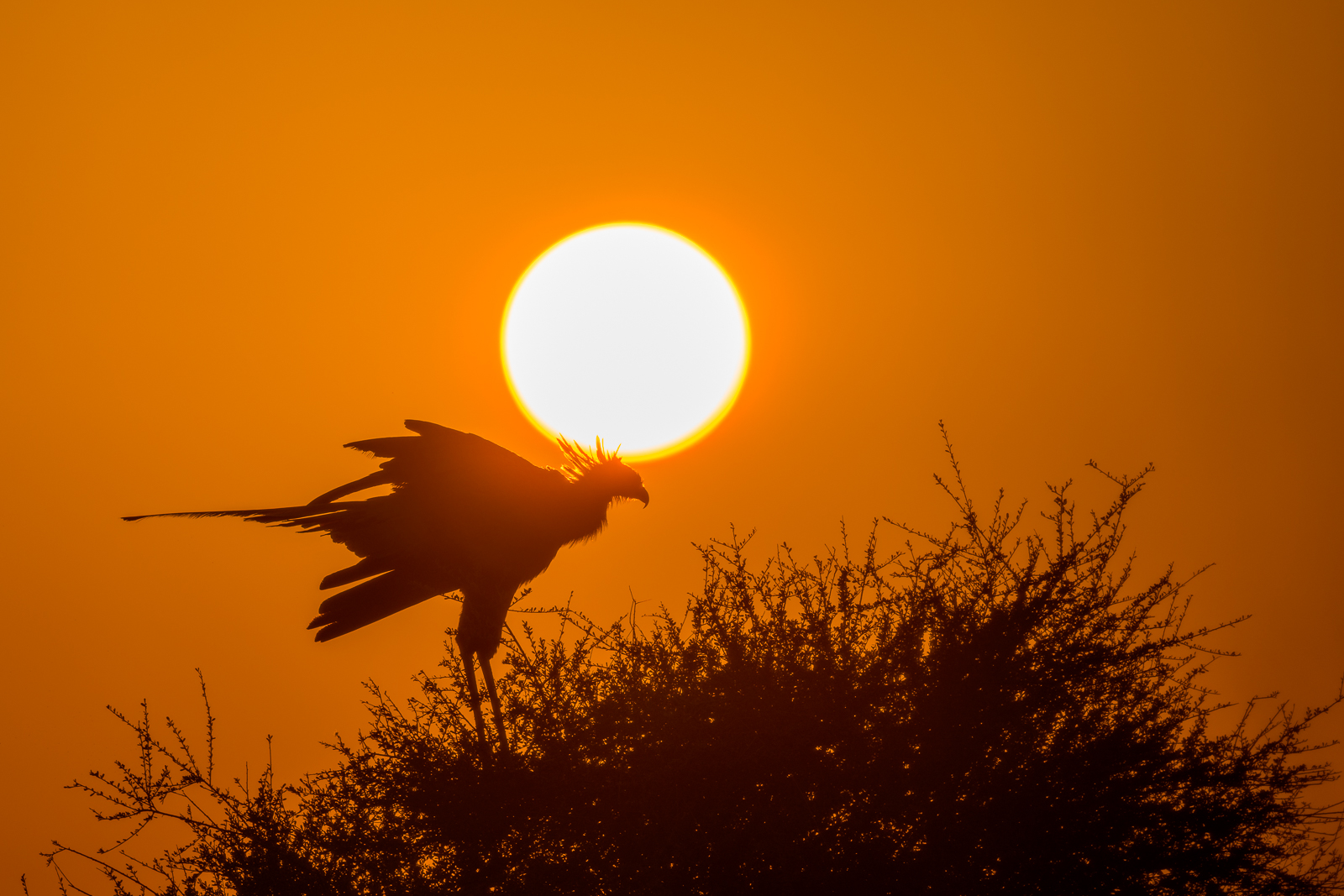
 I had to get low for this one. In fact, I wanted to get even lower to place the secretary bird’s head further into the sun, but well… the ground got in the way. Secretary birds are large, long-legged birds of prey native to sub-Saharan Africa, known for hunting snakes and insects on foot. We see them every now and again in the early morning perched high in acacia trees, warming themselves in the sun before descending to the ground to begin their day of stalking. Nikon Z8 with Nikkor 500mm PF lens, ISO 72, f/5.6 at 1/2000th of a second.