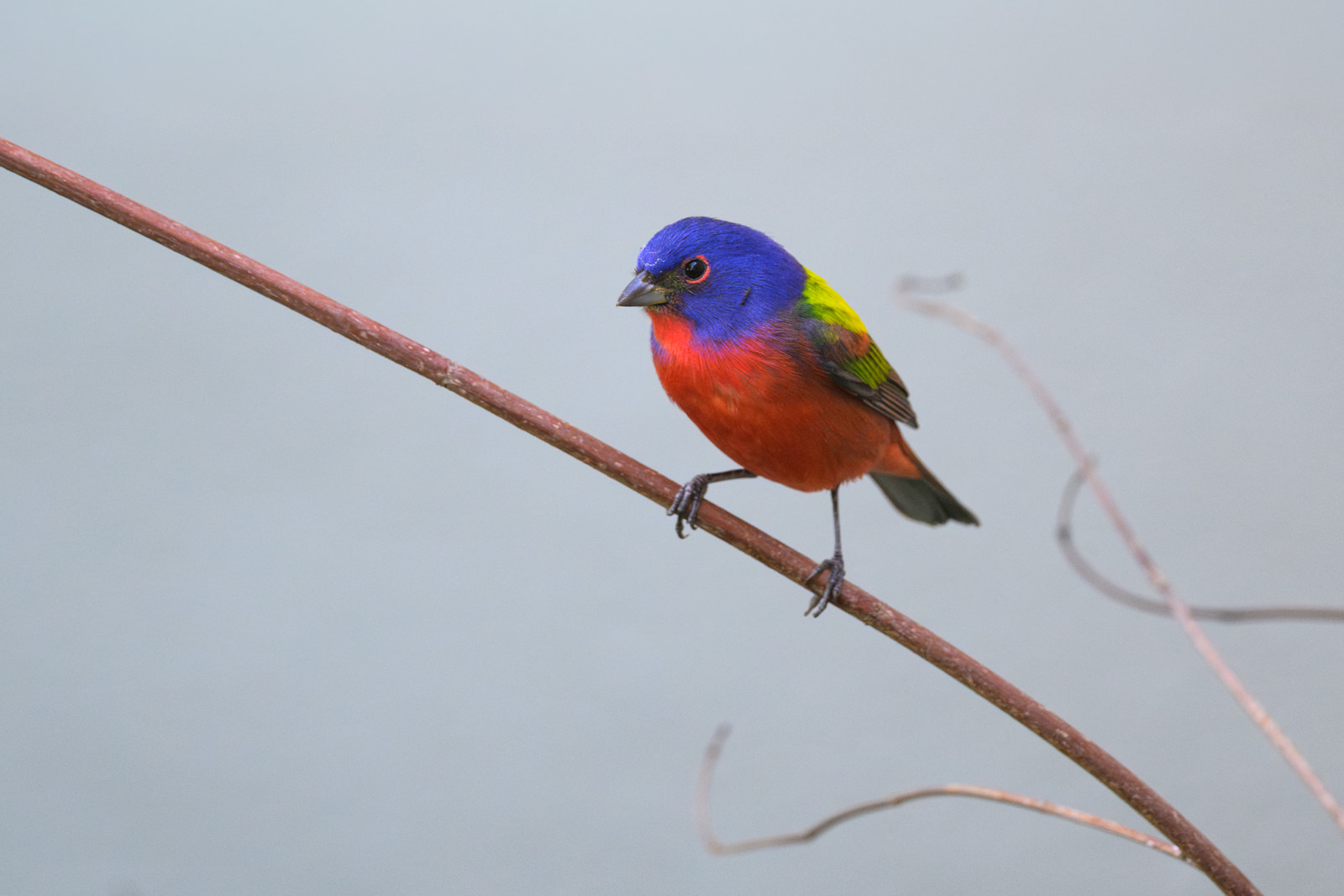
Over the past several decades, I’ve been on at least one hike in each of our fifty states, camera in hand, searching for wildlife. I’ve seen a lot of different species. That said, there are plenty of animals that I haven’t had any luck with. The painted bunting — often considered North America’s most beautiful bird — was one of them. Until last week when visiting my mother and hiking in an area that I’ve been to many times before in southwest Florida. There are two main populations of painted buntings in the United States — the east coast population ranging from North Carolina down to southern Florida, and the west coast population mainly in Texas, Oklahoma, Arkansas and Louisiana. I remember when I was living in New York and one migrated in the wrong direction and ended up in Prospect Park in Brooklyn. It caused quite a stir and I stayed away to avoid being part of the problem. Nice to finally catch up with a few of them last week. Next time I’ll try to get shots with greenery in the background, but for now, this will have to do. Nikon Z8 with Nikkor 500mm PF lens, ISO 2200, f/5.6 at 1/400th of a second.
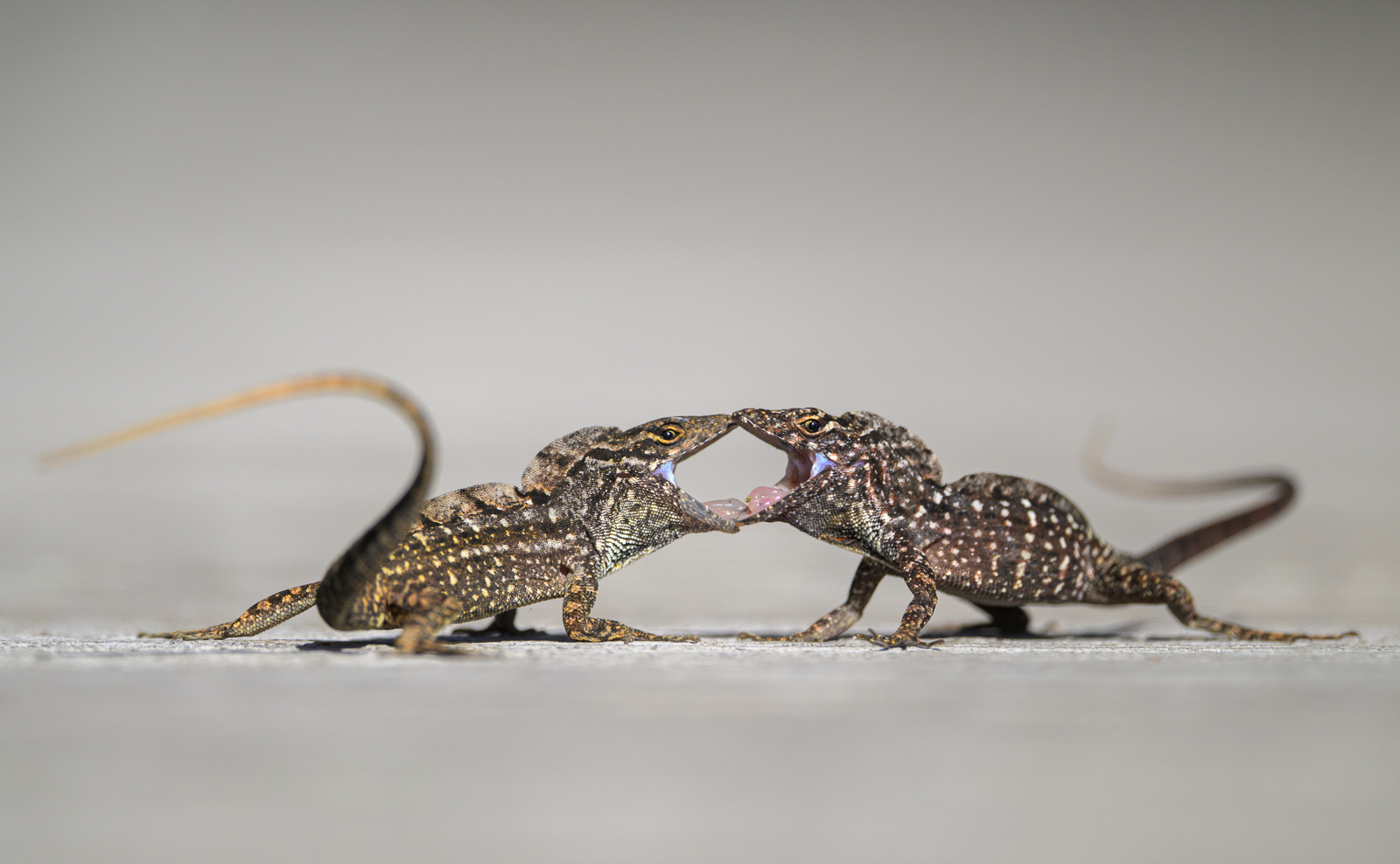
Last week while in Florida I captured these two brown anole lizards clashing in a territorial dispute. They are small but fierce lizards and are highly territorial. Males will chase, grapple, and even bite one another to defend prime habitat and access to females during the breeding season. What looks almost like a tiny reptilian boxing match is actually a serious contest of dominance, often settled in seconds before the loser retreats and the victor claims the perch. Nikon Z8 with Nikkor 500mm PF lens, ISO 280, f/5.6 at 1/2500th of a second.
Heading to Florida for a few days, so this will be last post until later in the week.
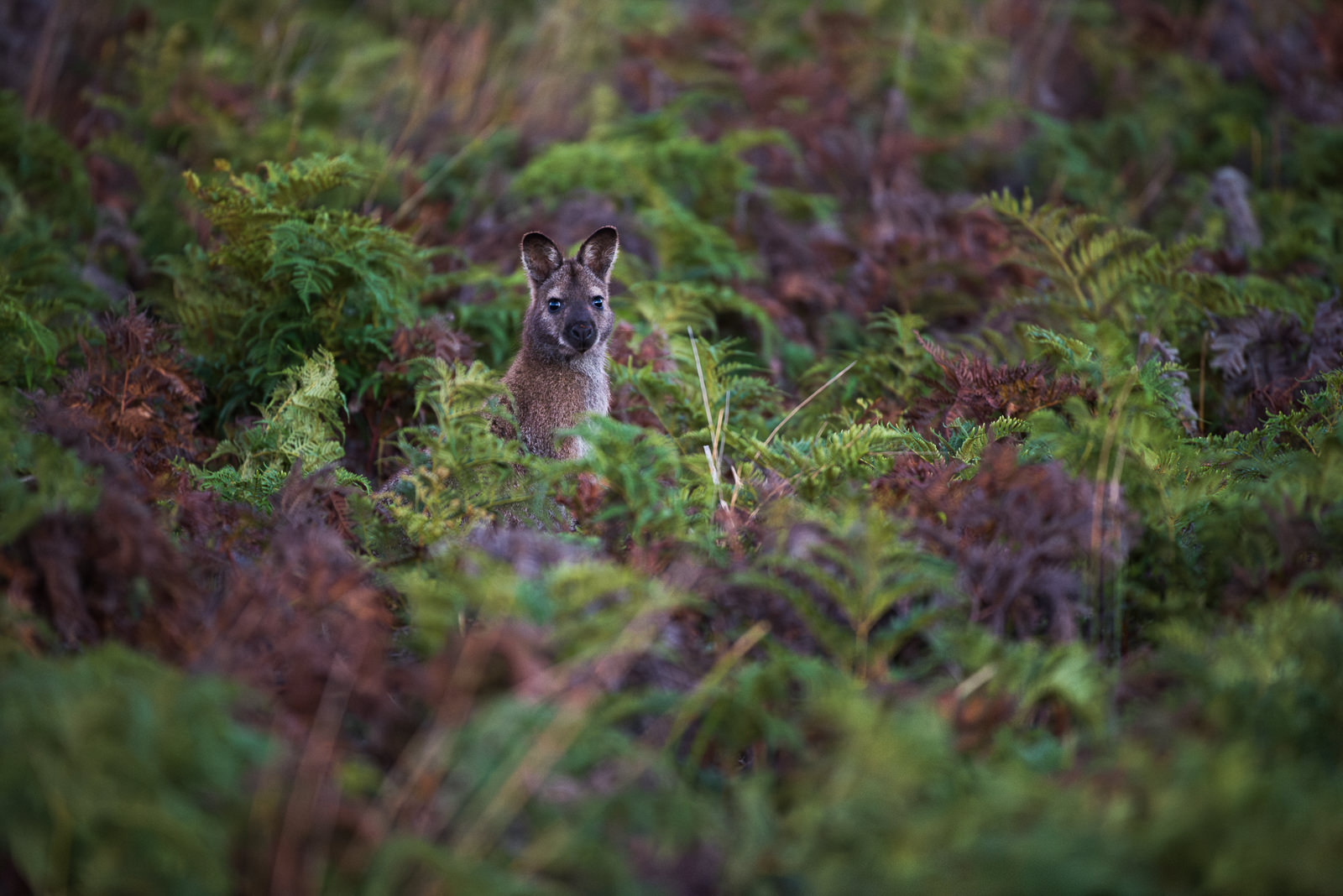
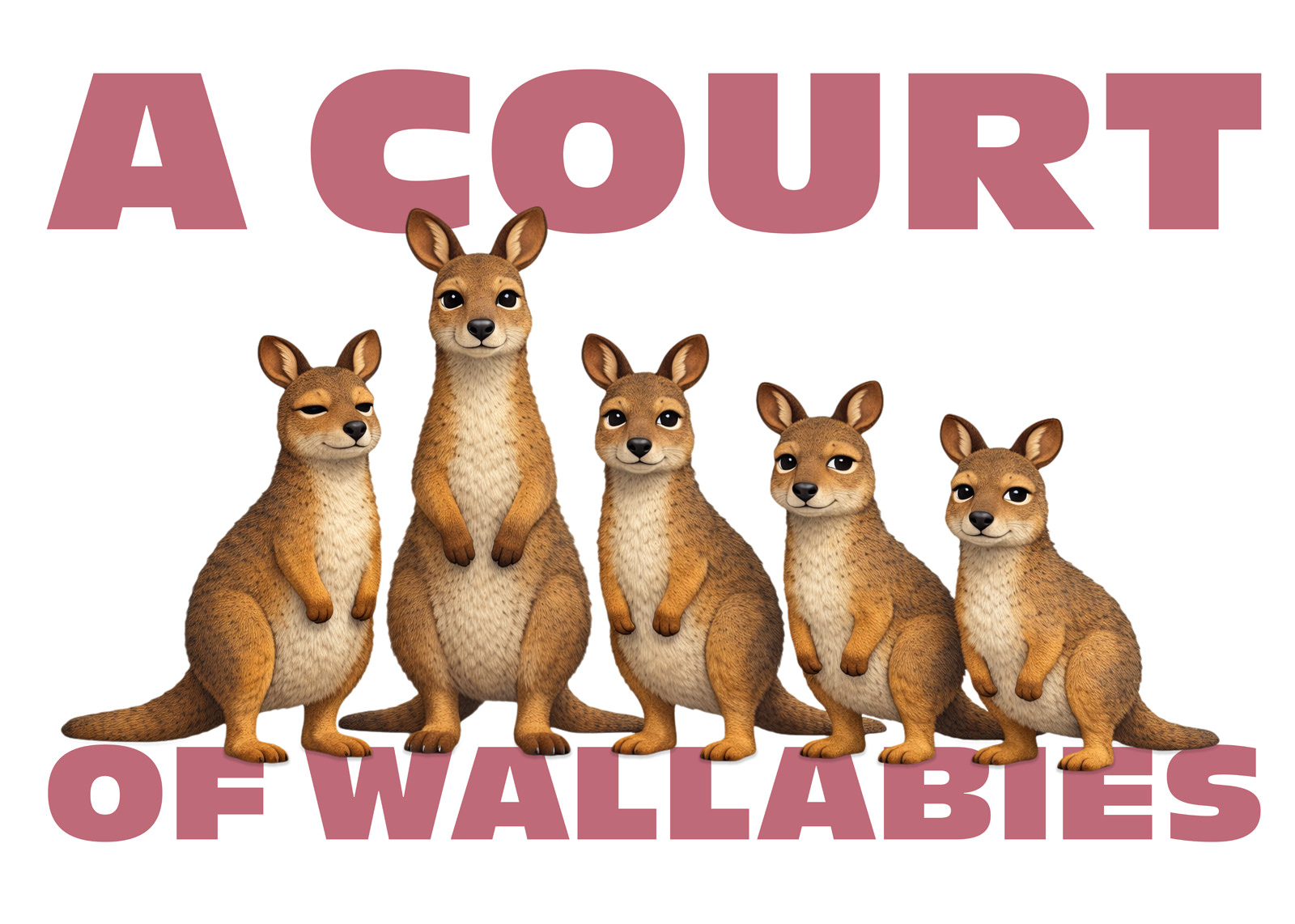
A group of wallabies is sometimes called a court. The term draws from the image of social gathering and display, especially during breeding season, when males gather around a receptive female. That dynamic can resemble a royal “court,” with suitors assembling and posturing. Wallabies aren’t highly social like kangaroos, but when they do cluster, the name captures a sense of quiet ceremony in the bush. And per usual, this Bennett’s wallaby was alone, perhaps looking for that elusive court. For more animal group names, visit my store, Species Limited. Nikon D810 with Nikkor 200-400mm lens (at 400mm) ISO 3200, f/4 at 1/250th of a second.
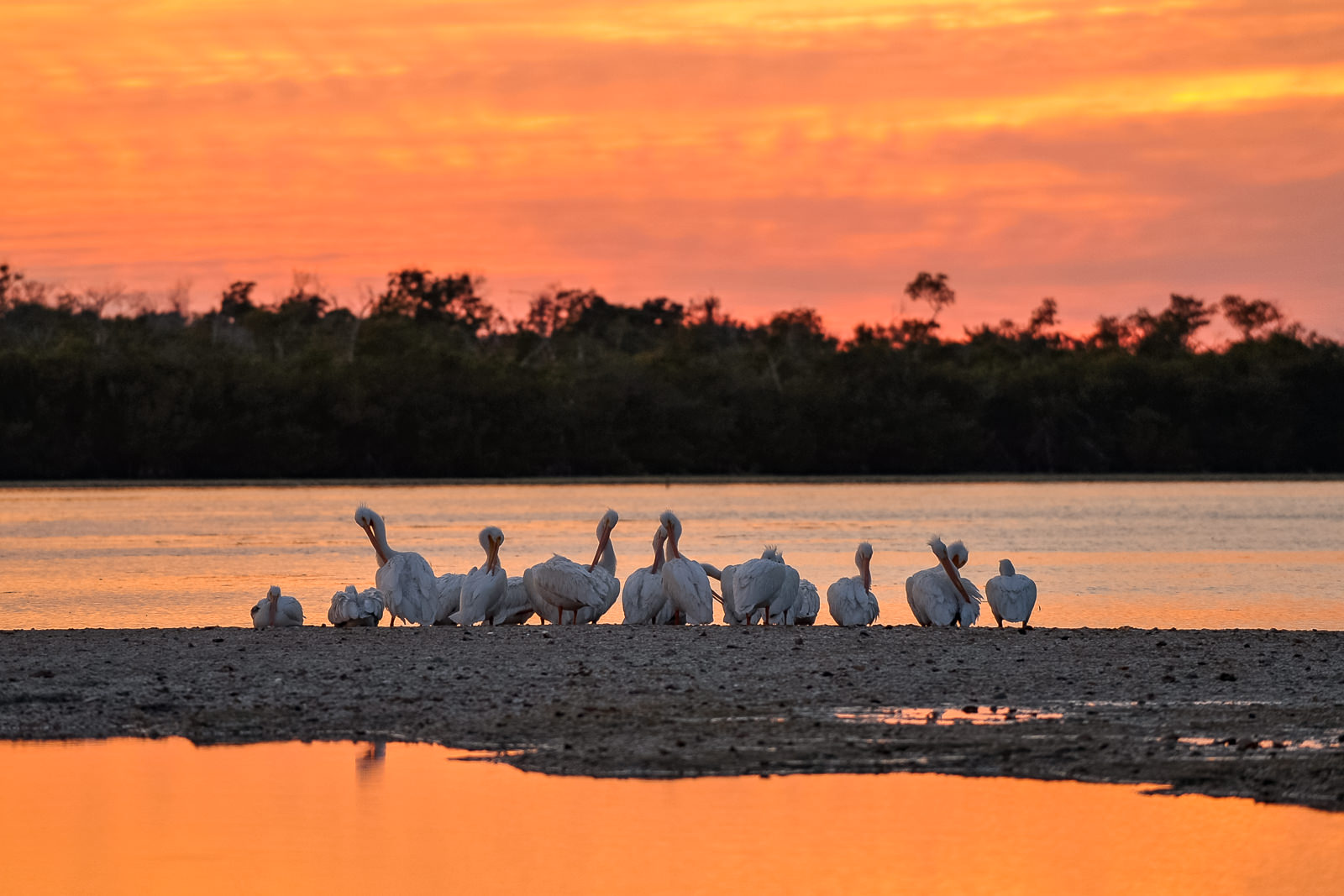
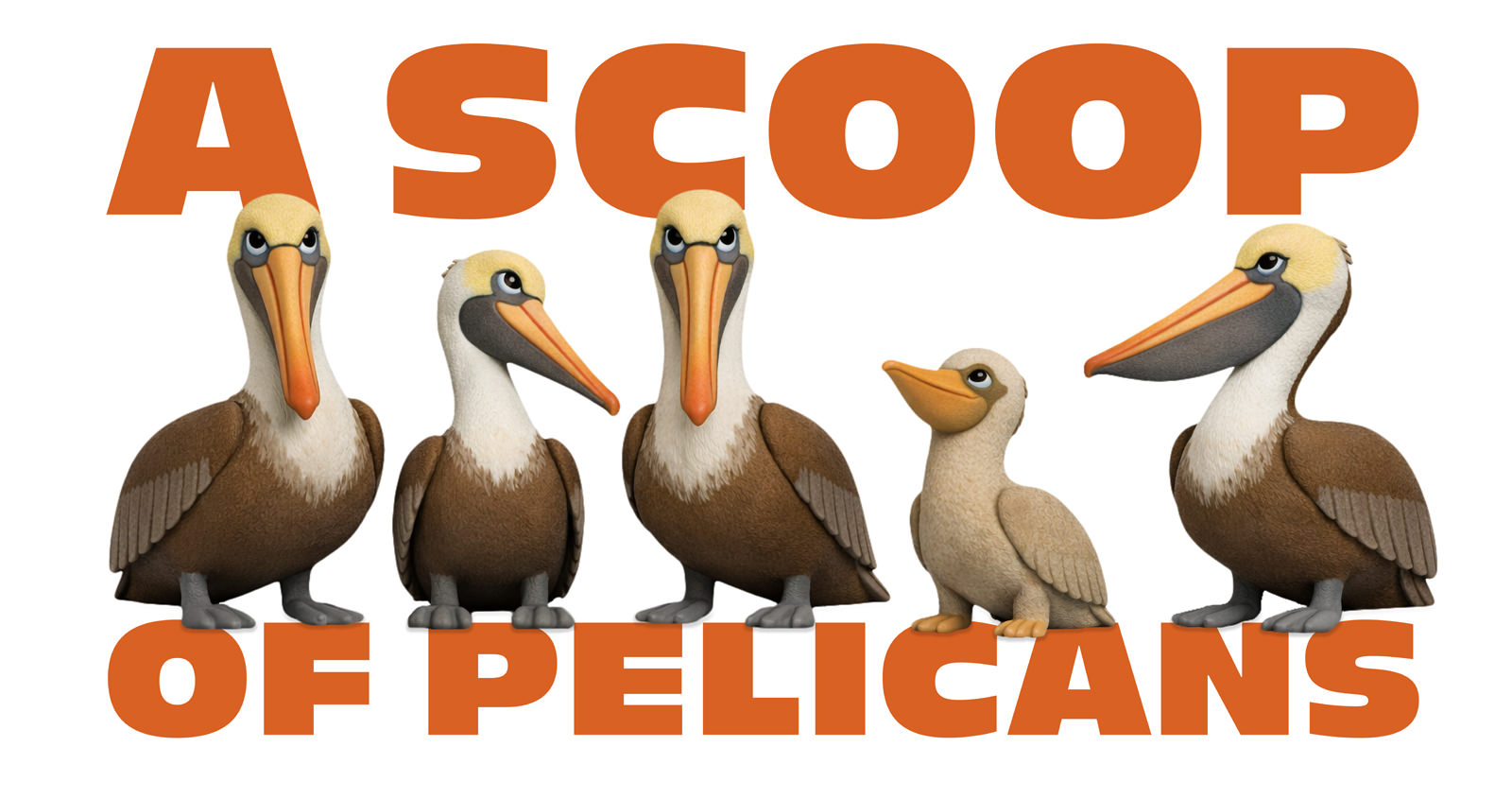
A group of pelicans is called a scoop because of their most distinctive feature — the oversized throat pouch. Pelicans feed by dipping or plunging into the water and literally scooping up fish along with a gulp of water, which they then drain before swallowing their catch. The word perfectly mirrors both the action and the shape of their bill. Few birds are more defined by a single feeding motion than a pelican making a scoop. The photo features white pelicans in Florida. The illustration features brown pelicans — the two different species we get in the United States. To get your wildlife inspired T-shirts, visit my store at Species Limited. Nikon D700 with Nikkor 70-200mm lens (at 200mm) ISO 400, f/4 at 1/200th of a second.
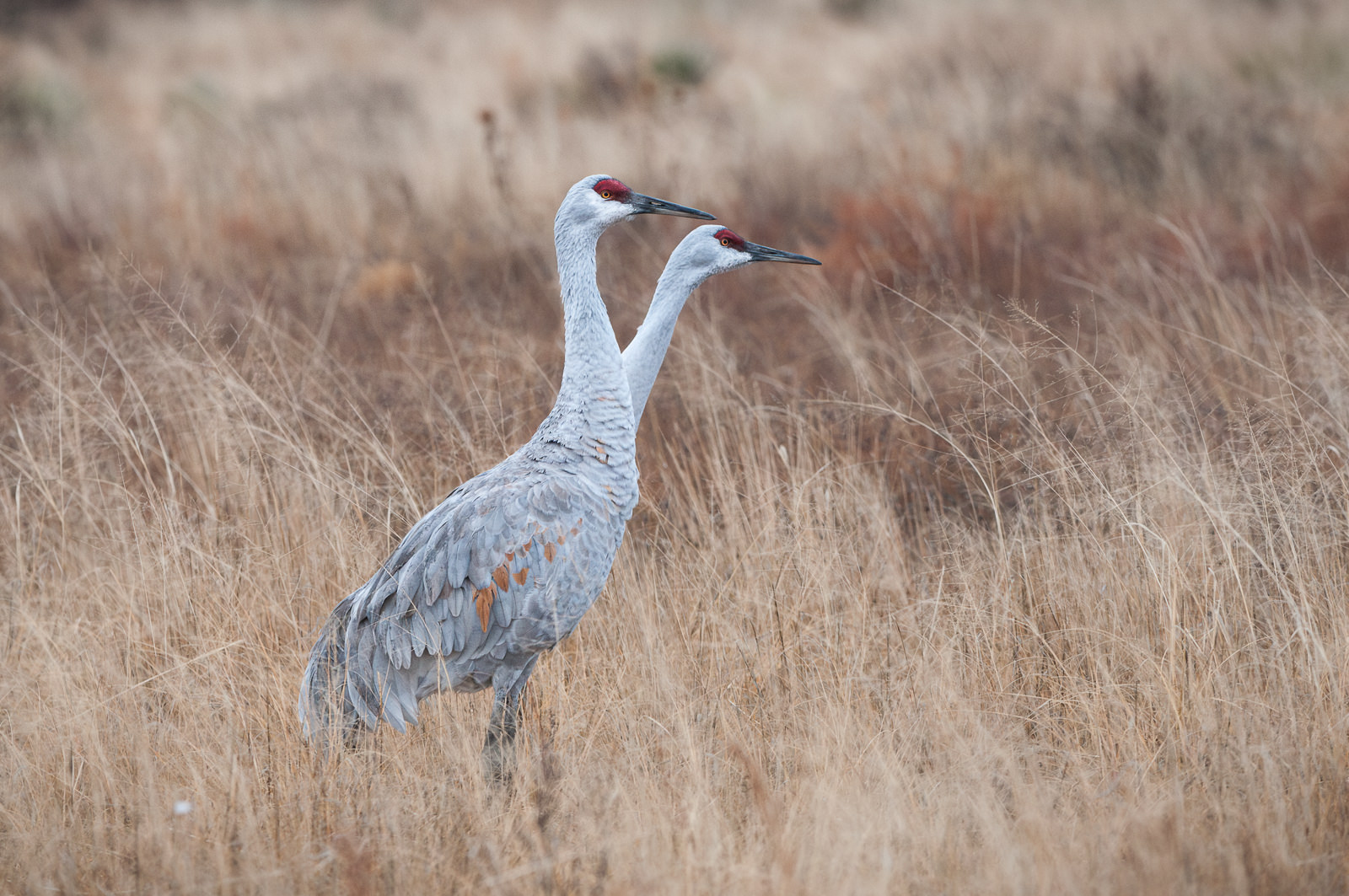
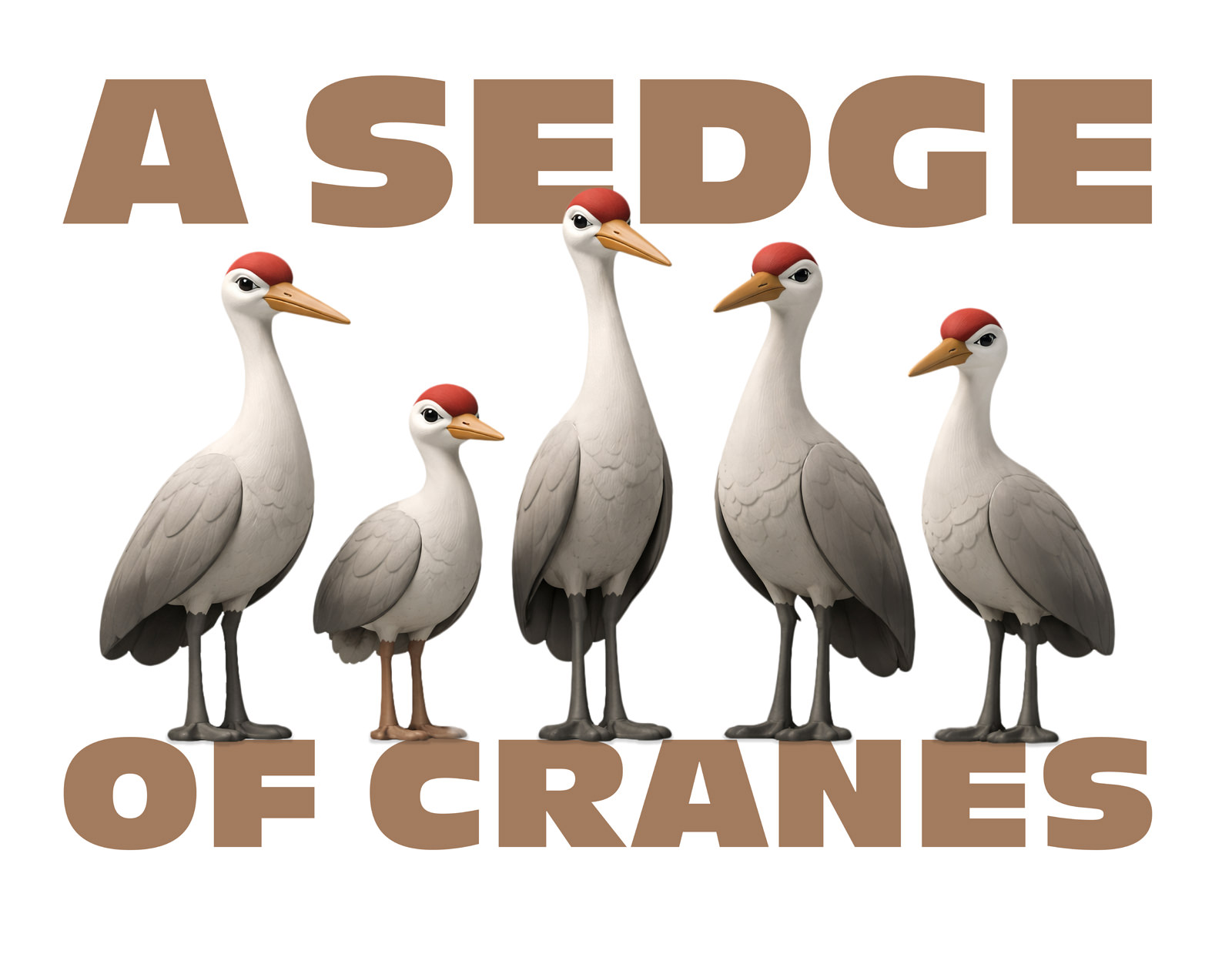
A group of cranes is called a sedge because cranes are so closely associated with wetlands, and sedges are grass-like plants that dominate marshes and boggy habitats where cranes feed and nest. Two members of a sedge are pictured here, but there were thousands more sandhill cranes in Bosque Del Apache National Wildlife Refuge in Socorro, New Mexico when I visited years ago during their yearly migration. To get your sedge t-shirt or onesie, visit my store at specieslimited.com. Nikon D300 with Nikkor 200-400mm lens (at 290mm) ISO 1600, f/5.6 at 1/200th of a second.
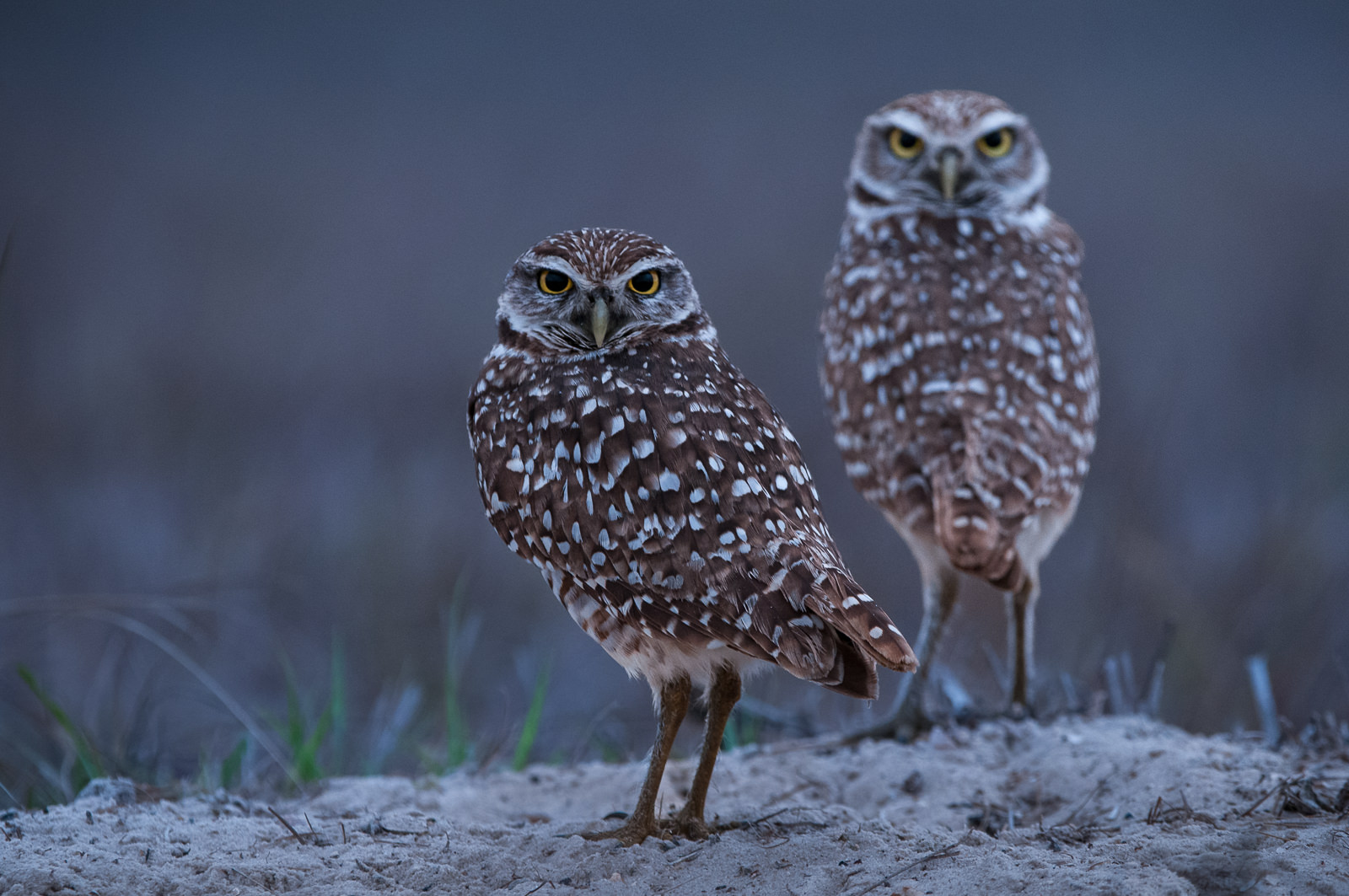
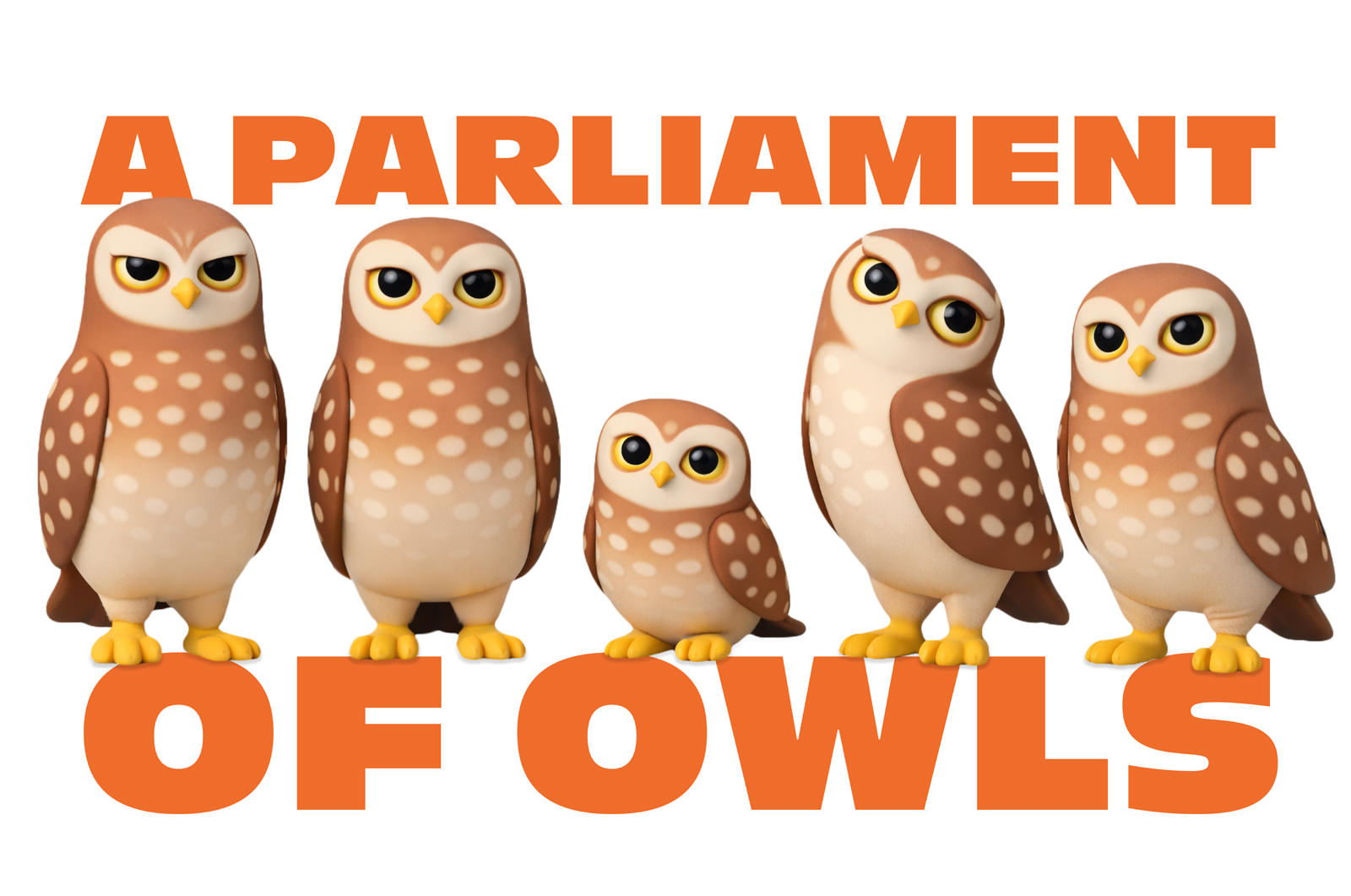
A group of owls is called a parliament because, for centuries, owls have symbolized wisdom and seriousness. The term dates back to medieval Europe and was popularized in 15th-century literature, in works like Chaucer’s Parliament of Fowls. With their upright posture, forward-facing eyes, and solemn expressions, owls resemble dignified officials gathered in debate. These two burrowing owls were in an open field with a few others at dusk on the west coast of Florida. Nikon D300 with Nikkor 200-400mm lens (at 330mm) ISO 800, f/4.5 at 1/250th of a second.
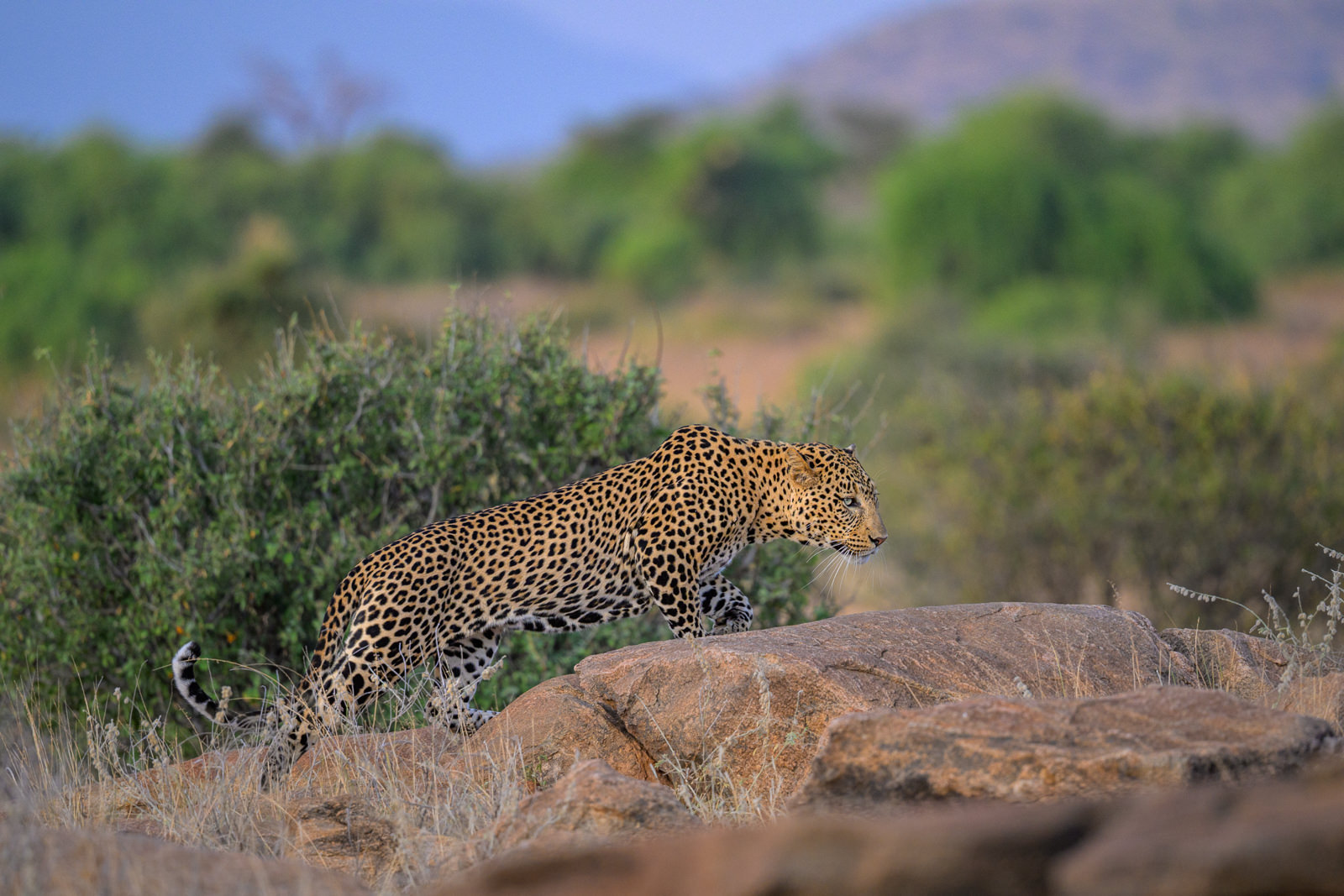
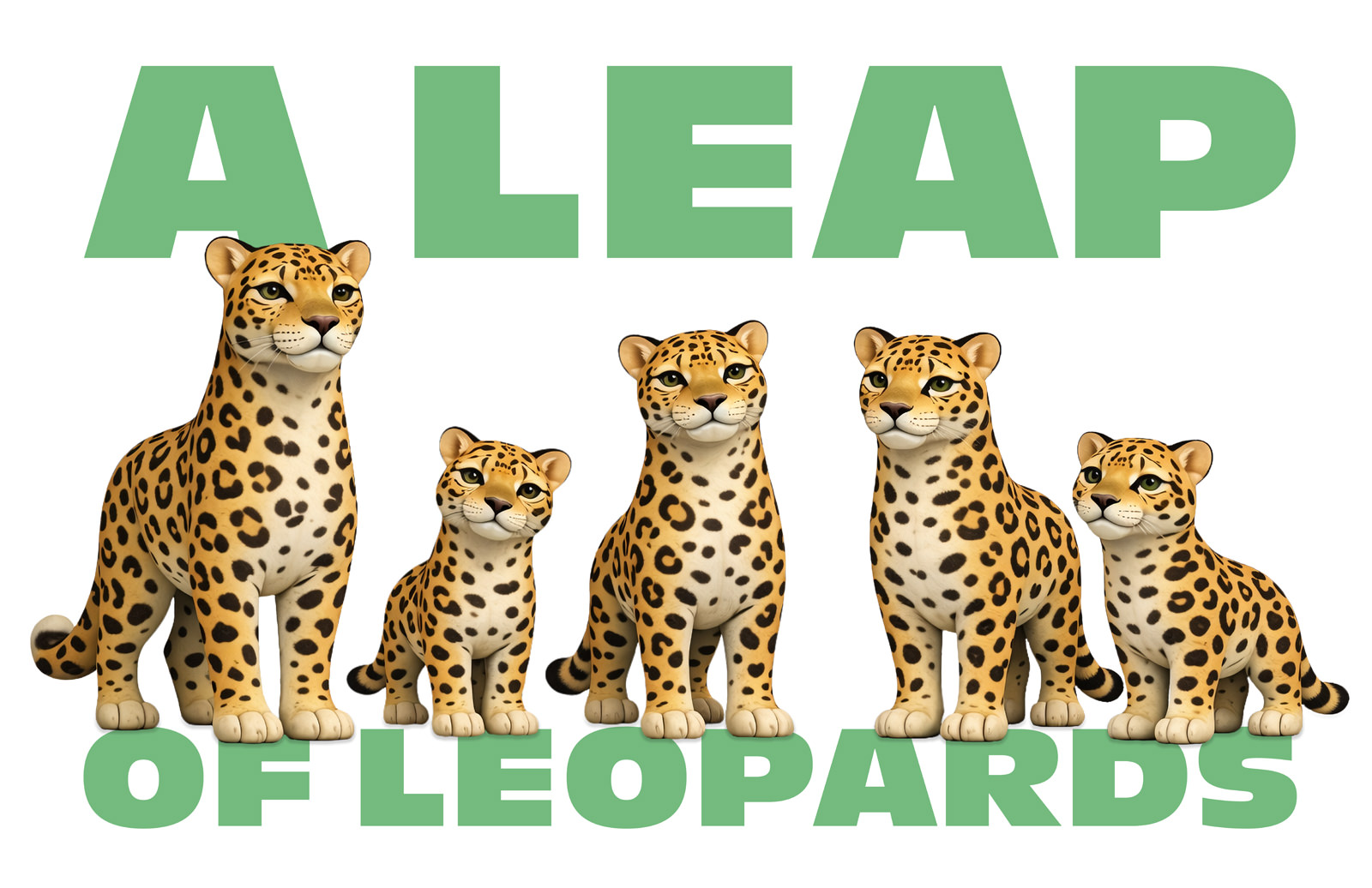
Leopards are almost always solitary unless it’s a mother with her offspring, or two adults come together to mate. I’ve seen lots of leopards over the years, but only once have I seen more than one at a time and that was a mother with her almost-full-size cub. But as with most species, they do have a fun name for a group of them. Leopards are incredibly powerful jumpers, capable of launching themselves into trees or onto prey with sudden force, so “leap” fits the bill. I photographed this solitary adult male this past June in Kenya. To get your Leap of Leopards merchandise, visit Species Limited. Nikon Z8 with Nikkor 500mm PF lens, ISO 1400, f/5.6 at 1/1600th of a second.
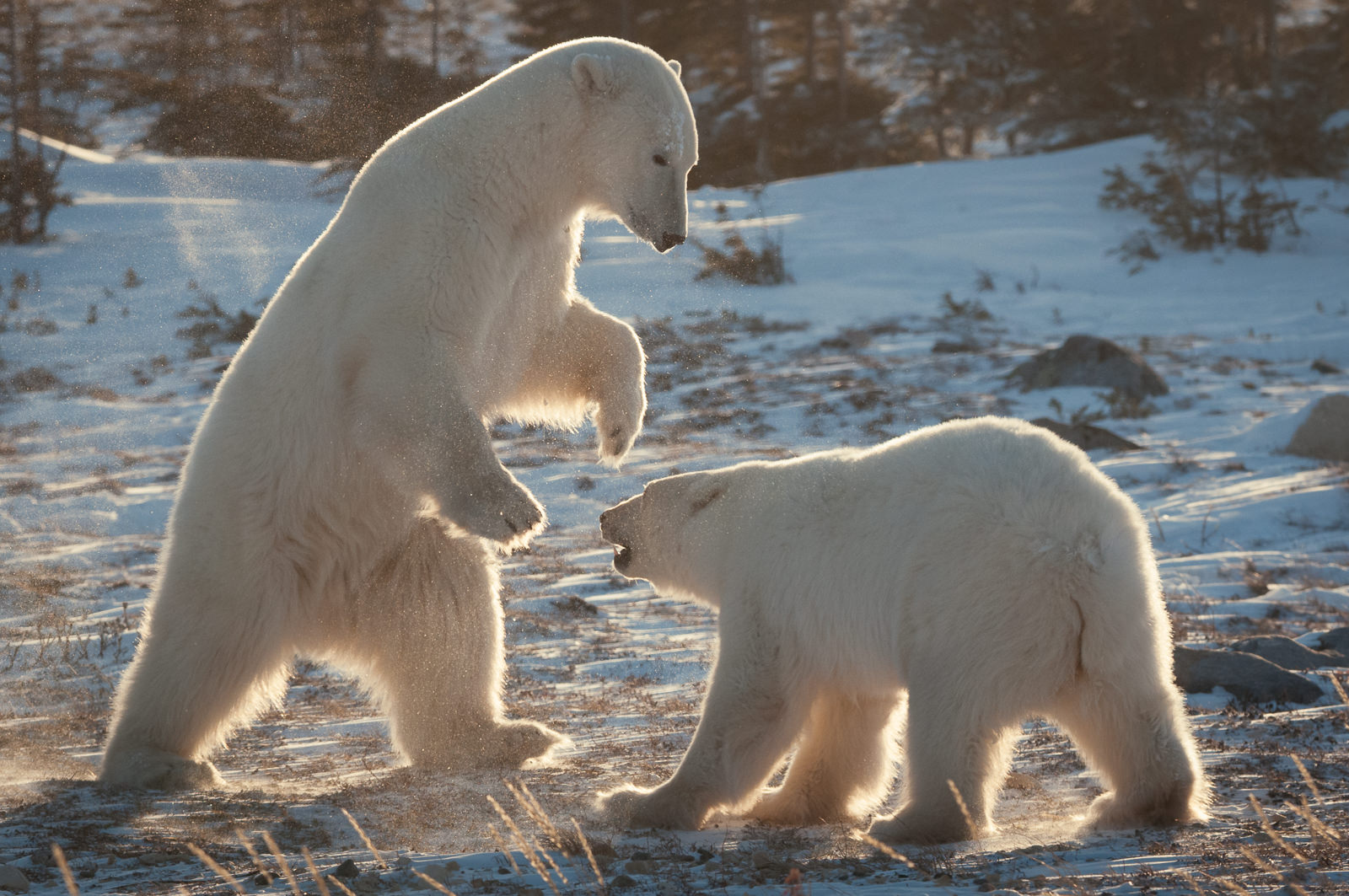
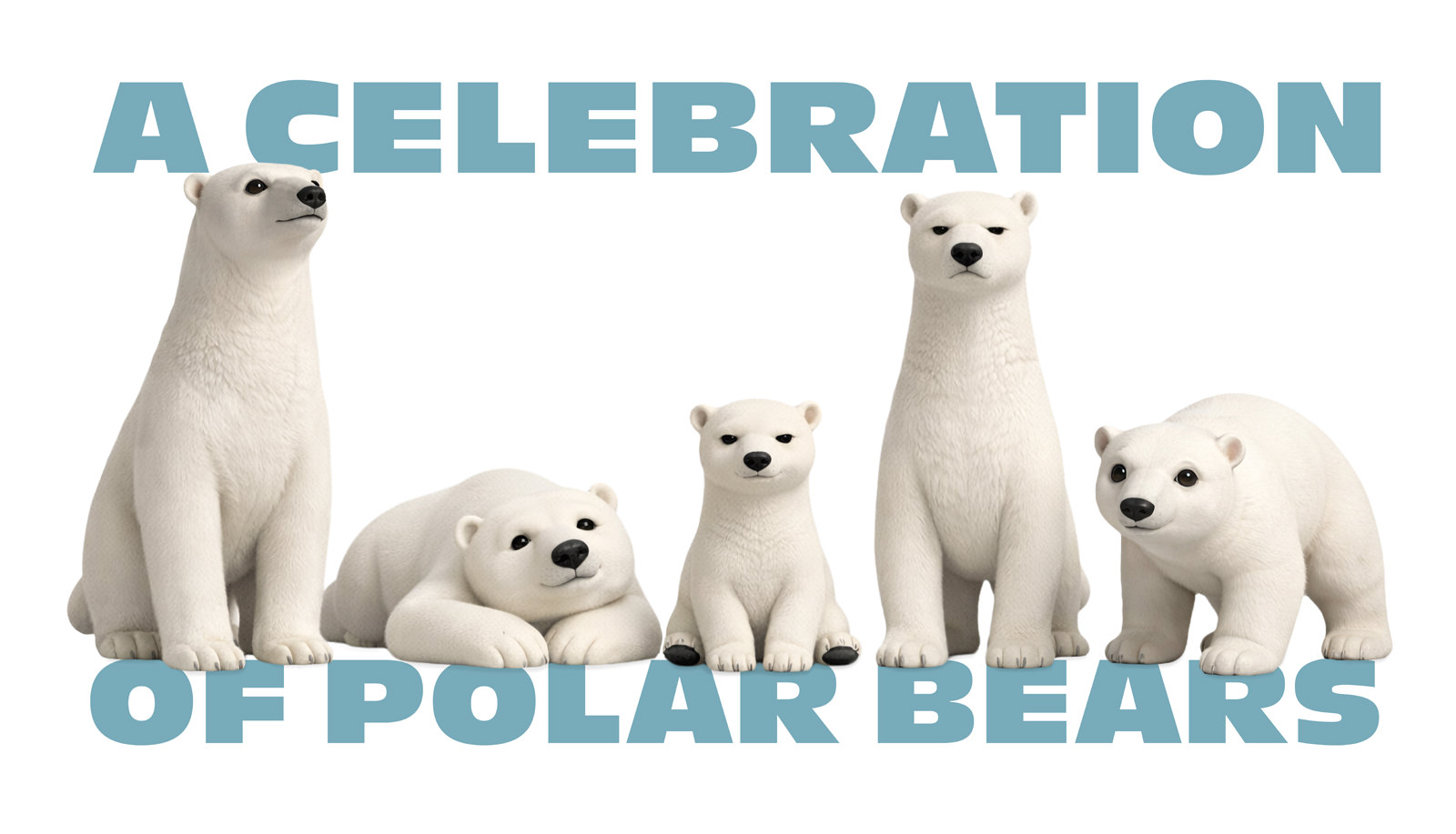
A group of polar bears is sometimes called a celebration. They are famously solitary animals, so seeing more than one together — outside of a mother and cubs — is unusual. When they do gather, it’s often around a large food source like a whale carcass or when waiting for the ice to freeze so that they can go hunt, and the sight of several massive white bears on the sea ice can feel rare and almost momentous. The word celebration captures that sense of spectacle and rarity — a remarkable gathering in an otherwise vast, empty Arctic landscape. To get your Celebration of Polar Bear merchandise, visit Species Limited.Nikon D300 with Nikkor 70-200mm lens (at 135mm) ISO 400, f/6.3 at 1/1600th of a second.
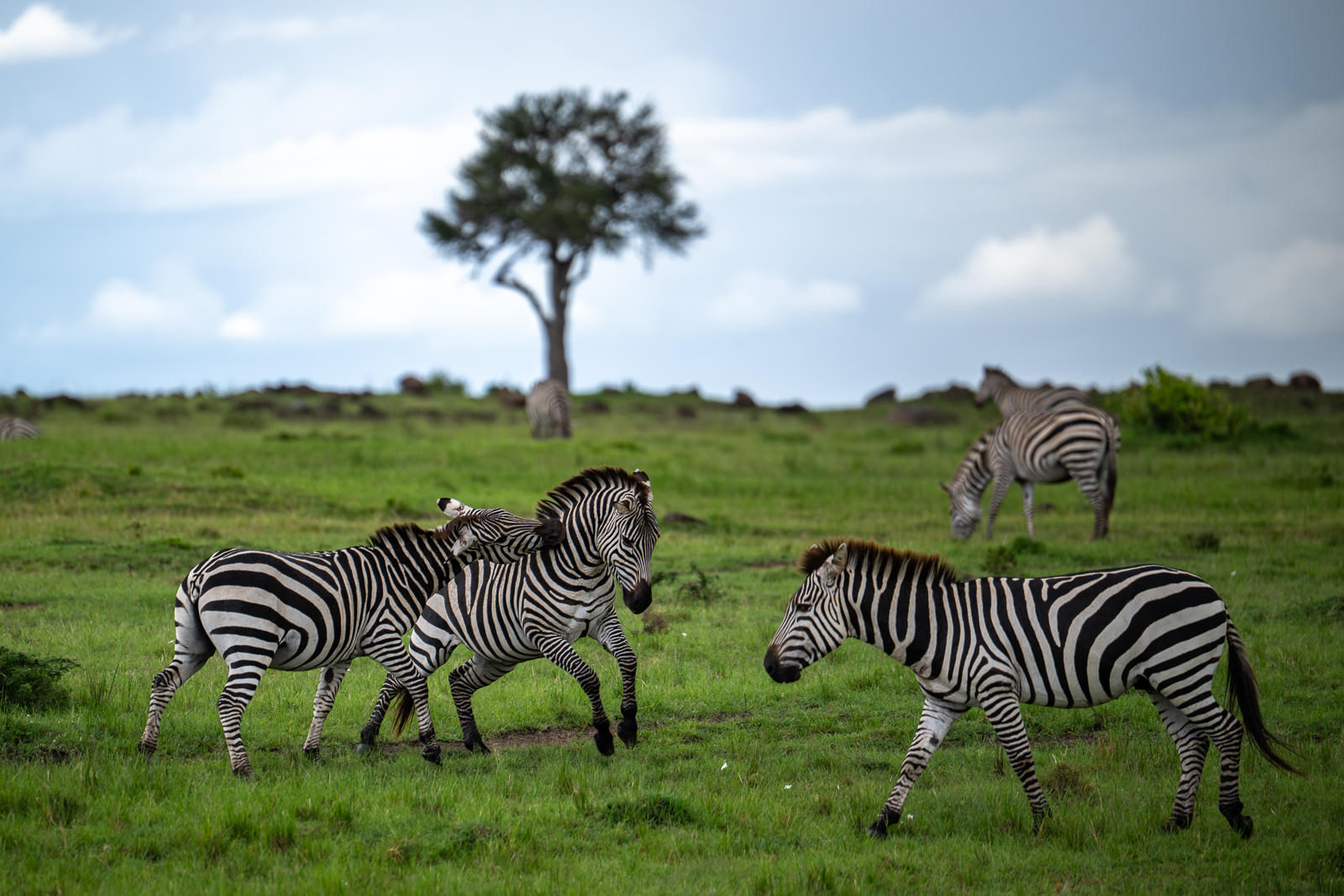
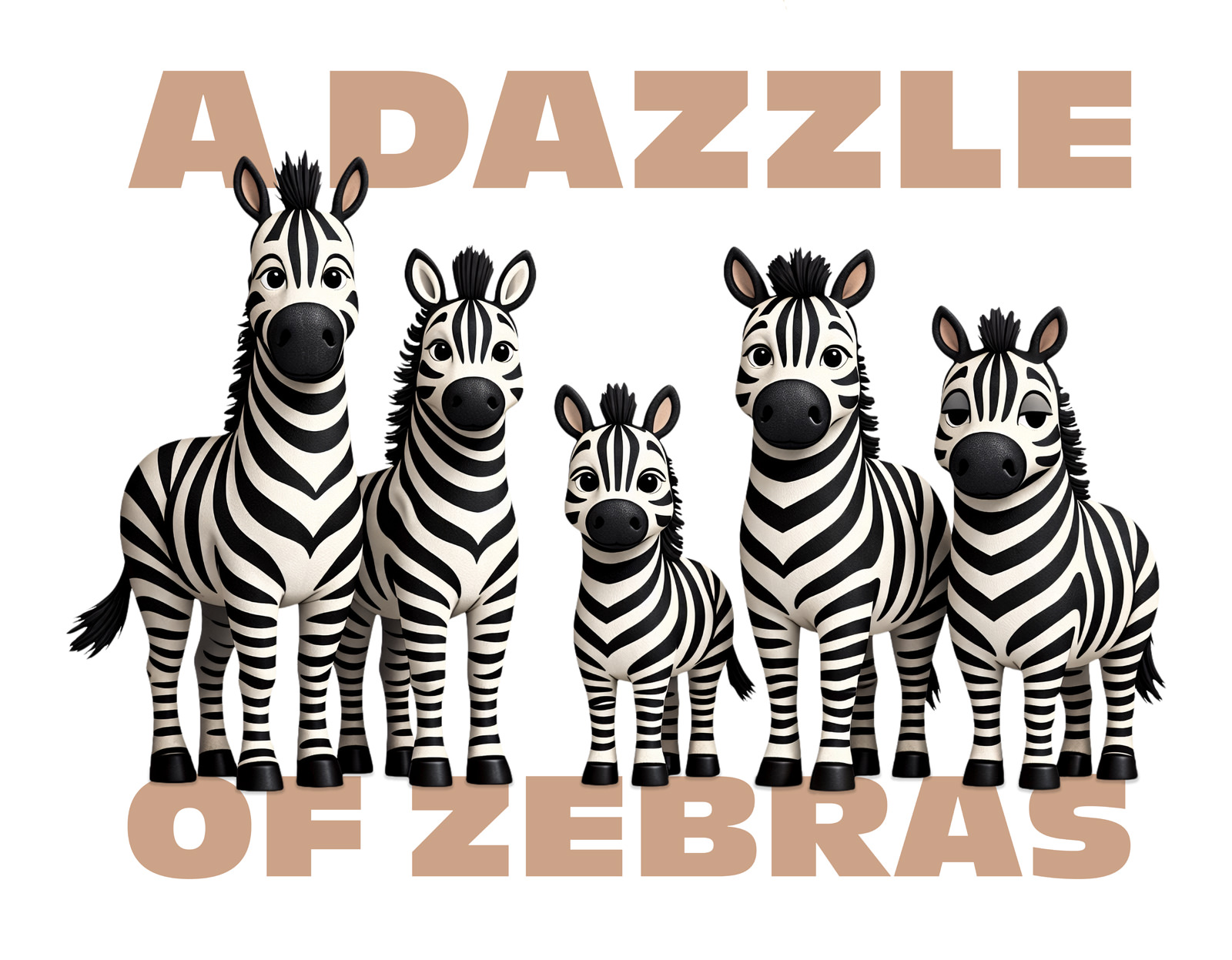
A group of zebras is called a dazzle because of the visual effect their black-and-white stripes create when they stand or move together. When clustered in a herd, the overlapping stripes can blur into a confusing pattern, making it difficult for predators to single out one individual, especially when the zebras are running. Nikon Z8 with Nikkor 70-200mm lens (at 200mm) ISO 100, f/2.8 at 1/1000th of a second.
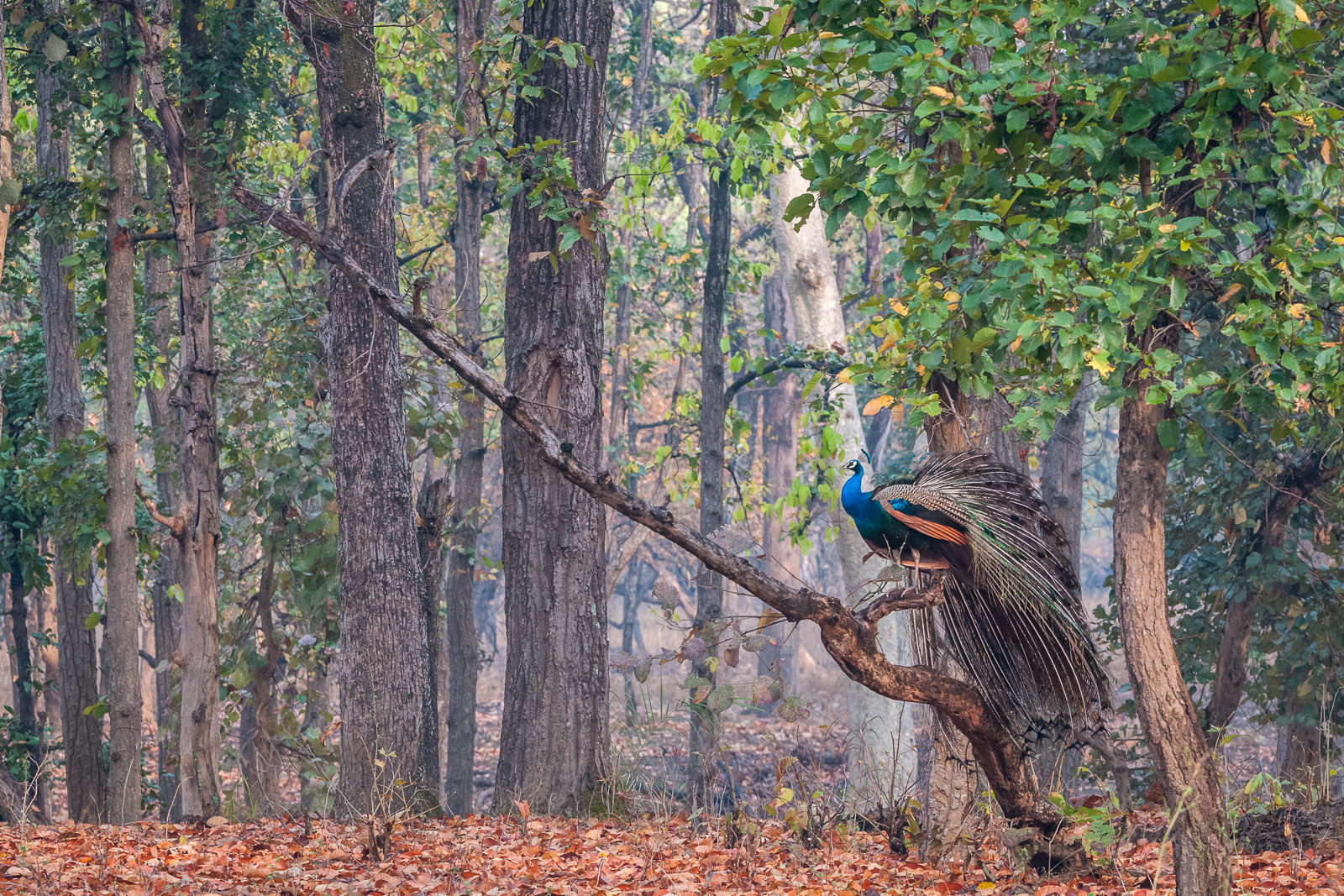
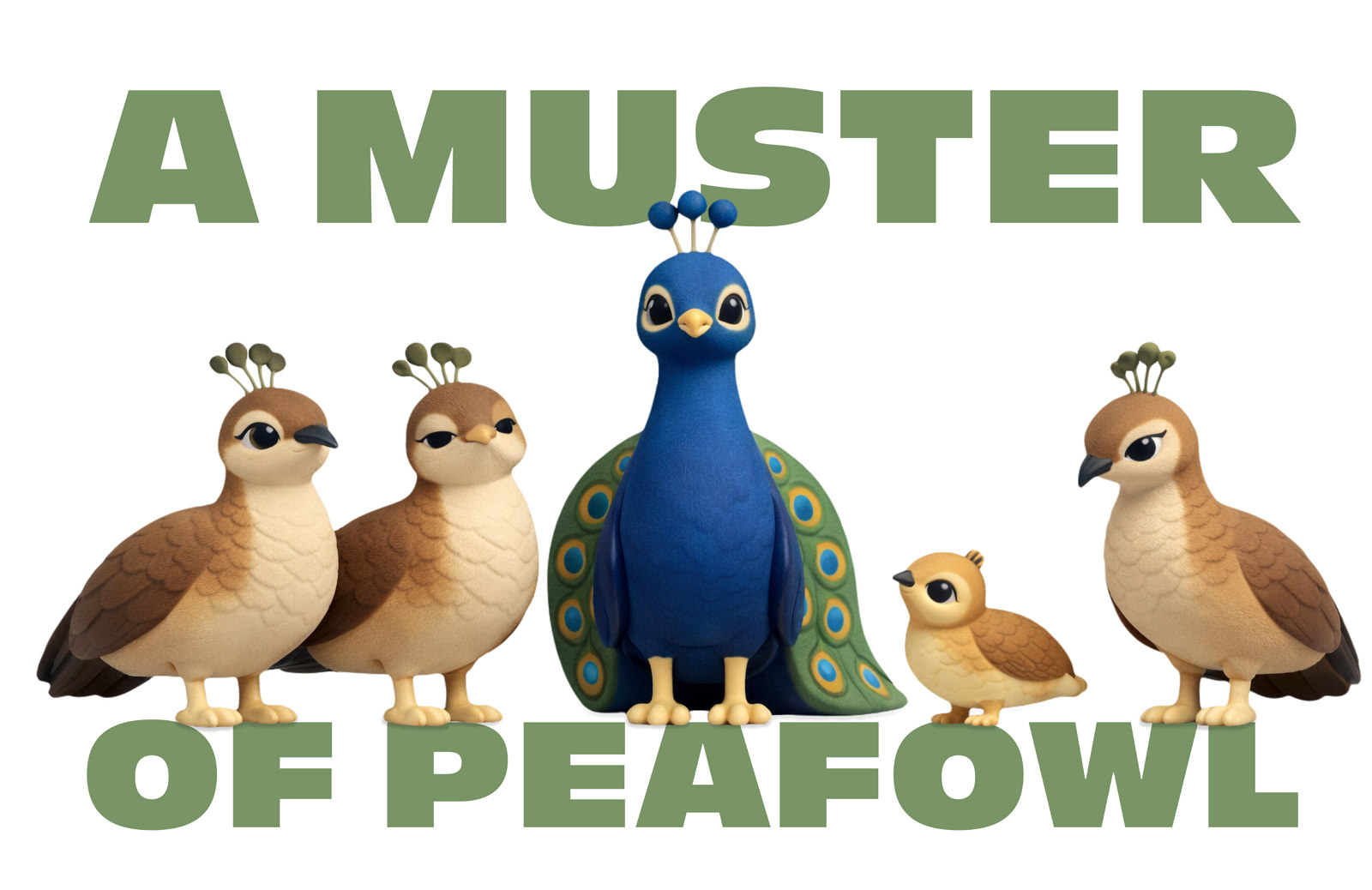
A group of peafowl is called a muster because the word historically means a gathering. The term dates back to Middle English and comes from the Latin monstrare, meaning “to show” or “to display.” And that’s where it fits peafowl beautifully. When peafowl gather, particularly during breeding season, it can look very much like a ceremonial assembly. Males fan out their tail feathers in full display, presenting themselves as a worthy mate. A muster captures both the act of gathering and the spectacle of showing off. This blue peacock was photographed in Bandhavegarh National Park in India. Nikon D300 with Nikkor 200-400mm lens (at 200mm) ISO 800, f/7.1 at 1/125th of a second.
We use cookies to enhance your experience while using our website. If you are using our Services via a browser you can restrict, block or remove cookies through your web browser settings. We also use content and scripts from third parties that may use tracking technologies. You can selectively provide your consent below to allow such third party embeds. For complete information about the cookies we use, data we collect and how we process them, please check our Privacy Policy